Managing bleeding after cardiac surgery should not be over complicated. Here’s a transfusion algorithm that can help guide us and allow us to be better stewards of our precious resources. 🎩 tip to the authors.
eddyjoemd.com/foamed/
@jhollowaymd.bsky.social
PGY5 CT Anes fellow🫀at tOSU➡️ future CritCare fellow🫁 at UMich via tOSU Anes Res & Wayne State SOM💉 MedEd🤓|| Tweets≠medical advice||🏳️🌈 #MedSky #AnSky #TILT: Today I learned that…
Managing bleeding after cardiac surgery should not be over complicated. Here’s a transfusion algorithm that can help guide us and allow us to be better stewards of our precious resources. 🎩 tip to the authors.
eddyjoemd.com/foamed/
great story about patient advocacy, research, and bradykinin-mediated angioedema
as a trainee I remember feeling helpless to treat this or even really understand it (we would often bang away with epi/steroids/antihistamines for no good reason)
(background: https://emcrit.org/ibcc/angioedema/#top)

Fortunate to be one of the many many trainees able to call Dr. Essandoh a mentor. Learn something from him every time we talk. Great discussion on mentorship, observation, opportunities, being a better leader, & aspiring to be a master clinician. #AnSky #MedSky
accrac.com/episode-296-...

BRASH syndrome ECG:
- subtle peaked T-waves from hyperkalemia
- bradycardia is *disproportionately* severe, as compared to the extent of hyperkalemia-induced morphology changes
(more on BRASH: emcrit.org/ibcc/brash/)
(ECG credit: ecg.bidmc.harvard.edu/maven/dispca...) #ECGsky
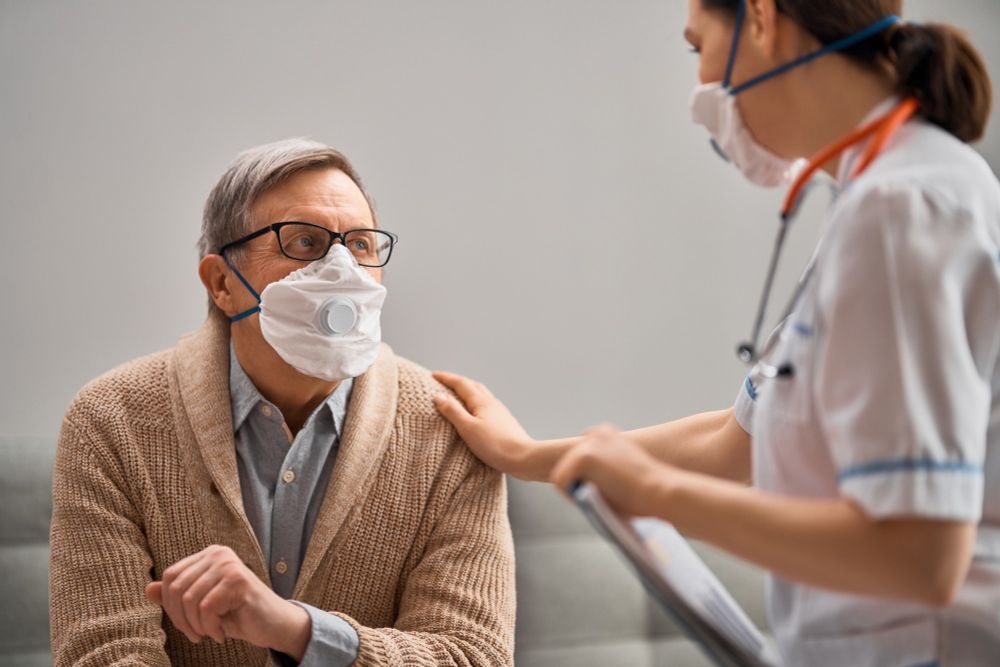
When the mask mandate was lifted from Mass General Brigham in May '23, hospital transmission of resp virus went up. When the mandate was re-instituted in Jan '24, infection rates went down. www.news-medical.net/news/2024052...
28.11.2024 19:39 — 👍 26582 🔁 5279 💬 998 📌 419
Skytorial: Piptazo vs Cefepime 😁
Recently this JAMA-IM paper correlating piptazo with mortality has gained a weird amount of attention
(It's been out for months so it's not really new)
This one of the most methodologically horrific papers I've ever seen
Lets talk real quick about the paper...
Skytorial: can you crack the case?
A middle-aged healthy patient undergoes colonoscopy under propofol sedation.
Colonoscopy is unremarkable.
Post-procedure, the patient doesn't wake up and has rhythmic movements involving the legs as shown here.
Labs are normal.
What might be going on?

For anyone interested in learning more about angiography, check out my introductory guide!
You’ll find a lot of nice annotated diagrams like this one.
intuitivecardiology.notion.site/angiography

This great lab study from 2020 surprised me at the time - challenging our assumptions about fresh gas flow rates and economic/environmental costs. #AnSky
[ Higher FGF (~6L/min) during TIVA reduces costs without sig environmental impact. ]
Summary → www.metajournal.com/articles/103...
I do feel like the LVRS patients really benefit. Our lung transplants have started getting more epidurals (opposite trend). But ITM+intercostal exparel+cryo for most thoracic seems sufficient. For trainees, a bummer since it’s certainly a slightly different skill set than lumbar when you do need it.
21.11.2024 10:27 — 👍 1 🔁 0 💬 0 📌 0🙋🏻♀️ Nearly all of our robotic thoracic cases are getting ITM rather than epidurals. Exceptions for open thoracic cases or bilateral VATS, eg lung volume reduction procedures.
20.11.2024 22:35 — 👍 2 🔁 1 💬 1 📌 0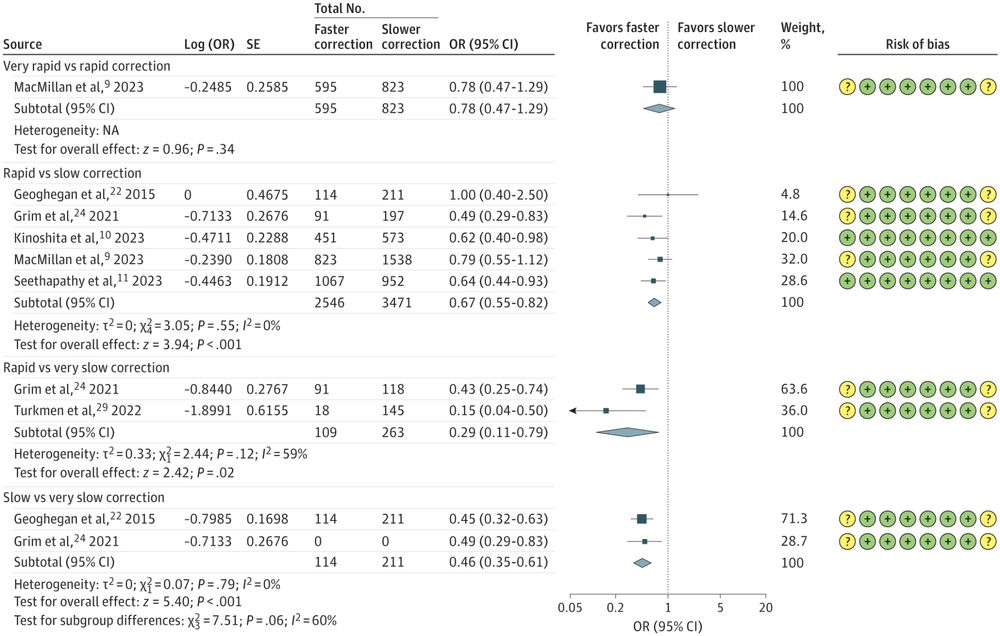
Honey, stop what you're doing, new hyponatremia research just dropped!
What's it say?
It looks like slow correction is associated with worse outcomes, like death and length of stay!
Was it just a small study?
No, it was a meta-analysis of almost 12,000 patients!
jamanetwork.com/journals/jam...

Flowchart showing pathology of DIC
Unsolicited DIC pic:
18.11.2024 18:15 — 👍 47 🔁 6 💬 5 📌 2
Love it when an article justifies what I teach in OR. journals.lww.com/anesthesia-a... #PedsAnes Thanks!
18.11.2024 23:56 — 👍 7 🔁 1 💬 1 📌 0As an editor I have the 'pleasure' of reading multiple clinical manuscripts each week.
Content is key, there is no getting around this.
But content needs to structured in an easily accessible way for the reader to engage...
Is this called a "skeetorial"? Anyway, here we go.
🧪 #medsky #ansky
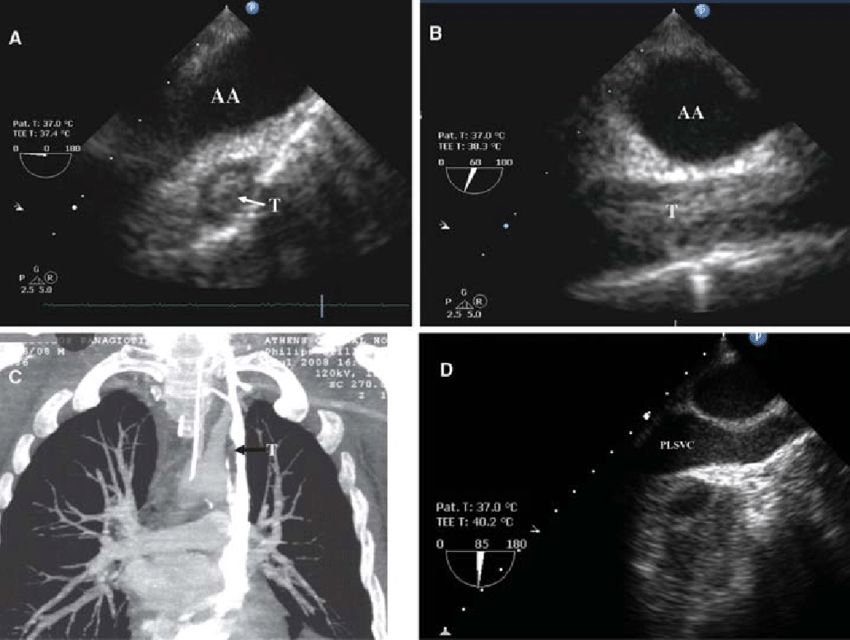
Image source: https://www.researchgate.net/publication/24146723/figure/fig4/AS:669192080609282@1536559233265/A-and-B-PLSVC-thrombosis-arrow-in-long-and-short-axis-view-respectively-C-CT.png
#TILT #CardsAnes considerations for persistent left superior vena cava:
- PAC may be impossible to advance via L internal jugular v.
- Cannot effectively give retrograde cardioplegia
- May req extra venous drainage cannula for CPB
- Can complicate 🫀 transplant
#MedSky #AnSky #MedEd #Anesthesiology

Image source: https://www.thieme-connect.de/products/ebooks/book/10.1055/b-002-74298
#TILT: Visceral situs or isomerism typically match atrial situs or isomerism, ie:
- Atrial situs inversus➡️visceral situs inversus
- Right atrial isomerism➡️abdominal heterotaxy w/ asplenia
- Left atrial isomerism➡️abdominal heterotaxy w/ polysplenia
#MedSky #AnSky #CardioSky #MedEd

associationofanaesthetists-publications.onlinelibrary.wiley.com/doi/10.1111/...
16.11.2024 15:28 — 👍 5 🔁 4 💬 0 📌 0

Radial arterial lines are the default in most 🇬🇧 ICUs but can be wildly inaccurate in cases of profound shock.
These pics are taken seconds apart, after inserting a Femoral PiCCO line, systolic BP 121mmHg higher!!!
I’ve seen big discrepancies before but nothing of this magnitude! 😲
1/

That’s it! And it was a long one. Anything anyone else used or recommends to current residents?
Would love to have other resources to check out and/or recommend, whether it’s for acing the test or being a standout on a clinical rotations.
- For exams, anesthesia anki decks definitely exist, but I personally never used them. I found TrueLearn to be sufficient for retrieval practice, but if you’re a big Anki fan, Ankisthesia is the one I’ve heard most using:
ankiweb.net/shared/decks...
- Stoeltling’s co-existing disease: GREAT reference to prep for a case when you’re encountering an infrequent comorbidity, LESS helpful for exams
- Stoeltling’s pharmacology and physiology: More along the lines of Barash/big Miller, but I’d argue often less used than the other two. Didn’t use it
- Stanford CA1 guide: Linked below, is a great collection of slide decks to review as an M4 or during CA1 orientation. NOT test studying material
- Jaffe’s: GREAT for prepping to staff a case, but NOT test studying material
ether.stanford.edu/ca1_new/
Other popular books:
- Big Miller (aka Miller’s Anesthesia): More in depth than Barash, and would be good for similar uses or reference. NOT a test study book to read cover to cover
- Baby Barash (aka Clinical Anesthesia Fundamentals): Similar to baby Miller, didn’t like the formatting as much

- Yao and Artusio: While I barely touched this as a resident, I’m currently reading it through for oral boards (aka APPLIED). I think for an APPLIED, it’s probably one of the better options, *but* APPLIED is more about articulating what you know rather than rote learning, so practice makes perfect
16.11.2024 16:10 — 👍 0 🔁 0 💬 1 📌 0
Other options and disclaimers:
- Morgan and Mikhail➡️was not my favorite text. Not detailed enough for rotations, too dense for exams IMO, *but* a ton of BASIC and ADVANCED questions come from M&M. I read it through M4-intern year and barely touched again, personally

For subspecialties, my preference was to read Barash, aka Barash, Cullen, and Stoeltling’s Clinical Anesthesia.
Barash is *far* too detailed for exam studying, but it’s a perfect overview before starting a rotation (eg 6 pages on OLV is too much for exams, but perfect before a thoracic rotation)
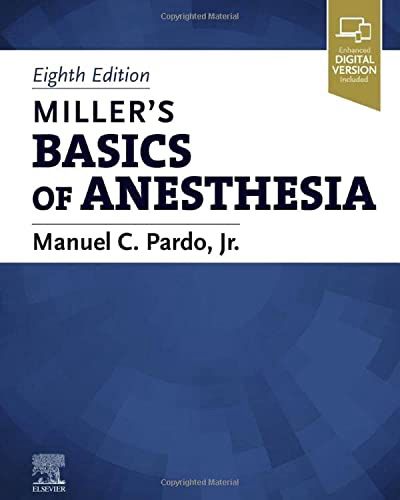
Moving onto studying for clinical rotations.
My favorite introductory anesthesia text for M4s and/or orienting CA1s has to be “baby Miller”, aka Miller’s Basics of Anesthesia
It’s the perfect amount of info without being overwhelming to really master the basics of practice. I read while orienting
Other helpful study resources for ABA exams:
- ACCRAC keywords podcasts (how to think through questions, great information)
- OpenAnesthesia (less keyword focused than it used to be, but still helpful)
- University of Kentucky’s anesthesiology keyword video series on YouTube

For BASIC, I also used Hall’s, which is a book of multiple choice questions. I have mixed feelings — it might have helped, but most of the same info was on TrueLearn. A small number of Halls questions had dated information. Do with that what you will 🤷♀️
16.11.2024 16:10 — 👍 0 🔁 0 💬 1 📌 0