Information Brokers
An insightful rethinking of political socialization within Latino immigrant households. Conventional wisdom tells us that children are passive recipients of political lessons from their parents, with ...
Book release date news! 📖 7/3/26
Information Brokers @uchicagopress.bsky.social explores how Latino children, especially in immigrant families, guide parents through U.S. institutions and politics, shaping civic participation.
If this resonates, please repost 🙏
press.uchicago.edu/ucp/books/bo...
22.02.2026 20:17 —
👍 7
🔁 5
💬 0
📌 1
Information Brokers
An insightful rethinking of political socialization within Latino immigrant households. Conventional wisdom tells us that children are passive recipients of political lessons from their parents, with ...
Book release date news! 📖 7/3/26
Information Brokers @uchicagopress.bsky.social explores how Latino children, especially in immigrant families, guide parents through U.S. institutions and politics, shaping civic participation.
If this resonates, please repost 🙏
press.uchicago.edu/ucp/books/bo...
22.02.2026 20:17 —
👍 7
🔁 5
💬 0
📌 1
Another great postdoc opportunity at Notre Dame! We’re seeking a scholar of American racial & ethnic politics to join our fantastic and growing postdoc cohort
Major upside: the opportunity to interview with our poli sci dept for conversion to a tenure-track line
apply.interfolio.com/179415
19.12.2025 18:17 —
👍 30
🔁 27
💬 0
📌 0
Apply - Interfolio
{{$ctrl.$state.data.pageTitle}} - Apply - Interfolio
Looking for a postdoc in American politics? Come work with us in Ann Arbor! No obligations other than research. Preference for institutions-focused work, but we’re open to a wide range of substantive interests (including local politics!). Happy to answer any questions: apply.interfolio.com/178829
19.12.2025 15:32 —
👍 23
🔁 18
💬 0
📌 0

Book Cover for forthcoming book, Information Brokers.
Although the book will not be out until the summer, I just got the cover for it, and I am excited to share it with the world (or the five or so kind folks who engage with this post). I look forward to sharing more about my book “Information Brokers” with @uchicagopress.bsky.social in the new year.
16.12.2025 19:38 —
👍 22
🔁 6
💬 1
📌 2

Infographic titled “2025 Billionaire Gains vs. Grocery Spending.” On the left, a large gold square shows that the top 100 richest Americans gained $995 billion in wealth in 2025, about $7,595 per U.S. household, representing wealth gains for just 100 individuals. On the right, a slightly smaller green square shows total U.S. grocery spending of $775 billion, about $5,916 per household, covering roughly 131 million households. A callout at the bottom reads “The Scale of Inequality,” noting that billionaire wealth gains exceeded national grocery spending by $220 billion. Sources listed: Bloomberg Billionaire Index and Bureau of Labor Statistics.
For the second year in a row, the wealth gains for the 100 richest Americans exceeded what ALL American households spent on groceries combined.
~$995B for billionaires vs ~$775B in total grocery spending.
We have an oligarchy and inequality problem masquerading as an affordability crisis.
14.12.2025 23:28 —
👍 956
🔁 511
💬 10
📌 31
Echoing this great thread from my co-author @mfroman.bsky.social on our paper with @mamalik.bsky.social showing how migration motive shapes immigrant political corporation. Excited to share and get feedback.
13.12.2025 18:20 —
👍 7
🔁 1
💬 0
📌 0
This paper was a blast to work on. The challenge: present party positions across many issues, in real time, using language voters actually use. 🧵 on why we went with a more involved retrieval-based approach and where I think these tools are headed.
12.12.2025 14:28 —
👍 18
🔁 6
💬 1
📌 1
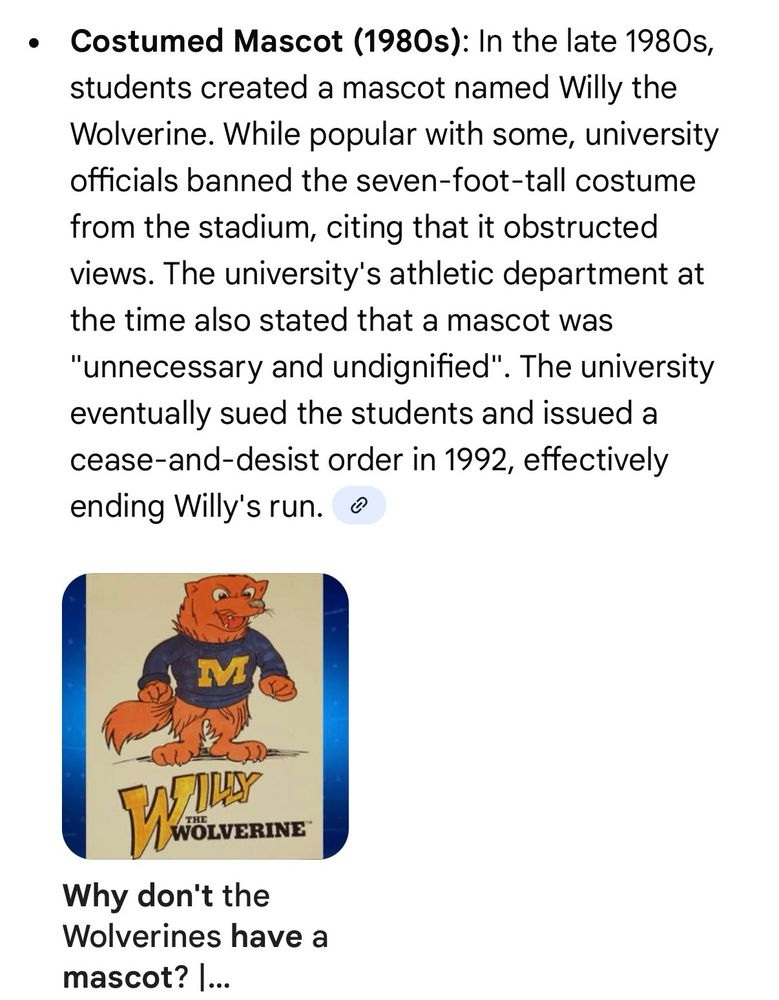
Here is the sad thing Google told me.
29.11.2025 21:53 —
👍 1
🔁 0
💬 0
📌 0
I know I just got to Michigan, and I should not rock the boat. But can we start a campaign to get a custom mascot like Brutus, Hook’em, or Hairy Dawg? Not only is Michigan missing out on the revenue, but it is also a cool part of the game. Plus, it would stop Brutus from his shenanigans.
29.11.2025 20:11 —
👍 3
🔁 0
💬 3
📌 0
Thanks, Drew! Once I get a book cover, everyone (whether they like it or not) will be hearing more from me about the book.
31.10.2025 12:12 —
👍 2
🔁 0
💬 0
📌 0
Another great presentation from UT grad @averrilli.bsky.social on her project “Moving in and Mobilizing” about gentrifier behavior in their new neighborhoods @priec.bsky.social
She is a rising star and on the market!
19.09.2025 18:44 —
👍 11
🔁 6
💬 1
📌 0
Off to a great start at #CUBoulderPRIEC @priec.bsky.social! UT grad @mirandasullivan.bsky.social presenting her excellent work on the impact of respectability politics among Latines… she finds…
(She’s on the market! Keep your eye on this rising star 🌟#hookem)
19.09.2025 18:03 —
👍 5
🔁 4
💬 1
📌 0
If you’re at APSA, go check out the Ralph Bunche Summer Institute poster session starting at 10am today.
Details are below:
Poster Session: Ralph Bunche Summer Institute (RBSI) Scholars
Saturday, September 13
10:00 am - 12:00 pm PDT
Vancouver Convention Centre (VCC) - East Exhibit Hall A
13.09.2025 16:04 —
👍 15
🔁 5
💬 0
📌 0

At APSA 2025: The Role of Migration Motive in Immigrant Political Incorporation
In Event: The Politics of the Immigrant Experience
Fri, September 12, 4:00 to 5:30pm PDT
Roberto Carlos, University of Michigan
Marcel Roman, Harvard University
Mashail Aman Malik, Harvard University
Why do some immigrants politically invest in their host country while others do not? @robertocarlos.bsky.social, @mfroman.bsky.social and @mamalik.bsky.social show the salience of migration motive, esp. economic motive, in shaping political incorporation. More at #APSA2025!
11.09.2025 01:49 —
👍 6
🔁 2
💬 1
📌 0
2024 Time Series Study - ANES | American National Election Studies
The Full Release of the ANES 2024 Time Series Study is now available!
The data and documentation can be downloaded from the ANES website at: electionstudies.org/data-center/...
13.08.2025 01:32 —
👍 45
🔁 26
💬 1
📌 2
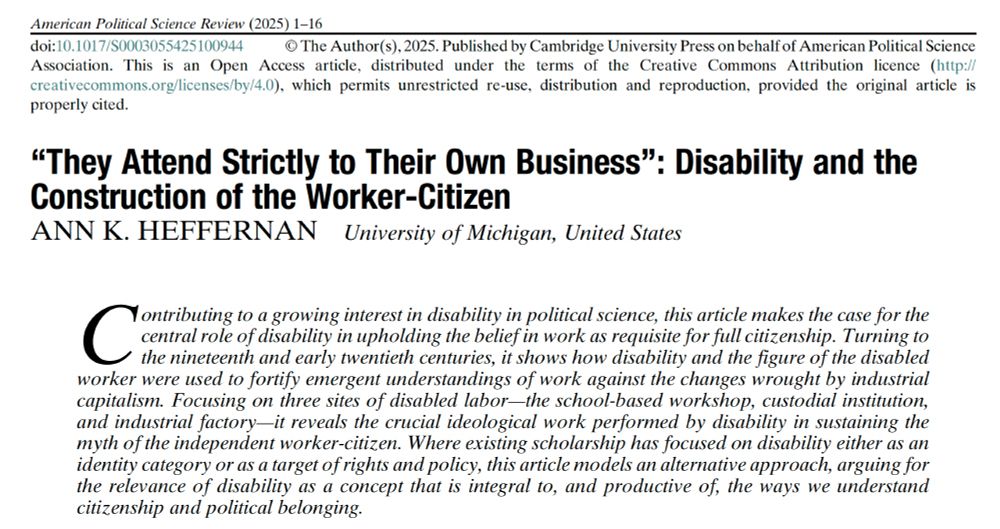
Screen capture of the first bage of an article in American Political Science Review, reading as follows:
Title: "They Attend Strictly to Their Own Business": Disability and the Construction of the Worker-Citizen
Ann K. Heffernan, University of Michigan, United States
Contributing to a growing interest in disability in political science, this article makes the case for the central role of disability in upholding the belief in work as requisite for full citizenship. Turning to the nineteenth and early twentieth centuries, it shows how disability and the figure of the disabled worker were used to fortify emergent understandings of work against the changes wrought by industrial capitalism. Focusing on three sites of disabled labor—the school-based workshop, custodial institution, and industrial factory—it reveals the crucial ideological work performed by disability in sustaining the myth of the independent worker-citizen. Where existing scholarship has focused on disability either as an identity category or as a target of rights and policy, this article models an alternative approach, arguing for the relevance of disability as a concept that is integral to, and productive of, the ways we understand citizenship and political belonging.
Coming soon to an open access APSR near you:
(all kidding aside, I'm so happy to see this piece out in the world)
30.07.2025 21:00 —
👍 66
🔁 15
💬 7
📌 1
I'm stunned. ICE attorneys not identifying themselves in COURT?
15.07.2025 16:55 —
👍 4103
🔁 1612
💬 283
📌 297
I gotta say, as a Jew, it’s incredibly fucked up and sad that Elon Musk and Grok being Nazi sympathizers hasn’t caused a mass exodus (or coordinated boycott) from X.
I don’t like to shame people for what is clearly a failure of collective action, but honestly, what the fuck?
09.07.2025 00:23 —
👍 7536
🔁 1429
💬 258
📌 148
R&P welcomes our new editor, Katelyn Stauffer!
@kstauffer.bsky.social is an Associate Professor in the Department of Political Science at the University of Georgia.
01.07.2025 14:07 —
👍 12
🔁 3
💬 2
📌 1

Opinion | Taking From the Poor and Giving to the Rich Is Not Populism
The “big, beautiful bill” will devastate rural areas and make it harder for those falling behind to ever get ahead. New Edsall article featuring @jacobhacker.bsky.social, Noam Lupu, myself and many more. www.nytimes.com/2025/07/01/o...
01.07.2025 15:54 —
👍 36
🔁 12
💬 2
📌 4
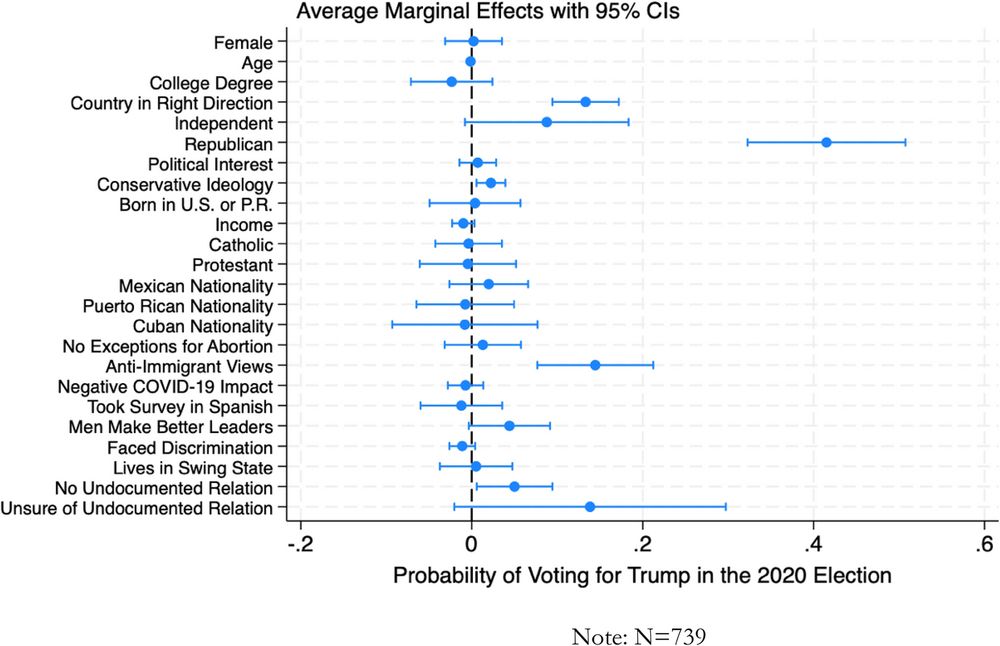
Our study adds to the literature challenging the idea that Latinxs rally around shared identity when targeted. Many, especially conservatives, prioritize party & ideology over group appeals. As Latinx political engagement grows, co-ethnic attacks may matter less. n/5 (end)
01.07.2025 13:49 —
👍 2
🔁 1
💬 0
📌 0
Even ambivalent GOP Latinxs didn’t shift when told about Trump’s anti-Latinx rhetoric or harmful COVID policies impacting the Latinx community. Support stayed firm among these Latinx respondents. n/4
01.07.2025 13:49 —
👍 0
🔁 0
💬 1
📌 0