
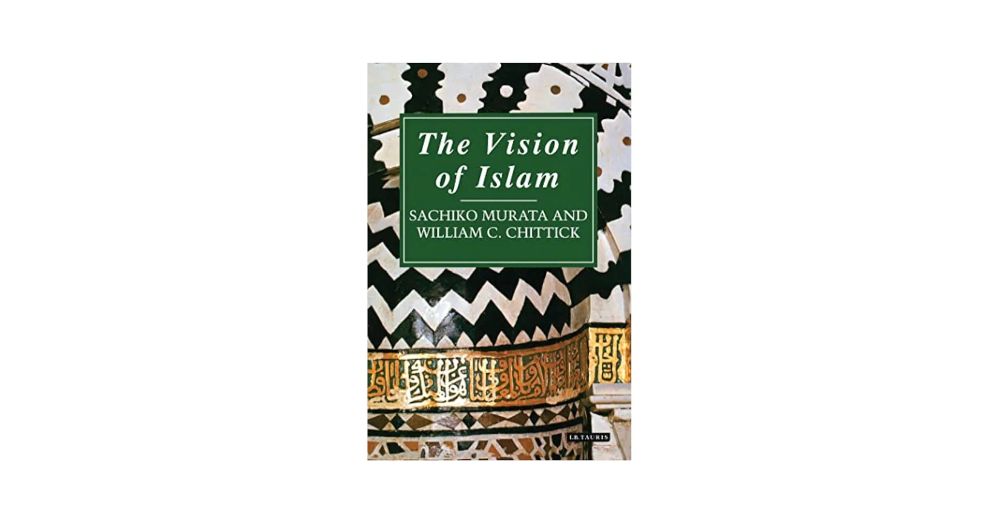
This thread was inspired by the chapter History as Interpretation in The Vision of Islam by Sachiko Murata & William C. Chittick.
www.amazon.com/-/hi/Sachik...
This thread was inspired by the chapter History as Interpretation in The Vision of Islam by Sachiko Murata & William C. Chittick.
www.amazon.com/-/hi/Sachik...
In Islam, history is never meaningless.
Every event—rise of nations, collapse of empires, our own personal trials—is a sign.
The question is not just “What happened?” but “What is God showing us through this?”
The Qur’an frames history within an eschatological horizon.
“The Hour has drawn near, and the moon has split” (54:1).
All events are steps toward the Last Day. History is purposeful, not endless.
Islamic history is not about nostalgia.
It demands reflection: if we repeat the arrogance of past peoples, we risk their fate.
History becomes a moral compass, not just a timeline.
For a modern historian, the fall of Pharaoh = political struggle.
For the Qur’an: “Pharaoh exalted himself in the land… So We seized him and his hosts and threw them into the sea. See how was the end of the wrongdoers” (28:4-40).
Same facts, different meanings.
Western history explains “from below”: human causes → meaning.
Islam explains “from above”: God’s unity → events.
One starts with economics, psychology, politics. The other begins with tawhid and sees history as unfolding from divine will.
When the Qur’an says: “Indeed in their stories there is a lesson for those who possess intellect” (12:111), it reframes history.
Events are mirrors.
They reflect human arrogance, divine justice, and the destiny of those who forget God.
Islam grounds history differently.
The Qur’an presents past peoples—ʿĀd, Thamūd, Pharaoh—not as dry records but as signs (ayat).
Their stories warn, guide, and remind. They are not just “what happened,” but why it matters.
Modern historians claim objectivity.
But the moment they choose what to record and how to tell it, they shape meaning.
They give meaning to events: progress, decline, destiny.
History is always read through a lens.
Facts are never just facts—they teach.
History has two sides:
• Objective: events themselves (what happened)
• Subjective: interpretation (what it means)
Facts never speak on their own. They only become “history” when someone interprets them.

Is history just a record of what happened? Or does it carry deeper meaning?
Modern thought treats history as neutral “facts.” Islam sees history as signs of God, pointing toward unity and destiny.
Here’s an exploration into the Islamic view of history, inspired from this book👇

This thread was inspired by the Metaphysics chapter in The Triumph of Mercy by Mohammed Rustom (esp. pp. 55–62). www.amazon.com/Triumph-Mer...
10.05.2025 07:30 — 👍 1 🔁 0 💬 0 📌 0
When you say: Bismillāh al-Raḥmān al-Raḥīm,
you’re not just reciting titles.
You’re entering into a relationship with the Real—
through His chosen Faces.

Unity Behind the Names
Even though there are many Names, they all refer back to one Essence.
Like waves on the ocean—different shapes, one water.
This is tawḥīd: to see One through the Many.

The World Mirrors the Names
Each thing in creation receives its being from a specific Name.
That’s why no two beings are exactly alike.
Creation is diversity—because the Names are many.

Every Event Is a Manifestation
Rain doesn’t “just happen.”
It’s a manifestation of the Name al-Raḥmān (the Merciful).
A new insight? The Name al-Ḥakīm (the Wise).
Nothing exists except as a trace of a Name.
The Names are not the Essence
Ṣadrā teaches: the Essence is above all relations.
But when the Essence relates, it appears as Names.
They are veils of the Real—revealing and concealing at once.
The Names are Real
They aren’t metaphors or inventions.
They’re how the Essence manifests qualities in the world—knowledge, mercy, justice, power.
Each Name is a relational truth, not a piece of God.
The Essence of God is beyond names, forms, and categories.
But the Divine Names are how the Essence relates to the world.
They are like faces—reflections of One Light—appearing differently based on how you look.

Why do we call God "the Merciful," "the Just," or "the Creator"?
Does God change?
Or do these Names reflect something deeper?
For Mullā Ṣadrā, the Divine Names are not just titles.
They are the very way we come to know the Unknowable.
Let's explore:
This thread was inspired by the Qurʾānic Hermeneutics chapter in the book: The Triumph of Mercy by Mohammed Rustom
www.amazon.com/Triumph-Mer...
Let tafsīr (Quran Commentary) be a ladder.
The more you climb, the more you see—not just in the Qurʾān, but in yourself.
5. The Prophet Unites the Layers
The Prophet Muḥammad (PBUH) is the Qurʾān in human form.
He embodies all meanings, outer and inner.
That’s why spiritual masters say: To see the Prophet is to see the Qurʾān walk.
4. Apparent Contradictions Point to Depth
If two interpretations contradict, they may be addressing different levels of reality.
Law, theology, mysticism—they all orbit the same Center.
Don’t ask: Which one is correct?
Ask: What level of descent does this reflect?

3. Interpreters Stand at Different Stations
Some see the surface meanings. Others see inner truths.
Just like a mountain looks different from the base, the slope, and the peak— Commentators reflect where they stand in their spiritual ascent.
2. Descent Creates Multiplicity
When the Qurʾān descends to the world, it travels through spiritual realms.
At each level, new meanings emerge, suited to that world.
Multiplicity is not error—it’s a sign of the journey.
1. The Qurʾān is One in Reality
Mulla Ṣadrā teaches that the Qurʾān is a single ontological Reality—unified in the Divine Presence.
Disagreements in tafsīr reflect human perspectives, not divine contradictions.
Each verse of the Qurʾān comes from a single Light.
But when that Light descends into the world, it refracts—like white light passing through a prism.
Multiple meanings, layered commentaries, diverse understandings:
All are rays of the same Source.

Why do people read the same verse of the Qurʾān…
...and come away with completely different meanings?
Is someone wrong?
Or is something deeper happening?
Islamic sages didn’t see contradiction.
They saw descent.
Here are 5 insights:
This thread was inspired from the Chapter "Counsel and Confession" in the book "Inrushes of the Heart" by Mohammed Rustom.
www.amazon.com/Inrushes-He...