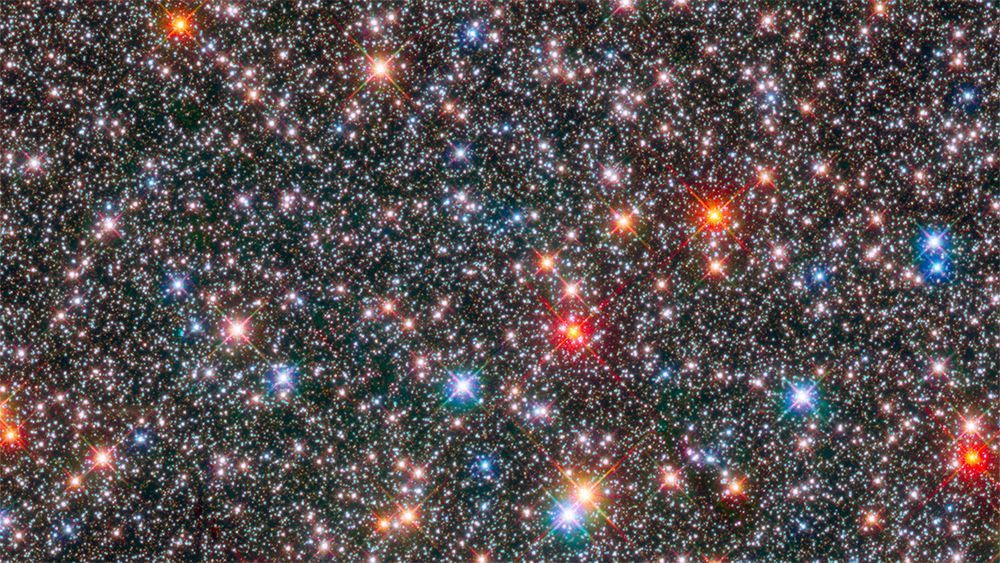

A very high-resolution image of the medieval core of the Czech capital, Prague.
📷 This week's #EarthFromSpace is a close-up view of Prague, the capital of Czechia.
www.esa.int/ESA_Multimed...
A very high-resolution image of the medieval core of the Czech capital, Prague.
📷 This week's #EarthFromSpace is a close-up view of Prague, the capital of Czechia.
www.esa.int/ESA_Multimed...
"I'm honored to be your ancestor" - Alice Wong
Thank you, Alice.

This story began with a JPL press release in July 2024, soon after the #Mars rock was discovered. www.jpl.nasa.gov/news/nasas-p...
Today is the publication of the peer-reviewed paper describing what's in it. That @nature.com paper is here www.nature.com/articles/s41...
🧪
👉 www.iflscience.com/unexpected-d...
08.09.2025 18:01 — 👍 7 🔁 1 💬 0 📌 2
Hameus Mons from Voyager 1
Haemus Mons is a mountain located near Io’s south pole and, in this image, lies near the terminator in this image from Voyager 1 on March 7, 1979. Its base spans about 200 by 100 kilometers.
21.08.2025 00:35 — 👍 107 🔁 21 💬 0 📌 3
We analysed every line of X’s algorithm we could get our hands on.
Here’s what we found.
Read on: www.mirror.co.uk/news/politic...

Over the last decade or so, the concept of time crystals has gone from an intriguing hypothesis to an experimental reality.
www.iflscience.com/first-time-c...
New published article:
"An experimental study of clinopyroxene- and garnet-melt trace element partitioning in Fe-rich basaltic systems" from M. D. Mouser and N. Dygert!
You will find the full article here: doi.org/10.33063/agc...
New published article entitled:
"Hopanoid distributions differ in mineral soils and peat: a re-evaluation of hopane-based pH proxies" from Inglis et al.
You will find the full article here: doi.org/10.33063/agc...
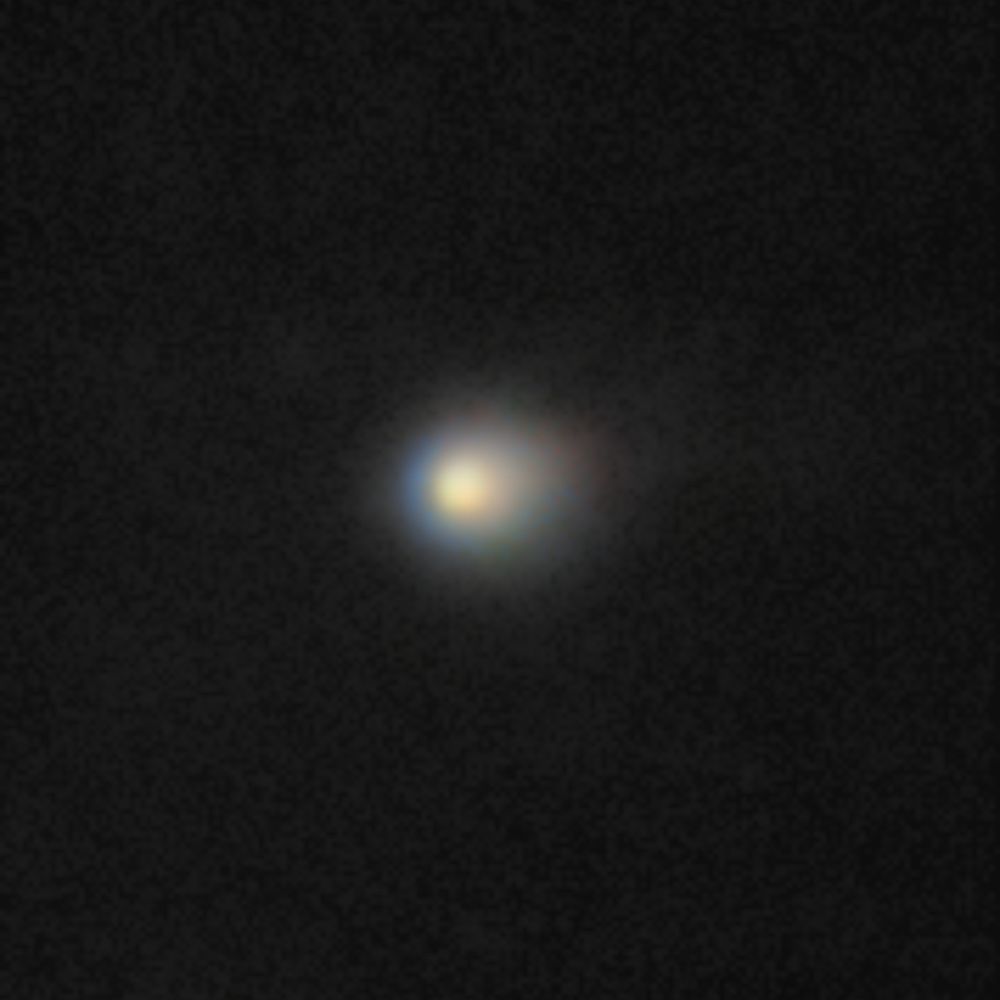
Holy shit.
This is 3I/ATLAS—the interstellar comet recently discovered passing through the Solar System.
You're looking at something that didn't start out here.
It came from another star.
And, at about 7 billion years old, it was already ancient when our Sun was born.

Geologists Recommend Eating At Least One Small Rock Per Day
Geologists Recommend Eating At Least One Small Rock Per Day
theonion.com/geologi...
AGC is very proud to announce the first published article!
Congratulations to the authors who believed in AGC in order to publish their study: doi.org/10.33063/agc...
This is only the beginning.
Many other researchers already submitted their work to AGC and we hope you will be the next ones!
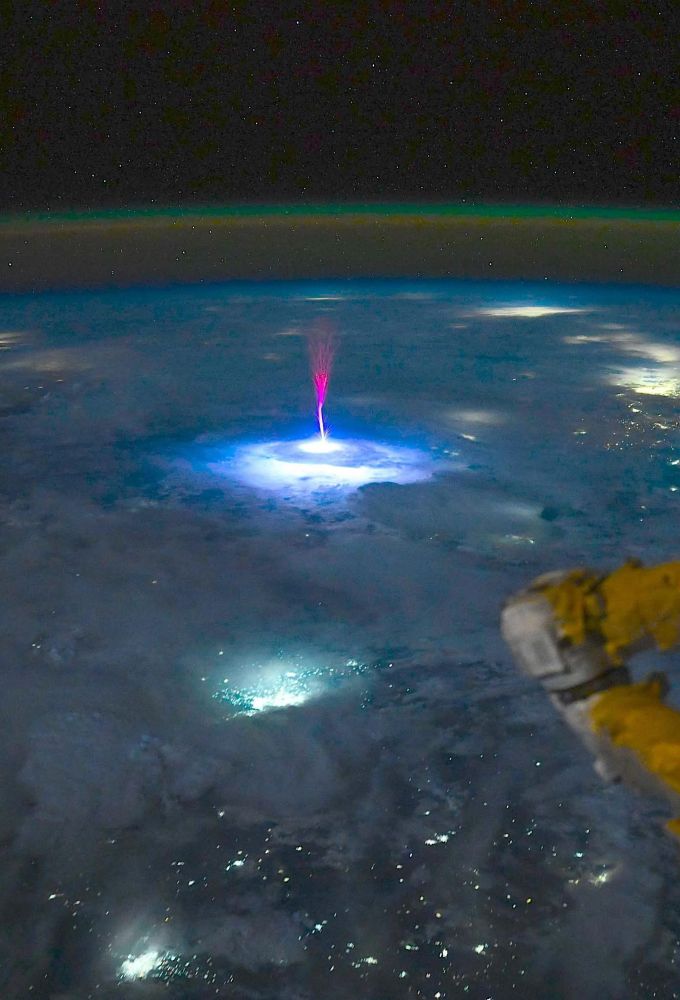
A red sprite photographed over Mexico from the ISS this morning. Photo by astronaut Nichole Ayers. San Antonio is the bright city seen off the arm.
🧪
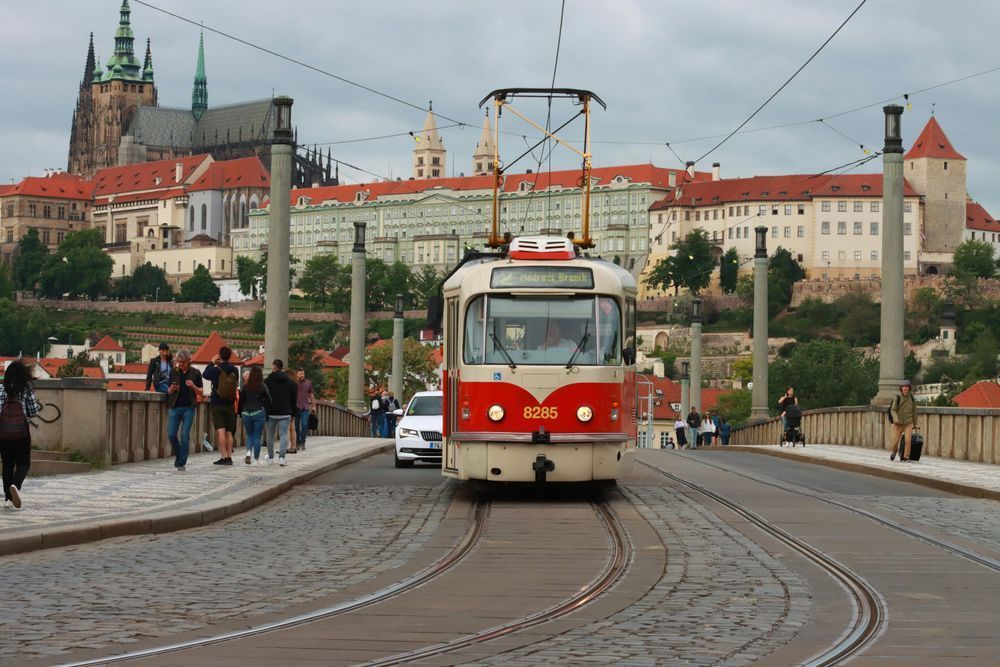
🚂 All Goldschmidt2025 delegates have received a travel pass
Check for an email on Wed 2 July "Your Ticket for Public Transport in Prague" from PID Lítačka (robot@operatorict.cz) with instructions to download your pass
valid from Sun 6 July 00:00 - Fri 11 July 23:59
More travel info: buff.ly/PqxsRO3
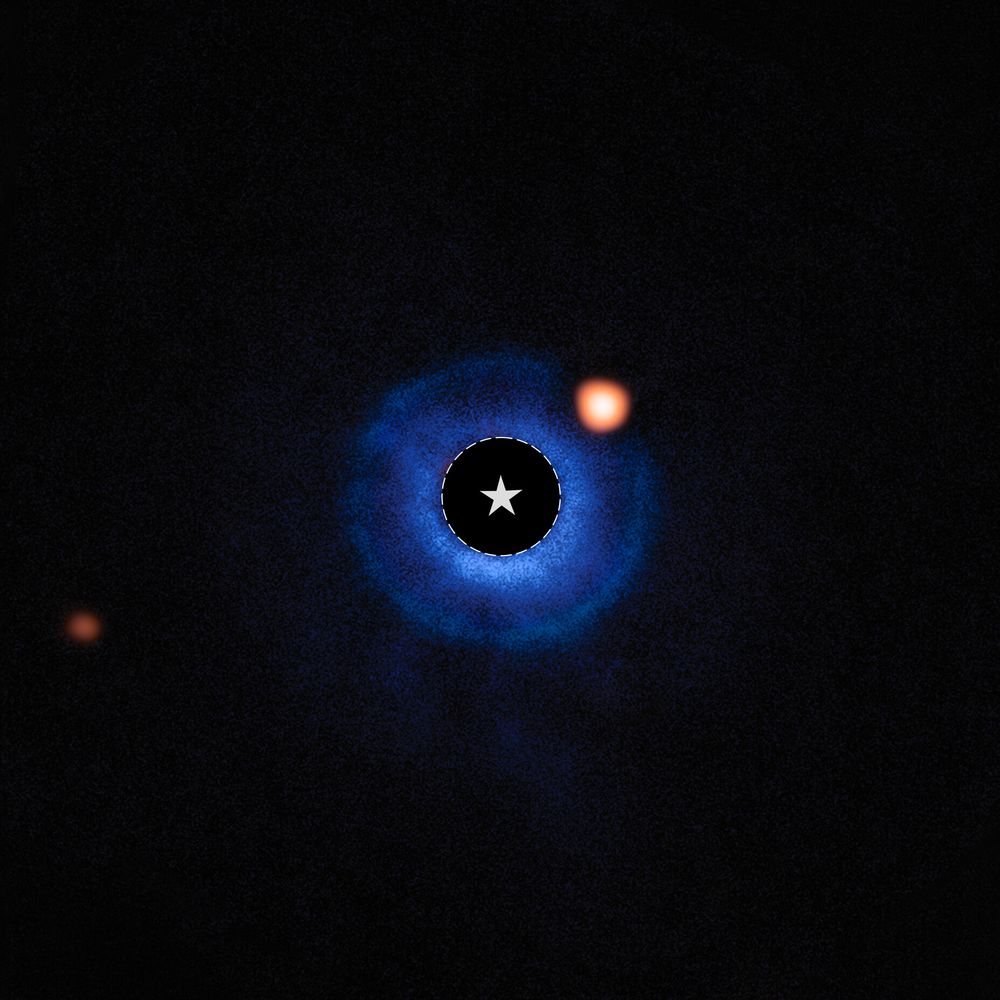
An image of a nearby star and its vicinity. The star itself has been blocked out and its bright light has been removed. A dashed circle with a star symbol at the centre of the image marks the star’s location. A fuzzy blue disc surrounds the star. An orange spot, near to the star and inside this disc, is identified as a planet orbiting the star. A fainter orange spot far from the centre marks a distant star.
The NASA/ESA/CSA James Webb Space Telescope has found evidence of a cold, Saturn-mass planet around the star TWA 7, seemingly sculpting its disc of debris!
If confirmed, this would be Webb’s first direct image discovery of a planet.
Read more 👉 www.esa.int/Science_Expl...
🔭 🧪 ☄️
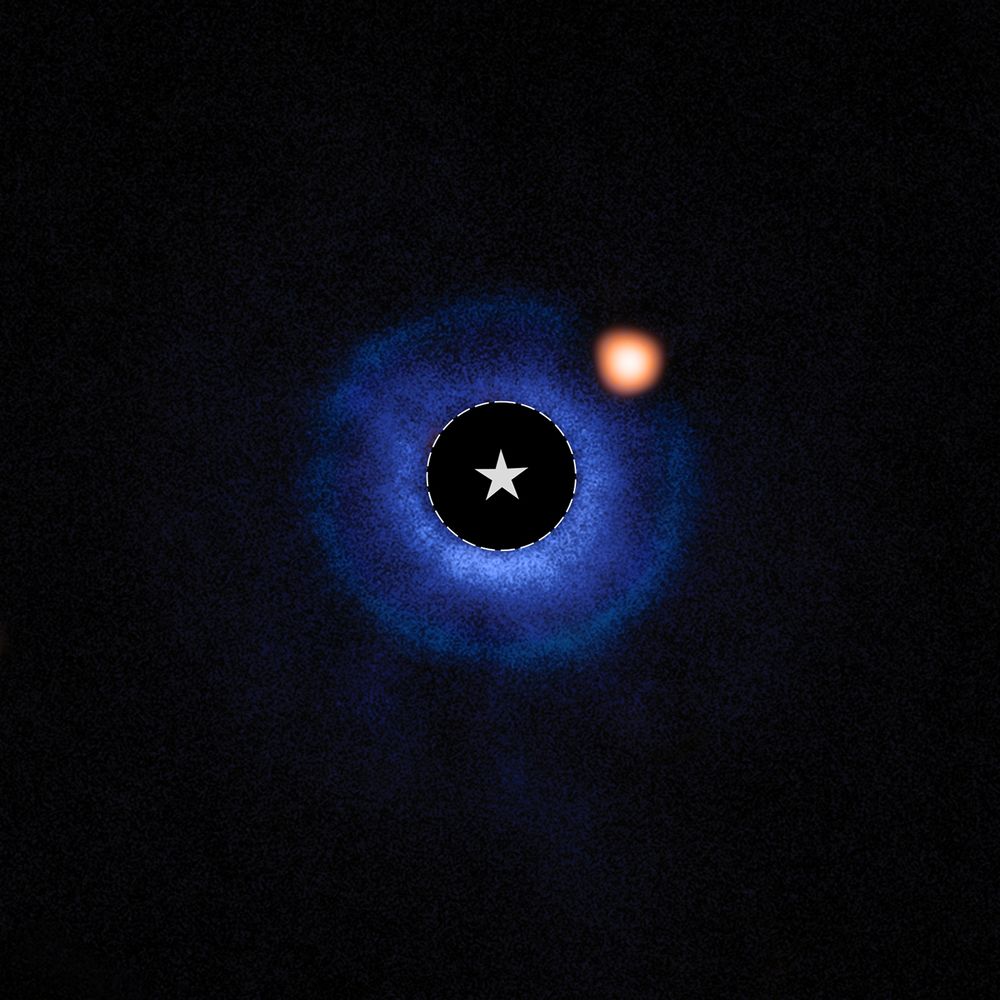
See that orange blob?
That's probably a Saturn-mass planet orbiting its parent star, the light from which has been blocked.
A whole other planet in a system only a few million years old, possibly still undergoing formation and developing its own ring and satellite system.
111 lightyears away.
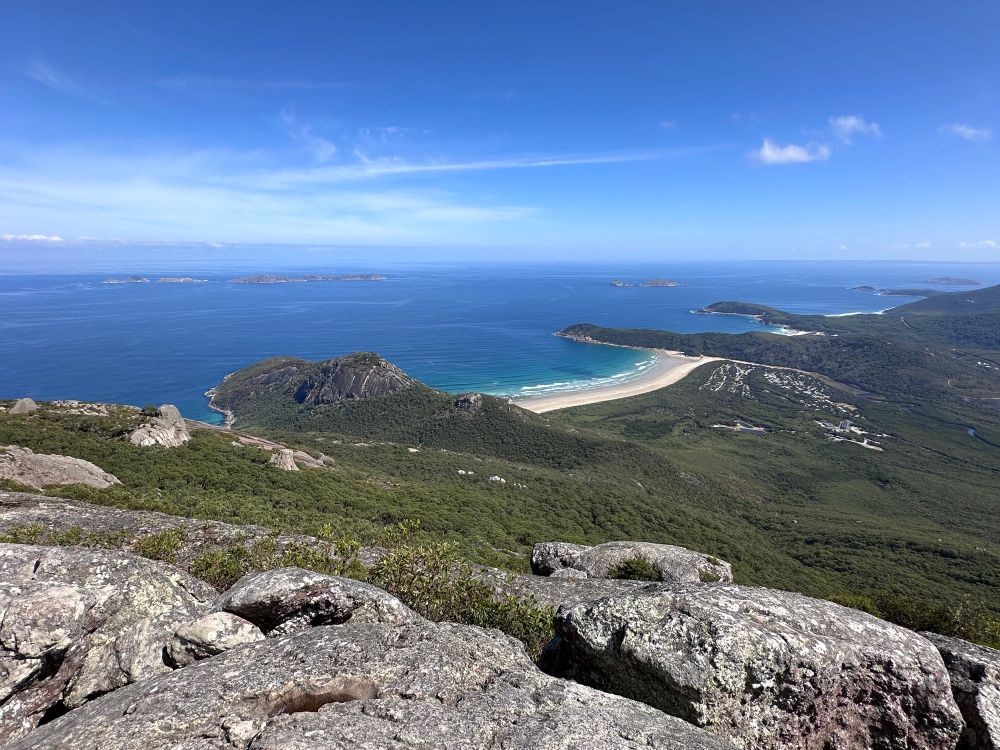
Wilson’s Promontory or Yiruk Wamoon, 3 hours drive from Melbourne, Australia, is National Park with magnificent peaks, beaches, rainforest, and the world’s southernmost mangroves. A hiking and boating paradise, the promontory and surrounding islands are the exposed portions of a Devonian granite batholith.
🌏 Rare opportunity to join us!
We’re hiring two new Lecturer/Senior Lecturers in the School of Earth Atmosphere & Environment #MonashUni, a top 50 global university
🔬 Isotope Geochemistry
🛰️ Remote Sensing/Geospatial
careers.pageuppeople.com/513/cw/en/jo...
careers.pageuppeople.com/513/cw/en/jo...
Preparing your manuscript for submission to AGC but slightly confused regarding our data and code publishing policies? We prepared this video to assist you. Also, go to our author guidelines webpage journals.uu.se/AGC/authorgu...
30.04.2025 05:20 — 👍 7 🔁 4 💬 1 📌 1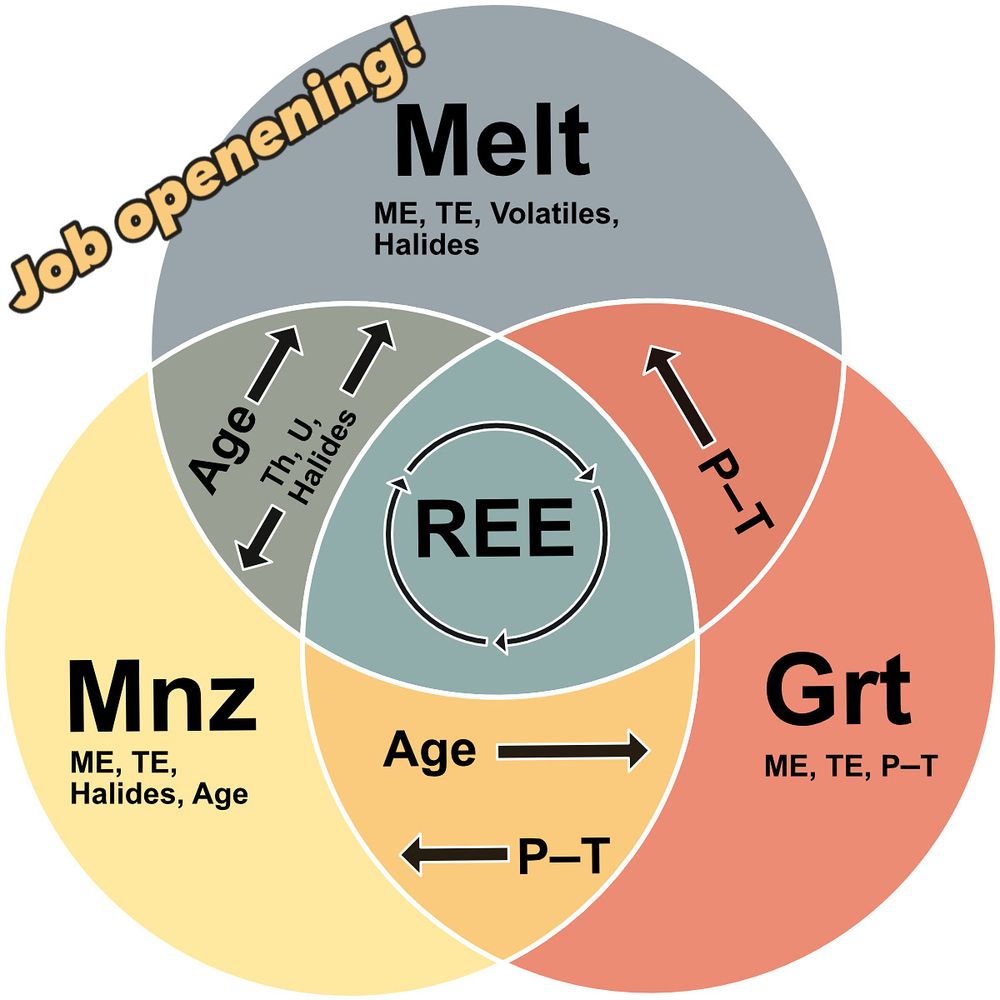
Join us at the University of Göttingen as a Research Assistant in Metamorphic Petrology and explore the mobilization and fractionation of REE, Th, and U during crustal melting.
📌 Find the full job posting at domsorger.eu
#metamorphicpetrology #monazite #garnet #rareearthelements #unigöttingen

You matter.
Unless you multiply yourself by the speed of light squared.
Then you Energy.
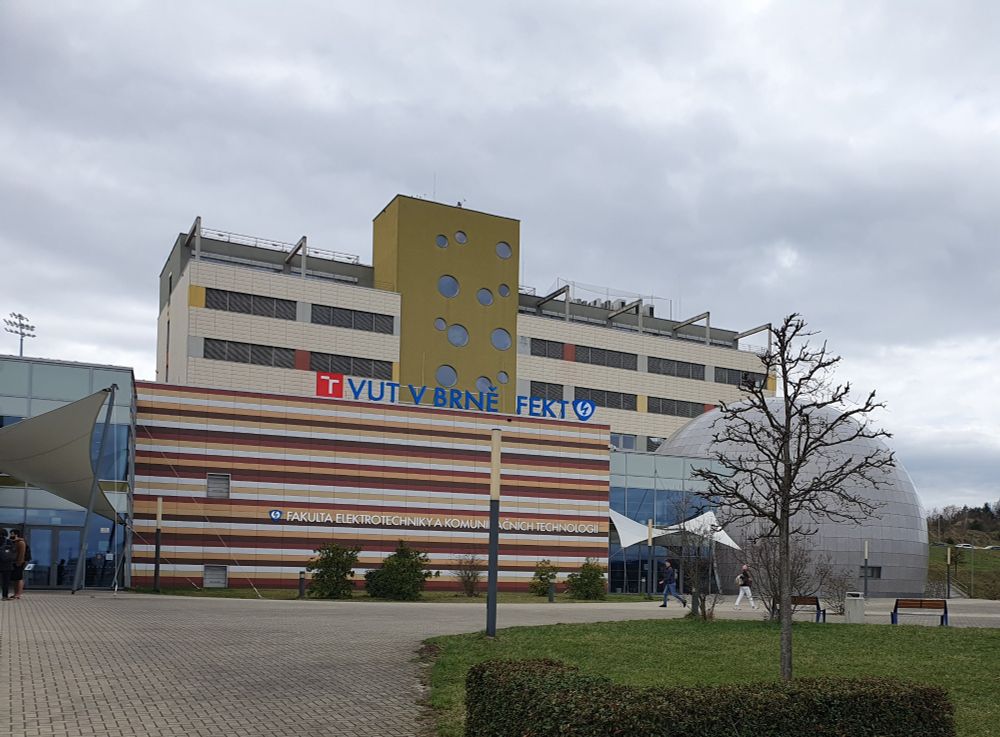
Enjoying my time here in Brno at the @ceitec.eu and @excitenetwork.bsky.social workshop!
01.04.2025 16:04 — 👍 6 🔁 1 💬 0 📌 0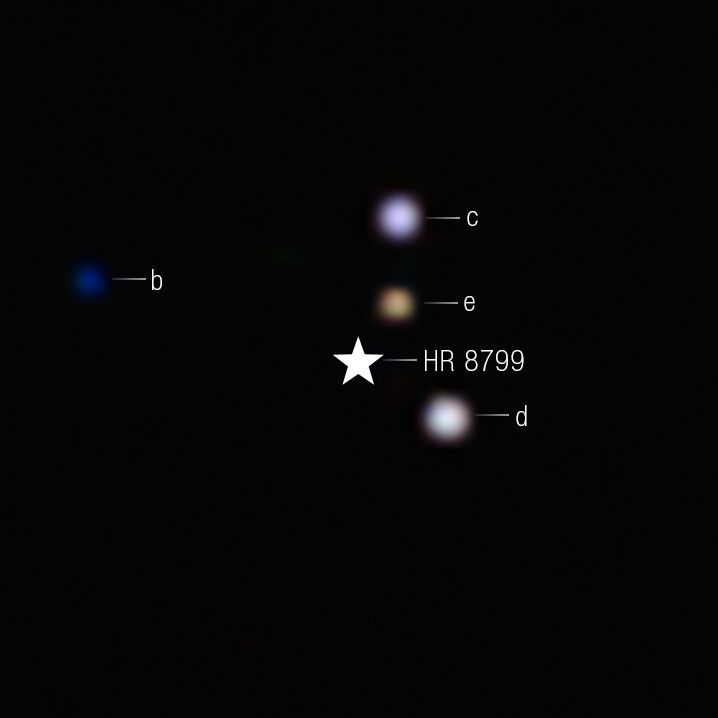
This image shows the planetary system HR 8799. The image background is black. At the centre of the image, there is a symbol representing a star labeled HR 8799. This star blocks the light from the host star. There are four exoplanets, which look like fuzzy dots, pictured in the image surrounding the star. Furthest from the star is a fuzzy, faint blue dot, labeled b, at the 10 o’clock position. At the one o’clock position, second furthest from the star is a blueish-white fuzzy dot labeled c. Just below that is an orange dot labeled e. At the four o’clock position, still nearby the star, is another fuzzy white dot labeled d.
The NASA/ESA/CSA #Webb Space Telescope has captured direct images of gas giant #exoplanets in a system 130 light-years away, and found evidence that they formed like Jupiter and Saturn 🪐
Read more 👉 esawebb.org/news/weic2504/
🔭🧪 #astrosci
BREAKING PLANET NEWS 🪐
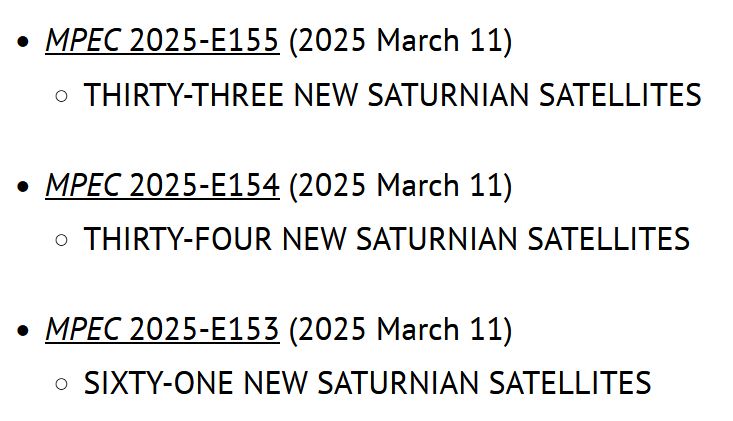
Rather hilariously, Saturn just got up to 128 new moons (thanks to some careful telescopic observations), bringing its total to…274? That’s just an absurd number of moons.
(Not the MPC bulletin I was expecting today…!)
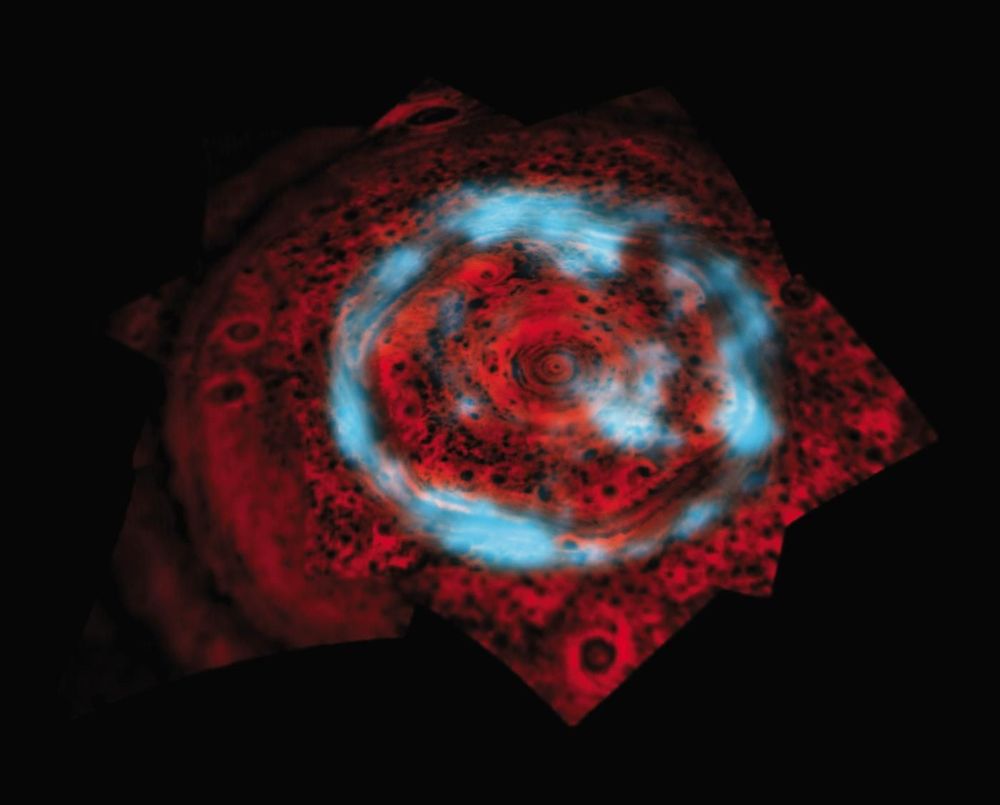
The north pole of Saturn with the polar vortex and surrounding cyclones shown in red is surrounded by the faint blue of the gas giant's aurora.
#PPOD: This composite image of Saturn's northern polar region shows the aurora and underlying atmosphere, captured by NASA's Cassini spacecraft's visual and infrared mapping spectrometer, at two different wavelengths of infrared light. Credit: NASA/JPL/University of Arizona 🧪 🔭
06.03.2025 18:45 — 👍 45 🔁 12 💬 1 📌 0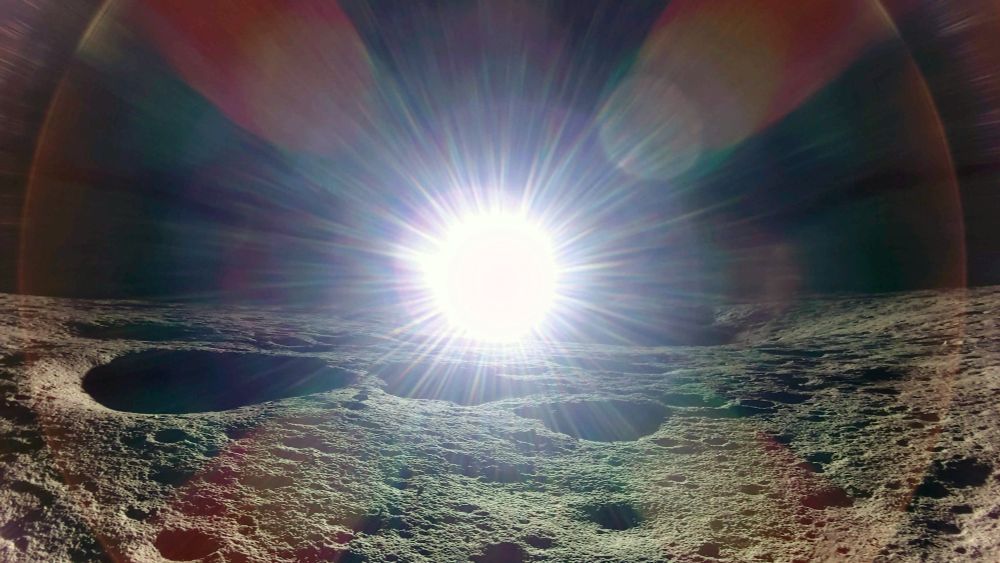
This is what sunrise looks like on the Moon.
Photo taken by the Firefly Aerospace Blue Ghost lander in Mare Crisium yesterday, 3 March 2025.
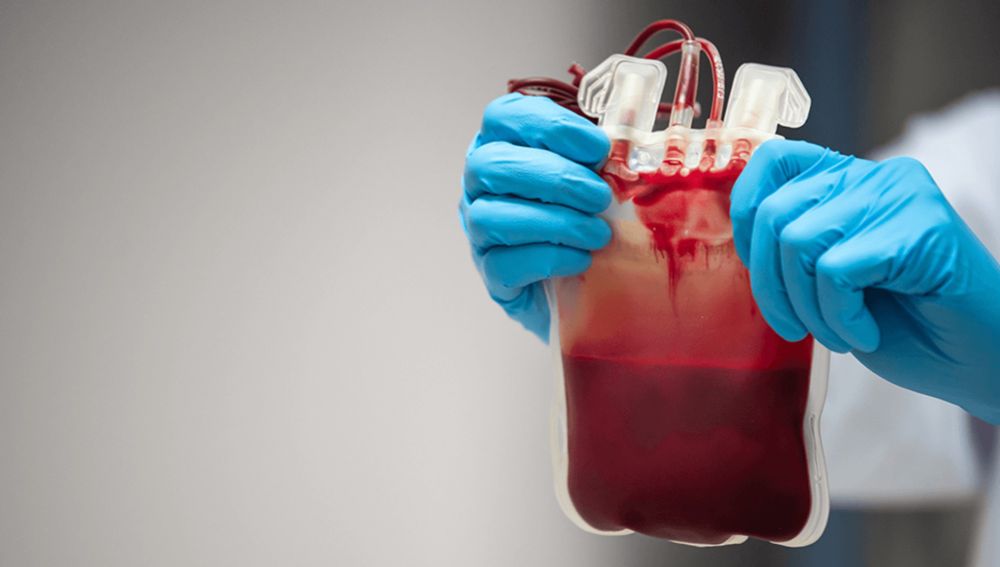
Despite not liking needles, he began donating his blood in 1954. Soon, it was realized that Harrison's blood contained a rare type of antibody especially sought after by healthcare professionals. 🧪
www.iflscience.com/man-whose-bl...
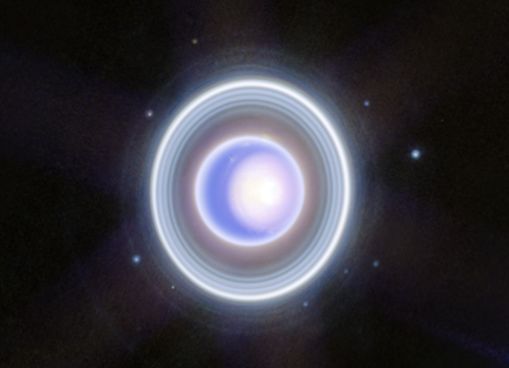
But also captured are 14 of the planet’s 27 moons: Oberon, Titania, Umbriel, Juliet, Perdita, Rosalind, Puck, Belinda, Desdemona, Cressida, Ariel, Miranda, Bianca, and Portia. Except for the few stars with diffraction spikes, everything else is a galaxy!
Learn more: https://buff.ly/3RtEi7t
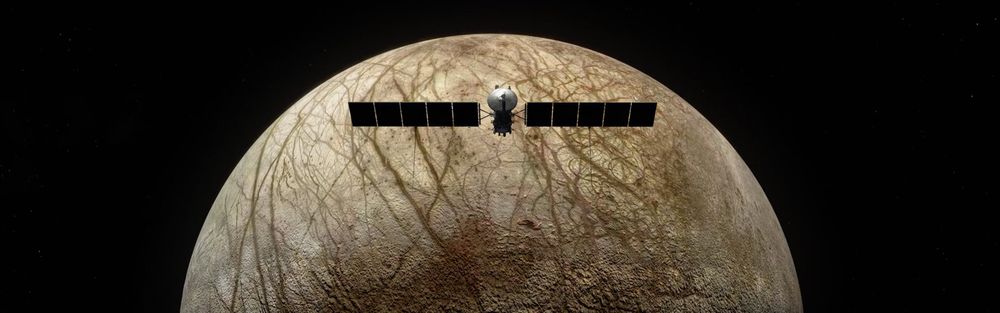
Europa ICONS is still funded and applications are open until 2/28 if you have interested undergrads! science.nasa.gov/planetary-sc...
17.02.2025 18:57 — 👍 10 🔁 5 💬 0 📌 0