Shivan Shah's Avatar

Shivan Shah

@idoncology.bsky.social

Transplant /oncology ID at USF. MD Anderson---->Houtston Methodist. Dog enthusiast and more

986 Followers  |  574 Following  |  93 Posts  |  Joined: 14.11.2024
Posts Following

Posts by Shivan Shah (@idoncology.bsky.social)

Post image

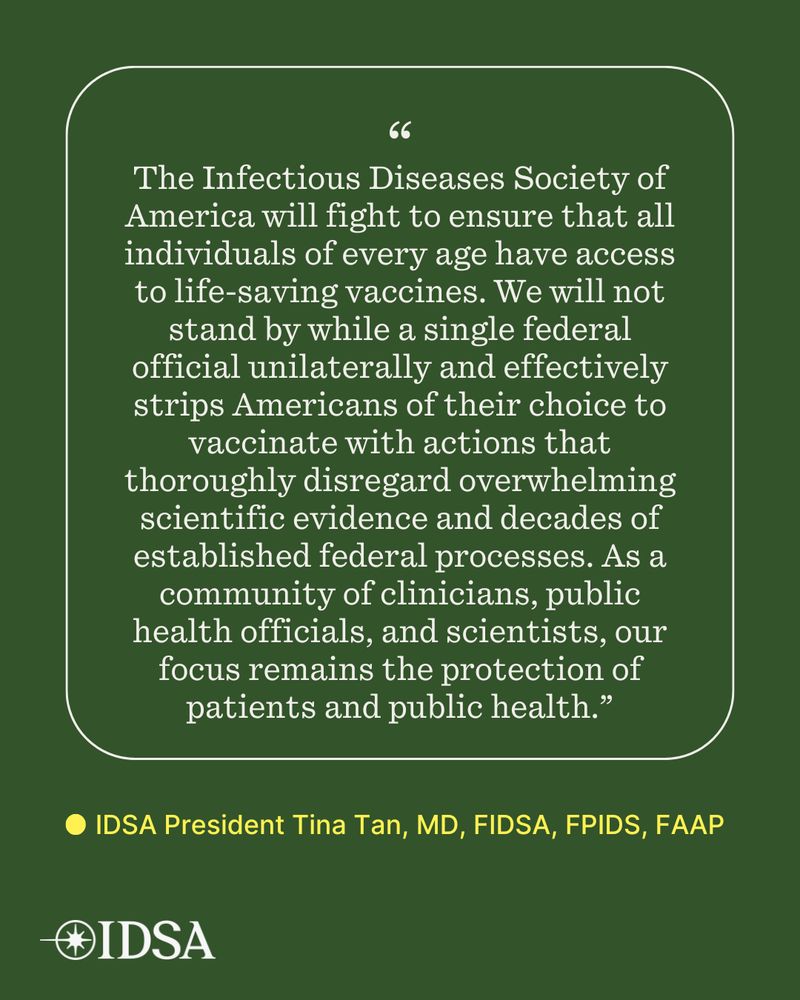
🚨BREAKING: IDSA, along with AAP, APHA, ACP and others, has filed a lawsuit against HHS/Secretary Kennedy to stop unlawful changes to vaccine policy and defend public health.

We refuse to stand by while America’s public health safeguards are torn apart. bit.ly/4lm7UkW

07.07.2025 17:19 β€” πŸ‘ 180    πŸ” 100    πŸ’¬ 7    πŸ“Œ 9
Post image

@astct.bsky.social has #ID #HSCT #CAR-T guidelines in TCT Journal
transplantid.net "GUIDELINES"▢️ "ASTCT Guidelines"πŸ“

#️⃣ πŸ”Ÿ : Management of parainfluenza and hMPV after HSCT and CAR-T
Thanks Aneela Majeed @clevelandclinic.bsky.social!

transplantid.net/5WJIIMGH

03.07.2025 16:15 β€” πŸ‘ 0    πŸ” 1    πŸ’¬ 0    πŸ“Œ 0
Incidence of Breakthrough Fungal Infections in Patients With Isavuconazole Prophylaxis: A Systematic Review and Meta-analysis Isavuconazole (ISA) is a newer triazole that has activity against most mold species and has been utilized for prophylaxis as well as treatment in patients with hematologic malignancies (HM) and hematopoietic stem cell transplant (HSCT). However, several studies have documented breakthrough invasive fungal infections (bIFIs). Thus, we conducted a systematic review and meta-analysis to investigate the incidence of bIFIs among patients receiving ISA prophylaxis.MethodsWe conducted a systematic review and meta-analysis of the published literature using the concept of ISA, HSCT, and HM from 5 search engines. In patients with HSCT and HM, the pooled incidence of bIFI while undergoing ISA prophylaxis was calculated via the DerSimonian-Laird random effect model.ResultsThe systematic review and meta-analysis included 35 and 19 studies, respectively. In total, 991 patients were identified as using ISA prophylaxis, and the majority had either acute myeloid leukemia or myelodysplastic syndrome (69.9%). The pooled incidence of proven/probable bIFI was 7% (95% CI, 4%–12%, I2 = 55%). The most common pathogen was Aspergillus species (43.1%), followed by Candida (22.4%) and Mucorales (12.1%). In 19 studies, mortality rates were documented and ranged between 0% and 100%; the majority of which were >50%.ConclusionsIn patients with HM or HSCT, we found a high incidence of bIFI while undergoing ISA prophylaxis, with high mortality. Given the lack of randomized clinical trials evaluating ISA in this indication, its role in prophylaxis remains unclear.

πŸ§ͺ ISA prophylaxis in 991 patients (69.9% with AML/MDS) showed 7% bIFI incidence (95% CI, 4%-12%). Common pathogens: Aspergillus (43.1%), Candida (22.4%). Mortality >50% in most studies.

#idsky

19.04.2025 04:00 β€” πŸ‘ 2    πŸ” 1    πŸ’¬ 0    πŸ“Œ 1

#IDOnc

19.04.2025 22:53 β€” πŸ‘ 0    πŸ” 0    πŸ’¬ 0    πŸ“Œ 0
Replacing Mycophenolate Mofetil by Everolimus in Kidney Transplant Recipients to Increase Vaccine Immunogenicity: Results of a Randomized Controlled Trial Vaccine immunogenicity is reduced in kidney transplant recipients (KTRs), especially in those using mycophenolate mofetil (MMF). Whether replacement of MMF by everolimus improves vaccine immunogenicity is unknown.MethodsKTRs were randomized 1:1 to continue MMF or switch to everolimus. Participants received one coronavirus disease 2019 (COVID-19) booster vaccination and two herpes zoster (HZ) vaccinations at 6, 10 and 14 weeks postrandomization. Primary outcome was the neutralizing antibody response 28 days after COVID-19 vaccination. Secondary outcomes included antibody and T-cell responses 28 days after COVID-19 and HZ vaccination, and safety.ResultsIn 110 KTRs, COVID-19 vaccination resulted in comparable Omicron XBB.1.5 neutralizing antibody titers in the everolimus versus MMF group (308 [74.4–1314] vs 327 [115–897]; P = .83), whereas severe acute respiratory syndrome coronavirus-2 (SARS-CoV-2) Spike-specific T-cell responses were slightly lower with everolimus (118 [32.1–243] vs 228 [113–381] spot-forming cells [SFCs]/106 peripheral blood mononuclear cells [PBMCs]; P = .02). HZ vaccination led to higher varicella zoster virus (VZV) glycoprotein E (gE)–specific immunoglobulin G titers with everolimus (2192 [888–4523] vs 1101 [440–2078] 50% endpoint titer; P = .004), while VZV gE-specific T-cell responses were similar (85.0 [27.5–155] vs 115 [50.0–258] SFCs/106 PBMCs; P = .24). Besides known side effects, everolimus led to more bacterial infections (27.3% vs 11.1%; P = .03).ConclusionsSix weeks’ replacement of MMF by everolimus in KTRs does not improve COVID-19 booster vaccine immunogenicity, whereas 10 weeks’ replacement enhances humoral HZ vaccine immunogenicity. While replacing MMF by everolimus may improve vaccine responses, its timing and potential risks require careful consideration.

In 110 KTRs, everolimus vs MMF showed similar COVID-19 antibody titers (308 vs 327; P=.83) but lower T-cell responses (118 vs 228; P=.02). HZ vaccine titers improved with everolimus (2192 vs 1101; P=.004). More infections with everolimus (27.3% vs 11.1%; P=.03).

#idsky

15.04.2025 22:30 β€” πŸ‘ 2    πŸ” 1    πŸ’¬ 1    πŸ“Œ 0
Preview
What intensivists need to know about cytomegalovirus infection in immunocompromised ICU patients Patients with overt immunosuppression are at risk of cytomegalovirus infection, which can lead to, or develop during, ICU admission. Learn more about its broad clinical presentations, risk factors…

Patients with overt immunosuppression are at risk of cytomegalovirus infection, which can lead to, or develop during, #ICU admission.

Learn more about its broad clinical presentations, risk factors and management strategies, with this #EdsChoice review.

πŸ‘‰ buff.ly/GQHzurR

#IDSky #MedSky #CMV

13.04.2025 13:15 β€” πŸ‘ 1    πŸ” 1    πŸ’¬ 0    πŸ“Œ 0

#IDOnc

06.04.2025 00:06 β€” πŸ‘ 1    πŸ” 0    πŸ’¬ 0    πŸ“Œ 0
Preview
Deficient Generation of Spike-Specific Long-Lived Plasma Cells in the Bone Marrow After Severe Acute Respiratory Syndrome Coronavirus 2 Infection By studying the bone marrow aspiration samples of 20 individuals with prior coronavirus disease 2019, we showed deficient generation of spike-specific long

and without mitigations neither infections or vaccinations do not provoke long lasting plasma cells - no immunity past ~4 months with short lasting plasma cells:
Infections:
academic.oup.com/jid/article/...

30.03.2025 15:06 β€” πŸ‘ 2    πŸ” 1    πŸ’¬ 1    πŸ“Œ 1
Distribution and prevalence of fungemia: a five-year retrospective multicentric survey in Venetian region, Italy Invasive fungal infections, significantly impact hospitalized and immunocompromised populations. Recent trends showed a shift from Candida albicans to non-albicans Candida (NAC) species, raising concerns about antifungal resistance.ObjectivesOur study focuses on the distribution of fungal species in blood cultures obtained from different healthcare settings, including hospitals, long-term care facilities, and community health centers in the Venetian region of Italy.MethodsWe retrospectively analyzed all consecutive blood culture isolates across 5 hospitals, 38 long-term care facilities, and 24 sample collection centers (blood exams and culture) from 2019 to 2023.ResultsBetween 2019 and 2023, 11,552 microorganisms were isolated from blood cultures; 693 (6.0%) were fungi. The yearly prevalence ranged from 5.2% in 2019 to 6.1% in 2023. C. albicans isolates decreased significantly, from 60.0% in 2019 to 43.1% in 2023. NAC species showed significant growth, particularly C. parapsilosis sensu stricto (from 23.6% in 2019 to 28.8% in 2023), C. tropicalis (from 0.0% in 2019 to 7.2% in 2023), and N. glabratus (from 9.1% in 2019 to 11.8% in 2023). Medical wards consistently recorded the highest number of cases (429/693, 61.9%), with C. albicans predominating in earlier years. Resistance to amphotericin B rose sharply in C. parapsilosis ss. (22.5% in 2022), while fluconazole resistance in N. glabratus remained high (peaking at 85.7% in 2021).ConclusionThe increasing dominance of NAC species and rising resistance trends underscore the necessity for enhanced diagnostics, infection prevention, and antifungal stewardship. Future research should incorporate clinical data to optimize fungemia management strategies.

🦠 From 2019-2023, 11,552 blood cultures showed 693 (6.0%) fungi. C. albicans dropped from 60% to 43.1%, while NAC species grew, e.g., C. parapsilosis from 23.6% to 28.8%. Resistance to amphotericin B rose to 22.5%.

#idsky

26.03.2025 01:00 β€” πŸ‘ 5    πŸ” 1    πŸ’¬ 0    πŸ“Œ 0

#IDOnc

25.03.2025 02:59 β€” πŸ‘ 0    πŸ” 0    πŸ’¬ 0    πŸ“Œ 0
Post image

Cytomegalovirus (CMV) infection in immunocompromised ICU patients can lead to severe complications like pneumonia and encephalitis. Distinguishing between reactivation and active disease is essential for targeted treatment and improving outcomes. zurl.co/dCQvA

14.03.2025 13:00 β€” πŸ‘ 3    πŸ” 1    πŸ’¬ 0    πŸ“Œ 0

Stenotrophomonas maltophilia - the cockroach of the ICU. After broad-spectrum abx nuke a patient’s microbiome, it’s often the last one standingβ€”esp. in vented patients. (VAP in a patient on mero, think Steno)

For years, TMP-SMX was the go-to, but alternatives are needed.

🧡(1/6)

13.03.2025 18:04 β€” πŸ‘ 4    πŸ” 3    πŸ’¬ 2    πŸ“Œ 0
AUC0-24/MIC for two different durations of antifungal treatment in ICU: 1-3 days vs 4-7 days, shown for various antifungals (and for caspofungin and anidulafungin shown separately for C albicans and C glabrata)

PK/PD target-related exposures per occasion of the study antifungals prescribed for treatment. The shaded area represents the PK/PD target used in this study. For fluconazole, 15 data points are outside the y-axis limits (max AUC0-24/MIC value was 3250.3); ICU intensive care unit; AUC0-24 area under the plasma concentration-time curve from zero to 24 h; fAUC0-24 free AUC0-24; MIC minimum inhibitory concentration; Cmin minimum observed plasma concentration; Cmax maximum observed plasma concentration

AUC0-24/MIC for two different durations of antifungal treatment in ICU: 1-3 days vs 4-7 days, shown for various antifungals (and for caspofungin and anidulafungin shown separately for C albicans and C glabrata) PK/PD target-related exposures per occasion of the study antifungals prescribed for treatment. The shaded area represents the PK/PD target used in this study. For fluconazole, 15 data points are outside the y-axis limits (max AUC0-24/MIC value was 3250.3); ICU intensive care unit; AUC0-24 area under the plasma concentration-time curve from zero to 24 h; fAUC0-24 free AUC0-24; MIC minimum inhibitory concentration; Cmin minimum observed plasma concentration; Cmax maximum observed plasma concentration

Are contemporary antifungal doses sufficient for critically ill patients? Outcomes from an international, multicenter PK study for Screening Antifungal Exposure in Intensive Care Units (SAFE-ICU)

J Roberts etc

TLDR: ++variable, need tailored approach w TDM

link.springer.com/article/10.1...

11.03.2025 12:44 β€” πŸ‘ 18    πŸ” 4    πŸ’¬ 0    πŸ“Œ 0
Preview
Strains of <i>Aspergillus fumigatus</i> Five Times More Likely To Acquire Resistance to Antifungals Researchers have identified strains of one of the world's most dangerous pathogens that are five times more likely to acquire antifungal resistance.

#IDOnc #medmycosky
www.technologynetworks.com/tn/news/stra...

Something cool and scary to read this morning.

11.03.2025 13:49 β€” πŸ‘ 0    πŸ” 0    πŸ’¬ 0    πŸ“Œ 0
Preview
Effectiveness of electrocautery, topical cidofovir and topical sinecatechins for the Treatment of Anal High-grade Squamous Intraepithelial Lesions in Persons with HIV: an open-label, randomized controlled trial Doubts remain about the best treatment for managing premalignant lesions (HSIL) associated with anal cancer.

Effectiveness of electrocautery, topical cidofovir and topical sinecatechins for the Treatment of Anal High-grade Squamous Intraepithelial Lesions in Persons with HIV: an open-label, randomized controlled trial.

βœ… Just Accepted
#IDSky

06.03.2025 00:17 β€” πŸ‘ 6    πŸ” 2    πŸ’¬ 0    πŸ“Œ 0

#IDOnc

05.03.2025 13:08 β€” πŸ‘ 0    πŸ” 0    πŸ’¬ 0    πŸ“Œ 0
Preview
Analyzing the Donor Dilemma: Outcomes of Kidney Transplant Recipients From Donors With Positive Blood Cultures Obtained at Organ Procurement Abstract. Based on expert consensus, the American Society of Transplantation recommends 7–14 days of preventive antibiotic therapy for solid organ transpla

New from @ofidjournal.bsky.social

Outcomes of 56 kidney transplant recipients whose donors had positive BCx. Most pathogenic organisms were treated, while most commensals were not. No infections developed in recipients related to bacteremia

#IDSky #TxID

academic.oup.com/ofid/article...

02.03.2025 18:04 β€” πŸ‘ 17    πŸ” 2    πŸ’¬ 0    πŸ“Œ 0

#IDOnc

04.03.2025 17:38 β€” πŸ‘ 0    πŸ” 0    πŸ’¬ 0    πŸ“Œ 0
Preview
Emergence and Spread of Clostridioides difficile Isolates With Reduced Fidaxomicin Susceptibility in an Acute Care Hospital In an acute care hospital, 6 of 108 (5.6%) fidaxomicin-treated patients with Clostridioides difficile infection were infected with isolates with reduced fi

Introduce a new antibiotic (fidaxomicin), develop resistance to the new antibiotic (fidaxomicin). πŸ˜”

#AMR #IDSky #ClinMicro @cidjournal.bsky.social

academic.oup.com/cid/advance-...

03.03.2025 18:19 β€” πŸ‘ 33    πŸ” 9    πŸ’¬ 0    πŸ“Œ 0
Preview
Prevalence of injecting-related bacterial and fungal infection among people who inject drugs: a systematic review and meta-analysis Despite increasing burden of injecting-related bacterial and fungal infection, there has been no recent synthesis of their epidemiology. We performed a systematic review and meta-analysis evaluating prevalence and incidence of injecting-related infection among people who inject drugs.

Prevalence of injecting-related bacterial and fungal infection among people who inject drugs: a systematic review and meta-analysis

βœ… Just Accepted
#IDSky

02.03.2025 22:11 β€” πŸ‘ 5    πŸ” 3    πŸ’¬ 2    πŸ“Œ 1

I don’t even have the words tbh. I truly hope this reaches people. #NurseSky #MedSky #IDSky

03.03.2025 01:24 β€” πŸ‘ 10    πŸ” 4    πŸ’¬ 0    πŸ“Œ 0

Definetly look at the OFID article

01.03.2025 17:03 β€” πŸ‘ 1    πŸ” 0    πŸ’¬ 0    πŸ“Œ 0
Preview
Inpatient Antibiotic Stewardship Interventions in the Adult Oncology and Hematopoietic Stem Cell Transplant Population: A Review of the Literature - Kelly E. Pillinger, Jeannette Bouchard, Sarah T. Wi... Objective: To review the use of antibiotic stewardship interventions in the adult oncology and hematopoietic cell transplantation (HCT) populations. Data Source...

Agreed but the question is that is it mainly bacterial infections in pur leukemia lymphoma pts. Could it be viral or non infectious. Few more journals to help you maybe form a working group with your collegues.
pmc.ncbi.nlm.nih.gov/articles/PMC...

journals.sagepub.com/doi/abs/10.1...

01.03.2025 17:00 β€” πŸ‘ 1    πŸ” 0    πŸ’¬ 1    πŸ“Œ 0

Prolonged abx*

01.03.2025 15:54 β€” πŸ‘ 0    πŸ” 0    πŸ’¬ 1    πŸ“Œ 0

Life threatening disease or is it just the mucosa barrier and does prolonged barrier help pts or harm them. Crp may be elevated for long time in these pts but abx will not change the underlying issue.

01.03.2025 15:33 β€” πŸ‘ 2    πŸ” 0    πŸ’¬ 1    πŸ“Œ 0

Yup I agree I only work with oncology patients and have had to educate our onc collegues on various tests and diagnosis. Lots of time it is lack of knowledge of how to interpret tests and when abx are appropriate. Strep mitis is one of the biggest examples of this. Does strep mitis cause severe

01.03.2025 15:33 β€” πŸ‘ 1    πŸ” 0    πŸ’¬ 1    πŸ“Œ 0

Decreasing Crp should not be used a marker to continue current broad abx if cultures and remain negative and no source seen. Decreasing crp can be from numerous reasons and not just giving abx. Onc ID stewardship def needed

01.03.2025 15:09 β€” πŸ‘ 0    πŸ” 0    πŸ’¬ 1    πŸ“Œ 0

It definitely can happen the question is do they develop bacteremia, pneumonia, is it viral or fungal. Difficult to say

I think you have room for a study.

01.03.2025 12:07 β€” πŸ‘ 0    πŸ” 0    πŸ’¬ 1    πŸ“Œ 0

I would make sure the CRP is not related to other factors such as relapse and starting emperic abx with CRP alone will increase your resistance eventually. This all can be helpful but also lead to more CRE and steno.

01.03.2025 11:40 β€” πŸ‘ 1    πŸ” 0    πŸ’¬ 0    πŸ“Œ 0