
🇪🇺 The power of the few: How clusters can strengthen European defence
By @lscazzieri.bsky.social – @euiss.bsky.social
www.iss.europa.eu/publications...
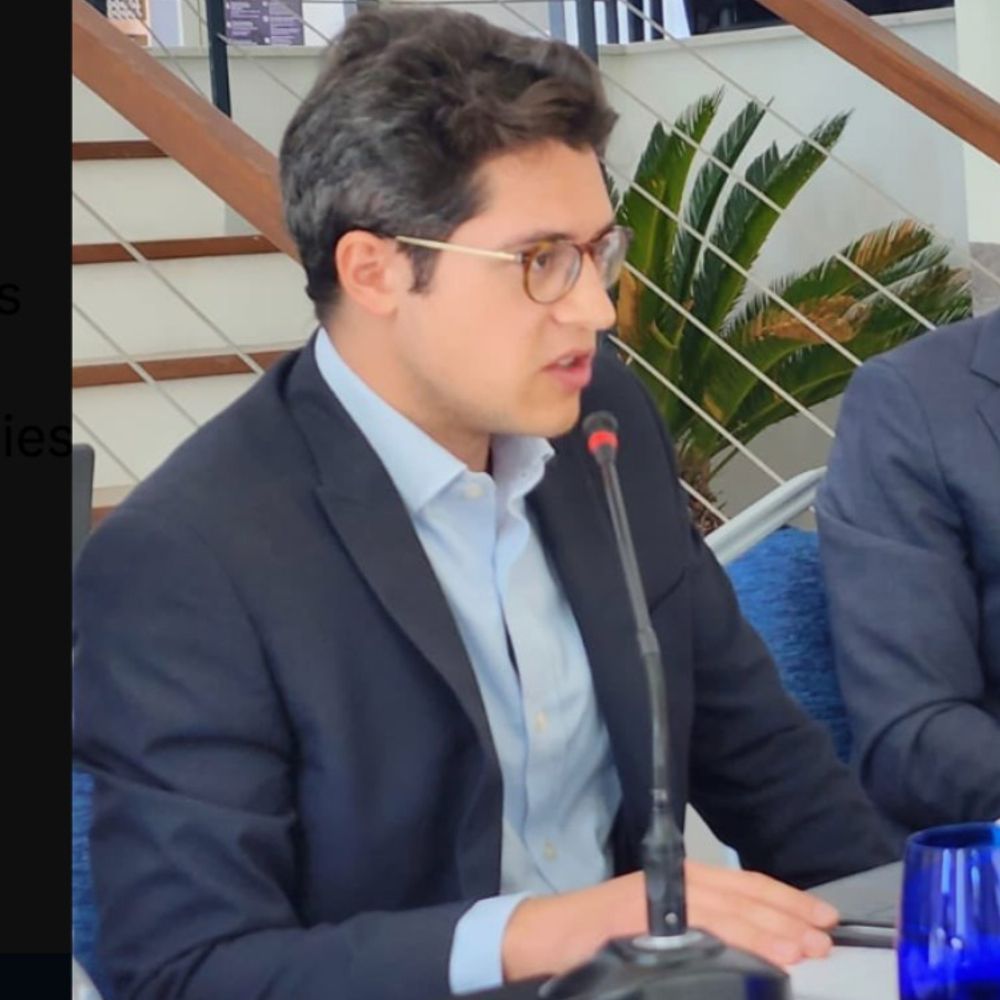
@lscazzieri.bsky.social
Senior Policy Analyst @euiss.bsky.social | Non-resident associate fellow @centreeuropeanref.bsky.social focusing on European defence issues| PhD from Kings College London| My personal views
🇪🇺 The power of the few: How clusters can strengthen European defence
By @lscazzieri.bsky.social – @euiss.bsky.social
www.iss.europa.eu/publications...

Infographic titled "The European Air Transport Command (EATC) – A model for multi-national cooperation". It shows Belgium, France, Germany, Italy, Luxembourg, the Netherlands and Spain delegating national air transport assets to the EATC under a "revocable delegation of authority". The EATC helps pool and coordinate aircraft for air transport, air-to-air refuelling and aeromedical evacuation missions. A map highlights participating countries in Europe.
Defence clusters are Europe's best bet to boost military capabilities via deeper industrial & operational cooperation, writes @lscazzieri.bsky.social.
From Eurofighter to the European Air Transport Command, minilateral defence initiatives are only gaining momentum. www.iss.europa.eu/publications...
Pleased to share my latest policy brief for EUISS:
I argue that defence clusters – small groups of aligned states – are the most viable avenue to strengthen European military capabilities, allowing for greater industrial and operational cooperation.
www.iss.europa.eu/publications...
My latest piece for EUISS:
Defence clusters – small groups of aligned states – provide the most viable route to strengthen European military capabilities, allowing for greater industrial and operational cooperation:

European Security Council: why creating a new institution is not the answer. @lscazzieri.bsky.social explores four possible ESC models but all face political & practical limits. The more realistic path: making better use of existing structures. ow.ly/3AbV50YebZw
13.02.2026 09:44 — 👍 7 🔁 2 💬 1 📌 0
🇪🇺 A European Security Council: Between strategic need and institutional realities
By @lscazzieri.bsky.social – @euiss.bsky.social
www.iss.europa.eu/publications...

European Security Council: why creating a new institution is not the most realistic option. Making better use of existing formats can deliver just what Europe needs, argues @lscazzieri.bsky.social. 🔗 ow.ly/3AbV50YebZw
12.02.2026 09:33 — 👍 4 🔁 1 💬 0 📌 1
The debate on a European Security Council is back.
In my new EUISS commentary, I look at four possible models — and argue that strengthening what Europeans already have is the most realistic path ahead
www.iss.europa.eu/publications...
The debate on a European Security Council is back.
In my new EUISS commentary, I look at four possible models — and argue that strengthening what Europeans already have is the most realistic path ahead
www.iss.europa.eu/publications...

The EU’s role in defence hinges largely on the level of defence funding in the next EU budget.
New @centreeuropeanref.bsky.social insight by @lscazzieri.bsky.social
Read here: buff.ly/bxYKhe4

The EU is embracing a more flexible approach to #defence co-operation by harnessing the dynamism of small groups.
New @centreeuropeanref.bsky.social insight by @lscazzieri.bsky.social
Read here: buff.ly/bxYKhe4
🎥 When it comes to reduced US engagement, @lscazzieri.bsky.social warns that Europe seems to be preparing only for benign scenarios. That is a strategy that comes with risks.
🔗 More on how the EU can protect its interests in this new era of low transatlantic trust. www.youtube.com/watch?v=DNUD...
The effort to strengthen Europe’s defences hinges on whether Europeans can avoid duplication and weave their efforts into a more coherent whole.
New @centreeuropeanref.bsky.social insight by @lscazzieri.bsky.social
Read here: buff.ly/bxYKhe4
The EU's efforts to accelerate and inject coherence into Europe's defence build-up depend on sustained funding and political will.
New @centreeuropeanref.bsky.social insight by @lscazzieri.bsky.social
Read here: buff.ly/bxYKhe4
New piece for @centreeuropeanref.bsky.social on the EU’s Defence Readiness 2030 Roadmap:
It's a much needed attempt to accelerate and bring coherence to Europe’s defence ramp-up, but its success hinges on both political will and sustained investment
www.cer.eu/insights/eu-...

Pleased to share my new piece on how Europe can navigate the 'grey zone'
Russia's hybrid warfare is meant to test Europe’s defences and unity. Europeans should be more assertive.
www.iss.europa.eu/publications...

According to Prime Minister Ulf Kristersson deliveries of the Gripen to Ukraine will start in 3 years
With that timeframe, the Gripens will contribute to deterrence in a hypothetical ceasefire scenario, rather than contributing to Ukraine's defence now.
www.defensenews.com/global/europ...

New piece for @euiss.bsky.social:
The ability to rapidly move forces and supplies around Europe is a crucial component of European deterrence.
But infrastructure gaps, shortages in transport assets, and administrative hurdles continue to impede military mobility.
www.iss.europa.eu/publications...

Moving troops from West to East Europe could take weeks or months.
The EU can help improve military mobility with more funding for infrastructure, harmonised & digitised border rules & a crisis state framework, writes @lscazzieri.bsky.social.
🔗 ow.ly/F6IX50XgN4W
But the EU can do more. By mobilising more funding from across its budget and from the EIB; by leading a a concerted effort to tackle administrative barriers; and by embedding mobility considerations across different policy areas to help secure buy-in from private sector stakeholders
23.10.2025 09:45 — 👍 1 🔁 0 💬 0 📌 0The EU has also become increasingly involved in military mobility, by mapping gaps and providing funding. The EU has also sought to harmonise procedures and ease regulatory obstacles to moving troops and equipment across Europe.
23.10.2025 09:45 — 👍 1 🔁 0 💬 1 📌 0NATO is a key actor in ensure the swift and secure movement of troops and equipment across Europe. And bilateral and small-group cooperation - for example the DE-DL-PL ‘Enablement and Sustainment Corridor’ play a crucial role in strengthening infrastructure and cutting administrative barriers.
23.10.2025 09:45 — 👍 1 🔁 0 💬 1 📌 0To do all this, Europeans will need to work through a range of frameworks. Efforts to improve military mobility are primarily national. But military mobility also requires extensive international coordination: on cross-border infrastructure, border crossings and transport capabilities.
23.10.2025 09:45 — 👍 2 🔁 0 💬 1 📌 0
European efforts to tackle military mobility have lacked urgency and a step change is now needed. The immediate priority should be tackling bureaucratic hurdles
so that transit procedures are as seamless as possible, and filling the most urgent capability and infrastructure gaps.
New piece for @euiss.bsky.social:
The ability to rapidly move forces and supplies around Europe is a crucial component of European deterrence.
But infrastructure gaps, shortages in transport assets, and administrative hurdles continue to impede military mobility.
www.iss.europa.eu/publications...
In these years of maximum danger, ramping up European defence is the only way to go. Lots of EU initiatives but we need results at speed and scale. Only if we are strong can we remain free.
Good to discuss all this with @thinktankeuropa.bsky.social with @eu2025dk.bsky.social
🔟 Finally there is a question of attention. The Roadmap is the latest of a long series of EU defence documents, which are quickly forgotten. The priority should be tangible progress on readiness
17.10.2025 13:48 — 👍 1 🔁 1 💬 0 📌 09️⃣ Then there is a question on funding. The provisional agreement on EDIP is good news but this is only about €1.5 billion until the next MFF. The Roadmap refers to plans for more defence spending in the next MFF, but does not in itself announce new funding sources
17.10.2025 13:48 — 👍 0 🔁 0 💬 1 📌 08️⃣ A third question is about non-EU allies. The proposed process does not account for the contribution of non-EU allies, especially Norway and the UK. Capability gaps will look bigger without their contribution. I doubt an EU process can work well without a mechanism to involve them somehow
17.10.2025 13:48 — 👍 0 🔁 0 💬 1 📌 07️⃣ A second question is whether the governance of EU projects is appealing to Member States. The decision over whether to place an existing capability coalition under an EU framework will be driven by the balance between the funding on offer by the EU and the level of added administrative complexity
17.10.2025 13:48 — 👍 0 🔁 0 💬 1 📌 0