The brain computes by processing information over time through interactions between connectivity and dynamics that are hard to model. Here we infer these interactions from data and find they better predict cognitive performance! www.nature.com/articles/s41... w/ @lindenmp.bsky.social
02.12.2025 23:38 — 👍 34 🔁 12 💬 4 📌 2
Precision Functional Mapping of Imagined and Experienced Pain https://www.biorxiv.org/content/10.1101/2025.08.06.668906v1
10.08.2025 04:15 — 👍 2 🔁 4 💬 0 📌 0
Alert!!!!
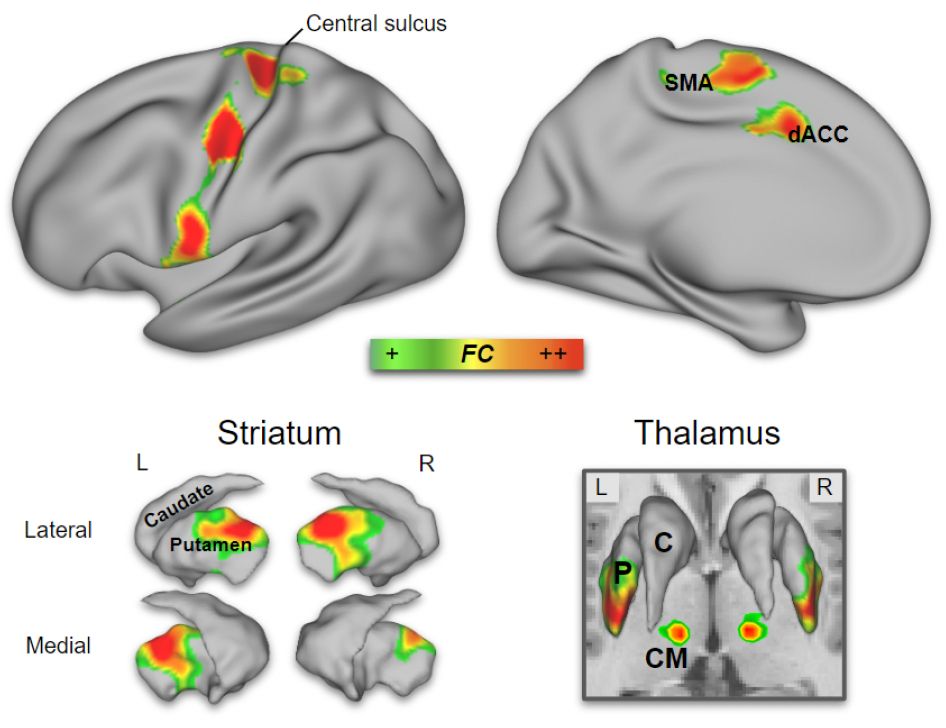
“An Action Networks Model for Pain”
We propose a new model for chronic pain — and highlight two functionally connected cortical networks that could revolutionize how we treat it.
👉 thread below 🧵
osf.io/preprints/ps...
26.06.2025 13:28 — 👍 91 🔁 42 💬 2 📌 7
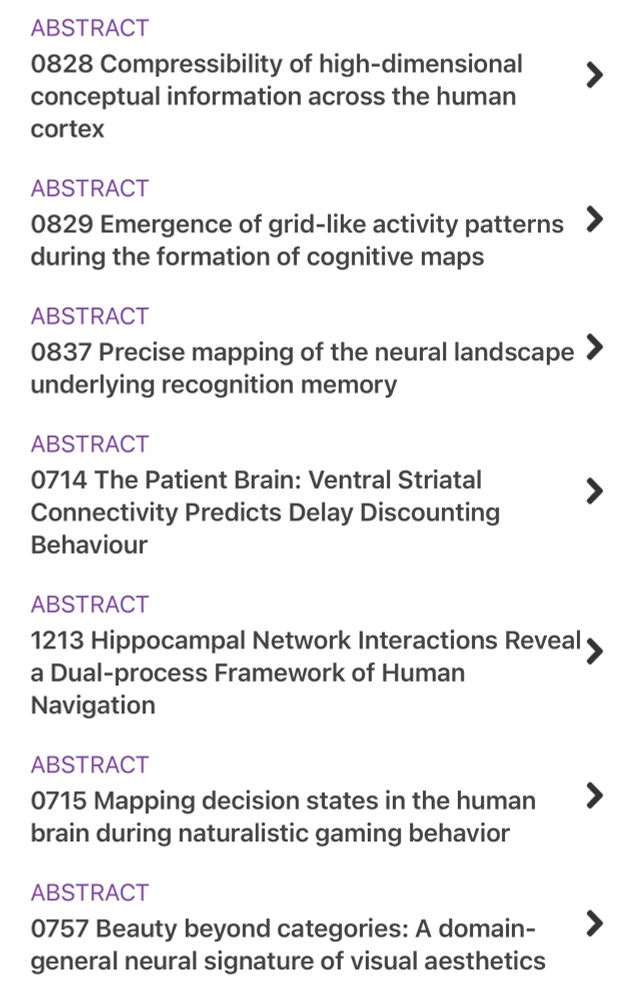
Big year for our lab at #OHBM2025!
Thrilled to present an exciting mix of posters, talks, and lots of brainy fun 🧠🤓
Come check us out! We’d love to connect!
@cognizelab.bsky.social
@ohbmofficial.bsky.social
#OHBM #OHBM2025 #Neuroimaging
25.06.2025 00:04 — 👍 11 🔁 5 💬 1 📌 1

Does your favorite song actually relieve pain?
We looked into the brain to find out. 🧠🎶❓
Come check out Poster #0780 (Wed/Thur) at #OHBM2025!
In collaboration with McGill University — Elise Desbarats & Prof. Mathieu Roy.
24.06.2025 23:02 — 👍 2 🔁 3 💬 0 📌 0
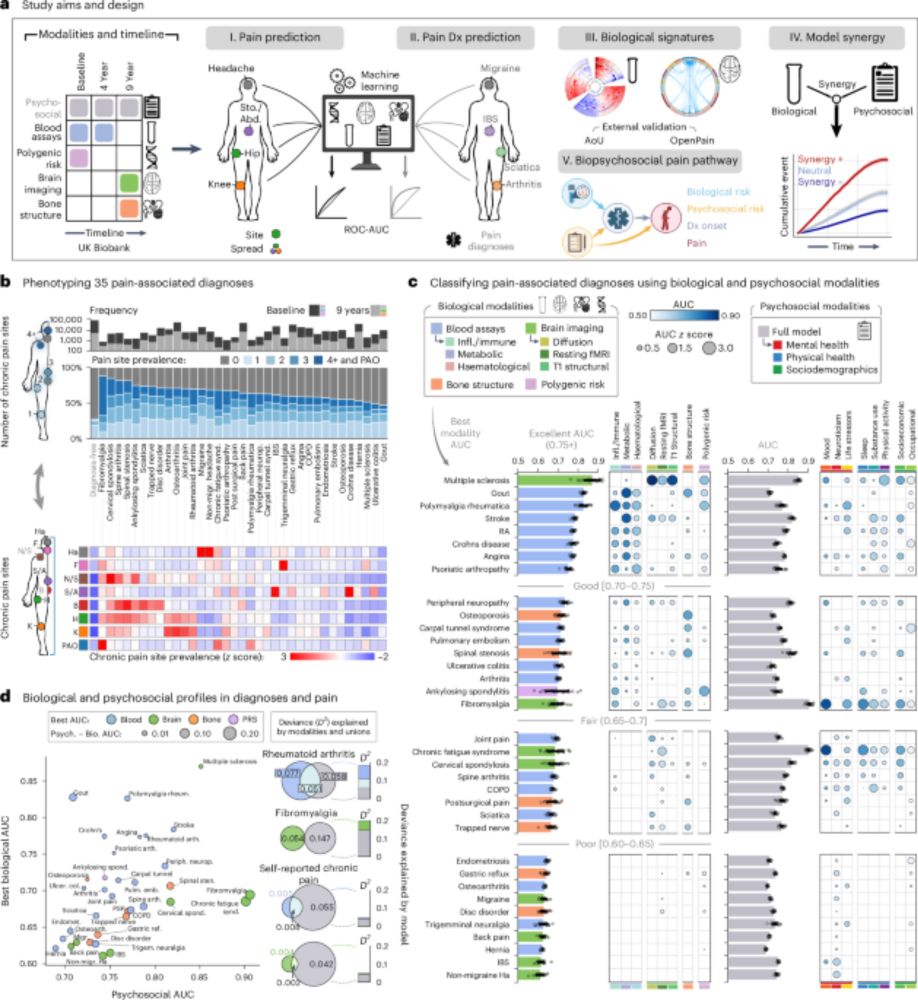
Biological markers and psychosocial factors predict chronic pain conditions - Nature Human Behaviour
Fillingim et al. show that biological and psychosocial factors jointly predict conditions associated with chronic pain.
Our new @NatureHumBehav paper shows why we need a holistic pain biomarker framework. ML on blood tests, brain/bone imaging & genetics predicts clinical diagnoses but falls short on subjective pain. Adding psychosocial (mood, sleep, stress) boosts both. shorturl.at/vxxeO
12.05.2025 15:51 — 👍 21 🔁 13 💬 1 📌 1
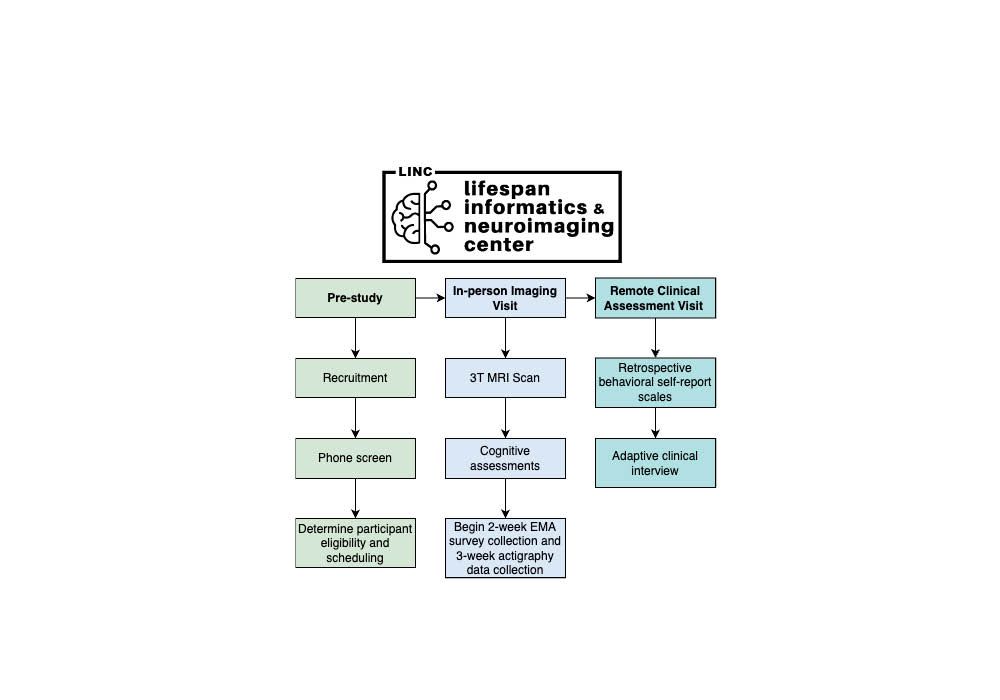
Dreaming of a dataset that tracks mood, sleep & activity to better understand affective instability (AI)…AND paired with advanced MRI? 🤯
Check out our new bioRxiv preprint for a 13–23 y/o community sample (n=10 and growing!) with multi-echo fMRI, EMA & actigraphy: www.biorxiv.org/content/10.1...
06.05.2025 15:32 — 👍 26 🔁 15 💬 1 📌 2
This paper is magical.
15.12.2024 12:37 — 👍 73 🔁 25 💬 3 📌 2

Learning resources for scientists · eLife
A collections of articles that provide practical resources and guidance for researchers and academics
1/ 🧵 Free resources for scientists
💡 Covering research skills, careers, #SciComm, leadership, activism and more, everything in this thread appears on our Learning Resources page, with tips for researchers and academics at any career stage. #AcademicChatter #ECRChat
https://buff.ly/4f8vIpk
26.11.2024 15:42 — 👍 150 🔁 75 💬 11 📌 7
Finally,😃 the first project during the Ph.D. program is published in PLOS Biology. We examined the spatiotemporal brain dynamics of context and sensory information integration in pain.
Thanks to my advisor @choongwanwoo.bsky.social and co-authors Seok-Jun Hong and Elizabeth Losin. plos.io/4fsaanu
16.11.2024 03:07 — 👍 6 🔁 1 💬 0 📌 0
PNAS
Proceedings of the National Academy of Sciences (PNAS), a peer reviewed journal of the National Academy of Sciences (NAS) - an authoritative source of high-impact, original research that broadly spans...
📢 Exciting news! My first first-author paper on brain decoding of spontaneous thought is now available on PNAS. Check it out! www.pnas.org/doi/10.1073/...
✅ Summary: We developed fMRI-based predictive models of spontaneous thought using personal stories as stimuli. (1/4)
30.03.2024 05:45 — 👍 18 🔁 9 💬 2 📌 0
Overall, our results support the notion that pain perception is a dynamic process of continuously integrating contextual information with sensory inputs. This underscores the importance of investigating the temporal dimension of pain perception. (8/8)
26.01.2024 00:56 — 👍 0 🔁 0 💬 0 📌 0

These suggest that integration occurs along the cortical hierarchy from transmodal to unimodal brain systems, by offering a holistic interpretation of temporal dynamics in pain processing within the framework of cortical hierarchy. (7/8)
26.01.2024 00:56 — 👍 0 🔁 0 💬 1 📌 0

In contrast, during the mid-to-late stages of integration, the somatomotor network regions were important in mediating the effects of stimulus intensity. (6/8)
26.01.2024 00:56 — 👍 0 🔁 0 💬 1 📌 0

In the results of the cue model, in the early-to-mid stages of integration, regions within the frontoparietal and dorsal attention networks, such as the lateral prefrontal, premotor, and parietal cortex regions, mediated the effects of cues. (5/8)
26.01.2024 00:56 — 👍 0 🔁 0 💬 1 📌 0

Using this behavioral dynamic information, we examined temporal dynamics of brain mediation for the cue and stimulus effects on the continuous pain prediction ratings through temporal mediation analysis and ICA. Then, we found four main temporal domains for each model (4/8)
26.01.2024 00:55 — 👍 0 🔁 0 💬 1 📌 0

To capture the rating trajectories of continuous pain prediction, we devised a semicircular rating scale and found distinct temporal profiles that revealed a gradual shift in their relative importance from cognitive to sensory aspects of pain (3/8)
26.01.2024 00:55 — 👍 0 🔁 0 💬 1 📌 0
Pain can be understood as a continuous integration process. To grasp its dynamic nature, we addressed the temporal dynamics of brain mechanisms involved in the continuous integration process underpinning pain experience using a new tool and analysis (2/8).
26.01.2024 00:54 — 👍 1 🔁 0 💬 1 📌 0

Temporal Dynamics of Brain Mediation in Predictive Cue-induced Pain Modulation
bioRxiv - the preprint server for biology, operated by Cold Spring Harbor Laboratory, a research and educational institution
Hi, I’m very pleased to share the preprint of my first project with my PI @choongwanwoo.bsky.social and amazing collaborators Seok-Jun Hong and E.A.R. Losin.
Here we examined the behavioral and neural dynamics of pain as a continuous integration process (1/8)
www.biorxiv.org/content/10.1...
26.01.2024 00:54 — 👍 22 🔁 10 💬 1 📌 1
University of Michigan '24 | Depression & Stress Mechanisms, Mental Health Disparities in Youths | 🇲🇾 Nascent Poet
⚜️-🇨🇦-🇮🇷
Assoc Prof, UToronto Pain Scientist
Co-Director, Centre for Multimodal Sensorimotor and Pain Research;
Canada Research Chair in Pain NeuroImaging;
Councillor, IASP; Secretary, CanPainSoc
fMRI, EEG, Psychophysics.
He/Him/His | 🏳️🌈 |✊🏾| 🇵🇸&🇱🇧& 🇸🇾|✌️
NIH-funded program uniting #pain #researchers across the continuum of #painresearch, from all disciplines and all career levels. http://PainResearchers.com
Professor @ Duke U • Fascinated by the 🧠 • Studying Memory using Mobile Neurotechnologies & Wearables • SuthanaLab.com
comp neuro, neural manifolds, neuroAI, physics of learning
assistant professor @ harvard (physics, center for brain science, kempner institute) + @ Flatiron Institute
https://www.sychung.org
neuroscientist | pain | mindfulness | psychedelics
www.zeidanlab.com
JESP features research in social psychology that use experimental or quasi-experimental methods or findings that push existing theories in new and needed directions!
Postdoc at Laboratory of Cognitive Neuroscience (Prof. Olaf Blanke), EPFL
PhD student @YalePsychology studying computational cognitive neuroscience.
Was @UChicago @Peking University
https://jinke828.github.io
A Ph.D. student. Center for Neuroscience Imaging Center (CNIR) in S. Korea. Homepage (https://sangkyuson.github.io/)
#PennState research institute that does #SocialScience.
Our mission is to foster research that addresses critical human and social problems at the local, national, and international levels.
Visit our website: https://ssri.psu.edu/
Global leader 🌎 in #prevention research, technical assistance, training, policy, & outreach. Our work ⬆️ #publichealth, #wellbeing & #flourishing. 🌳
Visit our website: prevention.psu.edu
Neural Mechanisms of Stress Vulnerability & Resilience 🧠 | Incoming Assistant Professor @Haifa University 👨🏫 | Postdoctoral Fellow @Yale University 🎓
Cognitive scientist seeking to reverse engineer the human cognitive toolkit. Asst Prof of Psychology at Stanford. Lab website: https://cogtoolslab.github.io
INSERM group leader @ Neuromodulation Institute and NeuroSpin (Paris) in computational neuroscience.
How and why are computations enabling cognition distributed across the brain?
Expect neuroscience and ML content.
jbarbosa.org
Cognitive neuroscientist | PI @ COGNIZELab | Prof @ ISTBI, Fudan, Shanghai | Exploring memory encoding, Default Mode Network and mental navigation with 7T fMRI @cognizelab.bsky.social
A bold research initiative to find biomarkers and advance pain science. A2CPS is a Consortium-based research project funded by the NIH Common Fund with the aim of finding biosignatures of chronic pain.