
Antscan
Thanks to micro-CT and www.antscan.info, you can now explore high resolution, 3D ant images from anywhere in the world. Fantastic work from Julian Katzke, Francisco Hita Garcia, @economo.bsky.social, Thomas van de Kamp and colleagues just dropped: www.nature.com/articles/s41...
05.03.2026 18:40 —
👍 17
🔁 10
💬 1
📌 0

It's been a while.
Here's a worker of another species: This is Cardiocondyla mauritanica from a colony collected in Spain last year. These ants are superb for taking pictures because the get startled and freeze for a few seconds upon any disturbance.
30.01.2026 16:20 —
👍 1
🔁 0
💬 1
📌 0
PhD position available in evolutionary genomics/bioinformatics (hoehnalab.github.io/job_adverts/...). Topic: analyzing gene expression evolution across several firefly species and linking expression changes to genomic architecture. The position is jointly supervised with @anaevolcatalan.bsky.social
11.11.2025 09:00 —
👍 45
🔁 54
💬 4
📌 2

A table showing profit margins of major publishers. A snippet of text related to this table is below.
1. The four-fold drain
1.1 Money
Currently, academic publishing is dominated by profit-oriented, multinational companies for
whom scientific knowledge is a commodity to be sold back to the academic community who
created it. The dominant four are Elsevier, Springer Nature, Wiley and Taylor & Francis,
which collectively generated over US$7.1 billion in revenue from journal publishing in 2024
alone, and over US$12 billion in profits between 2019 and 2024 (Table 1A). Their profit
margins have always been over 30% in the last five years, and for the largest publisher
(Elsevier) always over 37%.
Against many comparators, across many sectors, scientific publishing is one of the most
consistently profitable industries (Table S1). These financial arrangements make a substantial
difference to science budgets. In 2024, 46% of Elsevier revenues and 53% of Taylor &
Francis revenues were generated in North America, meaning that North American
researchers were charged over US$2.27 billion by just two for-profit publishers. The
Canadian research councils and the US National Science Foundation were allocated US$9.3
billion in that year.

A figure detailing the drain on researcher time.
1. The four-fold drain
1.2 Time
The number of papers published each year is growing faster than the scientific workforce,
with the number of papers per researcher almost doubling between 1996 and 2022 (Figure
1A). This reflects the fact that publishers’ commercial desire to publish (sell) more material
has aligned well with the competitive prestige culture in which publications help secure jobs,
grants, promotions, and awards. To the extent that this growth is driven by a pressure for
profit, rather than scholarly imperatives, it distorts the way researchers spend their time.
The publishing system depends on unpaid reviewer labour, estimated to be over 130 million
unpaid hours annually in 2020 alone (9). Researchers have complained about the demands of
peer-review for decades, but the scale of the problem is now worse, with editors reporting
widespread difficulties recruiting reviewers. The growth in publications involves not only the
authors’ time, but that of academic editors and reviewers who are dealing with so many
review demands.
Even more seriously, the imperative to produce ever more articles reshapes the nature of
scientific inquiry. Evidence across multiple fields shows that more papers result in
‘ossification’, not new ideas (10). It may seem paradoxical that more papers can slow
progress until one considers how it affects researchers’ time. While rewards remain tied to
volume, prestige, and impact of publications, researchers will be nudged away from riskier,
local, interdisciplinary, and long-term work. The result is a treadmill of constant activity with
limited progress whereas core scholarly practices – such as reading, reflecting and engaging
with others’ contributions – is de-prioritized. What looks like productivity often masks
intellectual exhaustion built on a demoralizing, narrowing scientific vision.

A table of profit margins across industries. The section of text related to this table is below:
1. The four-fold drain
1.1 Money
Currently, academic publishing is dominated by profit-oriented, multinational companies for
whom scientific knowledge is a commodity to be sold back to the academic community who
created it. The dominant four are Elsevier, Springer Nature, Wiley and Taylor & Francis,
which collectively generated over US$7.1 billion in revenue from journal publishing in 2024
alone, and over US$12 billion in profits between 2019 and 2024 (Table 1A). Their profit
margins have always been over 30% in the last five years, and for the largest publisher
(Elsevier) always over 37%.
Against many comparators, across many sectors, scientific publishing is one of the most
consistently profitable industries (Table S1). These financial arrangements make a substantial
difference to science budgets. In 2024, 46% of Elsevier revenues and 53% of Taylor &
Francis revenues were generated in North America, meaning that North American
researchers were charged over US$2.27 billion by just two for-profit publishers. The
Canadian research councils and the US National Science Foundation were allocated US$9.3
billion in that year.

The costs of inaction are plain: wasted public funds, lost researcher time, compromised
scientific integrity and eroded public trust. Today, the system rewards commercial publishers
first, and science second. Without bold action from the funders we risk continuing to pour
resources into a system that prioritizes profit over the advancement of scientific knowledge.
We wrote the Strain on scientific publishing to highlight the problems of time & trust. With a fantastic group of co-authors, we present The Drain of Scientific Publishing:
a 🧵 1/n
Drain: arxiv.org/abs/2511.04820
Strain: direct.mit.edu/qss/article/...
Oligopoly: direct.mit.edu/qss/article/...
11.11.2025 11:52 —
👍 643
🔁 453
💬 8
📌 66
Germline-limited transposon remnants foster somatic genome diversification https://www.biorxiv.org/content/10.1101/2025.11.02.686105v1
03.11.2025 10:31 —
👍 2
🔁 1
💬 0
📌 0

And while I am at it, here's a queen of Nesomyrmex wilda.
22.08.2025 07:52 —
👍 0
🔁 0
💬 1
📌 0

This is a worker of Cardiocondyla thoracica, next to a Drosophila.
22.08.2025 07:50 —
👍 1
🔁 0
💬 1
📌 0

Come find me at #SMBE2025 to chat about transposable elements in ants 🧬🐜
S15 - P8
22.07.2025 02:49 —
👍 18
🔁 5
💬 0
📌 1

New study provides deep insights into the genomes of superorganisms
Worker ants increase their reproductive success by caring for their siblings instead of producing their own offspring. An international research team, including Dr. Lukas Schrader from the University ...
Worker ants increase their reproductive success by caring for their siblings instead of producing their own offspring. An international research team has now uncovered the genetic basis of ant evolution. (Orig. publ. doi.org/10.1016/j.ce...) #ants #phylogenomics #evolution
24.06.2025 14:18 —
👍 10
🔁 5
💬 0
📌 0
Over 50 researchers from over 25 countries have made this possible. Almost 10 years of work. I have 23,062 emails on this project.
It is wonderful to see this published and I hope you enjoy it.
There’s a lot on genome evolution in ants and much much more.
16.06.2025 15:50 —
👍 16
🔁 5
💬 0
📌 1
Five years of COVID-19: Comments from the Society of Virology on dealing with the COVID-19 pandemic in Germany | Society of Virology
The Virological Society (Gesellschaft für Virologie - GfV), along with the German Society for Infectiology has issued a statement on lessons learned from the last pandemic. While it was originally issued in German, it is now also available in English. You can find it here:🧪
g-f-v.org/en/fuenf-jah...
03.06.2025 18:17 —
👍 16
🔁 9
💬 1
📌 0
This is also a useful complement to the "pivot" paper getting attention this week
"...science marches backward when the participants are unwilling to consider preexisting information, and a certain level of push-back is warranted when such behavior is combined with excessive self-promotion"
31.05.2025 06:29 —
👍 20
🔁 7
💬 1
📌 0
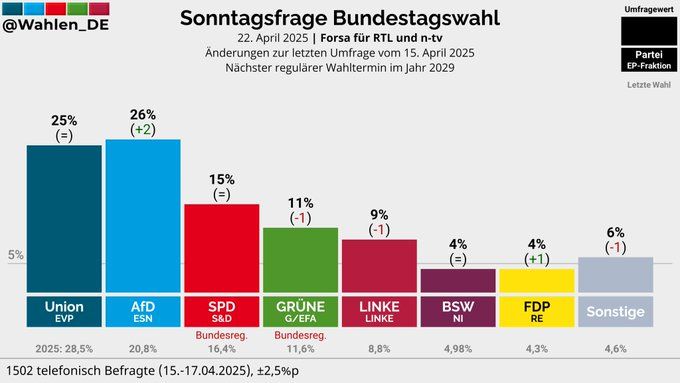
Für viele Deutsche mit Migrationsgeschichte ist es keine Randnotiz, dass eine rechtsextreme völkische Partei in Umfragen führt. Es bedeutet existenzielle Bedrohung und verstärkte Ausgrenzung. Solche Zahlen ignorieren zu können, ist ein Privileg, das viele nicht haben.
23.04.2025 09:21 —
👍 2608
🔁 730
💬 100
📌 37
Termites became the dominant decomposers of the tropics after two diversification pulses https://www.biorxiv.org/content/10.1101/2025.03.25.645184v1
28.03.2025 19:31 —
👍 6
🔁 2
💬 1
📌 0
New ant supergene just dropped.
26.03.2025 20:00 —
👍 2
🔁 0
💬 0
📌 0
Awesome work!
17.03.2025 21:12 —
👍 4
🔁 0
💬 0
📌 0
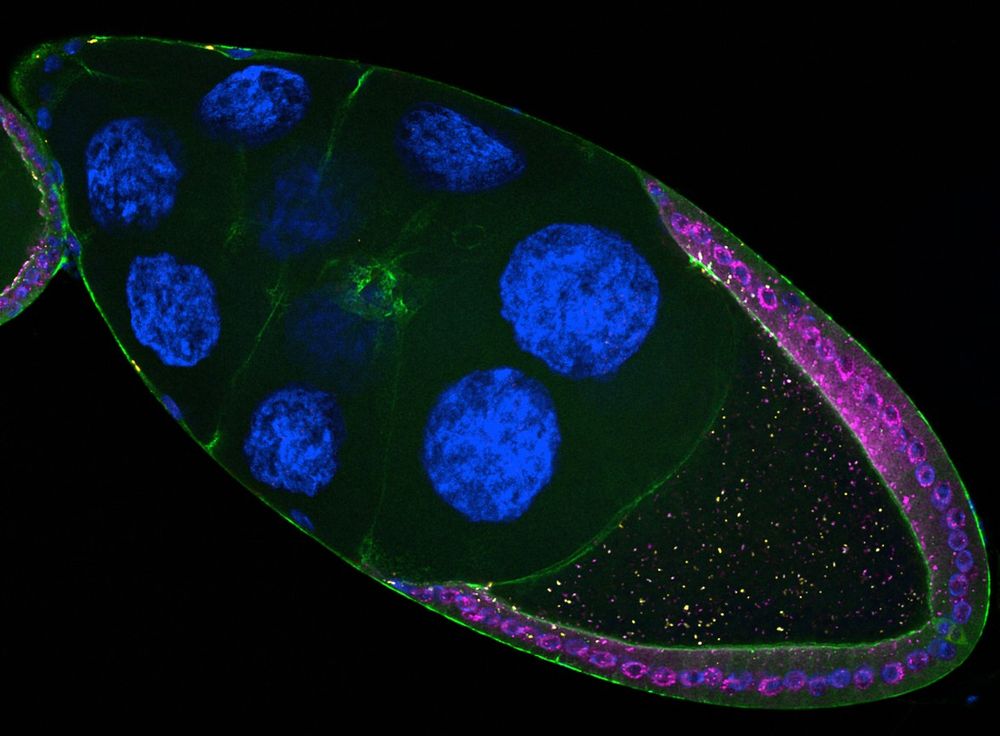
Drosophila follicle showing retrotransposons (pink & yellow) expressed in somatic cells infecting the oocyte
1/ Transposable elements are often called "jumping genes" because they mobilize within genomes. 🧬
But did you know they can also jump 𝘣𝘦𝘵𝘸𝘦𝘦𝘯 cells? 🤯
Our new study reveals how retrotransposons invade the germline directly from somatic cells.
www.biorxiv.org/content/10.1...
A short thread 🧵👇
17.03.2025 11:56 —
👍 546
🔁 259
💬 12
📌 33

DAS KANN DOCH NICHT WAHR SEIN!?!?😱🤯 Wer kneift uns bitte mal eben ganz ganz kräftig?
#FCBBOC 2:3
08.03.2025 16:34 —
👍 189
🔁 13
💬 12
📌 8

Polizei umstellt Adenauer

Polizei stürmt den Adenauer
BREAKING: Nachdem die Polizei den Adenauer nicht mehr beschlagnahmen kann, hat sie gerade die Scheiben eingeschlagen, ihn gestürmt, umstellt und unser gesamtes Team verhaftet! Das ist so krass - uns fehlen die Worte.
Wir sind auf der AfD-Wahlparty. Die Faschisten feiern weiter.
23.02.2025 17:45 —
👍 3098
🔁 1341
💬 147
📌 146

Es geht eine dramatische, bittere Woche zu Ende. Friedrich Merz hat sein Versprechen, nicht mit der AfD zusammenzuarbeiten, gebrochen. Er hat Erpressung als Mittel der Politik eingesetzt. Damit hat er der AfD den größten Erfolg beschert: die Spaltung der Demokraten. Wir haben alles versucht, zu einer Lösung unter den Demokratinnen und Demokraten zu kommen. Aber Merz war im Blindflug unterwegs gen Abgrund. Dank und Respekt gebührt jenen, die verhindert haben, dass erstmals im Deutschen Bundestag ein Gesetz durch eine gemeinsame Mehrheit mit der AfD zustande gekommen wäre. Sie haben sich gegen ihre Fraktionslinien gestellt, das verdient Hochachtung.
Zu heute.
31.01.2025 17:22 —
👍 6612
🔁 1449
💬 139
📌 41
Tesla Gigafactory, Berlin. – Buy a Tesla, support facism!
23.01.2025 10:42 —
👍 1820
🔁 402
💬 43
📌 38

This queen of Cardiocondyla obscurior gently embraces a batch of eggs and small larvae. This species we know most about as it has been a lab model for nearly 20 years now, pioneered by Jürgen Heinze in Regensburg.
23.12.2024 09:16 —
👍 3
🔁 0
💬 1
📌 1

A worker ant of Cardiocondyla venustula taking care of a pupa.
This one is a worker of Cardiocondyla venustula tending to a pupa. We collected this colony over ten years ago in South Africa. Like many Cardiocondyla species, these ants mate in the nest and colonies continuously rejuvenate themselves this way.
17.12.2024 06:32 —
👍 1
🔁 0
💬 1
📌 0


