If you're interested in a short behind-the-scenes of the retraction of a mega-metascience paper—the first of its kind (the retraction, not the paper)—this might be for you! Had to gloss over so many details to observe allotted time but happy to share an extended version of my slide deck with links.
13.01.2026 15:26 —
👍 49
🔁 17
💬 1
📌 0
Multi-Scale Methods and Emergence in Neural and Cognitive Science
A cool workshop on Emergence happening next week at the Fields institute in Toronto, and you can join for free! emergence-multiscale-neuro-workshop.github.io
04.12.2025 21:29 —
👍 3
🔁 1
💬 0
📌 0
Regular neck + full body stretches (it is all connected) plus back strengthening exercises. It turns out posture is not that important :)
04.12.2025 11:14 —
👍 1
🔁 0
💬 0
📌 0
Effective Business leaders: "It takes several months for new employees to become fully productive members of the team..."
Universities: EXCITING 6 MONTH POSITION REPLACING THE LAST PERSON WHO WAS HERE 6 MONTHS.
09.10.2025 06:53 —
👍 63
🔁 13
💬 1
📌 1
Modern theories of emotion (especially “interoceptive inference”) often cite William James as a key inspiration. But what did James actually say about emotion, and is it supported by the data? Here’s a brief look at the core arguments and classic evidence. 🧵
13.07.2025 07:47 —
👍 82
🔁 25
💬 5
📌 2

🧵1/7
New study: How do adolescent cognitive ability and education predict adult mental disorders?
🧠📚➜🧑⚕️
Using Norwegian register data (N = 272,351 men) of GP diagnoses and military assessed cognitive abilities.
👇
28.06.2025 09:58 —
👍 23
🔁 9
💬 3
📌 2
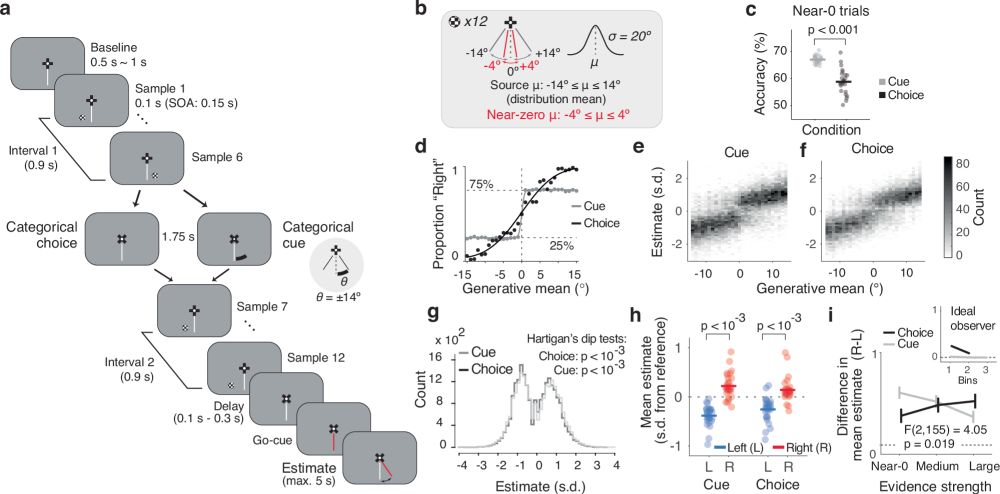
Confirmation bias through selective readout of information encoded in human parietal cortex
Nature Communications - People often discard incoming information when it contradicts their pre-existing beliefs about the world. Here, the authors show that this discarded information is precisely...
1/ New paper by Hame Park, (@AraziAyelet), Bharath Talluri, Marco Celotto, Stefano Panzeri, Alan Stocker & Tobias Donner published in Nature Communications – “Confirmation Bias through Selective Readout of Information Encoded in Human Parietal Cortex”: rdcu.be/etlR7. Here is a summary:
27.06.2025 13:35 —
👍 39
🔁 20
💬 1
📌 0

The cave of shadows: Addressing the human factor with generalized additive mixed models
Generalized additive mixed models are introduced as an extension of the generalized linear mixed model which makes it possible to deal with temporal a…
"exploratory data analysis is of great importance for those
domains of inquiry where explicit and mathematically precise
theories are lacking. ... results [..] can be completely opposite to what was expected, even though in hindsight..." #neuroscience#psychology
www.sciencedirect.com/science/arti...
27.05.2025 07:34 —
👍 5
🔁 0
💬 0
📌 0
When your statistical model "fits the data well" ...
09.05.2025 06:25 —
👍 198
🔁 32
💬 4
📌 1
In sum, causal studies are needed to elucidate the nature of the association between heart rate, the HEP and the neural processing of incoming sensory stimuli. We hope these findings will help unravel these interactions and inspire further studies.
29.04.2025 17:46 —
👍 1
🔁 0
💬 0
📌 0

In within-subject analyses, we did not find evidence that heart rate affects sensorimotor processing. The HEP changed with heart rate but was not affected by attention orienting. Heart rate and cardiac phase at the time of stimulus onset did not predict reaction time.
29.04.2025 17:46 —
👍 1
🔁 0
💬 1
📌 0

scatter plots illustrating the relationship between HAP amplitude and reaction time and heart rate
Participants with faster heart rates showed stronger HEPs in the frontal lobe and participants with stronger HEP over the motor cortex responded slower. These suggest that the HEP and heart rate might interfere with neural processing. However, causal interactions remain to be established.
29.04.2025 17:46 —
👍 2
🔁 0
💬 1
📌 0
We examined three questions. One, if attention orienting changed the neural response to the heartbeat (heartbeat-evoked potential, HEP). Two, if the HEP changed with heart rate and, three, if heart rate and the HEP were associated with sensorimotor processing of an auditory suprathreshold stimulus.
29.04.2025 17:46 —
👍 1
🔁 0
💬 1
📌 0

Graph showing change in heart rate from before a warning cue up to 8 seconds after. Heart rate decreases reaching a minimum around 3 seconds after.
Heart rate deceleration (bradycardia) is observed during states of focused attention, in response to a threat (fear response) or during attention orienting in expectation of an incoming stimulus (attentive anticipation). Yet the role of heart rate within these cognitive contexts remains unclear.
29.04.2025 17:46 —
👍 1
🔁 0
💬 1
📌 0

Many insights (and some interesting open questions) from @ribeironeuro.bsky.social Keynote Talk at the #MindBrainBody Symposium on the psychophysiology of temporal attention, with a great focus on cardiac deceleration 🫀⏱️
#MBBS25
11.03.2025 16:41 —
👍 10
🔁 2
💬 0
📌 0
“‘No data speaks for itself,’ McCoy said, forceful.
‘Data just lies there. People speak.’”
I think that’s my organizing principle for 2025, courtesy of @diane.dianeduane.com’s classic SPOCK’S WORLD, which I finally read towards the end of last year
01.01.2025 17:01 —
👍 66
🔁 14
💬 4
📌 1
Logo of the MindBrainBody Symposium
📣 Come join us for the #MindBrainBody Symposium 2025!
📆 March 10-12, 2025
📍 Berlin & online
🔎 mindbrainbody.de
Keynotes:
- Ivan de Araujo
- Nadine Gogolla
- Maria Ribeiro @ribeironeuro.bsky.social
- Markus Ullsperger
- Tor Wager
- Veronica Witte @veronicawitte.bsky.social
#interoception
25.11.2024 19:32 —
👍 135
🔁 75
💬 3
📌 7
The modulation of the HEP by heart rate emerged as a marker of neuronal gain modulated by arousal and associated with mental effort, suggesting that the impact of heart rate fluctuations on the brain depends on cognitive state.
09.02.2024 09:59 —
👍 0
🔁 0
💬 0
📌 0

The heartbeat-evoked potential (HEP) was stronger for slower heart rates. Surprisingly, this effect was stronger during periods of high mental effort, was absent during rest, and was related to the amplitude of phasic pupil responses. #pupil #arousal #heart-brain
09.02.2024 09:57 —
👍 1
🔁 0
💬 1
📌 0

The cortical heartbeat-evoked potential is modulated by heart rate in a task and mental effort dependent manner
Periods of slow heart rate are associated with increased sensory sensitivity. Accordingly, cardiac deceleration occurs when individuals orient their attention in anticipation of a sensory stimulus they might have to respond to (attentive anticipation). Cardiac deceleration might be important to optimize sensory processing. However, it is unclear which mechanism connects heart rate with the neuronal processing of external stimuli. In this study, we investigated if cardiac deceleration evoked by attentive anticipation as well as ongoing fluctuations in heart rate were associated with changes in the heartbeat-evoked potential (HEP), a cortical response evoked by the heartbeat which amplitude modulations are associated with sensory sensitivity. We studied these phenomena in young and older people [N = 33 (26 women) and 29 (23 women); mean age 23 and 61 years], using a previously described dataset including electroencephalograms (EEG), electrocardiograms (ECG), and pupilograms which were acquired during an auditory cued simple reaction time task, an auditory cued go/no-go task, and a passive task condition. While the period of attentive anticipation between the cue and the target characterized by cardiac deceleration was not related with significant changes in the HEP, ongoing heart rate fluctuations affected HEP amplitude. Interestingly, the effect of heart rate on the HEP increased with task difficulty and was associated with the amplitude of task-related pupil responses suggesting a link with mental effort. Thus, the impact of ongoing heart rate fluctuations on the HEP depends on cognitive state and this effect might link heart rate with the neural processing of external stimuli. SIGNIFICANCE STATEMENT These findings suggest that arousal level and mental effort modulate the input-output function that links heart rate to the strength of the cortical responses to the heartbeat. As such, the modulation of the heartbeat-evoked potential by heart rate emerges as a marker of cortical gain that is relatively easy to measure non-invasively in humans. Further studies should explore if this effect of mental effort extends to other sensory modalities, for example, the visual cortex neuronal gain. Moreover, this study suggests that the effect of heart rate on the neuronal processing of external stimuli is stronger during periods of high mental effort, raising a new hypothesis which exploration will further elucidate the connection between the heart and cognitive processing. ### Competing Interest Statement The authors have declared no competing interest. The dataset used in this study is available in Open Neuro Repository under the <https://doi.org/10.18112/openneuro.ds003690.v1.0.0>. All analyses and figures presented in the manuscript resulted from analyses of this dataset. MATLAB code for data analyses is available on GitHub on the following link [https://github.com/mariajribeiro/2024\_Ribeiro\_Effect\_of\_heart\_rate\_on\_heartbeat-evoked\_potential][1]. [1]: https://github.com/mariajribeiro/2024_Ribeiro_Effect_of_heart_rate_on_heartbeat-evoked_potential
Humans are better at detecting weak sensory signals during periods of slow heart rate. Our preprint explored the effect of heart rate on the brain by studying the link between heart rate and the heartbeat-evoked potential (the neural response to the heartbeat). #EEG
www.biorxiv.org/content/10.1...
09.02.2024 09:54 —
👍 15
🔁 4
💬 1
📌 0