#MSCA success rates now below 10%, yet the work that goes into writing this application is immense. Beyond the obvious increase in funding we need to find ways to lighten the time investment as well. Thousands of researchers spend weeks if not months working on this.
10.02.2026 07:19 —
👍 26
🔁 10
💬 0
📌 2
And I was complaining of Berlin’s —7
04.02.2026 12:36 —
👍 1
🔁 0
💬 1
📌 0
congrats Diego!!! See you in Rome
03.02.2026 16:15 —
👍 1
🔁 0
💬 0
📌 0
New preprint with Nicolai Wolpert and Catherine Tallon-Baudry !
Reaction times across three distinct perceptual tasks (total N = 90) varied with the electrical rhythm of the stomach.
#neuroskyence
22.01.2026 08:44 —
👍 14
🔁 7
💬 0
📌 1
People
Over the years, I have written a few Jupyter/Rmd/Matlab notebooks that attempt to teach some statistical concepts, particularly in neuroimaging. You can find them here: www.mrc-cbu.cam.ac.uk/people/rik.h..., though I will say a bit more about each one in a number of posts over next few days.
19.01.2026 17:46 —
👍 68
🔁 27
💬 6
📌 0
these books were really useful during my PhD. What about yours?
- Analyzing Neural Time Series Data
- Practical MATLAB for Brain and Cognitive Scientists
- Handbook of Psychophysiology
- The Integrative Action of the Autonomic Nervous System
- Handbook of Electrogastrography
18.01.2026 17:33 —
👍 1
🔁 0
💬 2
📌 0
I'm starting to build the lab's library, and would love hear your #1 essential book recommendation in Autonomic Neuroscience / Interoception, stats for Neuro/Psy science and any other must-have lab bible
16.01.2026 17:40 —
👍 5
🔁 2
💬 1
📌 0
Is a good bias!!
09.01.2026 16:15 —
👍 1
🔁 0
💬 0
📌 0
did it double over the last few years?
09.01.2026 14:39 —
👍 1
🔁 0
💬 1
📌 0
Hive mind: what resources would you recommend for students with little or no coding experience who want to learn MATLAB for cognitive neuroscience? I'm thinking (free) online courses or books
09.01.2026 14:36 —
👍 3
🔁 2
💬 1
📌 0

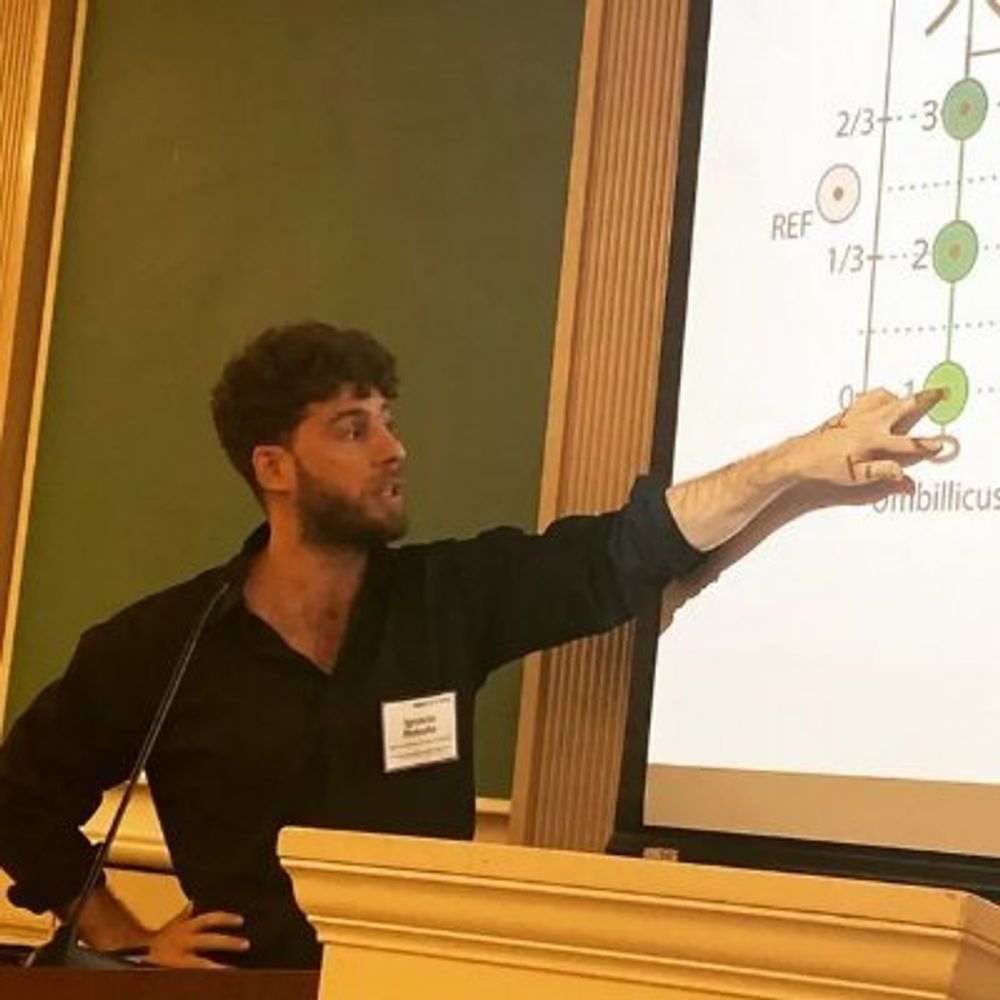
Image illustrating sensor placement. The reference sensor is placed on the xiphoid process (just under the sternum), the ground is placed on the left costal margin (just under the bottom rib), and sensors one through four are place over where the stomach would be. Sensor 3 is midway through the umbilicus (navel) and the reference sensor. Sensor 4 is roughly three centimetres from sensor 3 to participant-right. Sensors 2 is also roughly three centimetres away from sensor 3, but along a 45 degree angle upwards and to participant-left. Sensor 1 lies 3 centimetres further from sensor 2, along the same 45 degree line.

Two-panel image showing a processed electrogastrogram. The left panel shows five minutes of raw data from four different leads (measured from the four sensors in the previous image and their common reference). The right panel shows the same signal in frequency space, illustrating the typical normogastric peak at 3 cycles per minute.
Are you curious about electrogastrography, but keep getting chicken-related results when googling "EGG"? We have the preprint for you!
In this tutorial, we describe how to acquire and analyse gastric data from human participants. Plus FREE software! Read it here: arxiv.org/abs/2509.17260
18.12.2025 14:49 —
👍 35
🔁 16
💬 5
📌 2

Home - ESCAN 2026
ESCAN 2026 is the 9th ESCAN Conference, the biennial meeting of the European Society for Cognitive and Affective Neuroscience.
The ESCAN 2026 website is now live! → escan2026.eu
Join us in Rome, 3–6 June 2026, for the next European meeting in cognitive and affective neuroscience.
Find the registration info, venue details, and updates all in one place.
More news soon.
#ESCAN2026 #Neuroscience #Rome2026
27.11.2025 04:59 —
👍 21
🔁 12
💬 0
📌 1
So happy this paper is now out in @plosbiology.org! We investigated whether fluctuations in MEPs can be explained by phasic influences from internal bodily rhythms, and whether this might happen independently per organ system.
#interoception #neuroskyence
13.11.2025 11:01 —
👍 63
🔁 27
💬 2
📌 0
Thank you @dalmaijer.bsky.social for this excellent spotlight on our stomach-brain synchrony research! The analysis beautifully highlights how "more interoception isn't always better", it's about the context and interpretation of bodily signals.
09.09.2025 12:28 —
👍 9
🔁 0
💬 0
📌 0
Preprint -
Excited to present WHOLISTIC, which extends the concept of whole-brain functional imaging to the entire body. Pioneering work by incredibly talented Virginia Ruetten @vmsruetten.bsky.social, this platform reveals whole-organism cellular dynamics in vivo.
www.biorxiv.org/content/10.1...
08.09.2025 16:23 —
👍 194
🔁 70
💬 3
📌 6
visualizes gut peristalsis together with enteric nervous system activity,
08.09.2025 16:23 —
👍 9
🔁 1
💬 1
📌 0
Thank you very much Darinka!
05.09.2025 10:28 —
👍 0
🔁 0
💬 0
📌 0
Thank you Tahnee!!!
04.09.2025 14:44 —
👍 0
🔁 0
💬 0
📌 0
Thanks Irena!
04.09.2025 14:28 —
👍 0
🔁 0
💬 0
📌 0
Thank you so much Vanessa!
04.09.2025 14:27 —
👍 0
🔁 0
💬 0
📌 0
Thanks Edwin!!!
04.09.2025 14:27 —
👍 1
🔁 0
💬 0
📌 0
Thanks Nils!
04.09.2025 11:50 —
👍 1
🔁 0
💬 0
📌 0
I'll have open position for a postdoc and PhD students starting next year so do get in touch if this project entices you
04.09.2025 10:37 —
👍 3
🔁 3
💬 0
📌 0
Huge thanks to my mentors, colleagues, and collaborators who helped me get here
04.09.2025 10:37 —
👍 0
🔁 0
💬 1
📌 0
I’ll be leading this work as a new ERC-funded PI at the German Institute of Human Nutrition (DIfE), starting 2026.
04.09.2025 10:37 —
👍 1
🔁 0
💬 1
📌 0
GUT-FEEL will explore how the contractions and secretions of the gut shape brain activity, cognition, and mood by combining methods such as electrogastrography (EGG), fMRI, EEG, and hormone sampling
04.09.2025 10:37 —
👍 1
🔁 0
💬 1
📌 0
We all know the phrase “gut feeling.” But beyond the metaphor, the gut is anatomically connected to brain systems controlling arousal, mood, and behavior
04.09.2025 10:37 —
👍 1
🔁 0
💬 1
📌 0
Exciting news: I’ve been awarded an ERC Starting Grant for my project GUT-FEEL: Gut influences on brain and mind🥳#ERCStG @erc.europa.eu
04.09.2025 10:37 —
👍 23
🔁 0
💬 8
📌 0
Vamos Mateo! team erc :)
04.09.2025 10:28 —
👍 1
🔁 0
💬 1
📌 0