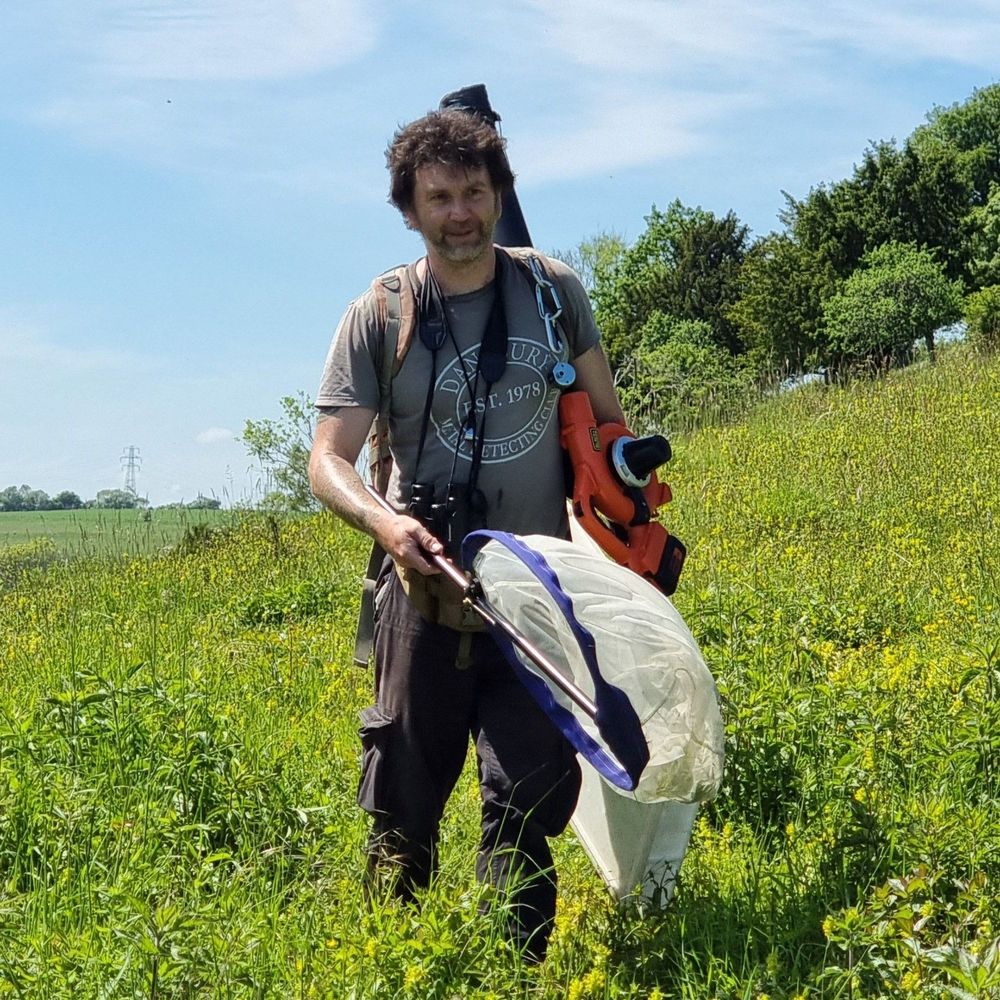
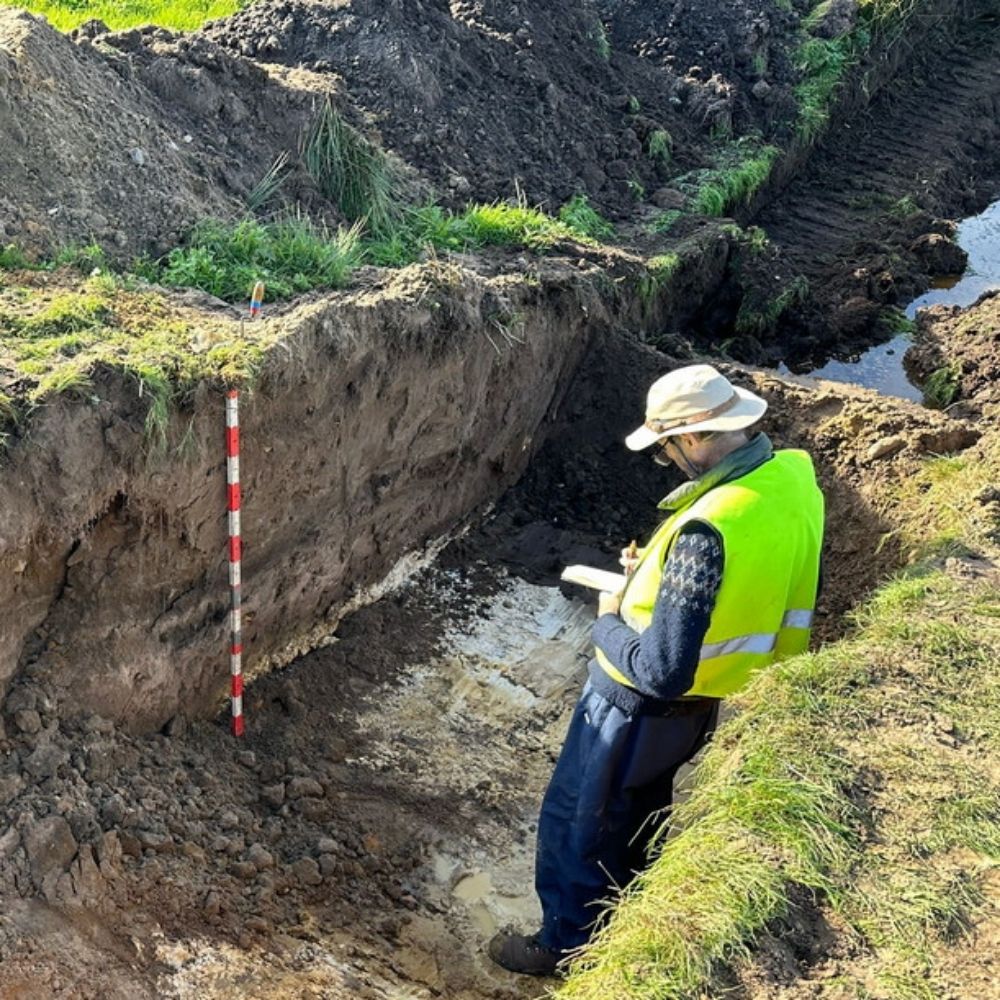
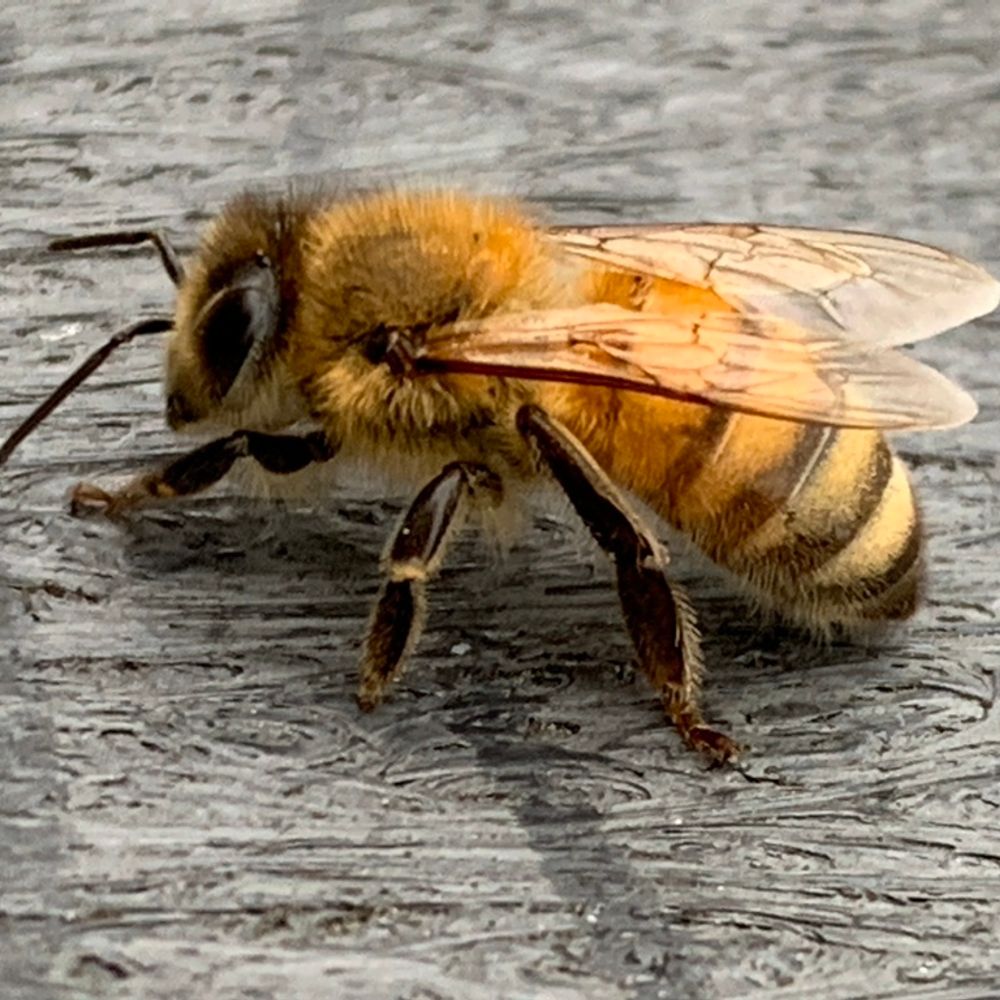
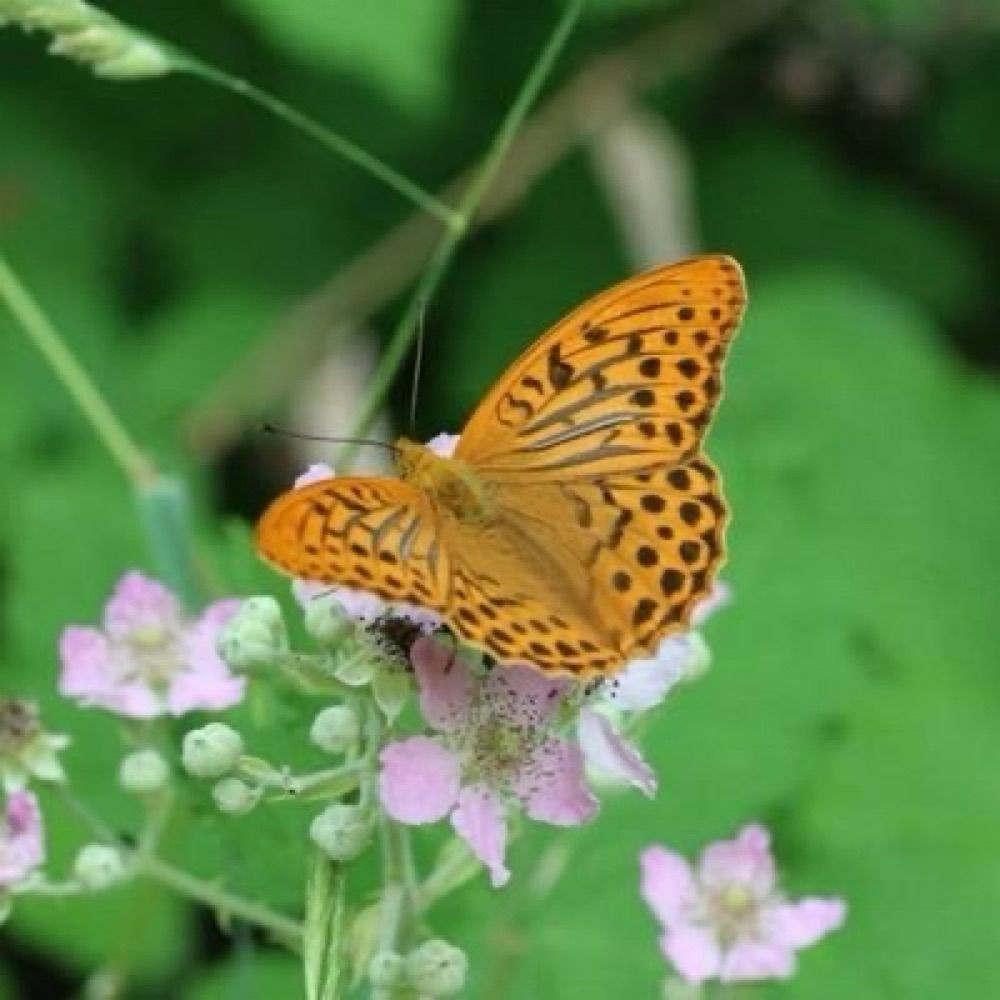
What do you record? Birds? Plants? Beetles? 🐞
Pan-Species Listing is about recording everything you find—building a fuller picture of UK biodiversity.
FREE! Join @graemelyons.bsky.social on 13 May to learn how to get started.
🔗 www.eventbrite.co.uk/e/1977266072...
@panspecieslisting.bsky.social
20.02.2026 10:38 — 👍 7 🔁 5 💬 0 📌 0

New on the blog! Read a sample chapter of Pan-Species Listing by @graemelyons.bsky.social 📖
Take a look 👀➡️ https://tinyurl.com/uye72vtd
#panspecies #identification #species #taxonomy
19.02.2026 11:54 — 👍 10 🔁 7 💬 0 📌 0

It's really quite common all through Sussex, here's my 171 records of it mapped. Such a cool looking thing though, I had one like that where the 'hole' through the head seems to be a collapsed turret and not a hole.
18.02.2026 16:17 — 👍 1 🔁 0 💬 0 📌 0
Enjoy!
18.02.2026 14:25 — 👍 0 🔁 0 💬 1 📌 0

Cover of book Pan-species Listing by Graeme Lyons.
Really enjoying this by @graemelyons.bsky.social
I don't think I'll ever become a super-naturalist but I'll have fun trying!
#PanSpeciesListing
18.02.2026 09:48 — 👍 12 🔁 4 💬 0 📌 0
Almost certainly I would think.
13.02.2026 15:02 — 👍 1 🔁 0 💬 0 📌 0
This was taken last summer. I didn't see any at Graffham where I found the moths in 2017 but I did find an entirely new population (and quite a heatlhy one too) at Hesworth Common.
13.02.2026 15:01 — 👍 1 🔁 0 💬 0 📌 0

2/2 I have 18 records, all from the Green Sand Ridge in West Sussex.
13.02.2026 14:45 — 👍 1 🔁 0 💬 0 📌 0

1/2 #speciesaday no. 686 is Oblong-leaved Sundew. Not usually as common as Round-leaved Sundew in Sussex. Find it on bare exposed black peaty mud (M16 - along with Sphagnum compactum and Marsh Clubmoss). This one appeared on a scrape at Hesworth Common last year, it also popped up again at Graffham.
13.02.2026 14:44 — 👍 57 🔁 4 💬 3 📌 0
Sounds like you could have done with that etymology in this instance ;). Never too late to start something new though.
13.02.2026 09:05 — 👍 1 🔁 0 💬 2 📌 0
Thanks Ken and Linda, I hope you enjoy it.
13.02.2026 09:02 — 👍 0 🔁 0 💬 0 📌 0
Great stuff, thanks!
13.02.2026 09:01 — 👍 0 🔁 0 💬 0 📌 0

6000 species in 2026: 6 week summary
As of today I am on 1,255 species (20.9%) in the first six weeks of the year (665 of which are inverts). The latest addition being a tiny Ps...
1,255 for the year! 20.9% of the challenge complete, including 665 invertebrates. A trip out yesterday produced four lifers, one species new to Sussex and one new to West Sussex. A ridiculous 80 Cattle Egrets was hard to believe even when I was looking at them.
12.02.2026 20:18 — 👍 15 🔁 2 💬 0 📌 1
Thank you so much! Perfect.
09.02.2026 06:15 — 👍 1 🔁 0 💬 0 📌 0
Does anyone happen to have photos of the Newhaven Woodchat Shrike and the Humpback Whale (when it was off Beachy Head) from last year that I could use in some talks about my book please?
08.02.2026 15:42 — 👍 2 🔁 5 💬 1 📌 0
I don't have any lined up but if you know of a venue, let me know!
08.02.2026 10:53 — 👍 1 🔁 0 💬 1 📌 0
Thanks so much Dave, this is great to hear!!!
08.02.2026 10:52 — 👍 10 🔁 1 💬 0 📌 0

2/2 I only have 5 records from 2 sites. Marline Valley in East Sussex and as of this year, Knepp in West Sussex. Seems to be genuinely scarce.
01.02.2026 14:56 — 👍 1 🔁 0 💬 0 📌 0

1/2 #speciesday no. 685 is Tanymecus palliatus. Nationally scarce b. Like large, plain, long-legged Sitona. Feeds on a range of plants in grasslands. All my records are between 15th May and 7th July.
01.02.2026 14:55 — 👍 19 🔁 1 💬 1 📌 0
If you let Andy know, he'll add them straight on.
31.01.2026 19:42 — 👍 3 🔁 0 💬 1 📌 0
Mine arrived today! Looks fantastic, and so information-rich that I could browse it for weeks. Unlike any other book I know, and one I wish I'd had 50 years ago! Natural history may never be quite the same again...
31.01.2026 14:34 — 👍 8 🔁 1 💬 2 📌 0
Coming from you that really means something Brian, thank you!
31.01.2026 18:16 — 👍 3 🔁 0 💬 0 📌 0

It's arrived! Pan-species Listing: How to Become a Super-Naturalist published by @pelagicpublishing. My first book.
I am so pleased with it. It looks amazing, all those photos of incredible British species really make this a very colourful book and a celebration of how fantastic our wildlife is.
30.01.2026 12:27 — 👍 117 🔁 22 💬 8 📌 1
£2 Talk Series – ‘10,000 Species’ by Graeme Lyons – Exeter Street Hall, Brighton
I am doing a talk on the 4th March at Exeter Hall, just by the Chimney House pub not far from me in Brighton on pan-species listing and the book, I'll also be selling copies at a discounted price exeterstreethall.org/event/2-talk...
28.01.2026 16:27 — 👍 7 🔁 5 💬 2 📌 0
This is testimony…
📌 Stella Carlson, “Pink coat lady”, speaks on the murder of Alex Pretti.
“After the shooting, they (ICE) decided to just scatter and save themselves.”
28.01.2026 10:48 — 👍 11748 🔁 5243 💬 456 📌 403


At last I have seen the Juniper Shield Bug, Cyphostethus tristriatus thanks to @graemelyons.bsky.social who pointed them out. Also learned a good technique for bug collecting! Sullington, South Downs #shieldbugs #juniper A good day.
25.01.2026 21:43 — 👍 21 🔁 3 💬 0 📌 0

🦋 Pan-Species Listing: Become a Super-Naturalist
Record all the wildlife you see in the UK and level up your natural history skills.
Join @graemelyons.bsky.social Lyons on 13 May to discover the world of PSL. @panspecieslisting.bsky.social
🎟️ FREE! Book now: www.eventbrite.co.uk/e/1977266072...
20.01.2026 10:02 — 👍 14 🔁 8 💬 0 📌 0
Natural history blogs, collections, herbaria, palaeobotany, lichens, plants and fungi. Cats. All the good stuff
PhD Biosciences (ecological systematic reviews & statistics), macro & astro photo, maker, renewables (living off grid), natural history (esp. Lepidoptera & Odonata), collect real paper books & journals.
From 🏴 Live 🏴. She/her 🏳️⚧️
Enjoying learning about mosses and ferns, liverworts, hornworts…
Devon
Just starting out learning about galls and leaf miners
The story of the Earth - geoconservation, museums, the poetry of things old & wild - based in East Anglia, UK.
https://futureheritage.wordpress.com/
Postdoc @ou-eees.bsky.social🦎 DPhil @biology.ox.ac.uk 🪲 Biodiversity, climate, ecology, species distributions, landscape genomics, conservation 🌳
Warden, Dancersend Nature Reserve, Bucks; MBE for conservation work; painter/writer; love beetles, fungi, slime moulds, the Chilterns & Armenia. Refugee from Twitter which used to be so good
Nature and climate. Work @unepwcmc.bsky.social on nature-based solutions for climate change mitigation. She/her. Sheffield/Cambridge. Views my own.
Freelance invertebrate ecologist
https://jamesdeebirdingtrips.blogspot.com/
https://www.instagram.com/james_dee_home/
Volunteer for Wildlife Trust BCN, butterfly transect walker at Priory Park, Bedford, interested in conservation, butterflies & all natural history
Hello! Entomologist and crustacean biologist from Florida, USA! Also art and game development. AuDHD. has anyone seen my phone
Nature writer; award-winning garden writer; book author; evening knitter and crocheter; tomato 🍅 fancier; grudging patron of feral pigeons. Living in Ireland 🇮🇪
https://linktr.ee/janepowers
🪸 Search and download biodiversity data.
🌍 Discover co-inhabitants of planet Earth.
Notts birder.
Landlocked #PatchBirding
Banner pics = patch finds + 4 Common Cranes & a Garganey
Walk/Bird/Learn/Repeat
Mostly #LowCarbon choices
#UKBirding
#Vegan
Posting photos and information about wildlife in the Fife & Kinross area and further afield.
I'm the ecologist at the Wiston Estate in West Sussex, C permit BTO bird ringer, a hedgerow appreciator, podcaster and struggling runner. Check out the Wandering Ecologist Podcast for positive conservation news and fun adventures! All views are my own.
Artist, writer, explorer
Cornwall based
Science fiction stories for children and adults
Sowlennagrace.substack.com
https://www.youtube.com/@SowlennaGrace