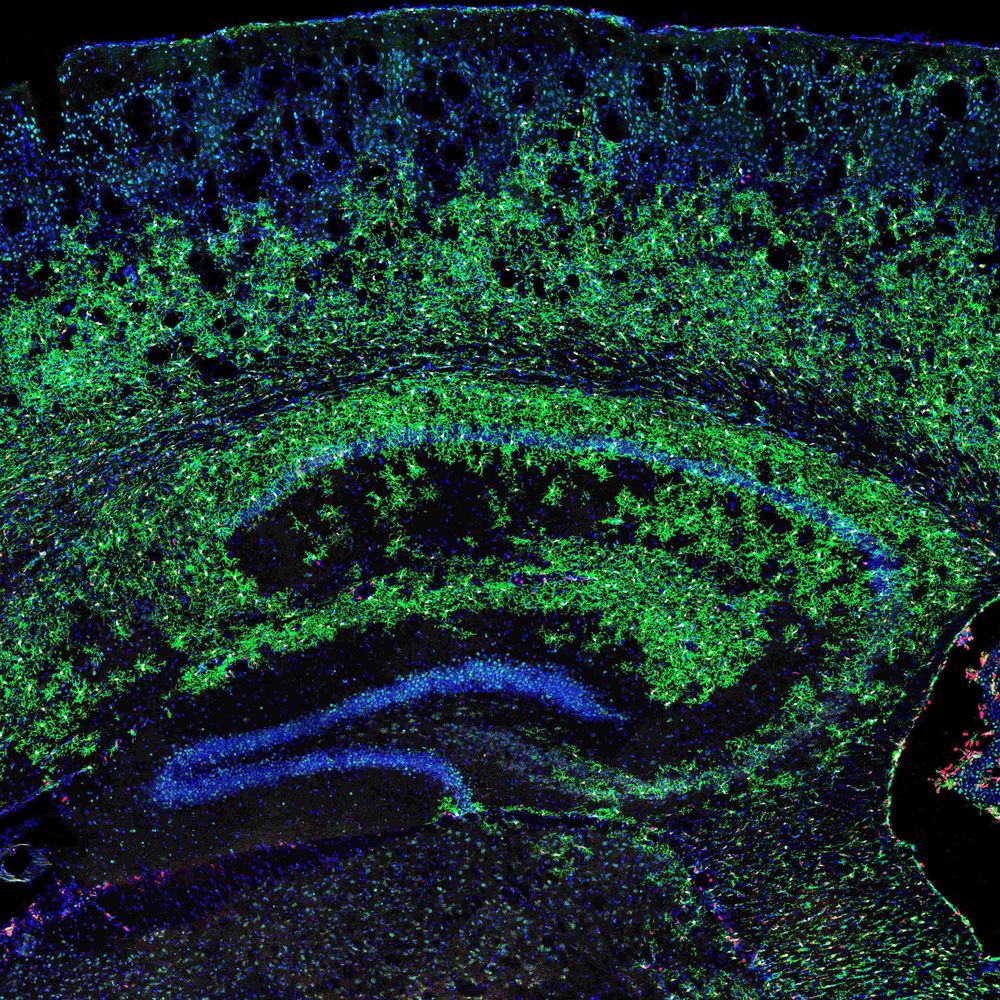
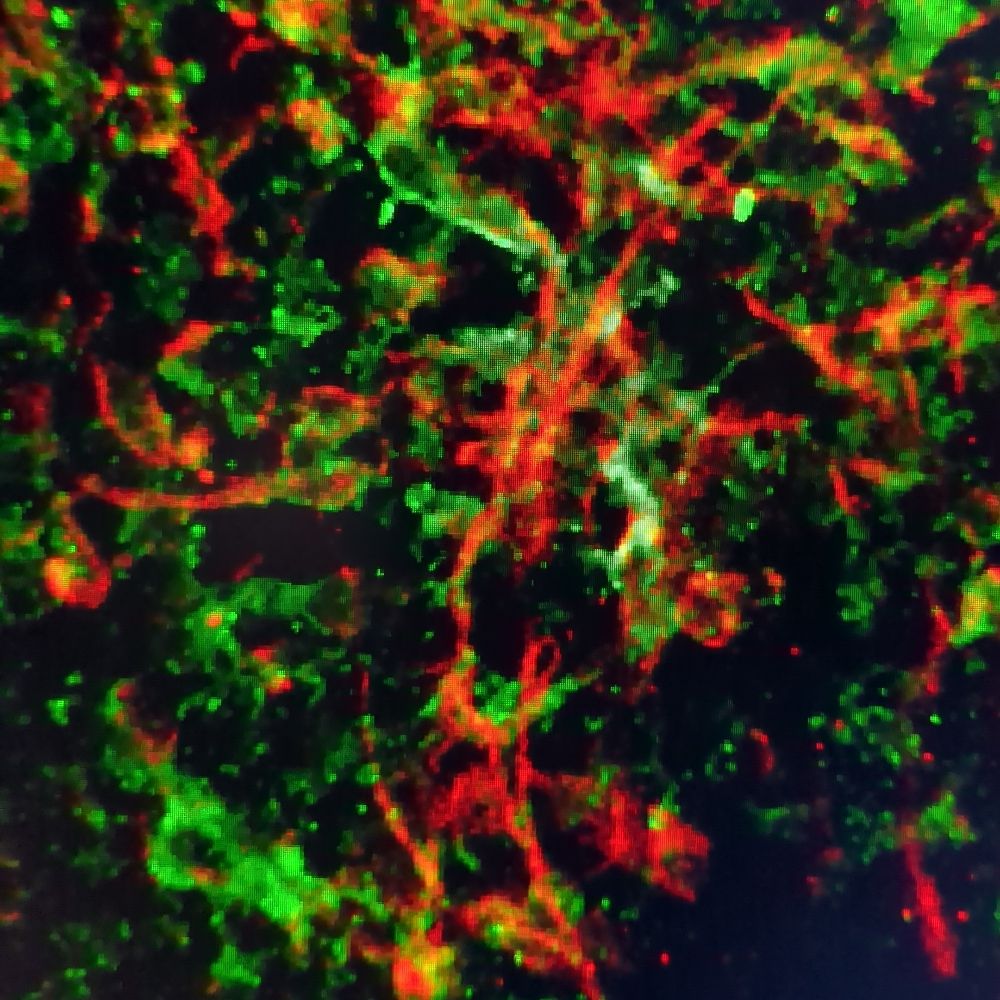
In this study, we developed a series of new chimeric brain models by combining different transgenic mouse lines with co-transplantation of human microglia and neural cells, enabling in vivo studies of human neuro–glia and glia–glia interactions.
06.01.2026 19:46 — 👍 0 🔁 0 💬 0 📌 0
Thank you so much for highlighting our work!
27.11.2025 01:57 — 👍 0 🔁 0 💬 0 📌 0

An idea we started in 2019 is now published in @natneuro.nature.com! Excited to share our new study: rdcu.be/eRvdA
Congrats to Mengmeng Jin and our team! Heartfelt thanks to all collaborators for their support, and to the reviewers for their insightful comments!
24.11.2025 14:17 — 👍 3 🔁 1 💬 0 📌 0
We also discuss technical challenges and share ideas to improve current models—making them more effective and broadly applicable.
We’re excited about the growing potential of chimeric brain models, and hope this piece sparks new ideas, collaborations, and progress in the field!
28.04.2025 16:18 — 👍 0 🔁 0 💬 0 📌 0
• Enable glial replacement strategies: studying interactions between diseased human glia and newly engrafted replacement human glia
• Study In vivo reprogramming of glia to neurons
• Combine with single-cell and functional assays to deepen the understanding of the human brain
28.04.2025 16:18 — 👍 1 🔁 0 💬 1 📌 0
• Reveal human-specific brain development & aging processes
• Uncover mechanisms of neurodevelopmental (e.g., autism) and neurodegenerative (e.g., Alzheimer’s) disorders
28.04.2025 16:18 — 👍 0 🔁 0 💬 1 📌 0
In this review, we center around one key idea: unlock.
How can chimeric brain models unlock the mysteries of human brain development, aging, and disease?
We discussed how these chimeric models can: 👇
28.04.2025 16:18 — 👍 0 🔁 0 💬 1 📌 0
Recently, with strong support from the team, we rebuilt it from scratch—and @cp-neuron.bsky.social gave it a home!
Big thanks to the reviewers for their thoughtful and constructive feedback!
28.04.2025 16:18 — 👍 1 🔁 0 💬 1 📌 0

This review was actually written once before (the section on methodological considerations for creating chimeric models is shown in the image below), but it didn’t make it to publication at the time.
28.04.2025 16:18 — 👍 0 🔁 0 💬 1 📌 0
Since starting my lab, we’ve made chimeric brain models a core focus. Our team published studies on the human microglia chimeric brain model and applied chimeric models to investigate disease mechanisms.
28.04.2025 16:18 — 👍 0 🔁 0 💬 1 📌 0

I was inspired by Dr. Suchun Zhang’s work on differentiating human PSCs + transplanting them into mice, and Dr. Steven Goldman’s work on human oligodendroglia taking over mouse brains.
We discussed the idea of chimeric models in our 2014 Nat Commun paper 👇
28.04.2025 16:18 — 👍 0 🔁 0 💬 1 📌 0
The idea for this review has been a long time in the making.
Back during my postdoc, I often discussed “no brainer” mice (mice lacking cortical structures) with my mentor Dr. Wenbin Deng, which sparked my curiosity about human cell engraftment in the mouse brain.
28.04.2025 16:18 — 👍 0 🔁 0 💬 1 📌 0
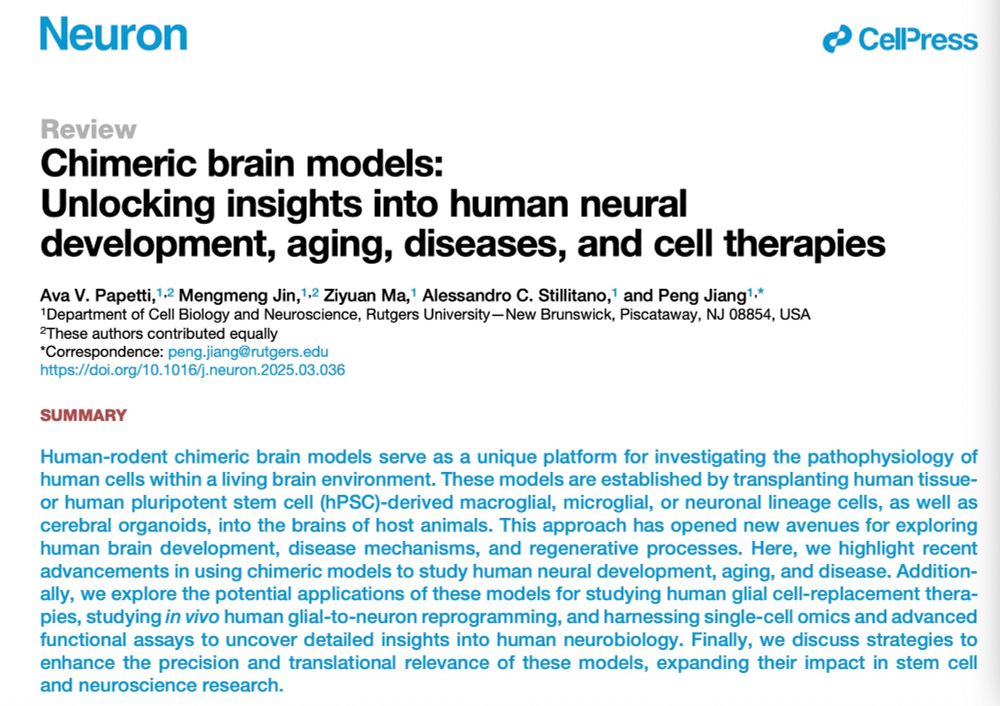
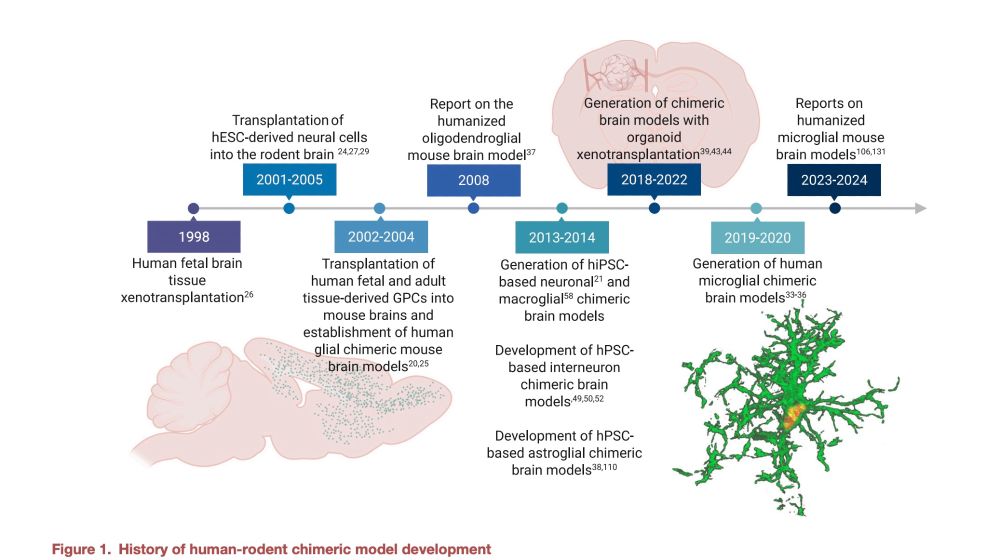
Thrilled to share our review just published in @cp-neuron.bsky.social ! 🎉
Big shoutout to Ava, Mengmeng, and our entire team!
authors.elsevier.com/a/1k-uh3BtfH...
28.04.2025 16:18 — 👍 4 🔁 3 💬 1 📌 0
Hopefully a little inspiration for our trainees...this was led by an amazing postdoc at UPitt..Dr. Jean Liou
07.03.2025 00:54 — 👍 12 🔁 3 💬 0 📌 0
Assistant professor, Rutgers university.
Biomolecular condensates, lipid droplets, alpha-synuclein
Neuroscientist, dabbling in stem cells, bioinformatics, and genomics. Professor at Rutgers.
We study cancer and metabolism at the University of Illinois College of Medicine and University of Illinois Cancer Center.
Research scholar at TIFR Hyderabad
Account of the Cellosaurus (www.cellosaurus.org) knowledge resource, the encyclopedia of cell lines
Watch our introductory video on: https://www.youtube.com/watch?v=xKA2AleIe0g
Disabilities and Accessibility Advocacy
2025 Schmidt Science Fellow
CDB UCL London and Gurdon Institute Cambridge
Wilson, Simons and Norden labs
Developmental, Systems and Synthetic Biology
Prev: Briscoe, Crick Institute; Zernicka-Goetz and Thomson, Caltech; Banerjee and Goehring, UCL
We are a group of Basel-based scientists interested in #stemcells & #organoids. Our ambition is to promote scientific collaboration between academic and pharmaceutical research institutes around the globe.
European Animal Research Association | Informing about the importance of biomedical research using animals and the progress of new approach methodologies.
Postdoctoral researcher at University of Zurich and the Childrens Research Centre. Views are my own.
Believer in Democracy. Defender of truth. Happily married. Proud Union member of SEIU 668 💜💛 LGBTQ+ ally🏳️🌈 Cat Dad 🐈⬛ #Vote💙 occasionally sardonic, sarcastic, and snarky
🚫DM 🚫 Crypto 🚫 MAGA
DMs from strangers = Block
PhD candidate at UBC, supervised by Dr. Francis Lynn. Studying islet transplantation.
Post-doctoral researcher at Tata Institute of Fundamental Research Hyderabad.
Veetil Lab, chemical biology.
The BBTΔ Lab, led by Prof. Kavi Devraj (PI), is based at the BITS Pilani Hyderabad Campus.
Website: kdevraj.wixsite.com/bbtd
We make cool tabletop items :D
Scientist studying epithelial biology, stem cells and cancer at UCL (@epicentr.bsky.social) 🫁 Deputy Editor at Stem Cells Translational Medicine
A final year PhD student looking for a post doc opportunity in the field of cell and developmental biology (gathering info)
Scientific content aggregator with custom content feeds. Science news, jobs, events and more. Sign up at https://www.scientific.today.
#Starvinity is a Sci-Fi/Fantasy universe, inspired by Star Wars, Star Trek, Dune, and so much more. Seek truth, defy tyranny, find freedom.