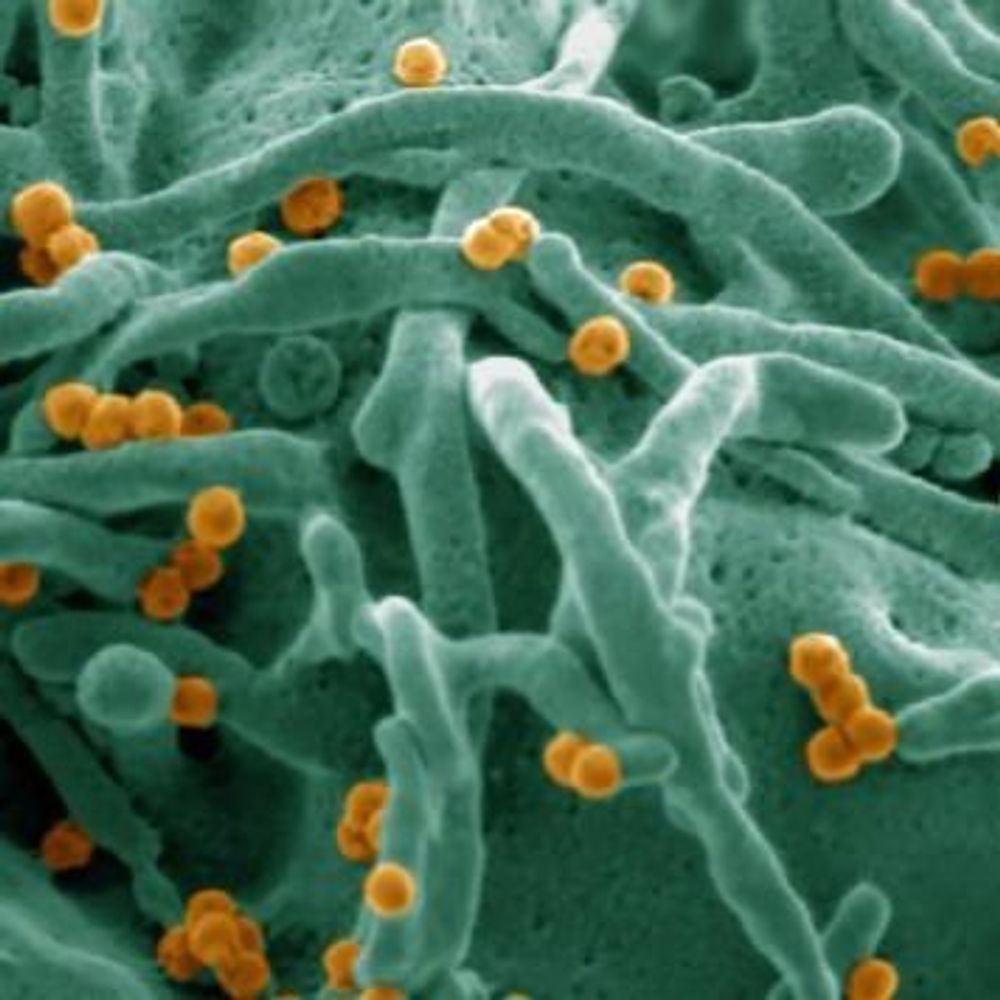
13/ Model choice balances safety, cost, ethics, and biology. Integrating advanced human-relevant models is a key future direction.
20.01.2026 10:41 —
👍 1
🔁 0
💬 1
📌 0
12/ BSL-2 surrogates reduce barriers: pseudoviruses (entry only), recombinant Cedar virus (replicating, non-pathogenic). Chimeric CedV expressing NiV/HeV F+G matches receptor tropism and enables BSL-2 pathogenesis studies in immunodeficient mice.
20.01.2026 10:41 —
👍 1
🔁 0
💬 1
📌 0
11/ Syrian hamsters: immunocompetent and permissive; disease depends strongly on route and dose; limited reagents constrain depth. NHPs: closest to human disease, including CNS involvement and relapse, but high cost and ethical/logistical barriers.
20.01.2026 10:41 —
👍 1
🔁 0
💬 1
📌 0
10/ Mice: WT resistant due to type I IFN. IFNAR-KO mice develop lethal disease but omit key IFN-virus interactions. Ferrets: rapid systemic and vascular disease; critical for testing m102.4 mAb efficacy and strain comparisons.
20.01.2026 10:41 —
👍 1
🔁 0
💬 1
📌 0
9/ In vivo models remain essential for vaccine/therapeutic efficacy and safety. No single model fully recapitulates human disease.
20.01.2026 10:41 —
👍 1
🔁 0
💬 1
📌 0
8/ Organ-on-a-chip models combine iPSCs with microfluidics to mimic organ architecture, flow, and mechanical stress. OOC systems were widely used for SARS-CoV-2; not yet applied to henipaviruses but promising for high-containment research.
20.01.2026 10:41 —
👍 1
🔁 0
💬 1
📌 0
7/ Key limitations of in vitro models: lack of circulating immune system, though co-culture approaches are increasingly used.
20.01.2026 10:41 —
👍 1
🔁 0
💬 1
📌 0
6/ Organoids: 3D iPSC-derived tissues capture architecture and cell diversity; compatible with histology and transcriptomics. Advantages of organoids: scalable, cost-effective vs animals, fewer ethical constraints, and can model later-stage pathology.
20.01.2026 10:41 —
👍 1
🔁 0
💬 1
📌 0
5/ Trans-well and air-liquid interface models add barrier function and polarity. Enable TEER, immune migration, and epithelial layering. In porcine airway ALI cultures, NiV spreads mainly cell-to-cell, induces IFN/MHC-I, and causes layer-specific cytopathology.
20.01.2026 10:41 —
👍 1
🔁 0
💬 1
📌 0
4/ Arterial ECs show more syncytia, cell death, and viral RNA than venous ECs, despite weak IFN responses at high viral load.
20.01.2026 10:41 —
👍 1
🔁 0
💬 1
📌 0
3/ Limits of monolayers: single-cell type, no immune context, and phenotypic drift with prolonged culture reduce in vivo relevance. iPSC-derived 2D models improve relevance. Endothelial iPSCs reveal strong arterial EC tropism driven by high EFNB2 expression.
20.01.2026 10:41 —
👍 1
🔁 0
💬 1
📌 0
2/ Cell lines: many are permissive due to widespread ephrin receptors. BHK, Vero, HeLa support high replication; useful for entry/IFN studies. Bat cell lines (esp. Pteropus alecto kidney, lung, brain) enable reservoir-host studies, but lack tissue and immune complexity.
20.01.2026 10:41 —
👍 2
🔁 0
💬 1
📌 0
1/ Henipavirus research is constrained by BSL-4 containment and limited patient samples, making in vitro and in vivo models essential.
20.01.2026 10:41 —
👍 1
🔁 0
💬 1
📌 0
📣 Publication alert 📣
A review paper in @ebiomedicine.bsky.social by @jakubhantabal.bsky.social summarises the current knowledge on host-pathogen interactions of henipaviruses and emerging models to study them. Below is summary thread 2 of 2: Models to study henipaviruses 🧵:
@psioxford.bsky.social
20.01.2026 10:41 —
👍 3
🔁 1
💬 1
📌 0
16/ Major gaps remain in defining cell-type-specific transcriptional responses, spatial immune organization, and cytokine signalling in infected tissues.
15.01.2026 10:22 —
👍 0
🔁 0
💬 1
📌 0
15/ Overall, henipavirus pathogenesis reflects efficient IFN antagonism, endothelial/CNS tropism, dysregulated inflammation, and possible immune-cell involvement.
15.01.2026 10:22 —
👍 0
🔁 0
💬 1
📌 0
14/ Adaptive immunity: seroconversion occurs, but delayed antibody responses and B-cell exhaustion have been reported. NiV activates CD4+ and CD8+ T cells, yet transient T-cell suppression and exhausted phenotypes are observed.
15.01.2026 10:22 —
👍 0
🔁 0
💬 1
📌 0
13/ DC infection may enable “trojan horse” trafficking of virus across the blood-brain barrier. In pigs, NiV has also been detected in CD8+ T cells, but similar infection has not yet been confirmed in humans.
15.01.2026 10:22 —
👍 0
🔁 0
💬 1
📌 0
12/ Henipaviruses may interact directly with immune cells due to ephrin expression on leukocytes. NiV can infect human dendritic cells at low levels; infected DCs induce T-cell apoptosis, suggesting immunosuppression.
15.01.2026 10:22 —
👍 0
🔁 0
💬 1
📌 0
11/ Lung pathology includes interstitial pneumonia, vasculitis, thrombosis, syncytia, haemorrhage, and pneumocyte hyperplasia. Reported pulmonary cytokines include IL-6, IL-8, IL-1α, MCP-1, and G-CSF; neutrophil involvement is hypothesised but unproven.
15.01.2026 10:22 —
👍 0
🔁 0
💬 1
📌 0
10/ The exact CNS cytokine landscape is unknown; TNFα, IL-6, IL-8, CCL2/3/5, and CXCL10 are inferred but not spatially resolved.
15.01.2026 10:22 —
👍 0
🔁 0
💬 1
📌 0
9/ Tissue pathology in NiV/HeV is dominated by vasculitis and inflammation in CNS and lung. CNS lesions show necrosis, encephalitis, and mixed immune infiltrates: lymphocytes, macrophages, neutrophils, and reactive glia.
15.01.2026 10:22 —
👍 0
🔁 0
💬 1
📌 0
8/ CedV is less fusogenic than NiV/HeV, forming fewer syncytia in vitro, a phenotype linked to reduced cytopathic effects.
15.01.2026 10:22 —
👍 0
🔁 0
💬 1
📌 0
7/ CedV infection induces IFN-stimulated genes (e.g. MxA), correlating with effective antiviral control. Receptor usage also contributes to CedV attenuation: absence of ephrin-B3 binding may limit CNS spread.
15.01.2026 10:22 —
👍 0
🔁 0
💬 1
📌 0
6/ CedV is non-pathogenic largely because it lacks P-gene RNA editing and therefore does not express V or W proteins. CedV P protein has low homology to NiV/HeV P; key STAT-binding residues are mostly absent, impairing IFN antagonism.
15.01.2026 10:22 —
👍 0
🔁 0
💬 1
📌 0
5/ NiV W protein translocates to the nucleus via karyopherins α3/4 and interferes with IRF3 and TLR-mediated antiviral pathways. These IFN antagonism mechanisms allow robust viral replication despite host antiviral sensing.
15.01.2026 10:22 —
👍 0
🔁 0
💬 1
📌 0
4/ Innate immunity, especially type I interferon (IFN-I), is a key antiviral barrier targeted by henipaviruses. NiV V protein binds STAT1 in the cytoplasm, blocking phosphorylation and downstream IFN signalling.
15.01.2026 10:22 —
👍 0
🔁 0
💬 1
📌 0
3/ Viral entry is mediated by G glycoprotein binding ephrin-B2 and ephrin-B3 receptors. CedV differs, using multiple ephrin-A/B receptors but not ephrin-B3. Ephrin-B2/B3 are highly expressed in endothelium and CNS neurons, consistent with systemic vasculitis and neuroinvasion seen clinically.
15.01.2026 10:22 —
👍 1
🔁 0
💬 1
📌 0