Demasiado llevo viviendo
con los que odian la paz.
Cuando yo digo: «Paz»,
ellos dicen: «Guerra».
Mon âme a trop vécu
parmi des gens qui haïssent la paix.
Moi, si je parle de paix,
eux sont pour la guerre.
Demasiado llevo viviendo
con los que odian la paz.
Cuando yo digo: «Paz»,
ellos dicen: «Guerra».
Mon âme a trop vécu
parmi des gens qui haïssent la paix.
Moi, si je parle de paix,
eux sont pour la guerre.
Ps 120,6-7
Multum incola fuit anima mea
cum his, qui oderunt pacem.
Ego eram pacificus;
cum loquebar, illi impugnabant me.
I have had enough of dwelling
with those who hate peace.
I am for peace, but when I speak,
they are for war.
Spanish, a more inflected language, can occasionally do it intelligibly, even if not permitted by the standard rules of grammar: “Esa tan impenetrable luz”.
07.03.2026 15:51 — 👍 2 🔁 0 💬 0 📌 0Note how “ista…. vita”, and “illam… lucem” are symmetrically separated by modifying clauses. Latin can do that elegantly. It has the effect of emphasizing the demonstrative adjective. In English we would consider it grammatically unintelligible.
07.03.2026 15:51 — 👍 1 🔁 0 💬 1 📌 0
From the collect
… tu, quǽsumus, in ista qua vívimus nos vita gubérna ut ad illam, in qua ipse es, lucem perdúcas.
… guide us in this present life and lead us to that light in which you have your dwelling.
If Scotus is right about the intellect’s direct intuition of material singulars, why do we get tension headaches? I mean reflection on the immaterial phantasm seems to be a major cause of headaches.
Just kidding folks, no need to write rebuttals. Long live the Subtle Doctor.
Pues bien, cuando llegue el día del juicio, entonces los pecadores se darán cuenta de lo poco larga que es cada vida que pasa
Well, when the day of judgment comes, then sinners will realize how not very long each passing life is.
The “quam non sit longa” says more than “brief”.
Augustine, on Ps 6 (valde velociter)
Cum ergo iudicii dies venerit, tunc sentient peccatores quam non sit longa omnis vita quae transit;
Orbene, quando sarà venuto il giorno del giudizio, allora i peccatori si renderanno conto di come sia breve ogni vita che passa.
Ps 38,22
Ne derelínquas me, Dómine;
Deus meus, ne discésseris a me.
No me abandones, Señor;
Dios mío, no te quedes lejos;
Forsake me not, O LORD!
My God, be not far from me
Ne m'abandonne jamais, Seigneur,
mon Dieu, ne sois pas loin de moi.
Lk 16,19 ff
“There was a rich man who dressed in purple garments etc.”
God sees clearly into the tortuous human heart. We do not. Our hope is the grace he gives to help us see through the obfuscations and tangles of our own making. This is the beginning of repentance.
Jer 17,9
Dolósum est cor super ómnia et insanábile; quis cognóscet illud?
El corazón del hombre
es la cosa más traicionera y difícil de curar.
¿Quién lo podrá entender?
More tortuous than all else is the human heart,
beyond remedy; who can understand it?
We heard with our own ears, O God;
our forebears have declared to us
the deeds you did in their days,
you yourself, in days long ago.
Dieu, nous avons entendu dire,
et nos pères nous ont raconté,
quelle action tu accomplis de leur temps,
aux jours d'autrefois.
Ps 44,2
Deus, áuribus nostris audívimus;
patres nostri annuntiavérunt nobis
opus, quod operátus es in diébus eórum, in diébus antíquis.
Oh Dios, nuestros oídos lo oyeron,
nuestros padres nos lo han contado:
la obra que realizaste en sus días,
en los años remotos.
Mt 20,24-26
“You know that the rulers of the Gentiles lord it over them,
and the great ones make their authority over them felt.
But it shall not be so among you.”
How great the temptation for a Christian to wield power as if the redemption never happened.
Ps 55,9
Exspectábo eum, qui salvum me fáciat
a spíritu procéllæ et tempestáte.
esperaría en el que puede salvarme
del huracán y la tormenta.
I would hasten to find my shelter from the raging wind and tempest.
J'ai hâte d'avoir un abri
contre ce grand vent de tempête.

“A practical guide to the Transfiguration”. Something I’ve been thinking about.
wordsandthings.org/2026/03/03/a...
This is why he accepted to be one who, on the way to his death, required someone to help him carry his Cross.
His servanthood aims to teach us how to hear a call to serve.
Mt 23,10: «You have but one master, the Christ.
The greatest among you must be your servant.»
The voice of Christ to which a Catholic owes obedience is most often heard in the unexpected encounter with someone whose very circumstance petitions our assistance.
Estoy piando como una golondrina,
gimo como una paloma.
Mis ojos mirando al cielo se consumen:
¡Señor, que me oprimen, sal fiador por mí!
Comme l'hirondelle, je crie;
je gémis comme la colombe.:
A regarder là-haut, mes yeux faiblissent:
Seigneur, je défaille! Sois mon soutien!
Is 38,14
Sicut pullus hirúndinis, sic mussitábo,
meditábor ut colúmba;
attenuáti sunt óculi mei
suspiciéntes in excélsum.
Like a swallow I utter shrill cries;
I moan like a dove.
My eyes grow weak, gazing heaven-ward:
O Lord, I am in straits; be my surety!
¿Por qué te acongojas, alma mía,
por qué gimes dentro de mí?
Espera en Dios, que volverás a alabarlo:
«Salud de mi rostro, Dios mío».
Pourquoi te désoler, ô mon âme,
et gémir sur moi ?
Espère en Dieu ! De nouveau je rendrai grâce :
il est mon sauveur et mon Dieu !
Ps 42,6
Quare tristis es, ánima mea,
et quare conturbáris in me?
Spera in Deo, quóniam adhuc confitébor illi,
salutáre vultus mei et Deus meus.
Why are you cast down, my soul; why groan within me?
Hope in God; I will praise him yet again,
my saving presence and my God.

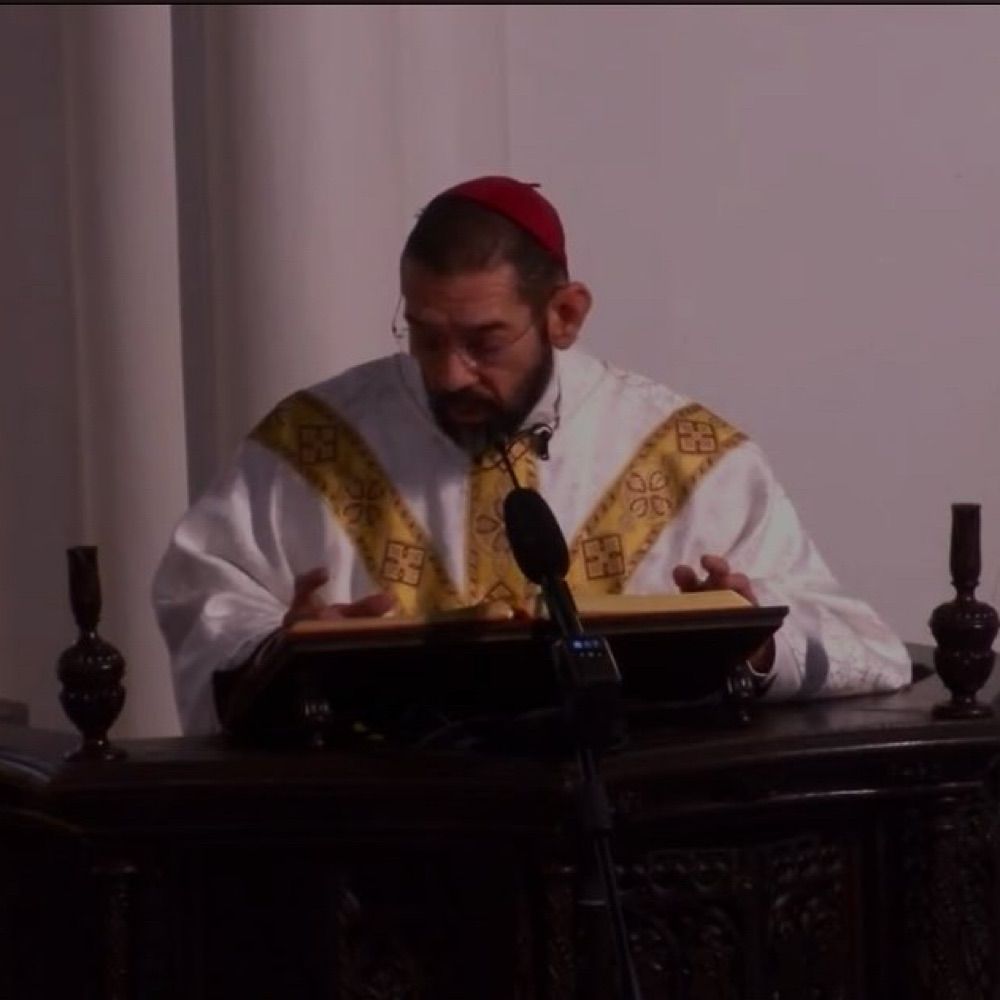
Lent II, Cathedral Mass
-On the sacramentality of Christ's life; the Transfiguration revealing the glory within him, and the "Anima Christi".
-Sobre la sacramentalidad de la vida de Cristo; la Transfiguración que revela la gloria dentro de él; y el “Anima Christi”.
youtube.com/watch?v=zbeK...
En Cristo la plenitud se muestra sacramentalmente; es decir, a través de su cuerpo.
01.03.2026 16:05 — 👍 5 🔁 0 💬 0 📌 0
Ps 150,5
omne quod spirat, laudet Dóminum.
Todo ser que alienta alabe al Señor.
Et que tout être vivant chante louange au Seigneur
Let everything that breathes praise the LORD
(The last phrase of the Psalter.)
Mt 17,8
«And when the disciples raised their eyes,
they saw no one else but Jesus alone.»
Not so much ‘where did Moses and Elijah go?’, but rather ‘where are they?’. The Law and the Prophets are in Him.
with the Church’s teaching on human dignity, the primacy of the family as a prior social reality that government should respect and protect, the principle of subsidiarity, and the inherently social character of human nature underlying the whole social order. 5/5
01.03.2026 02:46 — 👍 14 🔁 1 💬 1 📌 0
Most of us aren’t lawyers, but we can follow an argument. I wouldn’t recommend relying on an AI summary.
The brief is not primarily a theological argument; it proposes that birthright citizenship is solidly part of US law, and a legal principle that is in deep concord… 4/5
The sections on harm caused to society and the family by abandoning the principle (II,B-C) are pertinent to the issue of “what happens under our current system if the principle is abandoned”. 3/5
01.03.2026 02:46 — 👍 10 🔁 1 💬 1 📌 0
See I, A: “To Dismantle The Principle Of Birthright Citizenship Would Undermine Both The Legal And Moral Foundations of American Society.”
One really can’t argue that the Church should have said something when Dred Scott was being decided, but should not say something now. 2/5