This is actually quite brilliant, up to and including the final sentence 🔥
01.12.2025 11:09 — 👍 24944 🔁 9655 💬 510 📌 824
Why is this written as if that statement is just another opinion? What does the actual law say about the matter?
20.11.2025 20:34 — 👍 1 🔁 0 💬 0 📌 0

Image of the front entrance of a house, showing bright northern lights above: a green layer of aurora beneath a red aurora
we had spent much of the (chilly) evening in the countryside away from any lights, but my favorite image of the night ended up being the aurora just casually, majestically, filling the sky above our homes
12.11.2025 16:35 — 👍 5 🔁 0 💬 0 📌 0
yeah - tear drop shape, and I think the heaviest was 2.5 oz (I have them first weigh in g) Screening out pebbles and smoothing sand surface is better and have them measure rim-to-rim "as self-consistently as possible" Powder is a good idea -or with something like alternating layers of colored sand
22.10.2025 18:36 — 👍 2 🔁 0 💬 1 📌 0
one of the things I want to them to see is the effect of kinetic energy in impact geology and conversion of these high energies into (effectively) the violent excavation of the target surface
21.10.2025 20:48 — 👍 2 🔁 0 💬 0 📌 0
I have a short class activity exploring the mechanics of impact crater formation and crater morphology. First they drop small weights (fishing sinkers work well!) from various heights into sand beds and record crater diameters as a function of m,g,z, etc. Then end with lighting some firecrackers...
21.10.2025 20:48 — 👍 2 🔁 0 💬 2 📌 0
slow-motion capture from a student's phone:
21.10.2025 20:44 — 👍 1 🔁 0 💬 0 📌 0

Still image of sand bed with firecracker explosion starting to spread out an ejecta blanket
Teaching some comparative planetology, it turns out that lighting half-buried firecrackers in a bed of sand does a pretty nice job of simulating the formation of impact craters ; ) 🧪🔭
21.10.2025 16:20 — 👍 17 🔁 2 💬 1 📌 2
nist.gov and its associated subdomains: incredibly useful and important data, at risk of being lost...
13.10.2025 18:40 — 👍 1 🔁 0 💬 0 📌 0
it's something that existed in the population long before widespread recognition - so better diagnosis (and hopefully removal of stigma) would make it seem like there's a huge increase in its occurrence (whether or not that's actually the case...)
08.10.2025 12:48 — 👍 0 🔁 0 💬 0 📌 0

Classic plot of the occurrence of left handedness by birth year. The plot starts at 5% in 1890, dips to near 3-4% around 1910 then rises until leveling off at 12% in 1960 onward
I think about this plot all the time, and especially with respect to things like autism. If you’d lived in 1940 and had access to this data, would it feel like an “epidemic” of left-handedness?
25.09.2025 00:11 — 👍 7 🔁 0 💬 1 📌 1
To conclude, it looks like the Moon was moved around to give a nice backdrop(s) for the bridge scene ; )
A silly activity but a fun way to review some of the concepts we've been exploring in intro astronomy in order to better understand the relative motions of the Earth, Sun, and Moon!
18.09.2025 20:56 — 👍 3 🔁 2 💬 1 📌 0
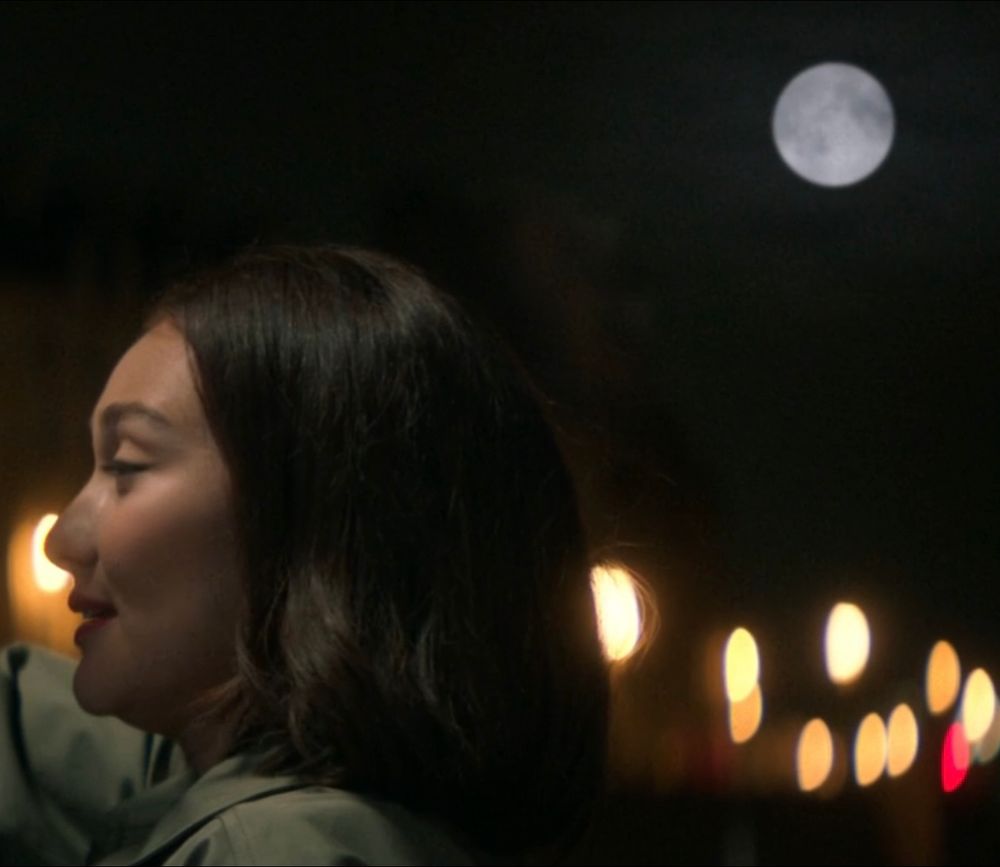
Belly from TSITP on the padlock bridge on the Seine, with the full Moon above the river in the background.
But in the next scene we see our main character(s) on or near what appears to be the "padlock bridge" on the Seine. We again see the Moon roughly aligned with the river. But the river runs SE-NW here(!) The timing and geometry therefore make it impossible to have the full Moon in this scene.
18.09.2025 20:56 — 👍 2 🔁 0 💬 2 📌 0

A picture of the Eiffel Tower at night, with a bright full Moon in the background.
Next, we have a nice shot of the Eiffel Tower with the bright gray full moon in the background. I'm not sure exactly where this is taken from, but the placement of the river suggests from somewhere around the Galeries area(?) That would put the Moon low in the ~southern sky - which is good!
18.09.2025 20:56 — 👍 2 🔁 0 💬 1 📌 0
BTW, in these scenes the Moon appears very bright whitish-gray (the way it looks when it's high in the sky), showing essentially no yellowish or reddish coloration from the atmospheric scattering that might be expected at relatively low altitudes (on the order of ~5 degrees here?)
18.09.2025 20:56 — 👍 2 🔁 0 💬 1 📌 0

Image of a bright white-gray full Moon hovering above the River Seine and buildings in Paris
The next scene where we see the Moon has to be sometime between 130am and 4am. Here the Moon is relatively low in the sky - a more realistic altitude, but a huge shift in position compared to the previous scene - when when the maximum distance the Moon could have moved is roughly ~45 degrees.
18.09.2025 20:56 — 👍 1 🔁 0 💬 1 📌 0

Belly from TSITP looks high into the sky at the Moon

The Moon shining from a partially cloudy sky, looking up from the perspective of a Paris street
Okay: the first issue is that of the Moon's altitude. It is 130 am, and suggested to be midsummer. Belly looks (very) high into the sky and notes a full moon. But at Paris' 48.9N, the highest altitude the Moon could be (near solstice) is about 23 degrees above the horizon ~[90-(48.9+23.5-5)]
18.09.2025 20:56 — 👍 1 🔁 0 💬 1 📌 0

The Summer I Misplaced the Moon... #TSITP 🔭
Watching the finale last night I happened to notice a few oddities regarding the placement of the Moon, so I wrote a quick set of review slides to work through with my intro astro class ; )
(other than times/locations, this should be spoiler free)
18.09.2025 20:56 — 👍 8 🔁 0 💬 3 📌 1
#jwstcycle5
16.09.2025 17:07 — 👍 2 🔁 0 💬 0 📌 0

Screenshot comparing two snippets of the overleaf recompile pane. One shows a document with 56 errors, the other shows a document with 2 warnings.
The two kinds of overleaf authors 🧪
16.09.2025 17:06 — 👍 10 🔁 0 💬 1 📌 0

NASA Study: Celestial ‘Accident’ Sheds Light on Jupiter, Saturn Riddle
An unusual cosmic object is helping scientists better understand the chemistry hidden deep in Jupiter and Saturn’s atmospheres — and potentially those of exoplanets.
Our (Faherty et al) newly published JWST detection of silane (SiH4) in the brown dwarf W1534 (aka "The Accident")! This molecule isn't seen on Jupiter because it's removed by deep silicate clouds, but unusual chemical properties of W1534 allow SiH4 to be mixed up into the visible atmosphere 🔭 🧪
10.09.2025 01:00 — 👍 28 🔁 8 💬 1 📌 0

Your Zodiac Sign Is 2,000 Years Out of Date (Gift Article)
Over millennia, our view of the stars has shifted, because of Earth’s wobble. It may be time to rethink your sign.
I wrote about how Earth's wobble causes our view of the skies to shift over time. Here's a paywall-free gift link. With @fparis.bsky.social and @iamrumz.bsky.social
09.09.2025 01:08 — 👍 217 🔁 50 💬 12 📌 12
26.08.2025 08:10 — 👍 3265 🔁 848 💬 19 📌 8
The heartbreaking thing about this
is that there’s already a proven way
to invest lots of money in a knowledge machine
that produces unforeseeable results
that include fantastically profitable ideas
(and some life-saving ones)
and generally benefit society
and this machine is called
a university
19.08.2025 17:33 — 👍 108 🔁 45 💬 5 📌 1
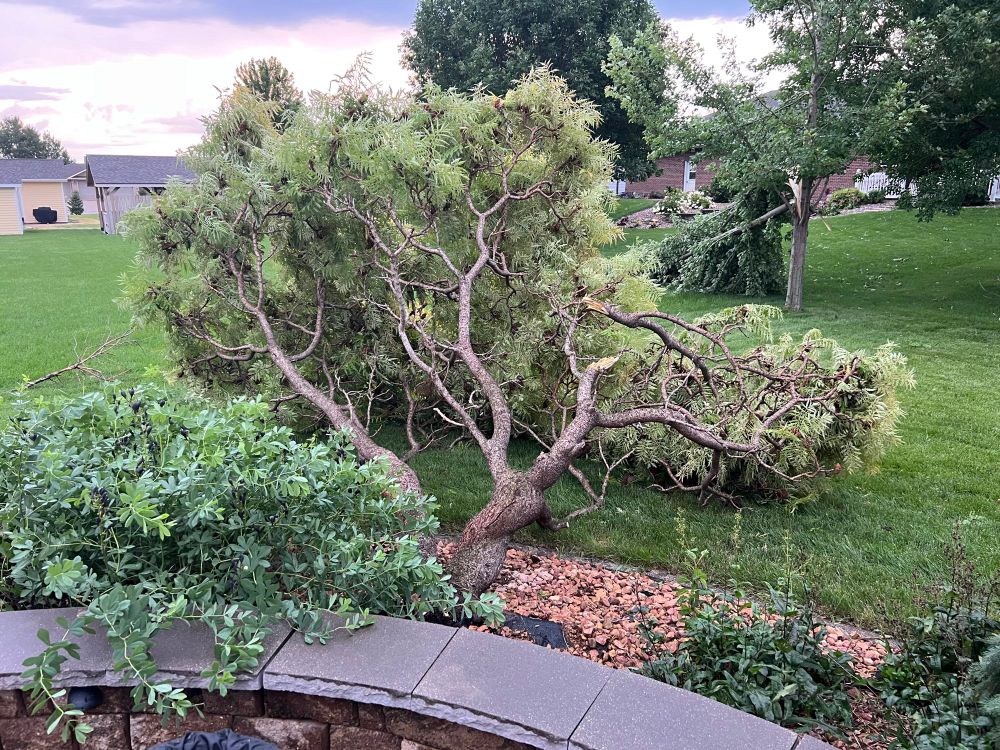
Picture of two downed trees, a sumac and maple, in a backyard.
We had an over 99mph(!) derecho pass through last night and lost a few of our favorite small trees. Thankfully house is fine we are all safe & sound!
29.07.2025 14:00 — 👍 3 🔁 0 💬 0 📌 0
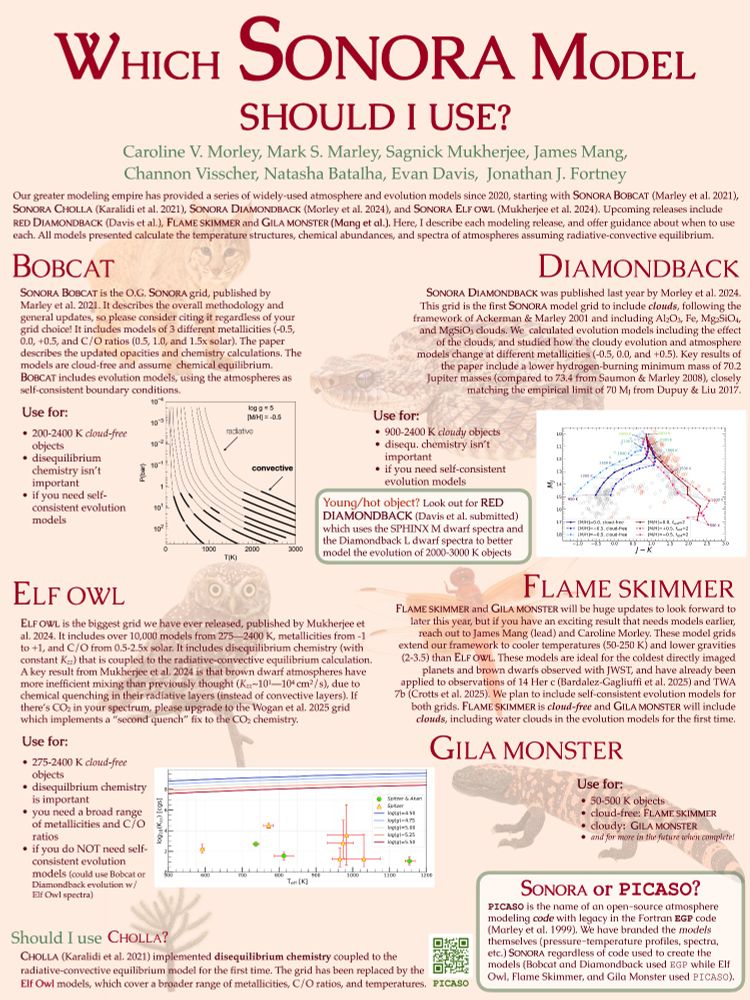
Image of a poster describing the different Sonora models, including Bobcat, Diamondback, Elf Owl, Flame Skimmer, and Gila monster.
I liked Caroline Morley's Exoclimes poster describing our Sonora model set so much that I'm going to hang up a replica in my office.
18.07.2025 21:29 — 👍 58 🔁 12 💬 6 📌 1

A true colour close up image of the dwarf planet Pluto, showing a large dark region to the bottom left and a pale smooth region crossing the equator in the middle right. Taken by NASA's New Horizons probe in 2015.
10 years ago, #OnThisDay in 2015, NASA's New Horizons probe performed the first flyby of dwarf planet Pluto, completing the initial survey of the Solar System. This 'true colour' photo was taken on 14 July 2015, showing numerous impact craters and the large basin of the Sputnik Planitia.
14.07.2025 13:10 — 👍 83 🔁 27 💬 4 📌 7
The current administration has more successfully destroyed US science and the scientific enterprise than the hypothetical nuclear weapons program in Iran.
24.06.2025 23:35 — 👍 2358 🔁 657 💬 20 📌 11
I rarely post personal things. But I need to talk about my 4-year-old niece, Hope.
She has a rare disease. A drug called elamipretide has helped her survive.
But the FDA recently denied its approval.
Now, her health hangs in the balance.
Please share her story & urge the FDA to reconsider. 🧵
23.06.2025 21:21 — 👍 7876 🔁 4833 💬 211 📌 249
Pastor, Activist, Theologian. The Gospel is anti-fascist, and so am I. Building a new world through the sanctuary movement, combating Islamophobia, and reparations.. https://www.michaelcaseywwoolf.com/
Putting faith into action for social justice. Read sojo.net.
Official page of the American Museum of Natural History in New York City. Open daily, 10 am–5:30 pm.
https://linktr.ee/amnh
I turn Art into Sports (and vice versa) | NO AI USED | “Everything I didn't know I needed" - follower testimonial
Deborah is an artist celebrated for her vibrant and diverse creations. Her art, distinguished by masterful use of color, is owned by collectors worldwide.
Gallery: Deborah-League.Pixels.com
astrophysics postdoc | cfa harvard & smithsonian | exoplanet atmospheres
Loser ape with a poor grip on self control
Youtube: https://youtube.com/c/GutsickGibbon
#Climate & sea level science + policy. Rutgers University. All views my own. www.bobkopp.net
PhD researcher in Brown Dwarf Variability in Trinity College Dublin.
https://cianotoole11.github.io/cianotoole.github.io/#
PhD in Astrophysics at Trinity College Dublin studying atmospheres and clouds on brown dwarfs (aka overachieving planets) ☁️🪐
Previously at: University of Sydney, Lund University
they/them
https://madeline-lam.github.io/
Earthquake geologist 🧪⚒️ | Scicomm specialist 🎙️| Formerly USGS, IRIS, NASA | she/her | Views are mine | website: https://wendybohon.com/
“A delightful blend of scientific rigor and domestic chaos.”
"A tireless chronicler and commentator on all things climate" -NYTimes.
Climate research lead @stripe, writer @CarbonBrief, scientist @BerkeleyEarth, IPCC/NCA5 author.
Substack: https://theclimatebrink.substack.com/
Twitter: @hausfath
Professor of Astrophysics at the University of Oxford. I study the atmospheres of other worlds beyond the Solar system.
Science journalist for NPR. I'm drawn to the transient and strange. I'm on Signal and welcome tips: nellgfb.11
Atmospheric modeling and retrieval group
Max Planck Institute for Astronomy
Modern Landscape Painter
JimMusil.com
Ph.D. astrophysicist turned data scientist and Seattle-based photographer. Mostly into nature and astrophotography these days, but sometimes I take pictures for NASCAR.
🔗: https://www.pjvphotography.com/
Clothing. Home Goods. Time Travel Supplies.
Iowa (x6), Nebraska (x2), Chicago, KC, Madison.
Critic @nytimes.com. Author AFTERGLOW (forthcoming), WE TELL OURSELVES STORIES (Liveright) and SALTY (Broadleaf). Teaching writing and criticism (Whitworth MFA, NYU XE).