
Vision Science makes the front page of NYT!!
featuring work from @neurofishh.bsky.social and @denilsson.bsky.social with comments from Berkeley's own @karthikshekhar.bsky.social
#visionscience
www.nytimes.com/2026/02/23/s...

@dgonschorek.bsky.social
Postdoc @EulerLab interested in visual neuroscience and machine learning. Personal website: https://dominic-gonschorek.notion.site/Dr-Dominic-Gonschorek-2e38d6e45aa7800ca1ead0556f6cdbd0?pvs=74
Vision Science makes the front page of NYT!!
featuring work from @neurofishh.bsky.social and @denilsson.bsky.social with comments from Berkeley's own @karthikshekhar.bsky.social
#visionscience
www.nytimes.com/2026/02/23/s...
Thanks to the team:
@Jonathan Oesterle @thomaszen.bsky.social @fededagos.bsky.social @teuler.bsky.social @philipp.hertie.ai @katrinfranke.bsky.social @Timm Schubert @Zhijian Zhao @nadinedyszkant.bsky.social @Klaudia Szatko @Chenchen Cai @florentyna-d.bsky.social @tom-sk.bsky.social @Ryan Arlinghaus
📦Dataset: huggingface.co/datasets/eul...
💻Code: github.com/eulerlab/all...
🧠GCL Classifier: github.com/eulerlab/gcl...
🤖DataJoint Database: github.com/eulerlab/dji...

We’re excited to share ALL-GCL: a large-scale dataset of 2P Ca²⁺ imaging from 80,000+ cells in the mouse retinal ganglion cell layer, collected over 9 years. Includes rich metadata, shared stimuli & cell-type assignments designed for type-specific analyses, modeling, and ML.
📄: tinyurl.com/ymn53frf
Very excited to present our work tonight @NeurIPS.
You will find me in the Exhibit Hall C,D,E #2014 4:30 p.m. PST — 7:30 p.m. PST!

Eine neue Software ermöglicht Gehirnsimulationen, die sowohl detailliert die Prozesse im Gehirn imitieren als auch anspruchsvolle kognitive Aufgaben lösen können. Entwickelt wurde das Programm von einem Forschungsteam am Exzellenzcluster @ ml4science.bsky.social der Universität Tübingen.
14.11.2025 08:21 — 👍 8 🔁 3 💬 1 📌 0
Histamine modulates early visual processing in awake mice. Top left: Visual responses were recorded in awake, head-fixed mice using single-unit extracellular recordings from retinal ganglion cell (RGC) axons in the optic tract and from dorsal lateral geniculate nucleus (dLGN) neurons, while pupil dynamics and locomotion were monitored. Top right: Tripodi and Asari manipulated histaminergic input to the retina by chemogenetic activation of hypothalamic tuberomammillary nucleus (TMN) neurons or by systemic pharmacology targeting histamine receptors. H3 receptor antagonists increase histamine release, whereas H1 receptor antagonists block postsynaptic histamine effects. Bottom left: Increasing histamine levels, either chemogenetically or pharmacologically, slowed and weakened visual responses in both RGC axons and dLGN neurons, whereas blocking H1 receptors had the opposite effect, consistent with H1 receptor-mediated gain modulation. Bottom right: Ethological implication: in nocturnal mice, histamine levels are low during daytime, when the animals rest, enabling faster and stronger retinal responses and potentially facilitating rapid detection of threats. At nighttime, when the animals are active, high histamine levels suppress and slow visual responses. Partly created with biorender.com.
The state of our brain shapes what we see. @dgonschorek.bsky.social & @teuler.bsky.social explore a @plosbiology.org study showing that #brain state-dependent release of #histamine modulates the very first stage of #vision – the #retina 🧪 Paper: plos.io/49K0Qv8 Primer: plos.io/3LupFkL
07.11.2025 13:44 — 👍 9 🔁 1 💬 0 📌 0
Scientists discover the secret behind the shrew’s amazing ability to shrink their brains 🧠
The clever trick sheds unwanted weight without compromising too much on cognition.
Find the 5-letter word 👇
Study by @cecibaldoni.bsky.social Dechmann Lab #shrewcrew et al
www.ab.mpg.de/743885/news_...

🔵Tübingen SNS 2025🔵
Registration is still open for the #SNS2025 event on 6-7 October!
Join us for plenary lectures 🗣️, poster sessions📊and social events 👥 about system neuroscience!🧠
Registration at meg.medizin.uni-tuebingen.de/sns_2025

Thrilled to share this work, long time in the making! Carried through creatively by @siddjakes.bsky.social after initial design & piloting by @trackingskills.bsky.social, with help from @trackingactions.bsky.social. Modeling in collaboration with Massimo Vergassola & Nicola Rigolli.
01.09.2025 19:06 — 👍 125 🔁 42 💬 1 📌 2Cool to see you @kayson.bsky.social in good company :)
10.06.2025 09:28 — 👍 1 🔁 0 💬 1 📌 0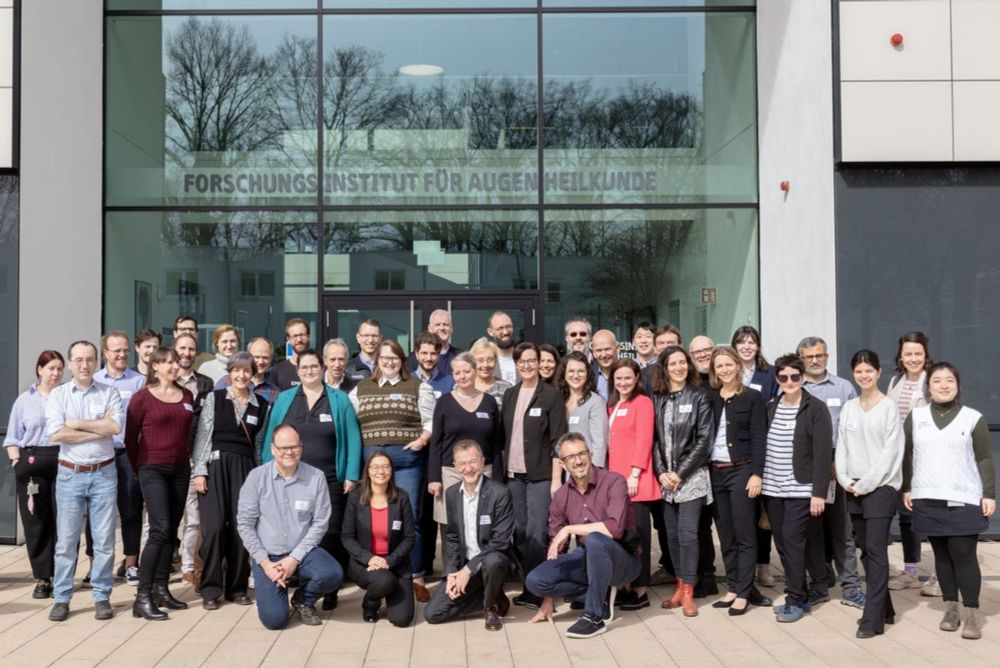
Strengthening European Ties: Institut de la Vision in Paris visits the IOR in Tübingen. This meeting was the first of its kind between the 2 internationally renowned institutes in vision and ophthalmology.
@unituebingen.bsky.social @tueneurocampus.bsky.social
www.eye-tuebingen.de?tx_news_pi1%...
If you submitted a paper to #ICML2025 and want to know how well your score compares overall, here is a good resource to keep track of your chances of getting it accepted this year. Fingers crossed for everyone!
papercopilot.com/statistics/i...
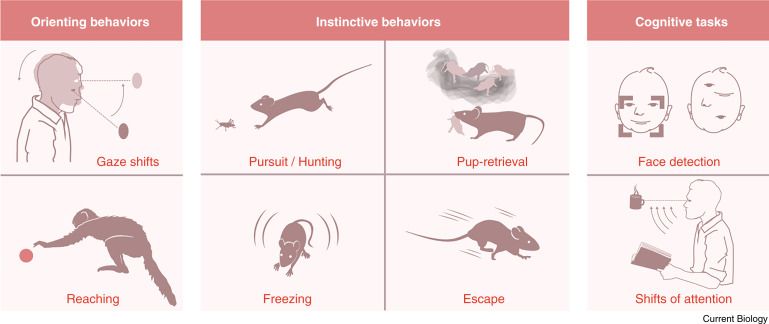
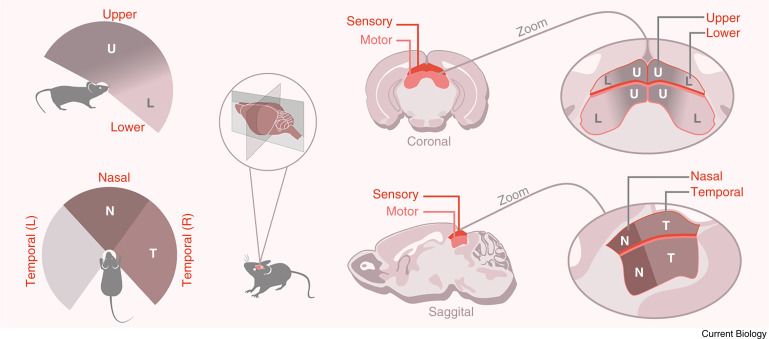
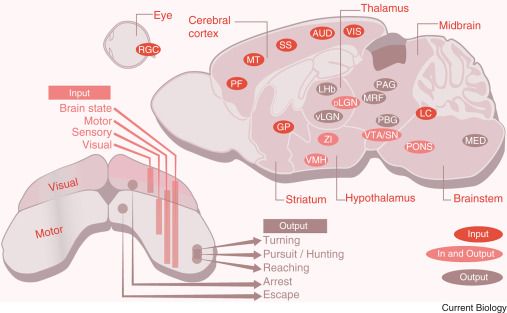
Thus new review by Jennifer Hoy (University of Nevada) and Karl Farrow (NERF) takes a deep dive into the role of the superior colliculus.
https://www.cell.com/current-biology/fulltext/S0960-9822(25)00052-1
Beautifully illustrated by Pia Rachedi + open access
@farrowlab.bsky.social
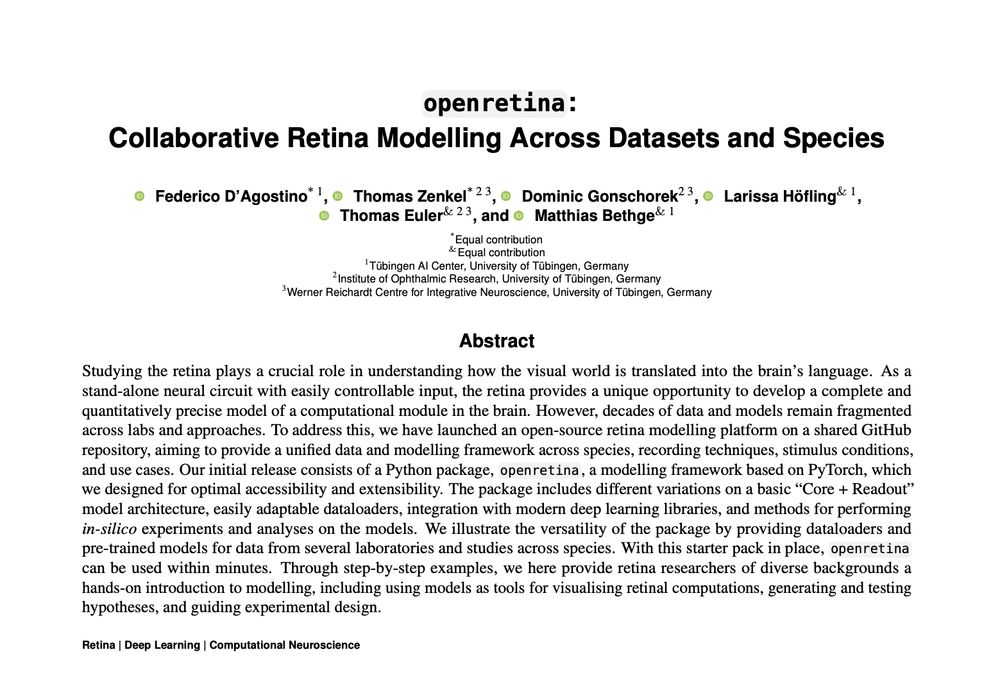
🚨 New paper alert! 🚨
We’ve just launched openretina, an open-source framework for collaborative retina modeling across datasets and species.
A 🧵👇 (1/9)

𝗡𝗲𝗰𝗲𝘀𝘀𝗶𝘁𝘆 𝗮𝗻𝗱 𝗦𝘂𝗳𝗳𝗶𝗰𝗶𝗲𝗻𝗰𝘆 𝗶𝗻 𝘁𝗵𝗲 𝗯𝗿𝗮𝗶𝗻
Excellent short piece about causation in the brain by @neurograce.bsky.social
In a complex system talking about necessary and sufficient is not productive.
www.thetransmitter.org/systems-neur...
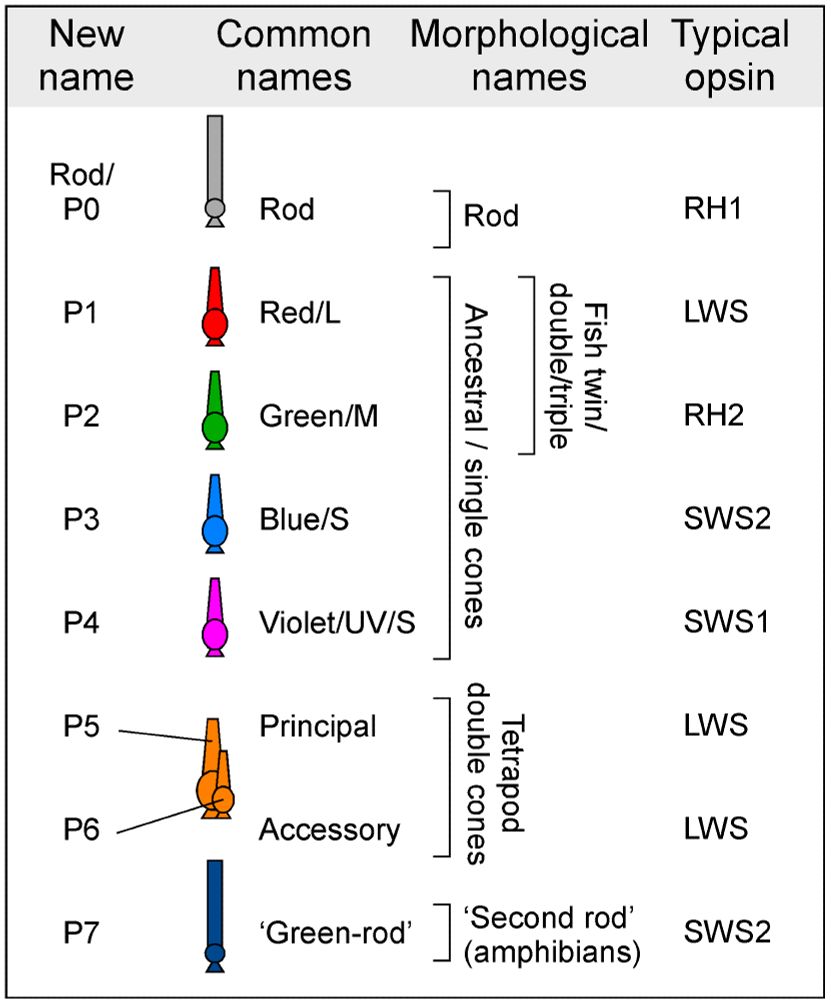
Seeking input: A standardized nomenclature
for the rods and cones of the vertebrate retina
A number of us have been working on a proposal to bring various disconnected naming systems for the vertebrate rods and cones across species into alignment. The basic proposal looks like this:

The results in a publication of an important scientific collaboration between IOR in Tübingen and the IdV in Paris! With the first detailed analysis of the modulatory effects of nitric oxide on retinal ganglion cells.
@unituebingen.bsky.social @tueneurocampus.bsky.social
👉 doi.org/10.7554/eLif...

I've added a new summary to the top of the Kickstarter, thanks to the advice of the excellent @matthewkressel.net. I think what I'm seeing right now is that I may need to clarify the importance of what's been happening in neuroscience. Refining the message!
www.kickstarter.com/projects/454...
Our paper on how the neuromodulator nitric oxide modulates a subset of mouse retinal ganglion cells is finally published in @elife.bsky.social doi.org/10.7554/eLif... Great work by @dgonschorek.bsky.social together with the lab of @oliviermarre.bsky.social and @matigoldin.bsky.social, ...
10.01.2025 15:16 — 👍 26 🔁 12 💬 1 📌 0Could you add me as well please? :)
05.12.2024 09:07 — 👍 0 🔁 0 💬 0 📌 0