Urban earthworm communities driven more by climate and elevation than urbanisation intensity - Urban Ecosystems
Soil biodiversity, particularly earthworms, plays a crucial role in ecosystem functions and services but remains largely understudied in urban environments. In this context, we conducted a synthesis analysis of 41 studies from urban environments (726 records, 1995–2024) to (1) describe patterns of earthworm communities, (2) identify the main drivers shaping urban earthworm communities, focusing on the effects of climate, degree of urbanization, soil properties, and local land use, with the expectation that climate would be the strongest driver, and (3) assess the occurrence of exotic earthworm species. Urban earthworm communities showed considerable variation in their abundance, biomass and species richness. Within our dataset, exotic species were detected in North America, South America, and Asia, but no records from European and African cities, despite their known presence there. However, there was a strong geographical bias, with 75% of records from Europe. Our results reveal that at the global scale, elevation, and annual variation in temperature and potential evapotranspiration are the most important predictors shaping total earthworm abundance. For total earthworm biomass, variation in potential evapotranspiration is the key predictor. At the plot scale, we found both positive and negative correlations between earthworm community metrics, soil properties, and specific land uses, namely urban forests and grasslands. We recommend additional standardised sampling, broader geographical and temporal coverage, and the investigation of urban-specific direct and indirect stressors, as crucial steps for understanding urban soil biodiversity and promoting beneficial management practices. Overall, this analysis indicates that urbanisation intensity showed no consistent effects on earthworm communities once climate and soil variables were accounted for. Given the importance of climate impacts, mitigation of climate change effects would be valuable for the maintenance of earthworm communities.
Really pleased that @kevhoef.bsky.social and my paper, along with the LandWorm working group (funded by CESAB - @frbiodiv.bsky.social), is published🎉.
We analysed earthworm communities in cities & find that increasing urbanisation doesn't appear to have an effect.
link.springer.com/article/10.1...
10.10.2025 11:57 — 👍 8 🔁 3 💬 0 📌 0
This new species is actually my Bluesky banner 😊
26.02.2025 12:48 — 👍 1 🔁 0 💬 0 📌 0

FIGURE 3 from the paper. Pictures of Avelona yvesi sp. nov. (paratypes). A, B, C: after fixation in absolute ethanol; D, E, F: alive specimens;
G: Place were Avelona yvesi sp. nov. was found. Photographic credits: Nicolas Henon (A to F); Sylvain Gérard (G). Scale bars:
0.5 cm. Abbreviations: CL = Clitellum; TP = Tubercula pubertatis; Pap = Genital papillae; MP = Male pore; LF = Longitudinal
furrows.
More pictures ...
26.02.2025 09:42 — 👍 1 🔁 0 💬 1 📌 0

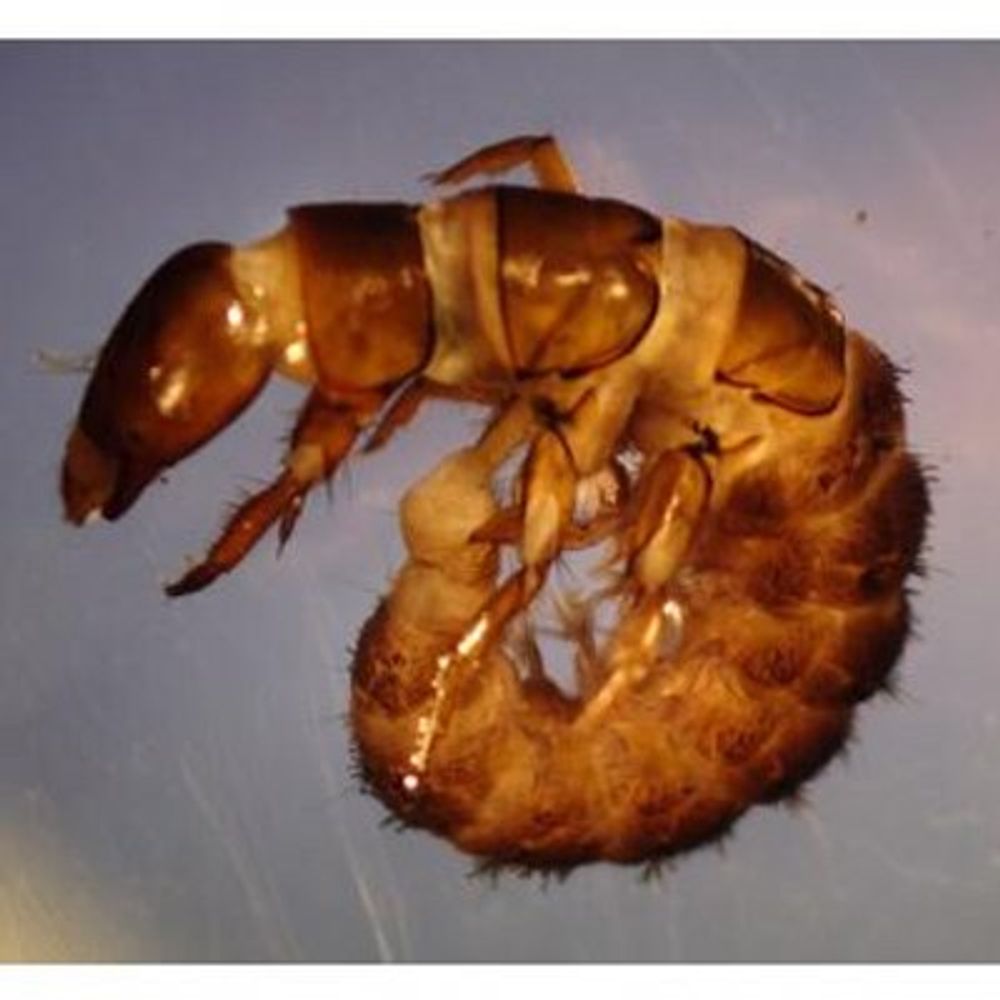
Picture of an alive specimen of the newly describe species of earthworm : Avelona yvesi.
New paper's out ! We describe a new species from Jura, France: Avelona yvesi. Together with Avelona zicsii comb. nov., they belong to the same genus as the bioluminescent Avelona ligra... but are not bioluminescent. Northeast of France seems like an interesting center of endemism for earthworms !
26.02.2025 09:38 — 👍 3 🔁 1 💬 1 📌 0

🪱 Putting Earthworm conservation on the map!
Check out the last publication of our #CESAB LANDWORM and IMPACT groups by @sylvaingrd.bsky.social et al.
👉 bit.ly/4ij7sTg
🔑 They are soil keystones & face global threats, demanding broad-scale, multifaceted diversity indicators for conservation.
🧪🌐🌍🦤
05.12.2024 08:38 — 👍 37 🔁 7 💬 2 📌 0
• Diversity components, emphasizing broader spatial scales, need greater consideration for earthworm conservation.
04.12.2024 12:11 — 👍 0 🔁 0 💬 0 📌 0
• Research on rarity, nativeness, specialization, and temporal trend assessments must be encouraged.
04.12.2024 12:11 — 👍 0 🔁 0 💬 1 📌 0
• Commonly used earthworm assemblage metrics are insufficient for earthworm protection.
04.12.2024 12:11 — 👍 0 🔁 0 💬 1 📌 0
Some highlights :
• Conservation ecology has been overlooked by earthworm researchers.
04.12.2024 12:11 — 👍 0 🔁 0 💬 1 📌 0
Redirecting
New paper out ! We call here for better integration of earthworms—a taxon extensively studied for its functions—into conservation biology, by highlighting gaps in earthworm ecology and proposing approaches to achieve this goal. in Open access !
doi.org/10.1016/j.bi...
04.12.2024 12:11 — 👍 2 🔁 2 💬 1 📌 0
Full-time Assistant Professor at Helsinki University. Part time computer geek. I like the environment and stuff.
https://www.helsinki.fi/en/researchgroups/ecological-data-sciences
VIPA - Postdoc community at Viikki campus
blogs.helsinki.fi/viikki-postdoc/
Global issues require studies and solutions on national and regional levels. The journal embraces every aspect of soil science.
Professor at UPEC
Associate director of the Institute of ecology and environnemental sciences of Paris
🔬earthworms, soil macrofauna,invasive species, evolutionary biology, dispersal, population genetics, DNA barcoding
Eau & Milieux Aquatiques chez FNE @fne.asso.fr
Freshwater ecology
But also ecolgy in general, environmental policies, Climate justice and social issues, and some other stuff.
Mostely in French and sometimes in English
Engineer Instrumentation at @CIRAD.bsky.social - @UMR-EcoSols.bsky.social, Montpellier
Emeritus Professor, Muséum National d'Histoire Naturelle, Paris.
🧪Monogenea, various parasites, invasive land flatworms.
Editor-in-Chief of @ParasiteJournal.bsky.social
Scholar: https://scholar.google.fr/citations?user=N2YjBSYAAAAJ&hl=en&oi=ao
Research, news, and commentary from Nature, the international science journal. For daily science news, get Nature Briefing: https://go.nature.com/get-Nature-Briefing
We present open access cutting-edge advances in the science & practice of conserving biological diversity & promoting human well-being. A journal of the Society for Conservation Biology.
https://conbio.onlinelibrary.wiley.com/journal/1755263x
Open Access publisher of academic journals PeerJ Life & Environment (life, medicine, environment), PeerJ Computer Science,
PeerJ Chemistry (our 5 chemistry journals).
🇫🇷 La #recherche agronomique pour le #développement 🇬🇧 French Agricultural #Research for #Development.
We are working towards a world inspired by ecology in which nature and people thrive.
Botanist and community ecologist, agroecology, invasion ecology, ANSES, Montpellier (FR)
Centre of biology for the management of populations.
@inrae-france.bsky.social, @ird-fr.bsky.social, @cirad.bsky.social, Institut Agro Montpellier. Also on #Mastodon: @CBGPMontpellier@ecoevo.social. https://umr-cbgp.fr
Intergovernmental Platform on #Biodiversity & Ecosystem Services. Denialism/trolling/profanity may result in banning. Re-skoots ≠ endorsements.
www.ipbes.net
linktr.ee/ipbes
A @britishecologicalsociety.org journal, publishing papers that significantly advance the field of ecology, including physiological, behavioural and evolutionary ecology.
Bienvenue sur le compte d'INRAE
Institut national de recherche pour l’agriculture, l’alimentation et l’environnement
Home to five Nordic ecology societies and journals @avianbiology.bsky.social, @nordicjbotany.bsky.social, @oikosjournal.bsky.social, @wildlifebiology.bsky.social and @ecography.bsky.social.
www.nordicsocietyoikos.org
One of the leading peer-reviewed journals in ecology, owned by the @nordicoikos.bsky.social. Publishes research papers where different aspects of ecology are brought together.