

On the first day of Christmas (in about 2014), @duckswabber.bsky.social gave to me - a partridge in a pear tree.
Happy Christmas everyone!
On the first day of Christmas (in about 2014), @duckswabber.bsky.social gave to me - a partridge in a pear tree.
Happy Christmas everyone!
so true
27.10.2025 15:14 — 👍 1 🔁 0 💬 0 📌 0Most Nature papers are published in Current Biology
26.10.2025 15:14 — 👍 64 🔁 11 💬 2 📌 0
Although highly topical, kleptoparasitism does not get nearly the attention it deserves!
Here, a plant exploits the kleptoparasitic behavior of a fly that likes to snatch ants killed by spiders.
🕷️🐜🪰🌿
So the thief itself gets taken advantage of. Nice going, plants!
www.cell.com/current-biol...

Changes in cell type composition, including cell expansions, cell losses, and novel cell gains, are associated with the evolution of specific behaviors. Figure credit: Matteo Farinella.
New review on how changes in cell type composition in and outside the brain contribute to the evolution of behavior. 🧪
authors.elsevier.com/a/1lihM,LqAZ...
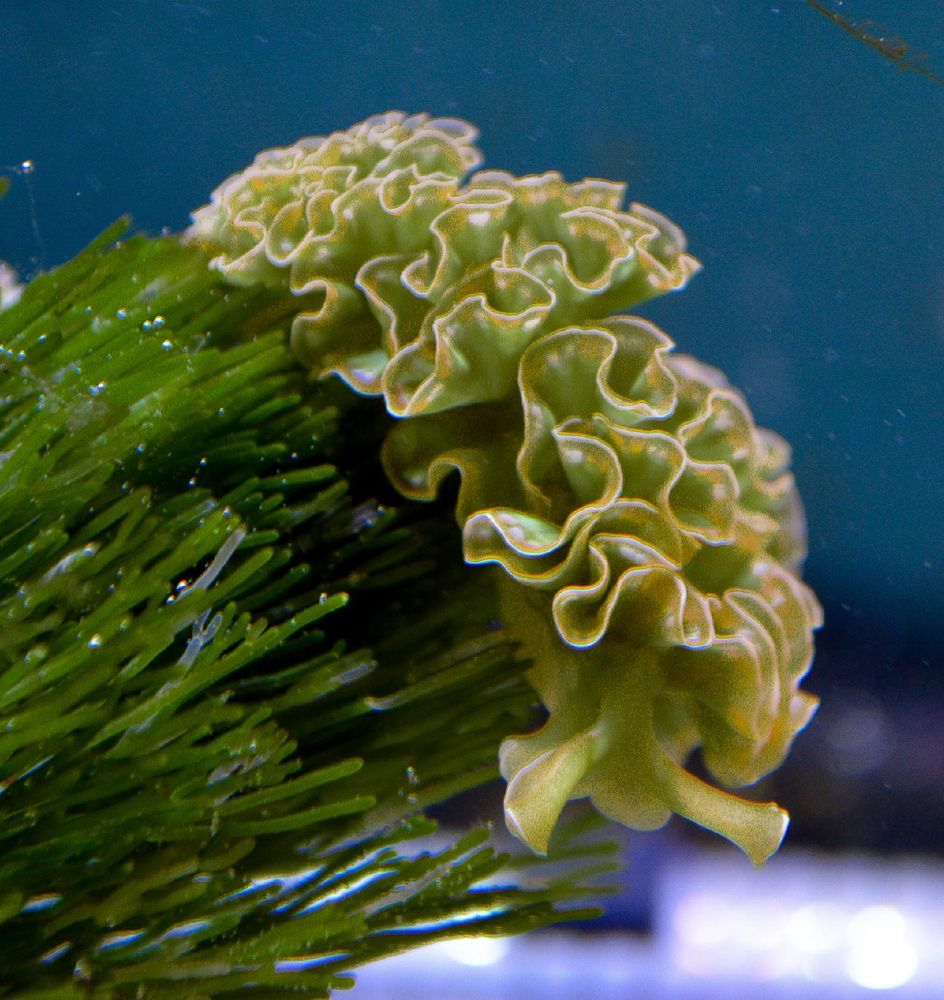
Corey Allard et al asks how “solar-powered” slugs maintain stolen chloroplasts from their diet for photosynthesis and starvation resistance. @cellpress.bsky.social, @harvardmcb.bsky.social, @harvardmed.bsky.social
www.cell.com/cell/fulltex...
Flybase lost all of the NIH support overnight - it is a disaster for the community. Please consider donating. I just did! www.philanthropy.cam.ac.uk/give-to-camb...
03.06.2025 18:23 — 👍 144 🔁 148 💬 4 📌 8amazing !!
01.05.2025 15:17 — 👍 1 🔁 0 💬 1 📌 0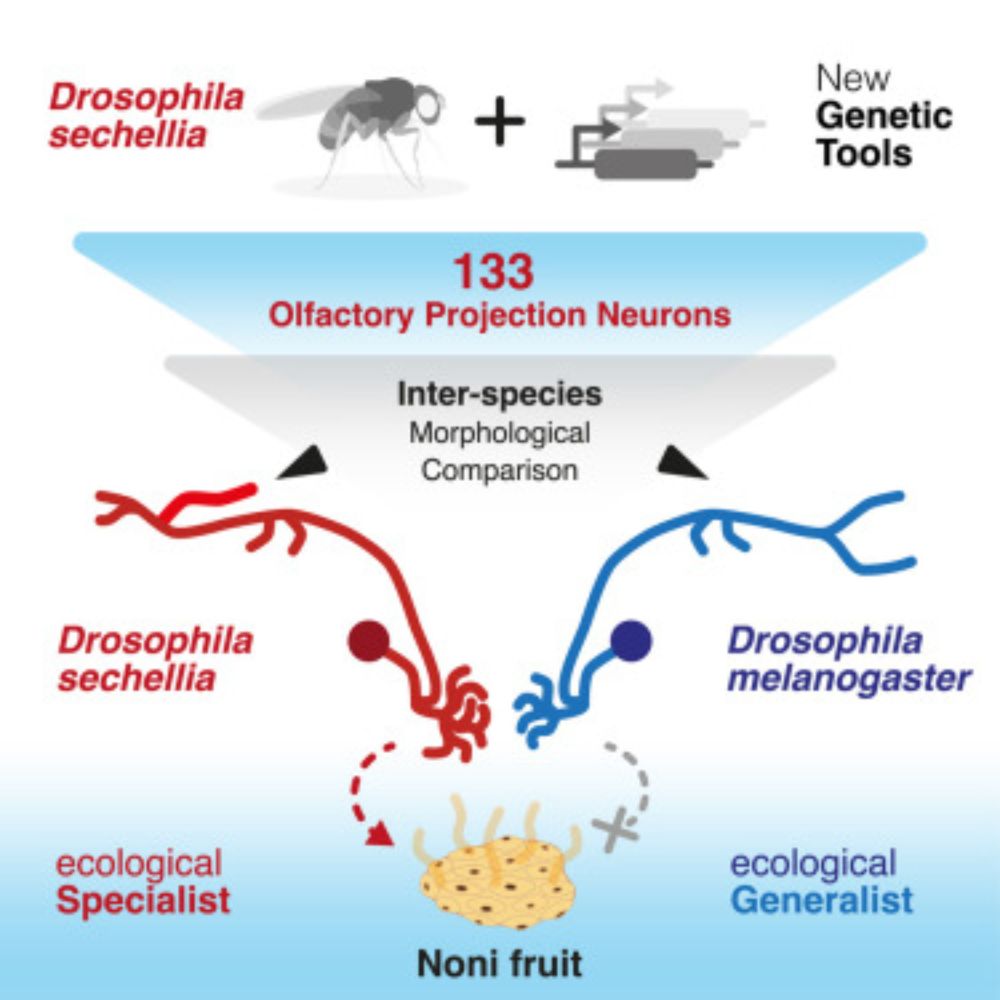
Happy to see this out now:
Olfactory projection neuron rewiring in the brain of an ecological specialist: Cell Reports www.cell.com/cell-reports...
In a team effort with @bentonlab.bsky.social 's lab we establish new genetic tools in #drosophila sechellia and compare single central brain neurons.
Now out in #ProcB 🧪
Ancestral complexity and constrained diversification of the ant olfactory system 🐜
Expertly led by Simon Marty and Antoine Couto, funded by @leverhulme.ac.uk and @agencerecherche.bsky.social 🙏🏻
#socialinsects @bristolbiosci.bsky.social @cnrs.fr

A colossal squid — the largest invertebrate in the world — has been photographed alive in its habitat for the first time. And it's just a baby. www.newscientist.com/article/2476...
15.04.2025 20:35 — 👍 144 🔁 68 💬 5 📌 15
In our latest paper, we describe how the passing-stripe hunting display of the broadclub cuttlefish camouflages the hunting predator during the final moments of the attack.
Read more here www.science.org/doi/10.1126/...
@drmartinjhow.bsky.social @jtroscianko.bsky.social @bristolbiosci.bsky.social
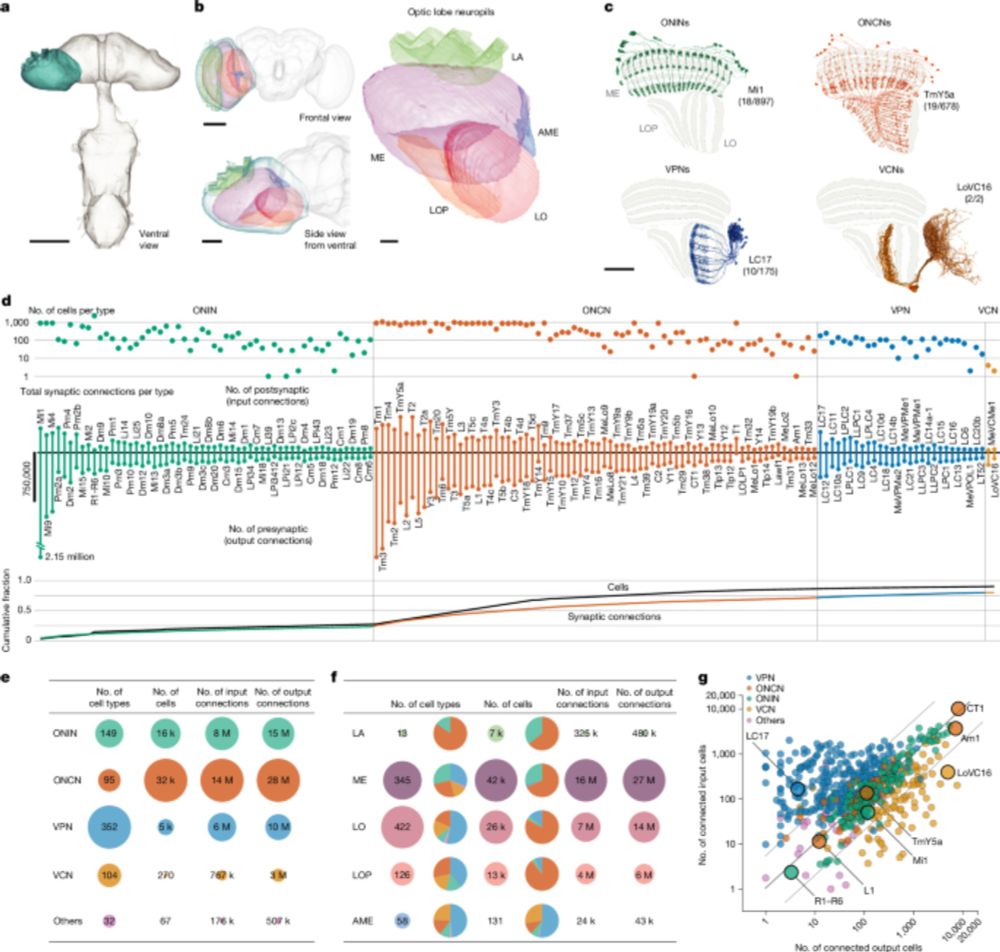
I know there's a 𝒍𝒐𝒕 going on right now, but I couldn’t be prouder to share this long-incubated labor of love: the complete connectome of the male 𝐷𝑟𝑜𝑠𝑜𝑝ℎ𝑖𝑙𝑎 optic lobe 🧠🪰
🔗 www.nature.com/articles/s41...
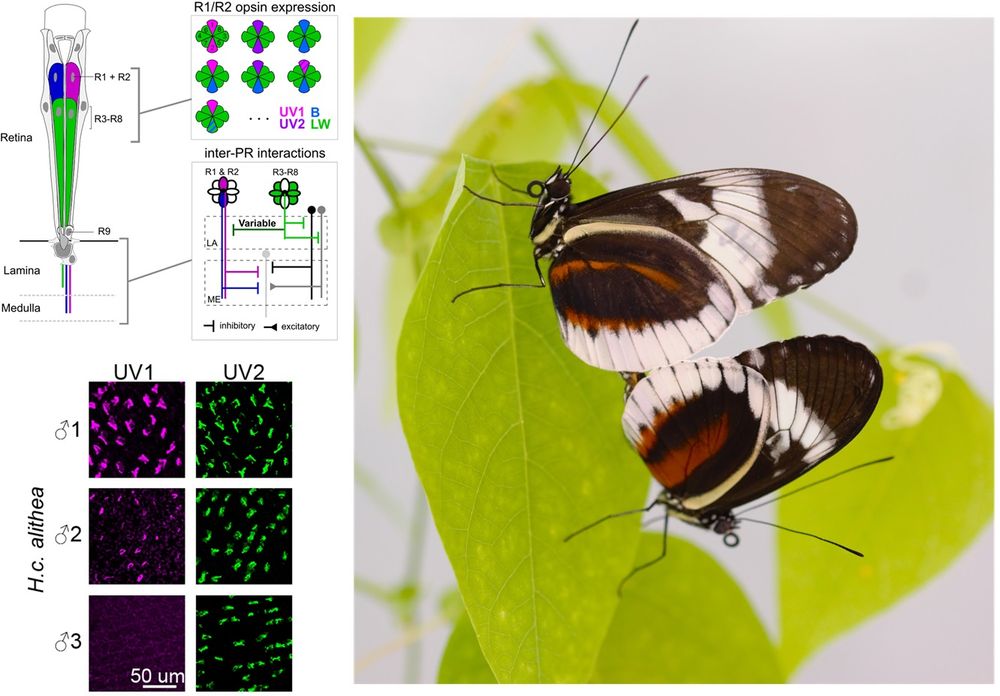
Top left: Cartoon showing how the eye is organized into ommatidia containing nine photoreceptors (left), with distinct ommatidial types typically defined by the opsin expression patterns in the R1 and R2 cells (right). R1/R2 axons bypass the lamina (LA) and project directly to the medulla (ME), while R3-8 project only to the lamina where they can also make inter-photoreceptor synaptic connections with R1/R2 axons. Bottom left: Representative anti-UV1 and anti-UV2 antibody stains in three representative white H. c. alithea males showing consistent expression of UV2 and variable expression of UV1 across individuals. Right: These white Heliconius cydno alithea butterflies are mating on a passionflower vine, but the male had a choice between white and yellow-winged females. Image credit: Wei Lu.
Neural circuits that link genetic variation to #behavior: This study of mate choice behavior in Heliconius cydno #butterflies shows that alterations to the peripheral nervous system, driven by genetic & gene expression differences, can alter essential behaviors 🧪 @plosbiology.org plos.io/4iHQDRd
12.03.2025 09:44 — 👍 39 🔁 14 💬 0 📌 1wild
12.03.2025 15:17 — 👍 1 🔁 0 💬 0 📌 0i think i’m now going to use the term “flylord” on a regular basis … ⚔️
07.03.2025 16:00 — 👍 2 🔁 0 💬 0 📌 0🤘✨
06.03.2025 15:02 — 👍 7 🔁 0 💬 1 📌 0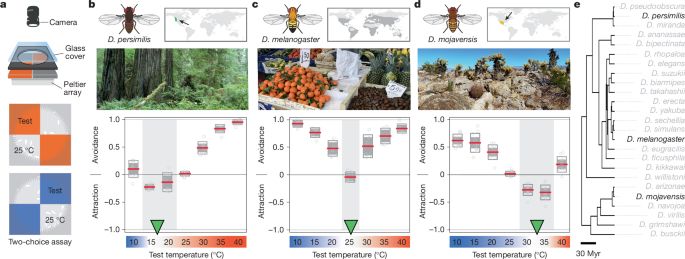
🎉 so excited to share my first first-author paper is out in @Nature.com, from my PhD work in the Gallio Lab! we uncover the neurobiological mechanisms that drive the evolution of temperature preference behavior in flies of the genus Drosophila 👇
go.nature.com/4i1VQn9
