Dixon and Hunter's Virginia Gazette, Williamsburg
Dec. 10, 1775: For sale in Surry, Va.: "A CANOE about 30 Feet long, sharp at both Ends, has a large Split in each Side, and Blocks for 4 Oars. Also sundry Clothes, some of which were stolen." The boat was taken from "runaway Negroes that came down James River, and were going to the Governor."
10.12.2025 18:55 — 👍 0 🔁 0 💬 0 📌 0

Lake George

Knox
Dec. 10, 1775: Col. Henry Knox's mission to move Fort Ticonderoga's artillery to Massachusetts has a brush with disaster when a scow carrying a cannon strikes a rock and runs aground on Lake George. The piece is later salvaged.
10.12.2025 17:21 — 👍 7 🔁 1 💬 0 📌 0
(From the National Park Service’s “Bicentennial Daybook,” 1975)
10.12.2025 16:31 — 👍 1 🔁 0 💬 0 📌 0
“The General will want some of each, as well as of the sweetmeats and pickles that are on board, as his lady [Martha] will be here today or tomorrow. You will please to pick up such things on board as you think will be acceptable to her, and send them as soon as possible.” 2/2
10.12.2025 16:31 — 👍 2 🔁 1 💬 1 📌 0

Dec. 10, 1775: Stephen Moylan, the muster-master general of Washington’s Army, writes Capt. William Barrett with a list of the foods seized from the British in recent naval raids: “There are limes, lemons, and oranges on board, which, being perishable, you must sell immediately. 1/2
10.12.2025 16:31 — 👍 4 🔁 2 💬 1 📌 0
(From the National Park Service’s “Bicentennial Daybook,” 1975)
10.12.2025 15:50 — 👍 1 🔁 0 💬 0 📌 0
Gen. Nathanael Greene writes that Rhode Island’s soldiers "seem to be so sick of this way of life, and so homesick, that I fear the greater part will go home." After he "harangued the troops" yesterday, some appeared "of a better disposition today. Still, he fears: “No public spirit prevails.” 2/2
10.12.2025 15:50 — 👍 2 🔁 0 💬 1 📌 0

Washington

A view of Boston from Breed’s Hill
Dec. 10, 1775: As many of the Connecticut militia leave Washington’s camp today outside Boston, the general issues an order assigning militia arriving from Massachusetts and New Hampshire to Roxbury, Winter and Prospect Hills overlooking the town, and to Cambridge. 1/2
10.12.2025 15:50 — 👍 5 🔁 0 💬 1 📌 0

Lee and Spado

Adams
Dec. 10, 1775: At a social function in Cambridge, Mass., American Gen. Charles Lee has one of his many dogs perform the “shaking hands” trick. “He orderd Mr. Sparder to mount and present his paw to me for a better acquaintance,” writes Abigail Adams. “I could not do otherways than accept it.”
10.12.2025 14:52 — 👍 9 🔁 6 💬 1 📌 1
Despite their inexperience the militia stands up to the Marines in a brief skirmish, wounding nine of Capt. James Wallace’s men before retreating. One American casualty, "Mr. John Martin, who was shot in his belly standing unarmed in his door," is reported. 2/2
10.12.2025 13:49 — 👍 6 🔁 0 💬 0 📌 0

Naval Documents of the American Revolution

The island in an 1875 map
Dec. 10, 1775: Royal Navy marines land on Conanicut Island, opposite Newport, R.I., to raid farms and carry off livestock. A small defense force of Rhode Island militia "had been inlisted but a few days, and arrived there but the evening before, in miserable condition," an account states. 1/2
10.12.2025 13:49 — 👍 6 🔁 0 💬 1 📌 0

National Archives

Franklin
Dec. 9, 1775: “After another campaign, we may find it necessary to ask aid of some foreign power.” Benjamin Franklin writes to his friend Charles Dumas in The Hague. He seeks Dumas’ help in “discovering, if possible, the disposition of the several courts with respect to such assistance or alliance.”
09.12.2025 18:27 — 👍 6 🔁 0 💬 0 📌 0
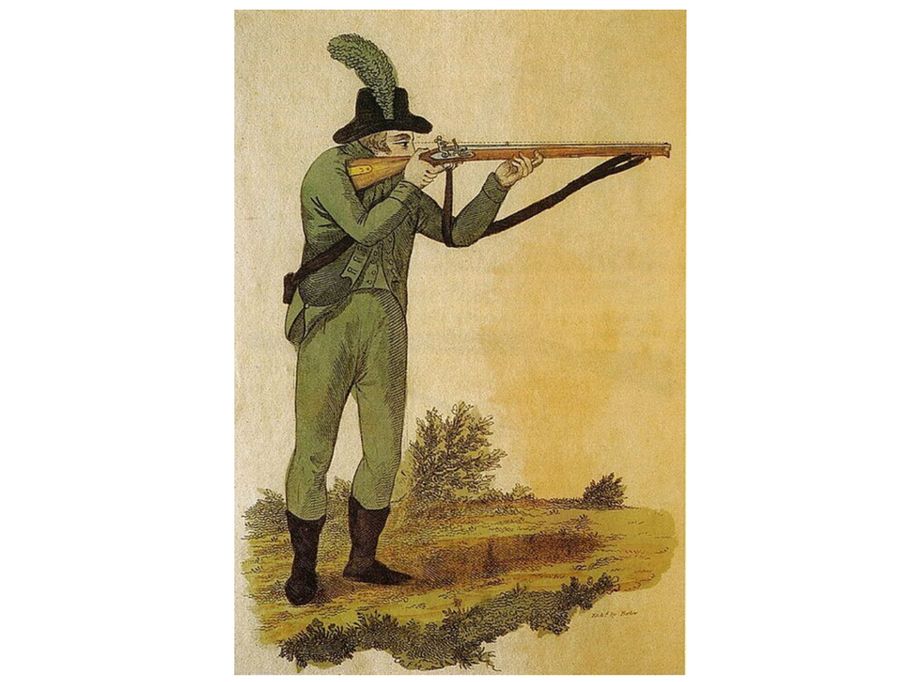
Rifleman in an 1803 illustration
Dec. 9, 1775: Washington’s Continental soldiers are newly supplied with gunpowder in Cambridge, Mass., when, Pvt. Paul Lunt writes, “one Rifleman shot another in their barrack, through the partition, and he expired immediately, the other confined for trial."
09.12.2025 18:08 — 👍 4 🔁 0 💬 0 📌 0
“One of our members of Congress sets out today for New England,” Lynch writes to George Washington in Cambridge, Mass. “Whether his intents be wicked or not, I doubt much; he should be watched." 2/2
09.12.2025 16:45 — 👍 6 🔁 0 💬 0 📌 1

Adams

Lynch
Dec. 9, 1775: A homesick John Adams departs Philadelphia on leave from Congress, having been “worn down with long and uninterrupted Labour” for some weeks. His departure for home in Braintree, Mass., is so hasty that a fellow member, Thomas Lynch of South Carolina, becomes suspicious. 1/2
09.12.2025 16:45 — 👍 8 🔁 0 💬 1 📌 0
(From the National Park Service’s “Bicentennial Daybook,” 1975)
09.12.2025 16:32 — 👍 1 🔁 0 💬 0 📌 0

From the first issuance of Continental money, May 1775
Dec. 9, 1775: New York instructs its delegates to Congress to ask that all paper money issued for war purposes be Continental currency. The issuance of so many notes by several colonies, in addition to the notes printed by Congress, makes the New Yorkers fear rapid depreciation.
09.12.2025 16:32 — 👍 9 🔁 0 💬 1 📌 0
“Another lesser Ball struck & fell in the Dock next the Wharfe where I stood, & within a few feet of me. But thro' a merciful & gracious providence we all escaped untouched—nor was any killed or wounded.” 2/2
09.12.2025 15:33 — 👍 3 🔁 0 💬 0 📌 0

Newport’s Long Wharf in 1818

Stiles
Dec. 9, 1775: The British warship Glasgow fires repeatedly on a boat that refuses to stop in Newport, R.I. The shots miss the vessel but strike warehouses on the wharf as townspeople watch in shock. A 9-pound ball “passed a few feet right over the heads of about 20 Men,” records Ezra Stiles. 1/2
09.12.2025 15:33 — 👍 5 🔁 0 💬 1 📌 0

Washington’s first inauguration, 1789
His full name was Robert Robert Livingston, and he was called the “Judge” to distinguish him from the many other Livingstons of early America. His son, Robert R. Livingston Jr., swore George Washington in as first president in his capacity as the chief judicial official of New York. 2/2
09.12.2025 14:20 — 👍 5 🔁 0 💬 1 📌 0

Livingston

Pennsylvania Gazette, Philadelphia
Dec. 9, 1775: Robert Livingston, a leading patriot of New York, dies at 57 of “an apoplectic fit” at the family estate of Clermont in the Hudson Valley. He had been a justice of the state Supreme Court for 12 years and served on the committee that governed New York City. 1/2
09.12.2025 14:20 — 👍 8 🔁 0 💬 1 📌 0
In just 30 minutes the British suffer what Col. Woodford calls “a second Bunker's Hill affair, in miniature”—with the difference that this time the British retreat, beating a path back to Norfolk. Compounding the setback: They are forced to spike and abandon artillery that’s stuck in the swamp. 9/9
09.12.2025 13:24 — 👍 7 🔁 0 💬 0 📌 0
Fordyce tries to rally his men by waving his hat and shouting, “The day is ours!” He is cut down by 14 bullets. Of his 60 grenadiers only 11 make it back to British lines alive and unhurt. The British overall suffer 62 casualties—how many dead is uncertain—to a single American shot in the thumb. 8/9
09.12.2025 13:24 — 👍 4 🔁 0 💬 1 📌 0
Just before dawn skirmish fire from sentries alerts the rest of the Virginians to the attack. The inexperienced Americans show discipline in standing and waiting behind their entrenchments until the grenadiers are 50 yards away, then devastate them with rifle fire. 7/9
09.12.2025 13:24 — 👍 3 🔁 1 💬 1 📌 0
Capt. Charles Fordyce determines to make the attack anyway, although to reach the plank bridge his company of grenadiers must advance along a narrow causeway through a swamp, wide enough only for six men abreast. “Under these disadvantages, it was impossible to succeed,” another officer reports. 6/9
09.12.2025 13:24 — 👍 3 🔁 0 💬 1 📌 0
The governor directs that his new Ethiopian Regiment of Black freedmen, who are manning Fort Murray at one end of the bridge, be use in a diversionary attack. However when his officers advance to the front lines they find the Ethiopians had been moved to another crossing and are unavailable. 5/9
09.12.2025 13:24 — 👍 3 🔁 0 💬 1 📌 0
On the night of the 7th Tom Marshall employs a ruse, sending a slave named William posing as a runaway into the British lines to tell them there are no more 400 men there, equal to the British. (In actuality the Americans number 860.) Dunmore takes the bait. 4/9
09.12.2025 13:24 — 👍 3 🔁 0 💬 1 📌 0
Dummore’s men and an American force including Col. William Woodford’s 2nd Virginia Regiment face each other from opposite sides of the Elizabeth River at Great Bridge, about 9 miles south of Norfolk. Two Virginia majors present are Tom Marshall and his son John, the future U.S. chief justice. 3 /9
09.12.2025 13:24 — 👍 3 🔁 0 💬 1 📌 0
Over the last two weeks Dunmore has been fortifying Norfolk while beefing up his force with escaped slaves lured by his promises of freedom. At the same time this proclamation of emancipation has terrified and enraged many white Virginians and rallied the patriot armies to confront the British. 2/9
09.12.2025 13:24 — 👍 3 🔁 1 💬 1 📌 0

A view of Great Bridge by a British lieutenant who was at the battle

Modern depiction of the British advance on the bridge
Dec. 9, 1775: Virginia troops inflict a decisive defeat on the British at the Battle of Great Bridge. The first American land victory of the Revolutionary War in the South results in royal Gov. Lord Dunmore retreating to Norfolk and eventually evacuating the colony altogether. 1/9
09.12.2025 13:24 — 👍 11 🔁 2 💬 1 📌 0