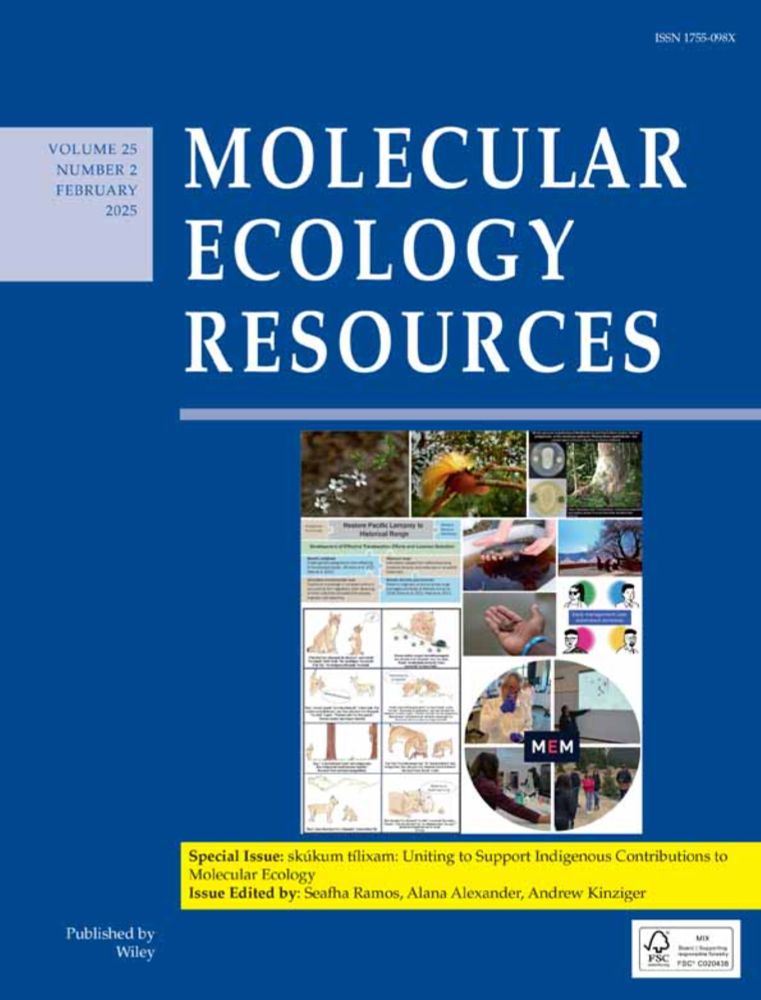
Integrating eDNA and acoustic-trawl data to provide small pelagic biomass estimates for fish stock assessment
Abstract. Accurate abundance estimates of fisheries resources are essential for sustainable fisheries management. In response to the growing need for devel
New paper by Cristina Claver (@azti.bsky.social), published in @icesmarine.bsky.social JMS.
We combine #eDNA and acoustic-trawl data in a Bayesian joint model to estimate biomass of the European anchovy in the Bay of Biscay.
From the potential of eDNA to operational use
🔗 doi.org/10.1093/ices...
02.02.2026 10:02 —
👍 20
🔁 12
💬 0
📌 0

🧬📘 New publication! "Invasion Genomics" explores how genomic techniques and data are revolutionising the study of biological invasions. ✍️ by @dan_g_bock and @riuslab.bsky.social 👇https://www.cabidigitallibrary.org/doi/10.1079/9781800626263.0000
13.01.2026 08:27 —
👍 6
🔁 4
💬 0
📌 0
I do not want your AI slop
I do not want it in my mop
I do not want it in my house
I do not want it in my mouse
I do not like brain-rotting AI spam
I do not want it, Sam Alt-man
17.12.2025 00:03 —
👍 1081
🔁 360
💬 0
📌 0
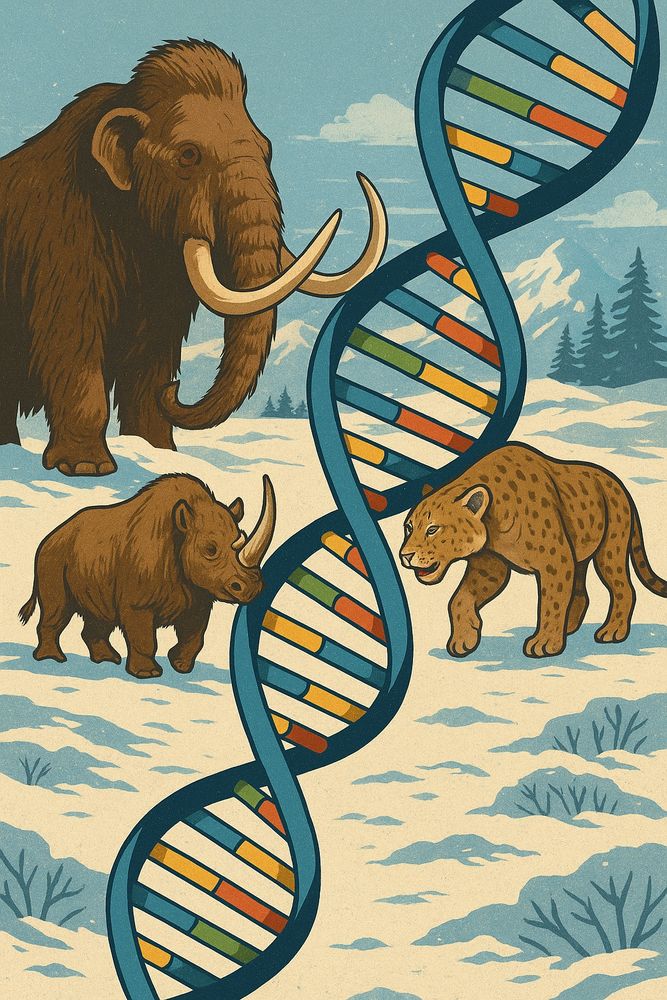
🦣🍖🧬 Fully funded 3-yr PhD in palaeogenomics & bioinformatics! Help me push non-model palaeogenomes beyond their limits @DTU in Denmark.
Start: Feb 2026 (flexible)
Application deadline: 24 Oct 2025
For details click here: tinyurl.com/BioExtPhD
Reposts appreciated 😁
09.09.2025 07:37 —
👍 54
🔁 54
💬 2
📌 1

In this blog post, Guest Editor Dr Luke Holman discusses their recent #PhilTransB issue, 'Shifting seas: understanding deep-time human impacts on #marine ecosystems': royalsociety.org/blog/2025/08...
19.08.2025 13:41 —
👍 1
🔁 1
💬 0
📌 0
Some thoughts on how our recent theme issue came together
13.08.2025 13:44 —
👍 3
🔁 0
💬 0
📌 0

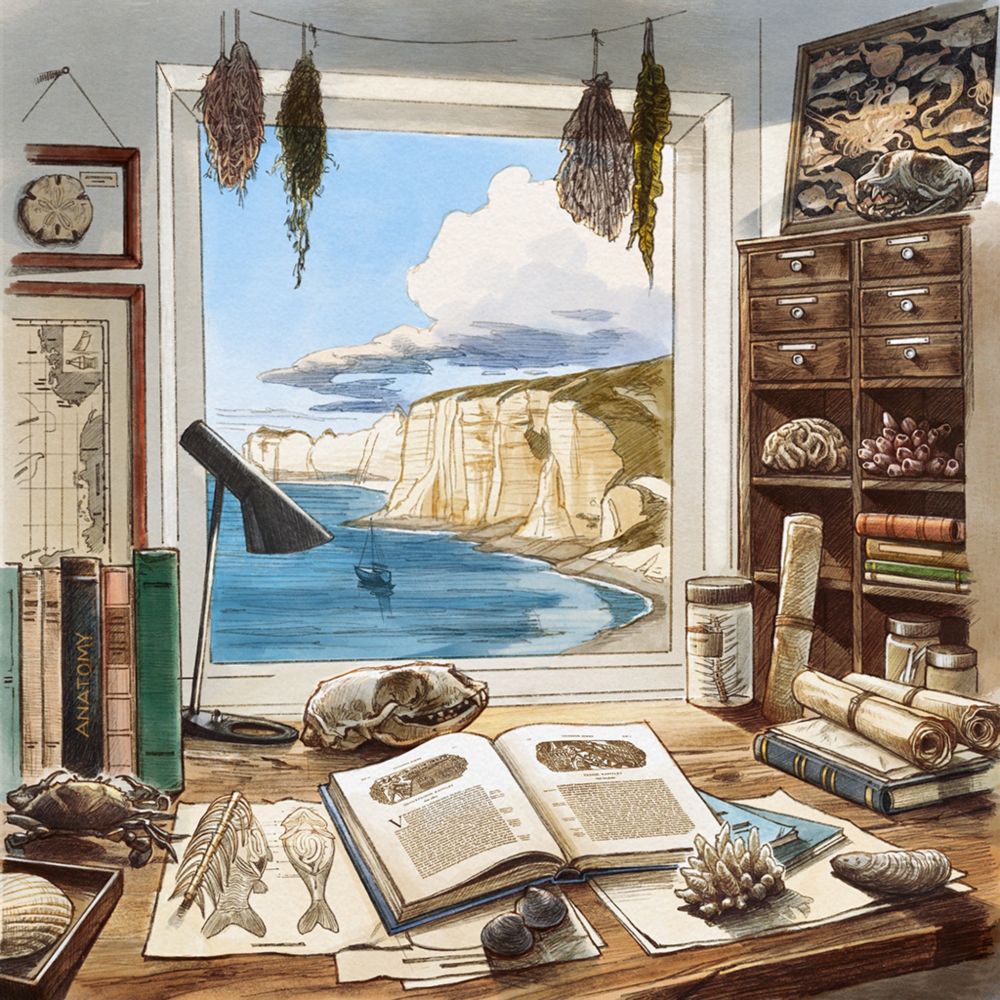
A marine illustration featuring two contrasting marine ecosystems in one perspective.
Here's an illustration I did for the Royal Society Publishing journal and their special release "The shifting seas". It was great fun to work on this hugely educational piece and I wanted to thank @lukeeholman.bsky.social in particular for giving me this opportunity 😊
16.07.2025 17:17 —
👍 122
🔁 24
💬 3
📌 0
Thank you so much for your beautiful art. You really captured how humanity has challenged the oceans, while also providing hope for future flourishing seas through recovery and restoration.
🌊
17.07.2025 08:12 —
👍 1
🔁 0
💬 1
📌 0
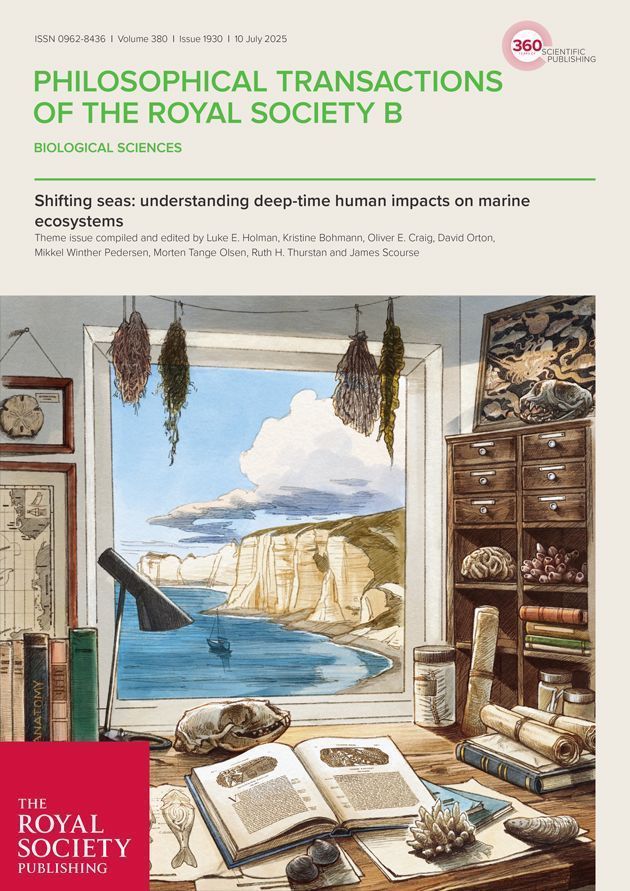
New theme issue of #PhilTransB out today ‘Shifting seas: understanding deep-time human impacts on #marine #ecosystems’. Read here: royalsocietypublishing.org/toc/rstb/202...
10.07.2025 10:20 —
👍 4
🔁 3
💬 0
📌 0

Thank you to all the amazing authors who trusted us with their research. Not to mention our wonderful artists Jacek Matysiak (www.instagram.com/big.hippo.art/) and Maddy Dall (www.instagram.com/maddydall/) who brought the issue to life with their beautiful illustrations.
10.07.2025 10:02 —
👍 3
🔁 0
💬 1
📌 0
Contributions use bones 🦴, shells 🐚, old catch records 📜, logbooks 📖, marine sediments 🧪 & more to reach before monitoring began. Using stable isotopes 🧬, ancient DNA 🧫, ecosystem models 🌍 & other tools, they reveal fresh insights into our impact on the seas 🌊.
10.07.2025 10:02 —
👍 1
🔁 0
💬 1
📌 0
My amazing co-guest editors @ruththurstan.bsky.social @kbohmann.bsky.social @mikkelwp.bsky.social @tangeolsen.bsky.social & non-Bskyers Ol Craig, David Orton, James Scourse and I found only enthusiasm and interest from our networks - the amazing research rolled in!
10.07.2025 10:02 —
👍 2
🔁 1
💬 1
📌 0
There wasn’t an obvious place to bring together data from archaeology 🏺, ecology 🌿, and marine geology 🌊…
Then I saw a call from @royalsocietypublishing.org 📣 for theme issues — and suddenly, everything clicked! 💡🧩
10.07.2025 10:02 —
👍 1
🔁 0
💬 1
📌 0
A couple of years ago we were beginning to see exciting interdisciplinary datasets coming out of @erc.europa.eu 🌍 @seachange-erc.bsky.social 🌊. It was amazing to begin to understand the complex dance of climate 🌡️, humans 🧍♂️🧍♀️, and marine biodiversity 🐟🪸 across centuries! ⏳✨
10.07.2025 10:02 —
👍 1
🔁 1
💬 1
📌 0

New paper out now in @natcomms.nature.com!
Multiproxy analysis reveals the earliest evidence of whale bone working and broadens the range of taxa known to have been used in the Bay of Biscay during the Late Paleolithic 🐋
Paper 🔗 www.nature.com/articles/s41...
30.05.2025 00:31 —
👍 2
🔁 1
💬 0
📌 0

Did you know that most 18/19thC coastal plantations were located at places where the largest Indigenous towns once stood centuries earlier? A great example of how deep-time land use practices create legacies that drive future, cumulative human-ecosystem engagements. 🔗 www.nature.com/articles/s43...
27.03.2025 11:32 —
👍 30
🔁 19
💬 0
📌 2
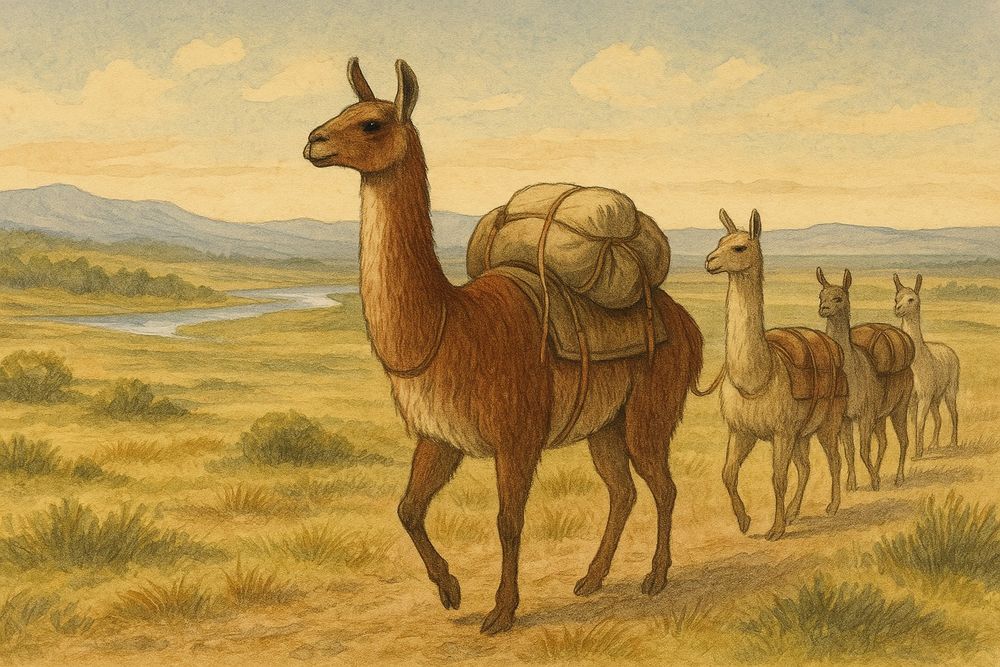
Did llamas make it to southeast South America before Europeans? 🦙
Our manuscript used #archaeology, isotopes, and palaeogenomics #aDNA to find out 🦙🦴🧬
In summary, nope. Just guanacos hanging on into early historical times.
Read it here: authors.elsevier.com/c/1kvQy,rVDB...
Reposts appreciated 😁
10.04.2025 07:39 —
👍 21
🔁 9
💬 0
📌 0
💡 Some takeaways:
Different eDNA methods give us different snapshots of ancient biodiversity. Interpret ancient records with care —methodological biases can shape ecological conclusions.
When your material crosses 2-4k years BP be careful interpreting alpha diversity changes.📝
21.02.2025 08:59 —
👍 0
🔁 0
💬 1
📌 0
📊 Consistent beta diversity
Despite the richness differences, both methods produced similar beta diversity patterns, highlighting consistent shifts in community composition over time.
Phew!
21.02.2025 08:59 —
👍 0
🔁 0
💬 1
📌 0

📉 Very different richness across methods!📉
Our results showed opposing alpha diversity trends:
• Metabarcoding = lower ASV richness in older sediments
• Metagenomics = lower genus richness in younger sediments
A clear reminder that the method truly matters! 🎯
21.02.2025 08:59 —
👍 0
🔁 0
💬 1
📌 0

🔍 What taxa overlapped? 🔍
We found that only 3 metazoan genera overlapped between methods:
• Oikopleura (larvacean)
• Gadus (cod)
• Clupea (herring)
(+ 🌿seagrass🌿)
Interestingly we found that only metagenomics provided reliable detections beyond 4k years for all taxa.
21.02.2025 08:59 —
👍 0
🔁 0
💬 1
📌 0

🔬 What did we do?🔬
We sampled a long (30m+), old (20y+) marine sediment core from the Skagerrak, North Sea, performing 18S(v9) metabarcoding and shotgun-metagenomic sequencing to see what these very different techniques tell us about ancient oceans.
21.02.2025 08:59 —
👍 0
🔁 0
💬 1
📌 0
We have so much more to do to support women in STEM! 👩🔬 Here at GLOBE, across Danish academia🇩🇰, and around the 🌍
🚀 Follow these great women, read & cite their work, and stay aware of the biases that can make us miss out on talented researchers & amazing collaborators! 💙 #WomenInSTEM #EquityInScience
11.02.2025 16:39 —
👍 3
🔁 0
💬 0
📌 0
People - Seachange
Finally, the super talented Lene Bruhn Pedersen! 🧪✨ Her lab skills are crucial to keeping our projects running. 🔬💡
Lene is looking for new opportunities in Copenhagen as our project wraps up. If you need the best lab tech in town, reach out! 👀📢
🔗 More about Lene: seachange-erc.eu/people/lene_...
11.02.2025 16:39 —
👍 5
🔁 1
💬 1
📌 0
People - Seachange
Working with us on @seachange-erc.bsky.social, we’re lucky to have Giulia Zampirolo! 🧬✨ She brings deep expertise in ancient metagenomics to help us decode past oceans. 🌊
📢 Her latest paper: 🔗 doi.org/10.1016/j.cu...
👀 More about Giulia (not on bluesky) 🔗 seachange-erc.eu/people/giuli...
11.02.2025 16:39 —
👍 7
🔁 1
💬 1
📌 0
Next up, the fantastic Kristine Bohmann! 🧬✨ A metabarcoding & eDNA wizard who is simultaneously:
🌊🔍 PI of @seachange-erc.bsky.social (@erc.europa.eu)
🌬️🦠 Leading the airDNA project (DFF)
🧪🌍 Heading the eDNA group at GLOBE
Follow her for top-notch eDNA research! 🚀💡
🔗 @kbohmann.bsky.social
11.02.2025 16:39 —
👍 3
🔁 1
💬 1
📌 0