


Just discovered the wonderful covers of 'Genes to Cells', the journal of the Molecular Biology Society of Japan @mbsj-official.bsky.social – absolutely beautiful!
here some examples inspired by mitosis, CRISPR, the DNA helix, and plant pigments
Just discovered the wonderful covers of 'Genes to Cells', the journal of the Molecular Biology Society of Japan @mbsj-official.bsky.social – absolutely beautiful!
here some examples inspired by mitosis, CRISPR, the DNA helix, and plant pigments


We've got ISSUES. Literally.
We scraped >100k special issues & over 1 million articles to bring you a PISS-poor paper. We quantify just how many excess papers are published by guest editors abusing special issues to boost their CVs. How bad is it & what can we do?
arxiv.org/abs/2601.07563
A 🧵 1/n

Great new study about the loss of a colour morph in Common Wall Lizards (Podarcis muralis)
www.science.org/doi/10.1126/...

A European common lizard (Zootoca vivipara) on a piece of wood. Photo credit: Montaine Delmotte, INRAE.
Human long-distance runners struggle with dehydration after losing 2% body mass, but common lizards still run well after losing 30% of their body mass. However, cold (20C) lizards are only half as fast as 35C lizards, so temperature impacts them more
journals.biologists.com/jeb/article/...

How iNaturalist, a citizen-science platform, led to the rediscovery of a species thought to be extinct. These platforms are powerful tools for the monitoring of biodiversity.
www.cell.com/current-biol...
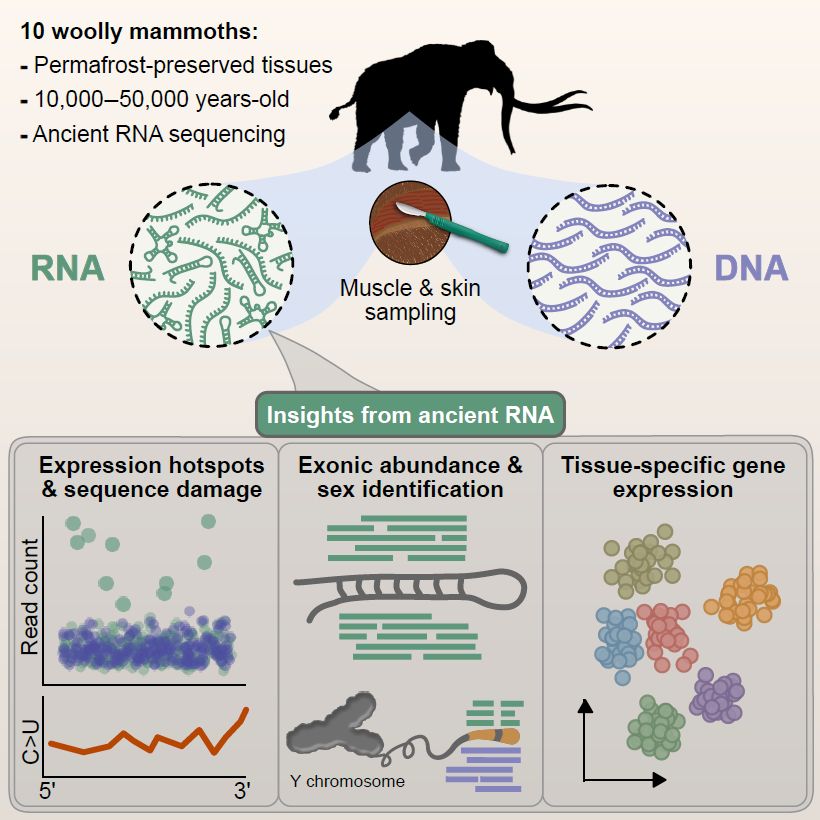
🦣🧬🦣🤯💥We are pleased to share our new paper about ancient RNA expression profiles from the Woolly Mammoth, now published in Cell @cellpress.bsky.social
www.cell.com/cell/fulltex...
If you want to know more, read the 🧵 below:

Researchers immunized an alpaca and a llama with snake venoms, and combined some of the antibodies produced into a potent cocktail
go.nature.com/47LQB8d

Nice video clip about one of our amazing study species. Those locomotory abilities are incredible!
youtu.be/CrXqqX-ta5I

Akis lusitanica

Ergates faber
Two large Beetles (Coleoptera) that can be found in Portugal. Always an impressive sight!
23.10.2025 09:29 — 👍 2 🔁 0 💬 0 📌 0
This stinkbug makes an alliance with a fungus to fight its enemy, a parasitic wasp. An evolutionary arms race taken to the next level.
www.science.org/content/arti...

A Museum specimen of now extinct Madeiran Large White, Pieris wollastoni (Photo: Sam Ellis)
We are also deeply saddened that the Madeiran Large White, Pieris wollastoni, is now officially extinct: it was last seen in 1986. The full report can be downloaded here www.bc-europe.eu/documents/68...
11.10.2025 09:34 — 👍 50 🔁 22 💬 1 📌 1
Safe to say that this cricket (Sphingonotus imitans) is right in its habitat. The precision of camouflage will never cease to amaze me.
10.10.2025 11:58 — 👍 2 🔁 0 💬 0 📌 0
This article is a couple of years old but still worth sharing given the spectacular diversity of phasmid eggs. Impressive!
www.nationalgeographic.com/animals/arti...

Quite interesting!
journals.plos.org/plosbiology/...

We’re offering a fully funded 4 yr PhD position to work on Sexual selection in complex environments at the @uv.es. Co-supervised by @dbergerbiol.bsky.social. Find details below 👇
01.09.2025 13:25 — 👍 31 🔁 57 💬 0 📌 2
Beautiful photos and short videos here!
www.nature.com/immersive/d4...

Brightfield image of an adult zebrafish caudal fin displaying a “truncate” shape and aberrant pigment pattern. This individual was exposed to transient overexpression of transgenic sonic hedgehog a at 2 days post fertilization, resulting in increased growth of rays at the center of the fin and disruption of the normally horizontal pigment stripes. Credit: Eric Surette and Stephanie Robinson.
Caudal fins show great variation in shape between diverse fish species. New research reveals that #developmental cues in embryonic tissues involving the Sonic hedgehog pathway imprint fin #morphology, highlighting a critical window for modulating appendage morphology. 🧪
plos.io/4mydLnA

"While present in all mammals, the HAR123 enhancer rapidly evolved since humans diverged from chimpanzees. Human HAR123 uniquely regulates many genes involved in neural differentiation. HAR123-knockout mice exhibit impaired cognitive flexibility & shifts in neural-glia ratios in the hippocampus." 👇🧪
22.08.2025 17:47 — 👍 15 🔁 4 💬 0 📌 0
Introducing "The SORTEE Guidelines for Data and Code Quality Control in Ecology and Evolutionary Biology"
The first standardised set of data editor guidelines. Led by SORTEE with input from numerous data editors across ecology and evolution.
🔗 doi.org/10.32942/X24...
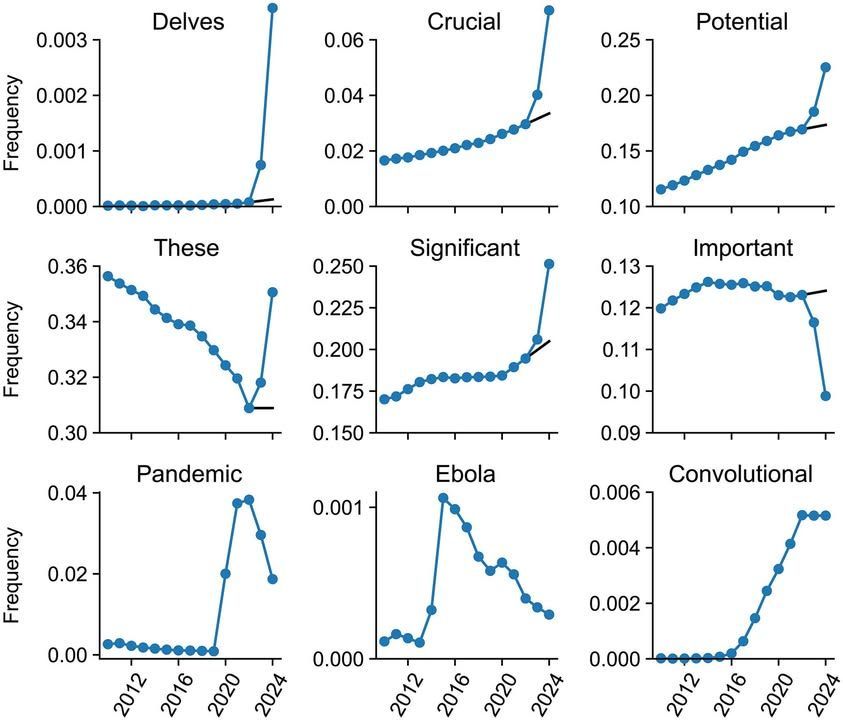
The appearance of large language models caused a drastic shift in the vocabulary of academic writing, according to an analysis in #ScienceAdvances of more than 15 million biomedical abstracts published from 2010 to 2024.
Learn more:

Larry Richardson appeared to be an early-career mathematician with potential, racking up more than 130 citations in 4 years.
It would all be rather remarkable—if the studies weren’t complete gibberish. And if Larry wasn’t a cat. #InternationalCatDay scim.ag/4lg3wTp
Latest paper elifesciences.org/articles/107... closes an important cycle in our efforts to study regeneration: week-long recordings allow us to observe the behaviour of cells during the entire course of regeneration in a crustacean leg – bright objects in movie are fluorescent nuclei of cells. 1/6
08.08.2025 17:39 — 👍 142 🔁 50 💬 2 📌 3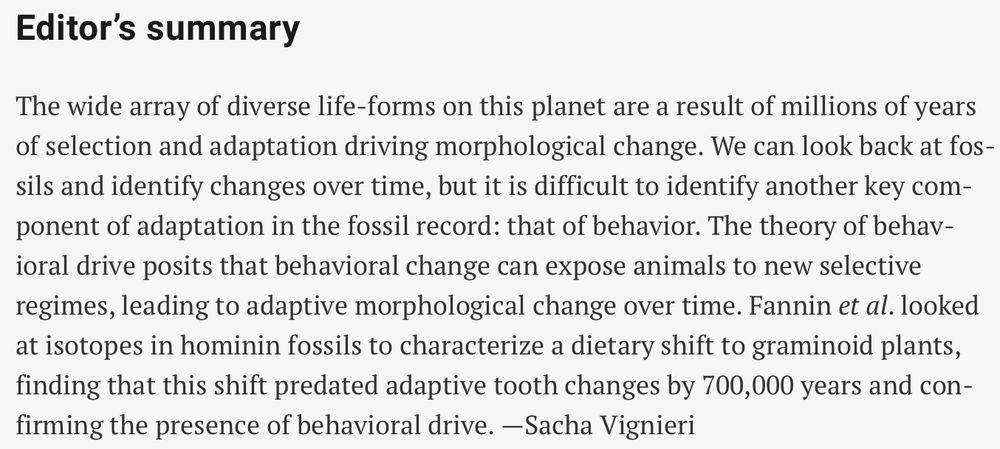
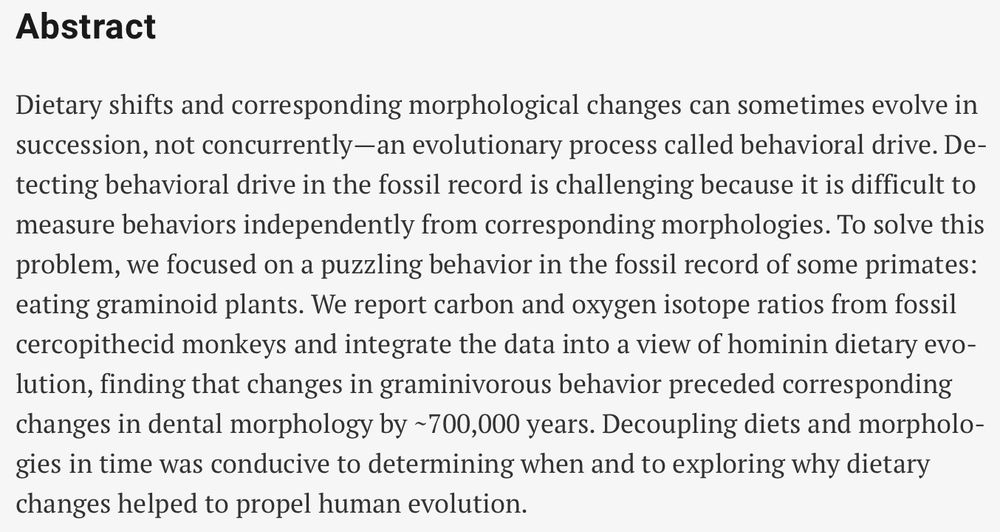
"Behavior drives morphological change during human evolution"
Our new article is out in @science.org today
www.science.org/doi/10.1126/...
Podcast intéressant sur le deuil chez les animaux
30.07.2025 09:11 — 👍 2 🔁 0 💬 0 📌 0
Policarpo et al. analyse 535 genomes to study opsin evolution across ray-finned fishes. Visual opsins are more prone to duplications and losses than nonvisual opsins; fish that rely on electroreception show a reduction in both opsin types.
🔗 doi.org/10.1093/gbe/evaf129
#genome #evolution #opsins

Very nice study shows that hidden achromatic colours play a big role in plumage colour variation! #colsci
www.science.org/doi/10.1126/...

A brain signature for optimism but not for pessimism
www.nature.com/articles/d41...
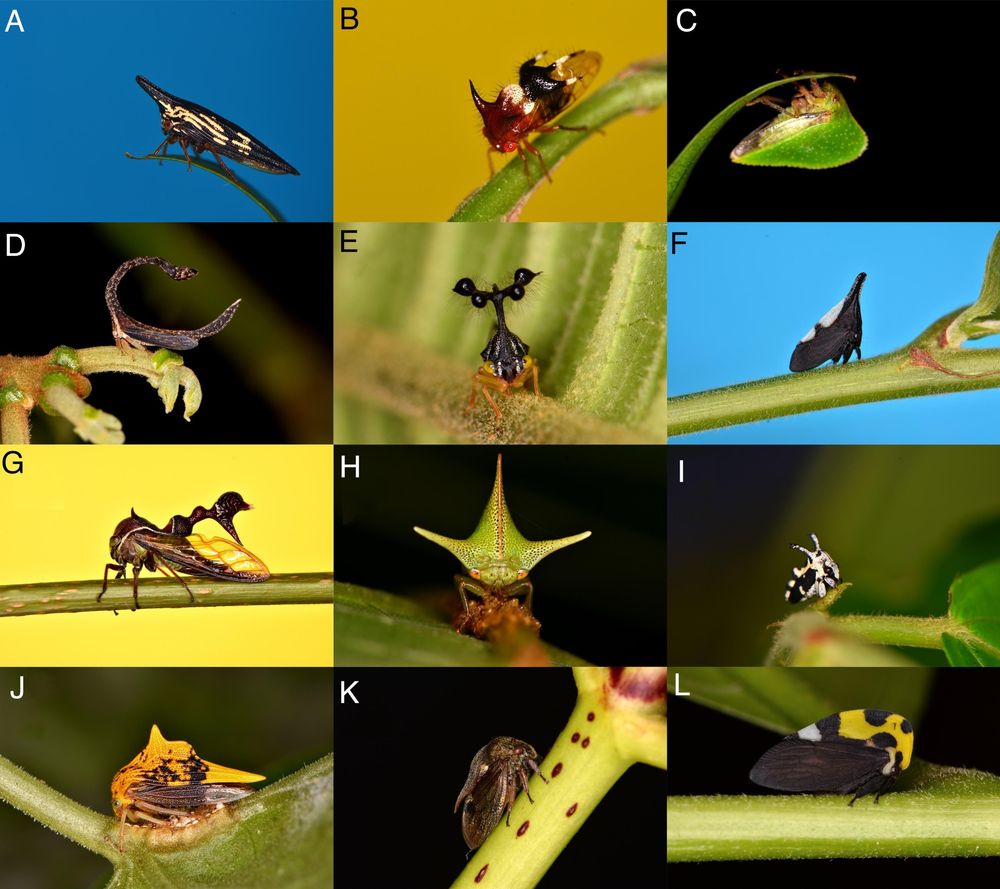
Why do treehoppers look so weird?! Our latest paper, out this week in @pnas.org, suggests a perhaps unexpected reason - static electricity ⚡ We show that treehoppers can detect the electrostatic cues of predators and that their crazy shapes may boost their electrosensitivity! doi.org/10.1073/pnas...
24.07.2025 11:41 — 👍 415 🔁 166 💬 13 📌 38
This book is a mix of science and history as it relates how British naturalists from the XIX century witnessed the extinction of the Great Auk, which largely contributed to the realisation that humans could drive species towards extinction.
24.07.2025 09:24 — 👍 3 🔁 0 💬 0 📌 0
