Basic R Course 2026 / Kenya | AniMove
Excited to announce our courses for #MovementEcology.🤗
This year we will be in #Africa @mpalarc.bsky.social at Mpala Research Centre. Starting with a basic R course designed for #AfricanResearchers, followed by a two-week international Animove workshop. animove.org/basic-r-cour... Please share 👍
27.01.2026 14:17 —
👍 21
🔁 14
💬 0
📌 1

Refining Capture and Collaring Protocols for Red Foxes
Animal capture is an important aspect of ecological studies, required for fitting tags and collecting biological samples. Capture success can be increased while ensuring high welfare standards throug...
🚨NEW PAPER🚨🦊
The main thing I learned during my PhD is that foxes are smarter than me.
We had gotten funding, we were collaborating with management authorities, we had the fancy collars... We were ready to investigate fox movement ecology. But we weren't catching any foxes. (1/5)
🧪🌍
20.01.2026 11:52 —
👍 36
🔁 12
💬 2
📌 2

Movebank
Help us improve Movebank: During 2026, we will undertake a major renewal of the Movebank system to build scalability and sustainability. What does Movebank mean for you? How could it better support your work? Your feedback will be highly appreciated! Survey: survey.academiccloud.de/f/221856?lan...
20.01.2026 13:54 —
👍 8
🔁 10
💬 0
📌 0
Done 😄
16.01.2026 08:45 —
👍 1
🔁 0
💬 0
📌 0
Added 😄
26.12.2025 10:03 —
👍 0
🔁 0
💬 0
📌 0


Another day of #AnimoveCR 😀 Analysing animal movement with continuous-time models by @ecoisilva.bsky.social and Chris Fleming, ending with a fantastic plenary talk by @kamransafi.bsky.social on Kruger National Park research.
04.12.2025 03:28 —
👍 9
🔁 6
💬 0
📌 0

Pictured is a male jaguar (Panthera onca) equipped with a tracking collar. William F. Fagan et al. tracked the movements of 1,239 mammalian carnivores, including 16 canid species and 18 felid species, on six continents. On average, compared with felids, canids displayed a greater density of trackways within their range and were more likely to reuse established trackways. According to the authors, the evolutionary differences in carnivore movement patterns could aid efforts to model encounters among carnivores, prey, and humans. See the article by Fagan et al. e2401042122. Image credit: Sebastian Kennerknecht (photographer).
Canids seem to be the routine lovers, reusing their travel routes more than felids. This shapes hunting, encounters, and even disease spread. Insights from 1,239 GPS-tracked carnivores, including the Arctic foxes we track on Bylot Island 🧪🌿🌎🌐🦊. Read in the latest PNAS at bitly.cx/TxI2
10.10.2025 09:56 —
👍 43
🔁 13
💬 0
📌 1

📣 Hot off the press at #ProcB!
🔍 Our study checked data/code-sharing policies in 275 eco/evo journals and compliance in Proc B (n=2,340) & Ecology Letters (n=571). Policies exist, but clarity and strictness vary, affecting reproducibility.
🔗 doi.org/10.1098/rspb...
17.09.2025 06:30 —
👍 63
🔁 43
💬 2
📌 3

Global distribution of forest landscapes covered by airborne LiDAR
Only a pre-print for now, but after 4 years of hard work I couldn't resist sharing this!
The Global Canopy Atlas: analysis-ready maps of 3D structure for the world's woody ecosystems
📜: doi.org/10.1101/2025...
Huge team effort led by the brilliant Fabian Fischer!
05.09.2025 14:29 —
👍 239
🔁 78
💬 10
📌 8
TADA! Simple guidelines to improve code sharing
🎉New preprint!
"TADA! Simple guidelines to improve code sharing"
tinyurl.com/8rmnwjrk
We present simple guidelines to help researchers of all coding levels improve the transparency and reproducibility of their analytical code, TADA!
Transferable, Accessible, Documented, Annotated.
02.08.2025 17:05 —
👍 100
🔁 53
💬 2
📌 5
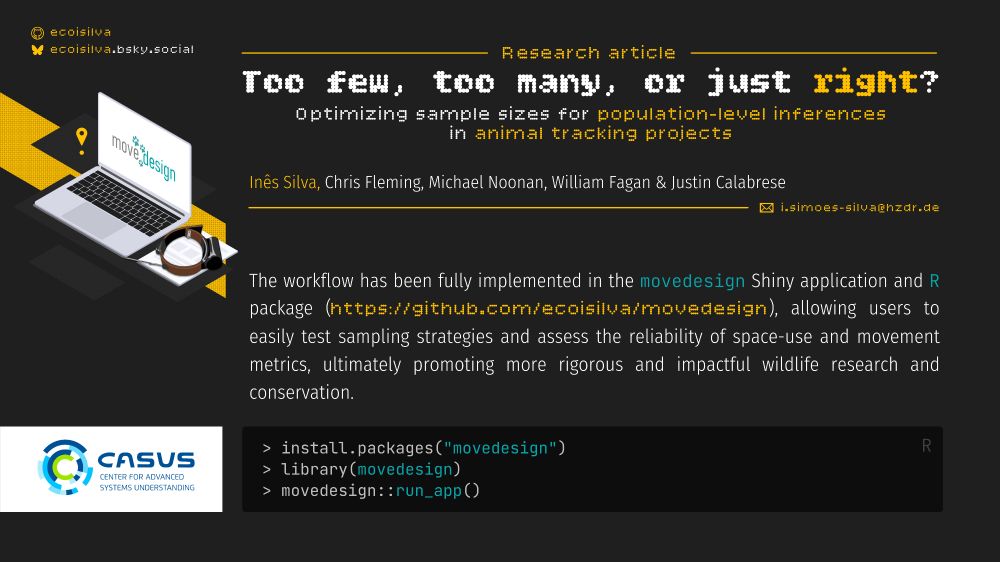
Graphical abstract for a manuscript titled "Too few, too many, or just right? Optimizing sample sizes for population-level inferences in animal tracking projects". The workflow has been fully implemented in the movedesign Shiny application and R package, allowing users to easily test sampling strategies and assess the reliability of space-use and movement metrics, ultimately promoting more rigorous and impactful wildlife research and conservation.
This workflow has been fully implemented into the latest version of the #movedesign R Shiny app, making it easy for researchers to test and optimize their animal tracking sampling strategies! The package is now available on CRAN #rstats github.com/ecoisilva/movedesign
04.08.2025 06:33 —
👍 5
🔁 2
💬 0
📌 0

A multi-panel figure shows how relative error (%) in population-level estimates changes with population sample size (m) across different sampling durations (2 months, 4 months, 1 year, 3 years, 9 years) for African buffalo tracking data. The top row displays results without resampling, and the bottom row with resampling. Each panel contains scatter points and error bars for relative error at each sample size, colored by whether the error falls within a ±5% threshold (blue for true, red for false). Shorter durations (left panels) show higher, more negative bias and larger error bars, with many red points, while longer durations (right panels) show reduced bias and more points within the error threshold.
We found that researchers should favor sampling parameters (duration or interval, depending on the target) over population sample size to reduce bias. However, a larger sample size is crucial to increase precision and capture high individual variation.
04.08.2025 06:33 —
👍 3
🔁 0
💬 1
📌 0
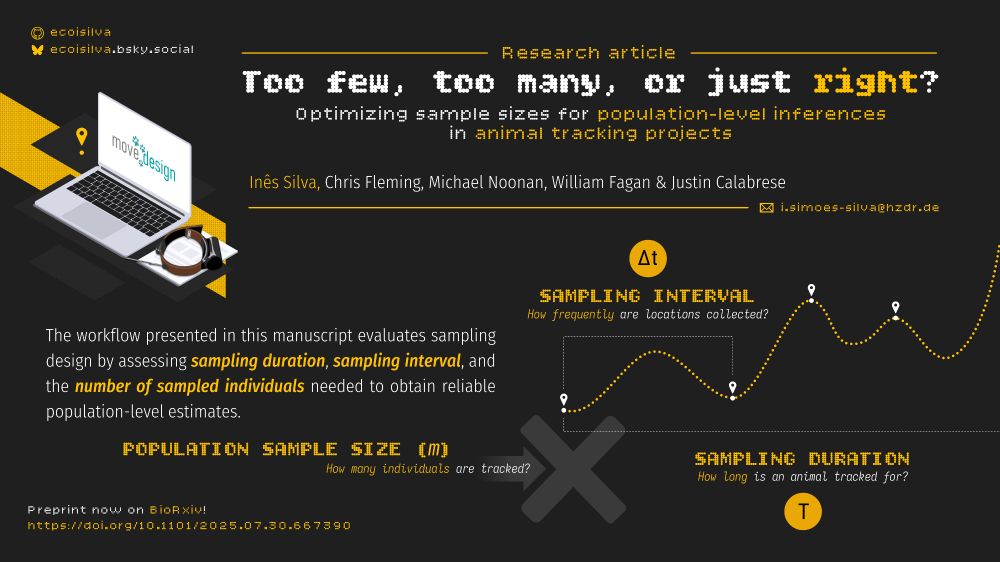
Graphical abstract for a manuscript titled "Too few, too many, or just right? Optimizing sample sizes for population-level inferences in animal tracking projects". The workflow presented in this manuscript evaluates sampling design by assessing sampling duration, sampling interval, and the number of sampled individuals needed to obtain reliable population-level estimates.
✨ New preprint! "Too few, too many, or just right?" 🌍🌎🌏 We explore how to evaluate study design in animal tracking studies by assessing sampling duration, interval, and, now, the number of individuals needed for reliable population-level estimates. #movementecology www.biorxiv.org/content/10.1...
04.08.2025 06:33 —
👍 26
🔁 8
💬 1
📌 0
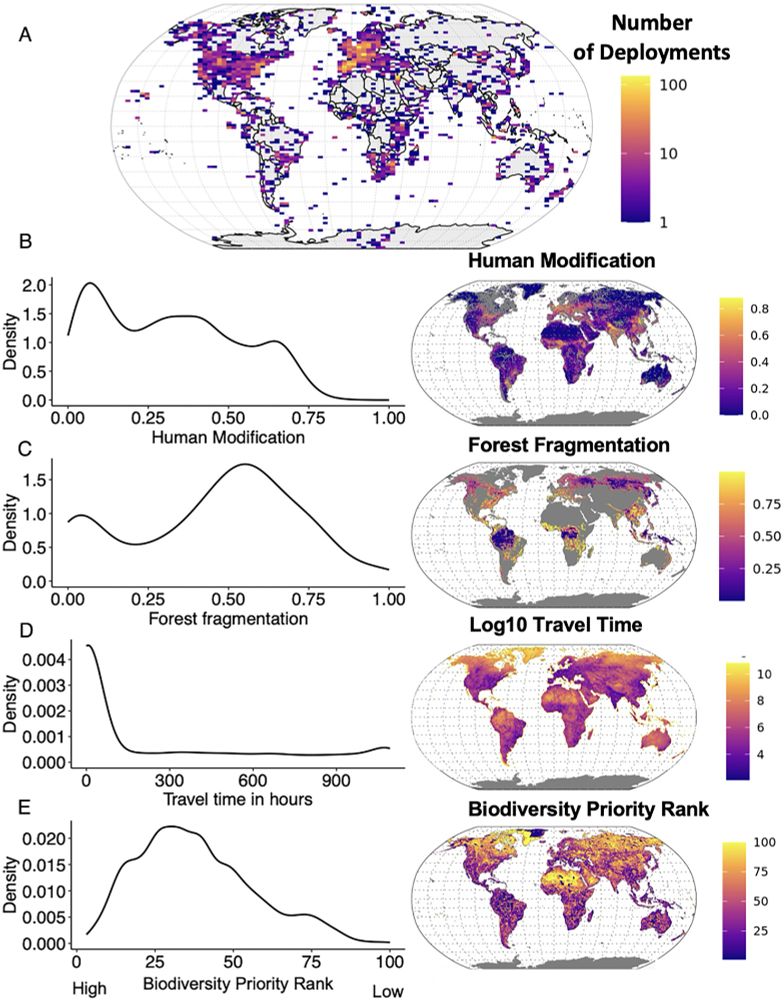
Thrilled to share our new article in @pnas.org highlighting global gaps in where we study animal movement—and outlining the next generation of smart bio-loggers.
👉 Read the full study in PNAS: lnkd.in/exP8NCeZ
1/
30.07.2025 00:02 —
👍 51
🔁 34
💬 2
📌 0
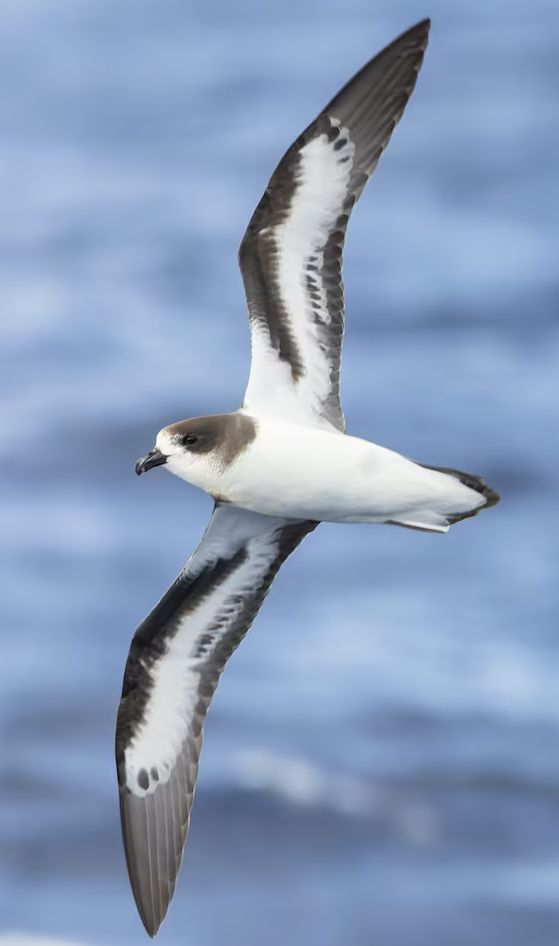
🚨New paper out🚨
We used fine-scale GPS, depth & accelerometry data to reveal foraging activity of the endangered Bermuda petrel.
Thanks: @campioni-leti.bsky.social & collab. effort of Bermuda Conserv. Dept, Canad. Wildlife Service & ISPA Portugal
A thread 🧵
#seabirds #biologging #movementecology
07.07.2025 09:36 —
👍 60
🔁 16
💬 1
📌 0
Can I be added? 😄
19.06.2025 13:04 —
👍 0
🔁 0
💬 1
📌 0
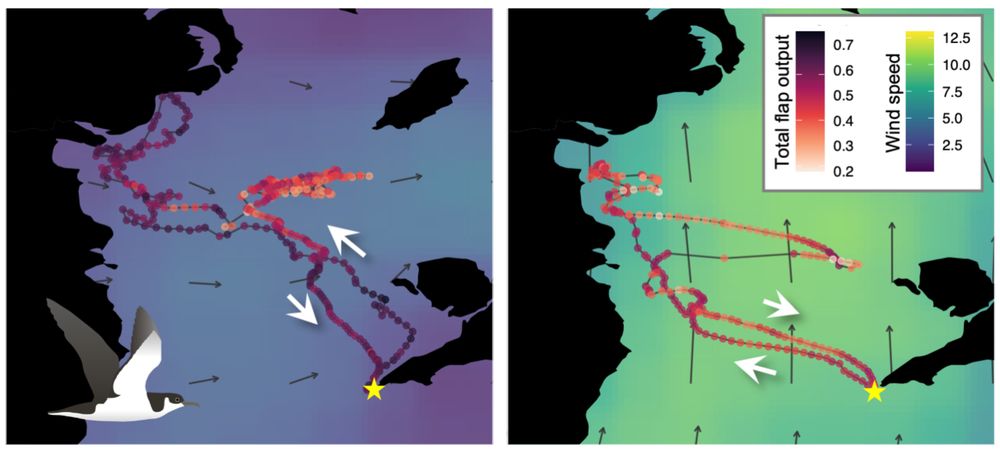
New paper in @currentbiology.bsky.social on seabird wind use and foraging decisions!
doi.org/10.1016/j.cu...
We estimated wind selectivity in Manx shearwaters and explored how birds handle the trade-off between being wind efficient and targeting known foraging areas
@sosbangor.bsky.social
15.01.2025 10:29 —
👍 83
🔁 40
💬 1
📌 2

Tracking data and teamwork once again show their value for wildlife conservation.
Our study led by Timothée Poupartand and Thibaut Bettignies reveals mismatches between the Natura2000 marine network and seabird distributions, urging for better protected areas off France
l1nq.com/kwIzl
11.06.2025 16:49 —
👍 6
🔁 4
💬 2
📌 0
A female Western Gull was recorded riding 150km in a garbage truck from San Francisco to a compost facility in Central CA, probably to forage. TWICE. An innovator, an icon, a genius.
This is one of my favorite @waterbirdsociety.bsky.social papers I've ever handled as managing editor #ornithology
03.06.2025 08:24 —
👍 3349
🔁 1132
💬 57
📌 144

Application countdown for the #Animove Workshop 2025 in Costa Rica.....Deadline is 31st of May. Sign up now ! animove.org/next-animove...
@mpi-animalbehav.bsky.social @movebank.bsky.social #biologging #animalmovement #rstats
26.05.2025 11:39 —
👍 11
🔁 5
💬 0
📌 0
You have been added 😄
19.05.2025 21:33 —
👍 1
🔁 0
💬 0
📌 0
The Ecology of Animal Migration course will be held again in Lund University this November! A great opportunity to learn and network for PhDs working on migration.
06.05.2025 13:54 —
👍 6
🔁 3
💬 0
📌 0
Open post-doctoral positions in #movementecology: a thread! If you are offering a position and would like us to spread the word, let us know.
25.04.2025 09:40 —
👍 2
🔁 2
💬 1
📌 0
Homepage - Comissão Comemorativa 50 Anos 25 Abril
Até 2026 celebramos 50x2, 50 anos de liberdade e de democracia.
Not been here for a while, I though I would today to commemorate the 25th of April 1974. If don't know what it represents for Portugal, visit the website that was built to commemorate the 50 years of the revolution (which was last year) which includes lots of information about it:
50anos25abril.pt
25.04.2025 11:25 —
👍 0
🔁 1
💬 1
📌 0
Done 😄
23.04.2025 11:10 —
👍 1
🔁 0
💬 0
📌 0
Added 😄
23.04.2025 11:09 —
👍 0
🔁 0
💬 0
📌 0