Yara Kyrychenko's Avatar

Yara Kyrychenko

@yarakyrychenko.bsky.social

PhD candidate @Cambridge | Responsible AI, intergroup conflict, misinfo, social media | yarakyrychenko.github.io

289 Followers  |  106 Following  |  15 Posts  |  Joined: 09.12.2024  |  1.928

Latest posts by yarakyrychenko.bsky.social on Bluesky

Today, social media platforms hold the sole power to study the effects of feed-ranking algorithms. We developed a platform-independent method that reranks participants’ feeds in real time and used this method to conduct a preregistered 10-day field experiment with 1256 participants on X during the 2024 US presidential campaign. Our experiment used a large language model to rerank posts that expressed antidemocratic attitudes and partisan animosity (AAPA). Decreasing or increasing AAPA exposure shifted out-party partisan animosity by more than 2 points on a 100-point feeling thermometer, with no detectable differences across party lines, providing causal evidence that exposure to AAPA content alters affective polarization. This work establishes a method to study feed algorithms without requiring platform cooperation, enabling independent evaluation of ranking interventions in naturalistic settings.

Today, social media platforms hold the sole power to study the effects of feed-ranking algorithms. We developed a platform-independent method that reranks participants’ feeds in real time and used this method to conduct a preregistered 10-day field experiment with 1256 participants on X during the 2024 US presidential campaign. Our experiment used a large language model to rerank posts that expressed antidemocratic attitudes and partisan animosity (AAPA). Decreasing or increasing AAPA exposure shifted out-party partisan animosity by more than 2 points on a 100-point feeling thermometer, with no detectable differences across party lines, providing causal evidence that exposure to AAPA content alters affective polarization. This work establishes a method to study feed algorithms without requiring platform cooperation, enabling independent evaluation of ranking interventions in naturalistic settings.

New paper in Science:

In a platform-independent field experiment, we show that reranking content expressing antidemocratic attitudes and partisan animosity in social media feeds alters affective polarization.

🧡

01.12.2025 07:59 β€” πŸ‘ 146    πŸ” 65    πŸ’¬ 4    πŸ“Œ 3
Preview
Towards scalable pro-social AI - Gates Cambridge Yara Kyrychenko's PhD explores how social media and social technology can be used to promote pro-social behaviour rather than to stoke divisions.

Yara Kyrychenko's PhD explores how social media and social technology can be used to promote pro-social behaviour rather than to stoke divisions - www.gatescambridge.org/about/news/t...

@uniofcam.bsky.social @kingscollege.bsky.social @gatesfoundation.bsky.social

24.11.2025 11:44 β€” πŸ‘ 2    πŸ” 1    πŸ’¬ 0    πŸ“Œ 0

Thank you for all of your support Sander!!

25.09.2025 11:08 β€” πŸ‘ 1    πŸ” 0    πŸ’¬ 0    πŸ“Œ 0
2025 - Women of the Future Awards

Excited to share that I’ve been shortlisted for the Women of the Future Awards in Artificial Intelligence! πŸŽ‰

awards.womenofthefuture.co.uk/our-alumni-c...

25.09.2025 11:06 β€” πŸ‘ 4    πŸ” 1    πŸ’¬ 0    πŸ“Œ 0
Post image Post image

Congratulations to @yarakyrychenko.bsky.social for being short-listed as a finalist for the Women of the Future Awards in AI! Yara is a massively brilliant scholar so proud πŸ‘ πŸ₯³

"For eighteen years, the awards have shone a light on trailblazing women"

awards.womenofthefuture.co.uk/our-alumni-c...

25.09.2025 09:22 β€” πŸ‘ 9    πŸ” 1    πŸ’¬ 1    πŸ“Œ 0
Post image

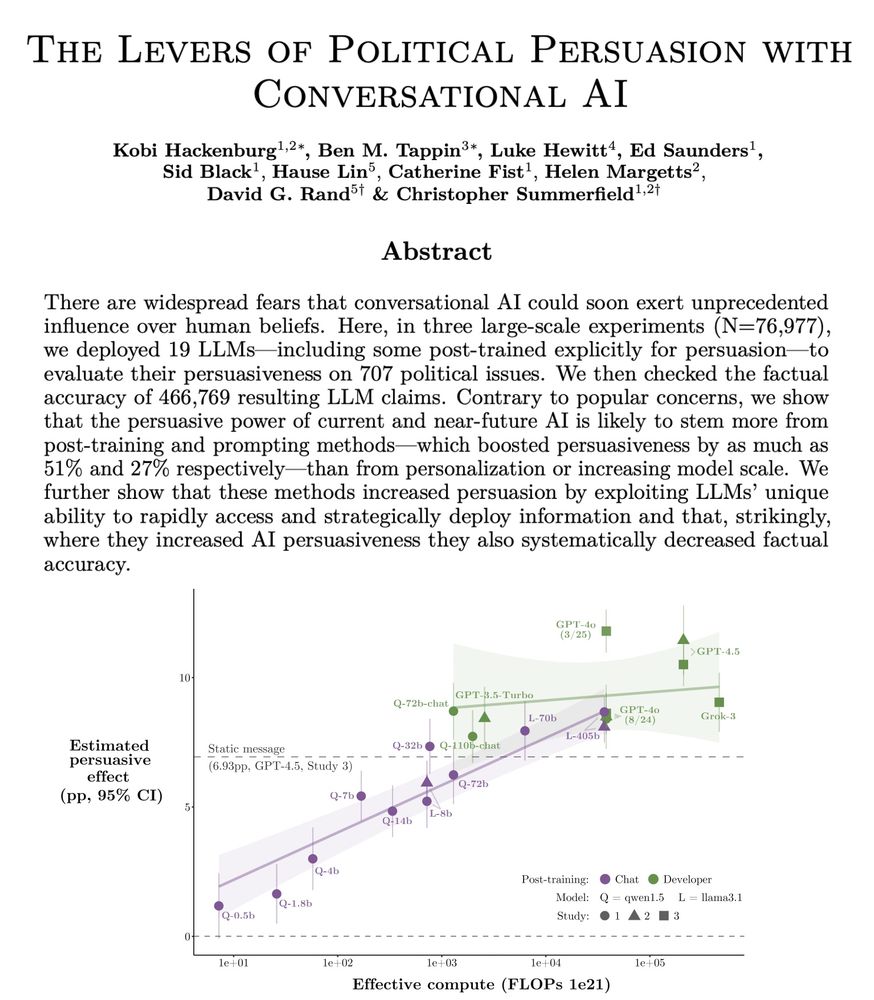
Today (w/ @ox.ac.uk @stanford @MIT @LSE) we’re sharing the results of the largest AI persuasion experiments to date: 76k participants, 19β€― LLMs, 707 political issues.

We examine β€œlevers” of AI persuasion: model scale, post-training, prompting, personalization, & more!Β 

🧡:

21.07.2025 16:20 β€” πŸ‘ 109    πŸ” 57    πŸ’¬ 10    πŸ“Œ 18
Post image

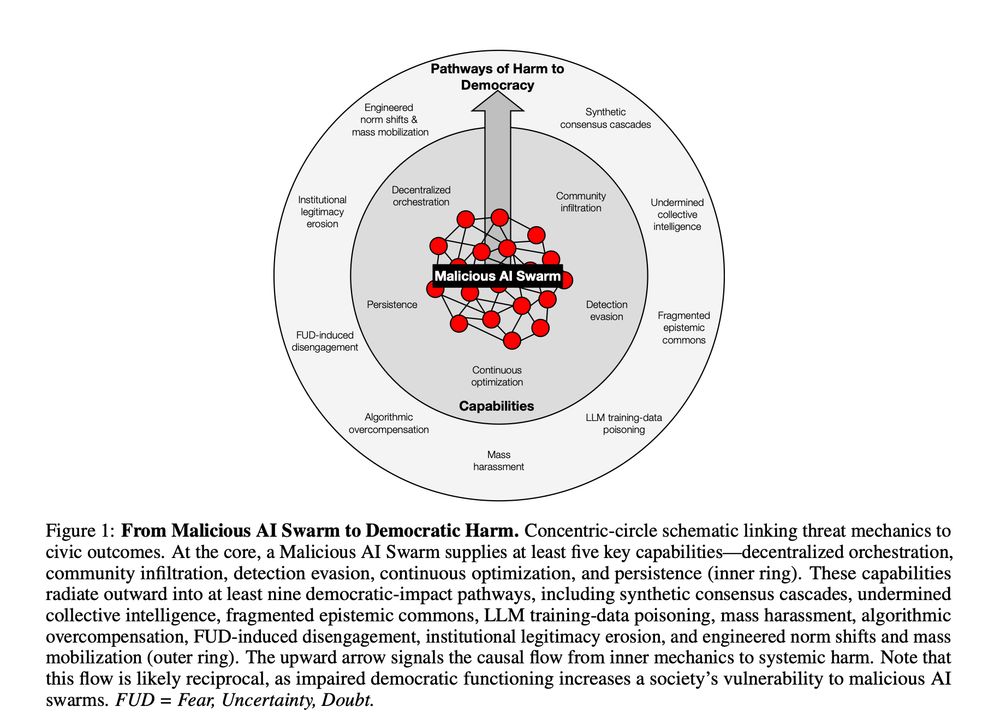
The combination of #artificialintelligence and #socialmedia poses a threat to democracy.

Our new paper explains how AI swarms can fabricate grassroots consensus, fragment shared reality, engage in mass harassment, interfer with elections, and erode institutional trust: osf.io/preprints/os...

03.06.2025 17:03 β€” πŸ‘ 110    πŸ” 59    πŸ’¬ 9    πŸ“Œ 4

Excited to be part of the Riga StratCom Dialogue this year!

30.05.2025 09:29 β€” πŸ‘ 0    πŸ” 1    πŸ’¬ 0    πŸ“Œ 0
Preview
What is AI slop? Why you are seeing more fake photos and videos in your social media feeds Cheap, low-quality AI-generated content is still extremely attention-grabbing – and thus lucrative for both creators and platforms.

We wrote an article about the rise of AI slop and the 'enshittification' of the internet for @theconversation.com with the brilliant @yarakyrychenko.bsky.social

One of these days, these bots are gonna walk all over you!

theconversation.com/what-is-ai-s...

29.05.2025 08:31 β€” πŸ‘ 35    πŸ” 21    πŸ’¬ 1    πŸ“Œ 1
Post image

Today at #TheWebConf: C3AI – Crafting & Evaluating Constitutions for AI

How should we actually write rules for AI?

C3AI provides a way to:
1. Design effective constitutions using psychology and public input.
2. Evaluate how well fine-tuned models actually follow the rules.

01.05.2025 08:49 β€” πŸ‘ 2    πŸ” 1    πŸ’¬ 1    πŸ“Œ 0
Post image Post image

Does communicating the scientific consensus on climate change inspire support for action? In a new meta-analysis of the GBM (n = 12,975) we find that scientific consensus increases support for climate action directly & indirectly across the political spectrum!

www.sciencedirect.com/science/arti...

11.04.2025 07:57 β€” πŸ‘ 66    πŸ” 24    πŸ’¬ 2    πŸ“Œ 5
Post image

Who is susceptible to misinformation? We looked at >60,000 people from 24 countries who took our MIST test. Key results: Gen Z are more susceptible & those on the extreme right (but they don't know it).

Led by the brill @yarakyrychenko.bsky.social & Fritz GΓΆtz

authors.elsevier.com/sd/article/S...

08.04.2025 07:30 β€” πŸ‘ 411    πŸ” 174    πŸ’¬ 19    πŸ“Œ 19
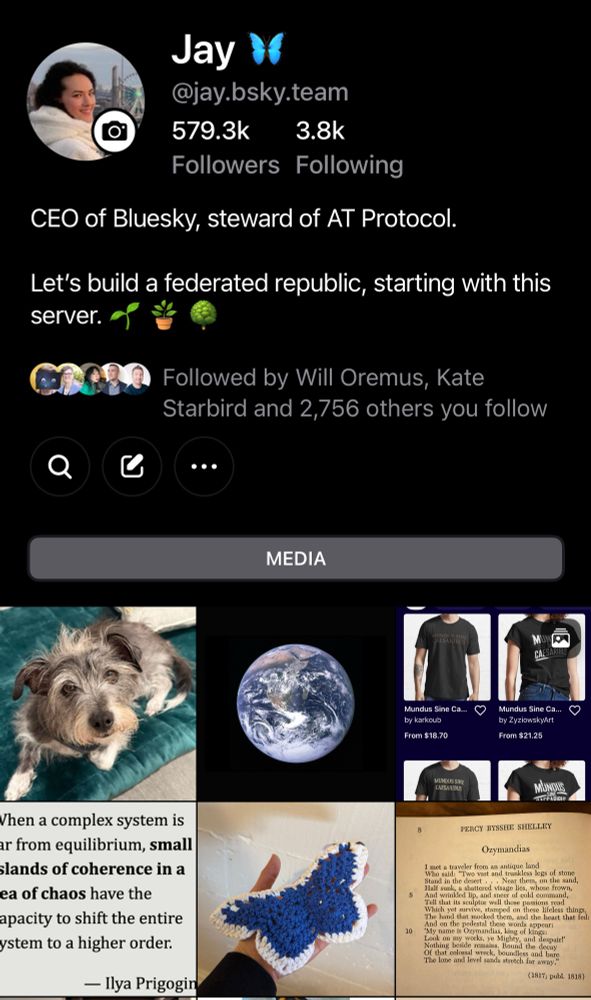
my profile page on flashes, a photo sharing app. recent photos i posted show up there in a grid display

my profile page on flashes, a photo sharing app. recent photos i posted show up there in a grid display

Here’s my account on Flashes, a photo sharing app. All my followers can automatically find me as soon as they log in!

This is what we mean when we say Bluesky is open: your identity and followers belong to you. It took 30s to sign up for this new, independent app, and everything is there.

29.03.2025 22:17 β€” πŸ‘ 9347    πŸ” 1258    πŸ’¬ 330    πŸ“Œ 153

Are you bored this weekend?

Can I interest you in some of the freshest thinking coming out of the academy today?

Try ePODstemology!

Our latest episode is Cambridge's Yara Kyrychenko on socially responsible AI.

30.03.2025 11:49 β€” πŸ‘ 2    πŸ” 2    πŸ’¬ 1    πŸ“Œ 0

Had a great time on ePODstemology talking with @markfabian.bsky.social about my research on socially responsible AI. Tune in! πŸŽ™οΈπŸ€–

27.03.2025 16:59 β€” πŸ‘ 1    πŸ” 2    πŸ’¬ 0    πŸ“Œ 0
Post image

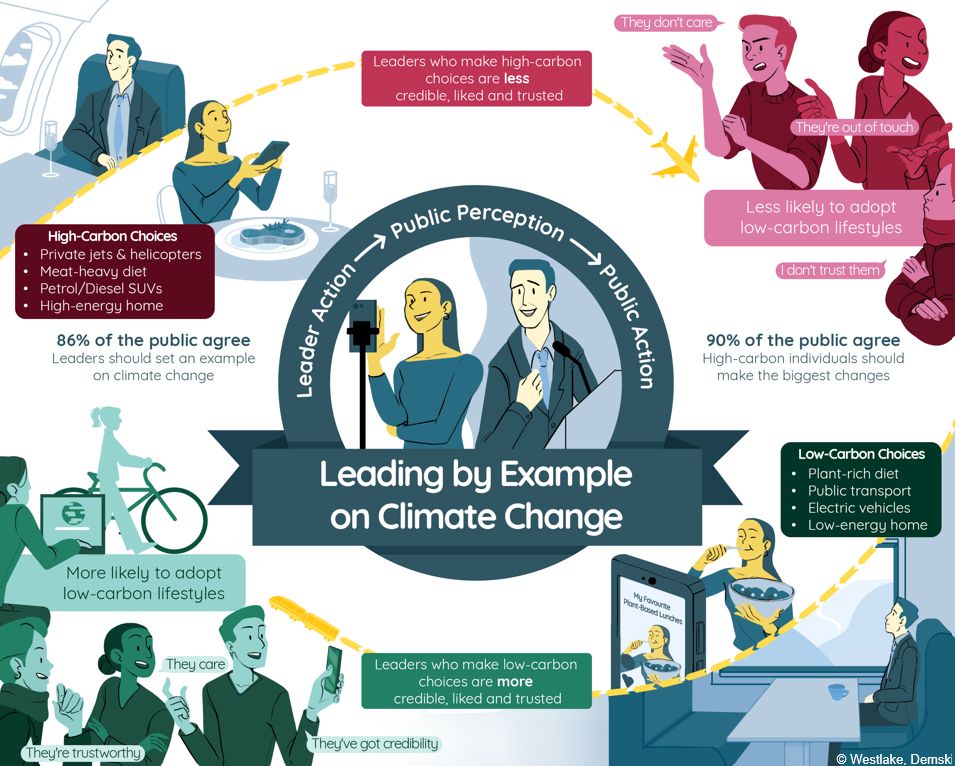
Great to see the Climate Change Committee (CCC) calling for public figures to β€œlead by example” on climate change, citing our research.

CCC says leading by example increases public buy-in and behaviour change @thecccuk.bsky.social

🚨So, we've made this new infographic showing how it works...
🧡

26.02.2025 09:52 β€” πŸ‘ 117    πŸ” 66    πŸ’¬ 7    πŸ“Œ 15
Post image

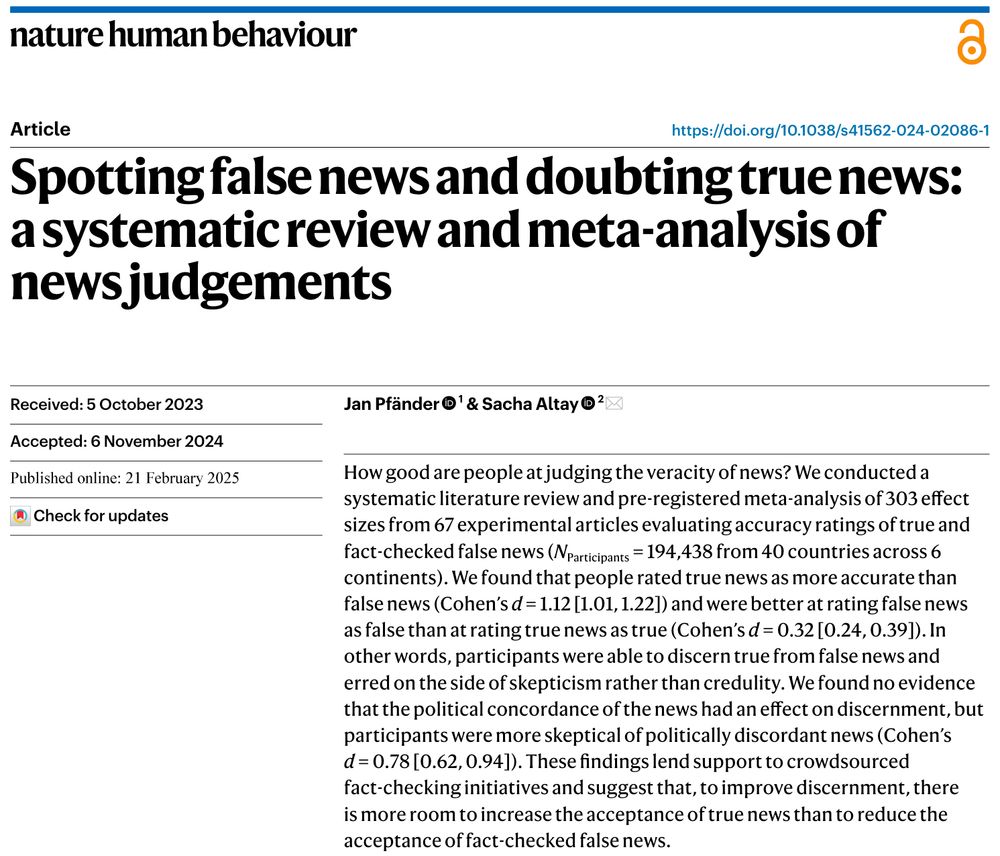
Out in @naturehumbehav.bsky.social

Can people tell true from false news?

Yes! Our meta-analysis shows that people rate true news as more accurate than false news (d = 1.12) and were better at spotting false news than at recognizing true news (d = 0.32).

www.nature.com/articles/s41...

21.02.2025 10:33 β€” πŸ‘ 138    πŸ” 46    πŸ’¬ 6    πŸ“Œ 8
Post image

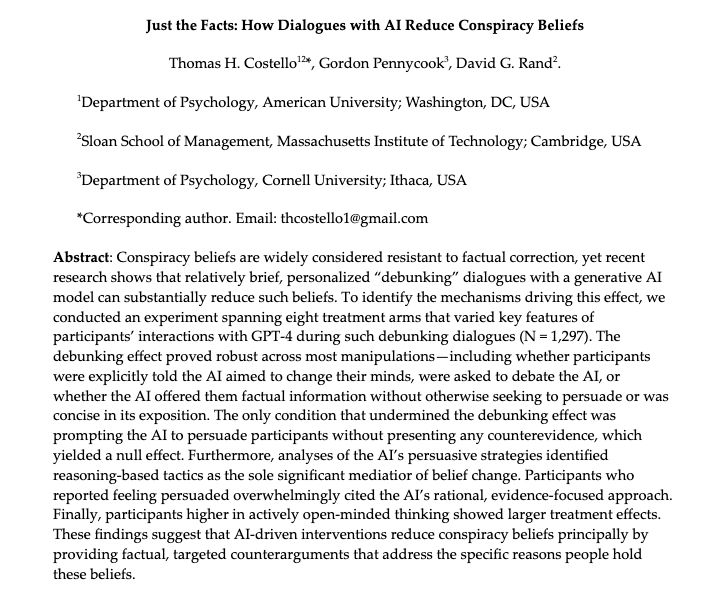
Last year, we published a paper showing that AI models can "debunk" conspiracy theories via personalized conversations. That paper raised a major question: WHY are the human<>AI convos so effective? In a new working paper, we have some answers.

TLDR: facts

osf.io/preprints/ps...

18.02.2025 16:30 β€” πŸ‘ 317    πŸ” 105    πŸ’¬ 19    πŸ“Œ 30
Post image

Absolute honor to receive the Vice-Chancellor's Research Impact Award. Thank you Prof Prentice & the whole panel. Our lab at Cambridge has been working many years empowering people to spot misinformation, reaching over half a billion people. Thanks for this recognitionπŸ™ www.cam.ac.uk/public-engag...

13.02.2025 12:25 β€” πŸ‘ 41    πŸ” 7    πŸ’¬ 4    πŸ“Œ 2
Preview
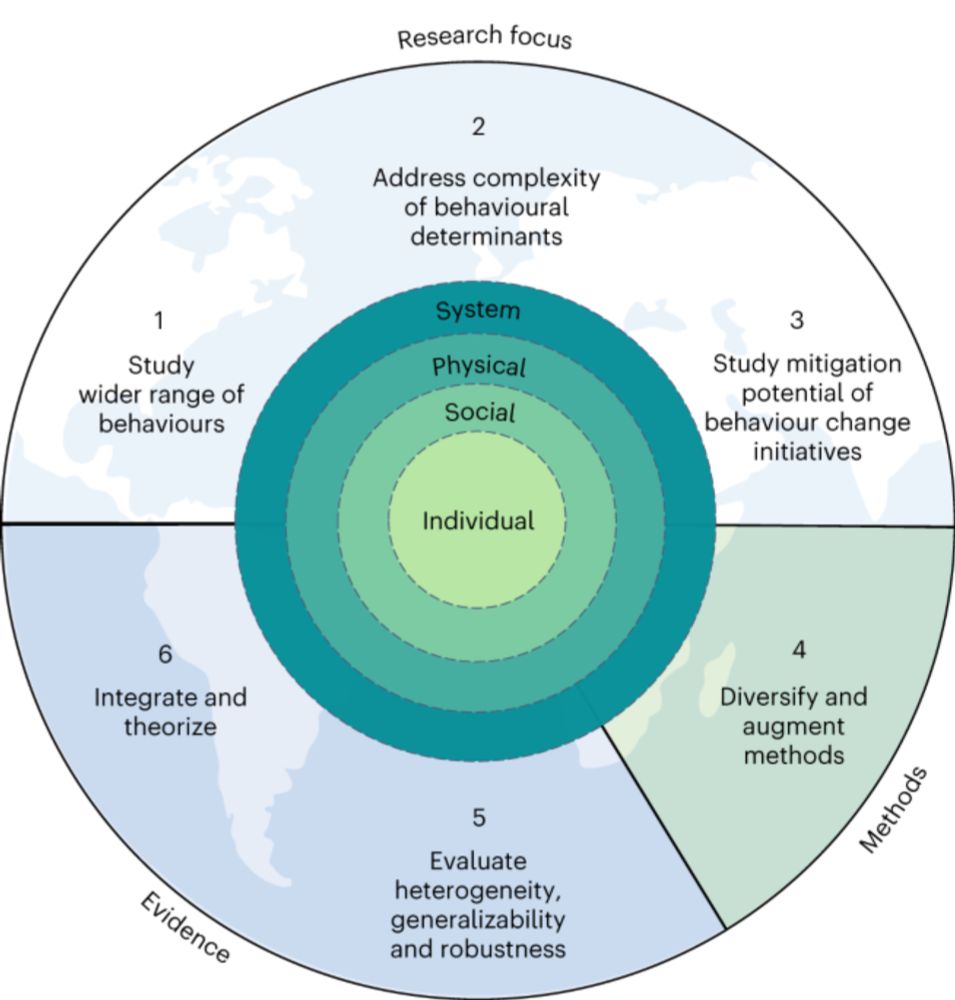
Realizing the full potential of behavioural science for climate change mitigation - Nature Climate Change Behavioural science offers valuable insights for mitigating climate change, but existing work focuses mostly on consumption and lacks coordination across disciplines. In this Perspective, the authors ...

Systematic evidence will generate higher-quality behavioral insights that could be integrated into climate policy, life cycle assessments, and economic models.

We offered some suggestions for this in our paper.

@cameronbrick.bsky.social @colognaviktoria.bsky.social
www.nature.com/articles/s41...

05.02.2025 10:00 β€” πŸ‘ 10    πŸ” 1    πŸ’¬ 1    πŸ“Œ 0
Post image

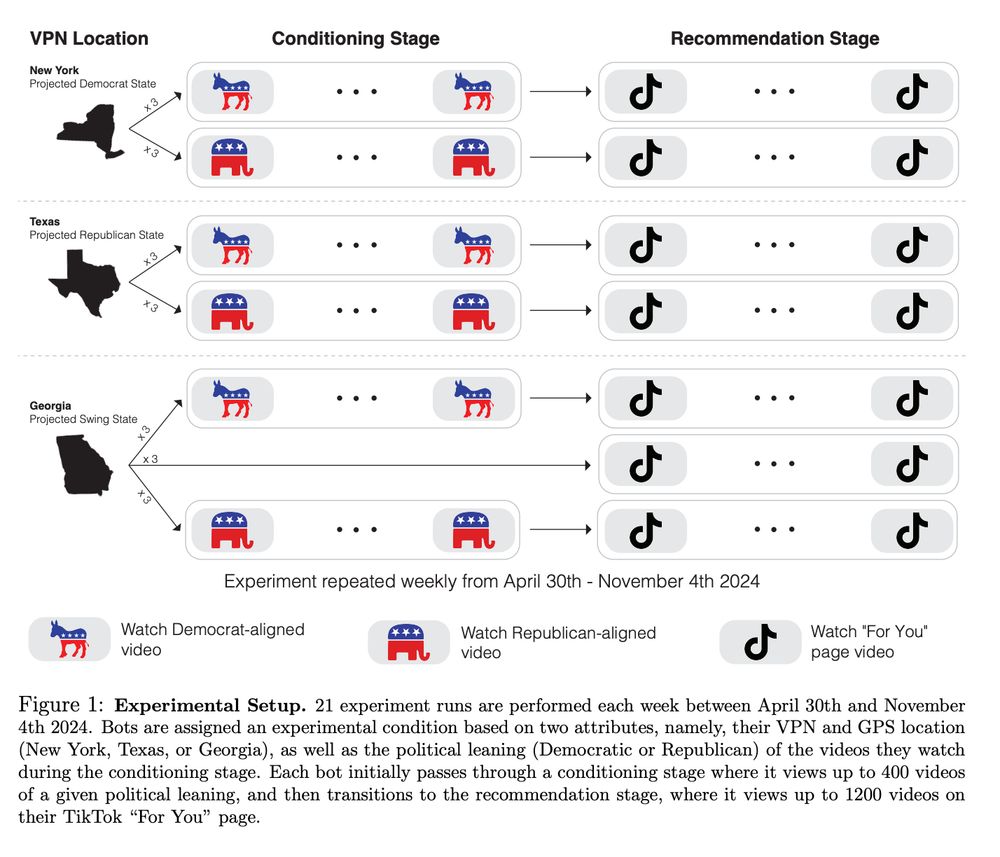
Tiktok boosted Republican messages 11.8% more than Democrat messages during the 2024 U.S. Presidential Race according to this new study that employed bots to view ~394,000 videos.

01.02.2025 20:38 β€” πŸ‘ 191    πŸ” 105    πŸ’¬ 6    πŸ“Œ 1
Numerous scholars believe that there is a crisis in psychology because of the β€œpoor quality” of our theories. However, we believe that it is misleading to suggest that psychology is going through a β€œtheory crisis” because the major shortcomings of theories in the field have been recognized for decades. More fundamentally, there is nothing temporary about the current state theory in the field. Theories in psychology and other social and behavioral sciences will always fall short of traditional scientific benchmarks because of the complexity of the topics that are studied and the problem of generality. In our view, the most recent recommendations for improving theory in psychology are limited in feasibleness. Following many scholars, we suggest that psychology should turn more to formal modeling to increase rigor and improve prediction. However, while models are potentially of great value to the field, they are not theories. Researchers need to accept the limitations inherent to the study of the complexity of social and behavioral phenomena and stop the unhelpful criticism of our field. They also need to recognize the cumulativeness of psychological theory and the enormous body of knowledge of psychological processes, structures, and effects that have been generated by research. Although theories in our field are often sketchy, they are indispensable in providing explanations for important phenomena, suggesting interventions and treatments for critical social and behavioral problems and facilitating the development of predictive models.

Numerous scholars believe that there is a crisis in psychology because of the β€œpoor quality” of our theories. However, we believe that it is misleading to suggest that psychology is going through a β€œtheory crisis” because the major shortcomings of theories in the field have been recognized for decades. More fundamentally, there is nothing temporary about the current state theory in the field. Theories in psychology and other social and behavioral sciences will always fall short of traditional scientific benchmarks because of the complexity of the topics that are studied and the problem of generality. In our view, the most recent recommendations for improving theory in psychology are limited in feasibleness. Following many scholars, we suggest that psychology should turn more to formal modeling to increase rigor and improve prediction. However, while models are potentially of great value to the field, they are not theories. Researchers need to accept the limitations inherent to the study of the complexity of social and behavioral phenomena and stop the unhelpful criticism of our field. They also need to recognize the cumulativeness of psychological theory and the enormous body of knowledge of psychological processes, structures, and effects that have been generated by research. Although theories in our field are often sketchy, they are indispensable in providing explanations for important phenomena, suggesting interventions and treatments for critical social and behavioral problems and facilitating the development of predictive models.

β€œThere is no theory crisis in psychological science”

Few quotesβ€¦πŸ§΅

25.01.2025 13:09 β€” πŸ‘ 68    πŸ” 16    πŸ’¬ 4    πŸ“Œ 14
Preview
Humanity's Last Exam Benchmarks are important tools for tracking the rapid advancements in large language model (LLM) capabilities. However, benchmarks are not keeping pace in difficulty: LLMs now achieve over 90% accuracy on popular benchmarks like MMLU, limiting informed measurement of state-of-the-art LLM capabilities. In response, we introduce Humanity's Last Exam, a multi-modal benchmark at the frontier of human knowledge, designed to be the final closed-ended academic benchmark of its kind with broad subject coverage. The dataset consists of 3,000 challenging questions across over a hundred subjects. We publicly release these questions, while maintaining a private test set of held out questions to assess model overfitting.

πŸ§ͺ "Humanity's Last Exam" sets a new benchmark for AI: 3,000 expert-crafted questions spanning 100+ subjects. Current LLMs perform poorly, revealing a gap in expert-level knowledge and calibration, but it would be difficult to build a harder test. πŸ©ΊπŸ’» #MLSky

23.01.2025 17:22 β€” πŸ‘ 28    πŸ” 9    πŸ’¬ 3    πŸ“Œ 1
Post image

🚨 My team is hiring an undergraduate intern (UK universities only) - a great opportunity, if I can say so myself!

Please share widely.

Want more info? See here: www.linkedin.com/feed/update/...

08.01.2025 08:45 β€” πŸ‘ 24    πŸ” 37    πŸ’¬ 0    πŸ“Œ 0
Post image

In this new article in American Psychologist we respond to critics in detail and clarify two key points for the field;

(1) The prevalence of misinformation in society is substantial when properly defined.

(2) Misinformation causally impacts attitudes and behaviors.

psycnet.apa.org/fulltext/202...

16.12.2024 11:16 β€” πŸ‘ 885    πŸ” 282    πŸ’¬ 44    πŸ“Œ 33
Preview
Large language models act as if they are part of a group - Nature Computational Science An extensive audit of large language models reveals that numerous models mirror the β€˜us versus them’ thinking seen in human behavior. These social prejudices are likely captured from the biased conten...

πŸ“’ @savcisens.com discusses a recent study that shows that LLMs exhibit social identity biases similar to humans. www.nature.com/articles/s43...

πŸ”“https://rdcu.be/d5owe

02.01.2025 14:58 β€” πŸ‘ 10    πŸ” 2    πŸ’¬ 0    πŸ“Œ 0

Thank @savcisens.com for the insightful review of our recent paper! Great new year’s present πŸŽ‰

03.01.2025 18:09 β€” πŸ‘ 1    πŸ” 0    πŸ’¬ 0    πŸ“Œ 0
Title card: Alignment Faking in Large Language Models by Greenblatt et al.

Title card: Alignment Faking in Large Language Models by Greenblatt et al.

New work from my team at Anthropic in collaboration with Redwood Research. I think this is plausibly the most important AGI safety result of the year. Cross-posting the thread below:

18.12.2024 17:46 β€” πŸ‘ 126    πŸ” 29    πŸ’¬ 5    πŸ“Œ 11
Preview
Generative language models exhibit social identity biases - Nature Computational Science Researchers show that large language models exhibit social identity biases similar to humans, having favoritism toward ingroups and hostility toward outgroups. These biases persist across models, trai...

1/9 🧡 New paper alert (now in Nature Computational Science)!
As polarisation continues to shape our world, we asked: Do social and political biases transfer to our AI? I.e. do LLMs show ingroup and outgroup bias?
www.nature.com/articles/s43...

12.12.2024 22:38 β€” πŸ‘ 23    πŸ” 8    πŸ’¬ 3    πŸ“Œ 1
Preview
Are AI models as divided as we are? | Gates Cambridge Tiancheng Hu and Yara Kyrychenko write about their new research findings on AI models and bias

New blog by Tiancheng Hu & Yara Kyrychenko on their new research findings on AI models and bias, including that chatbots that interact with humans show less bias than human users - www.gatescambridge.org/about/news/a...

12.12.2024 13:49 β€” πŸ‘ 2    πŸ” 1    πŸ’¬ 0    πŸ“Œ 0

@yarakyrychenko is following 20 prominent accounts