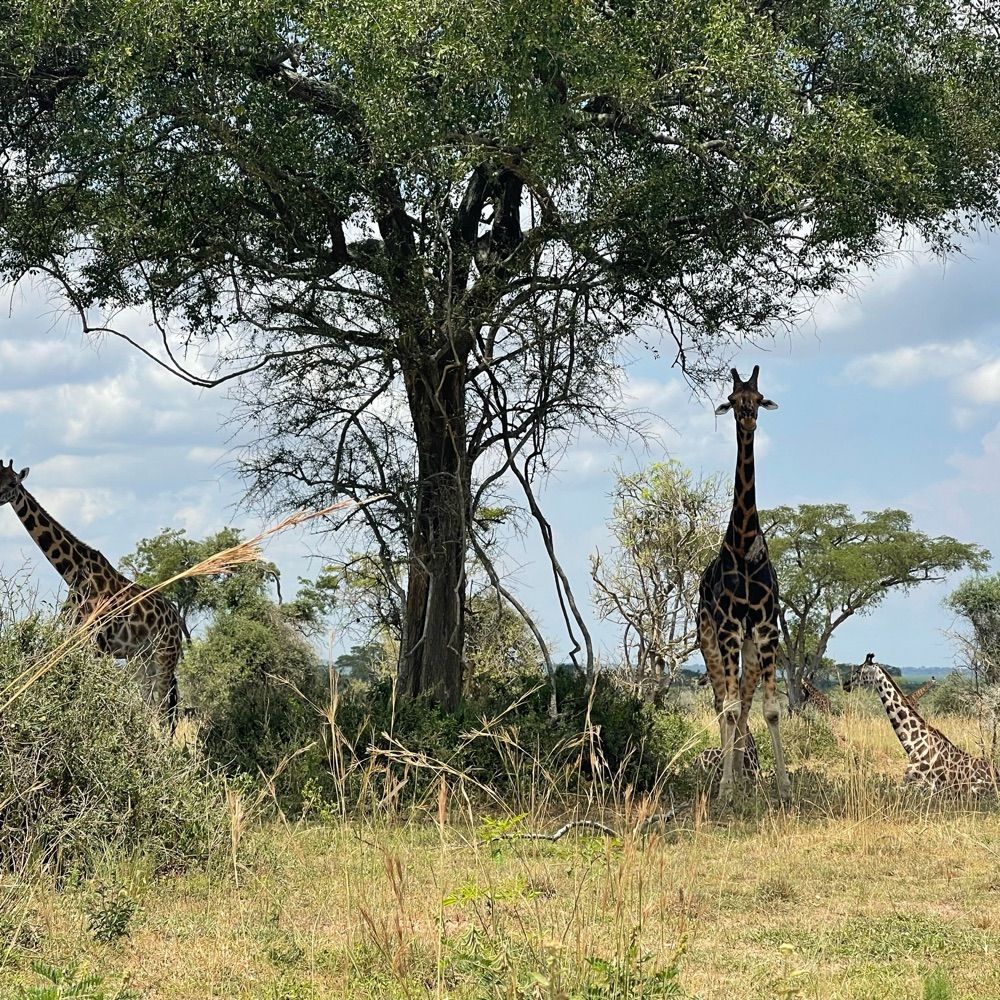

Because I think we could all use a little good news right now
24.01.2025 15:34 — 👍 6633 🔁 927 💬 154 📌 62
Because I think we could all use a little good news right now
24.01.2025 15:34 — 👍 6633 🔁 927 💬 154 📌 62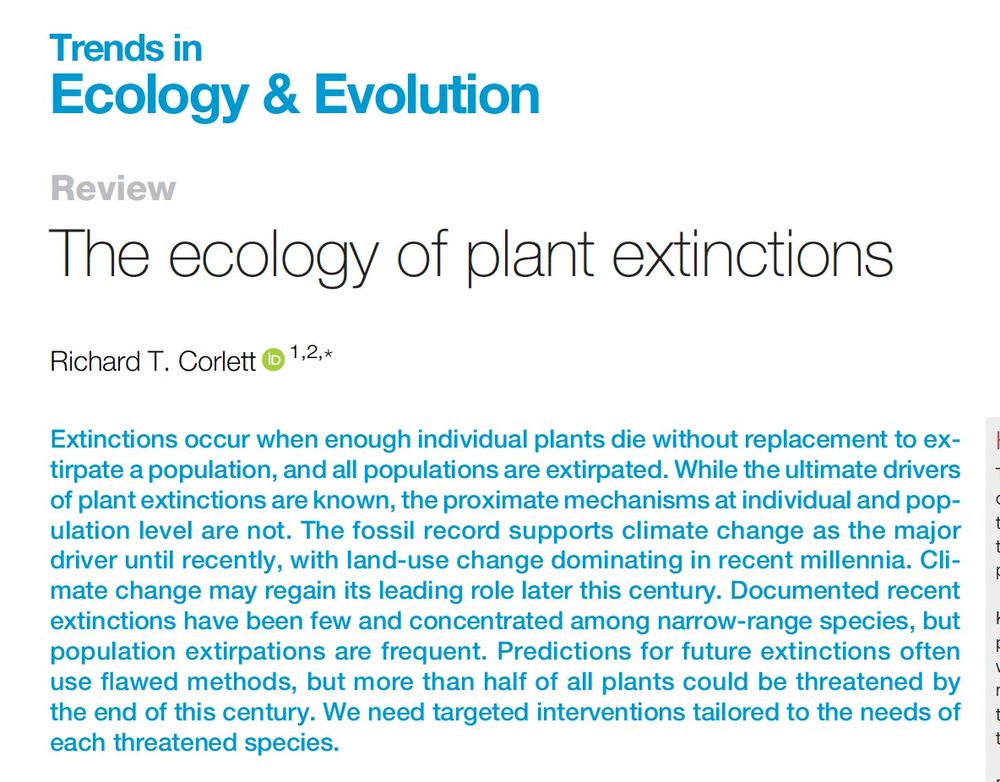
Image of the first page and abstract of the paper "The ecology of plant extinctions Author links open overlay panel Richard T. Corlett 1 2 Show more Add to Mendeley Share Cite https://doi.org/10.1016/j.tree.2024.11.007 Get rights and content Highlights The fossil record suggests that climate change was the major driver of plant extinctions and regional extirpations from the Pliocene until recently, when anthropogenic habitat loss became dominant. Known recent plant extinctions are disproportionately few in comparison with well-studied animal taxa, but many more species are probably committed to inevitable extinction unless given targeted support. Recent warm-edge extirpations demonstrate the growing impact of anthropogenic climate change and show that predictions of massive climate-driven extinctions later this century are plausible. The proximate causes for population extirpations are still rarely known but are likely to be highly varied and both species and location specific."
An important review - The ecology of plant extinctions - "Recent warm-edge extirpations demonstrate the growing impact of anthropogenic climate change & show that predictions of massive climate-driven extinctions later this century are plausible" www.sciencedirect.com/science/arti... 🌾🌎🧪🌐
07.12.2024 11:59 — 👍 225 🔁 87 💬 5 📌 0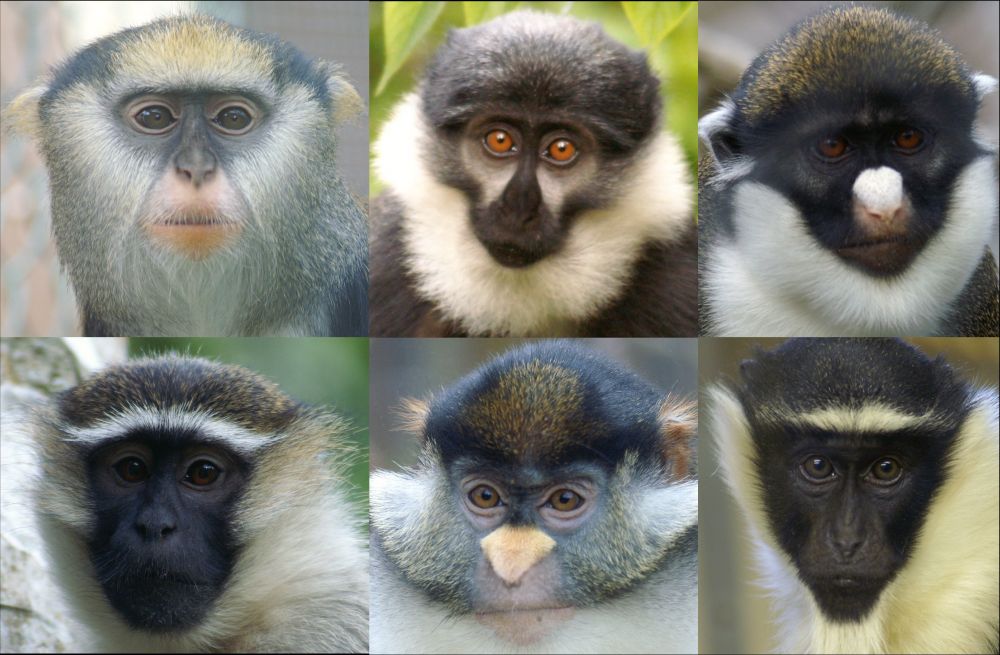
If you like genomics, speciation, and primates, this PhD position is for you! Unraveling the genomic architecture of speciation and gene flow in a crazy group of monkeys at U of Edinburgh . Do reach out with questions!
evol.mcmaster.ca/brian/evoldi...
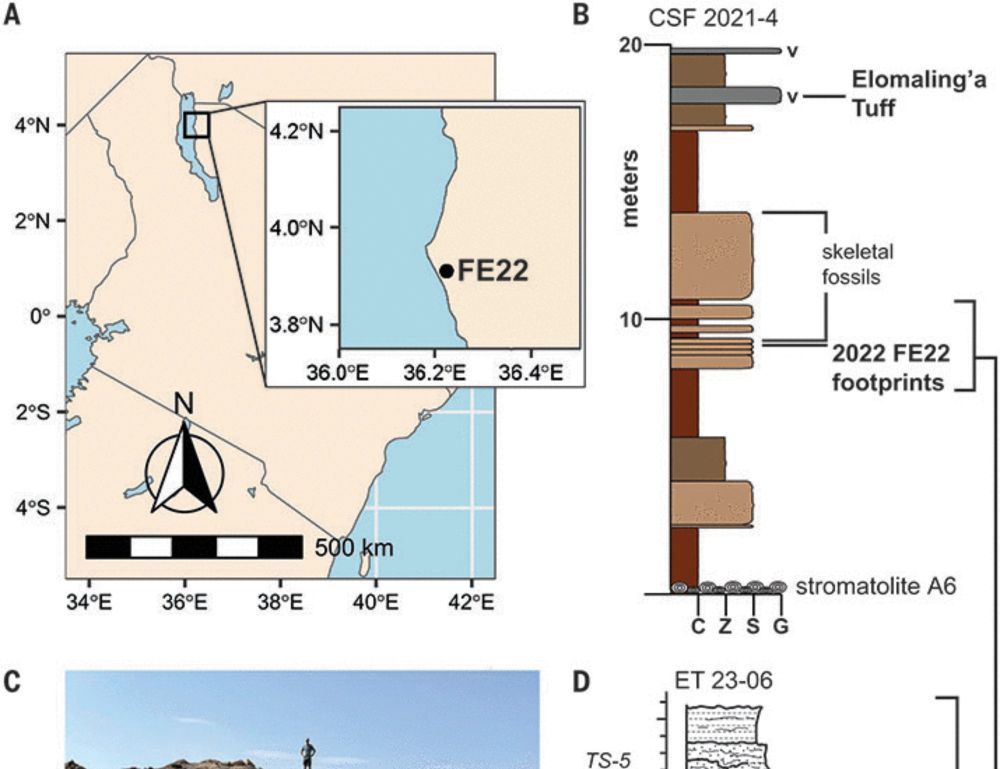
Excited to share our latest paper, new in Science! www.science.org/doi/10.1126/...
28.11.2024 19:15 — 👍 165 🔁 58 💬 8 📌 12

Be sure to join the ASP Conservation Committee in our upcoming webinar series!
28.11.2024 18:11 — 👍 13 🔁 10 💬 1 📌 0
The MOST ABUNDANT PROTEIN ON EARTH is probably the one that almost all life depends on.
It makes up ~3% of the mass of every leaf & blade of grass on the planet: a total weight of 10^11 kg.
Let's talk about Ribulose-1,5-bisphosphate carboxylase/oxygenase or 'RuBisCO'.
www.pnas.org/doi/10.1073/...
The most fantastic researchers doing such cool work! I wish I was there too 🦧💪
21.11.2024 05:06 — 👍 1 🔁 0 💬 1 📌 0Come work with us! We are a great group and the job is in New York City 🍎🗽💙
21.11.2024 05:04 — 👍 2 🔁 3 💬 0 📌 0