
Thanks, Jin!
11.06.2025 22:00 — 👍 1 🔁 0 💬 0 📌 0Thanks, Jin!
11.06.2025 22:00 — 👍 1 🔁 0 💬 0 📌 0Why must you always taunt us, Brent. Why?!
09.05.2025 18:42 — 👍 2 🔁 0 💬 1 📌 0
5/5 The full paper is freely available here:
osf.io/preprints/os...

4/5 Key finding #3:
Kids whose skills increased over time also experienced positive life outcomes, including better academic engagement, friendship quality, and well-being. So skill changes matter for adolescents' success.
3/5 Key finding #2:
Most Big Five personality traits did *not* show mean-level change or individual differences in change. So it seems easier for skills to change than traits.

2/5 Key finding #1:
There were significant individual differences in change for all five skill domains: self-management, social engagement, cooperation, emotional resilience, and innovation skills. So some kids increased over time, while others decreased.

1/5 New paper!
How do adolescents' personality traits and skills change across a school year? And how are these changes linked with academics, social relationships, and well-being?
New paper led by Christopher Napolitano in press at EJP.
Brief highlights in the thread below...

Stereotype threat: a once-dominant idea in social psychology that shaped how we think about identity and performance. But what happens when the evidence crumbles? A deep dive into the failed replications, the myths, and what it all means. Read my latest essay: open.substack.com/pub/michaeli...
18.12.2024 13:16 — 👍 118 🔁 44 💬 6 📌 10
So excited to share our new paper!
We wondered whether misalignment between how youth think they are capable of acting (social, emotional, behavioral skills) and how they typically act (personality traits) matters for life outcomes.
If you’re curious too, check out the preprint!
4/ Bottom line:
Success in adolescence isn't just about sticking to your personality. Social, emotional, and behavioral skills can help kids adapt and thrive, even when stepping out of their comfort zone.
Want to know more? Check out the full paper!
osf.io/d2z5b/downlo...
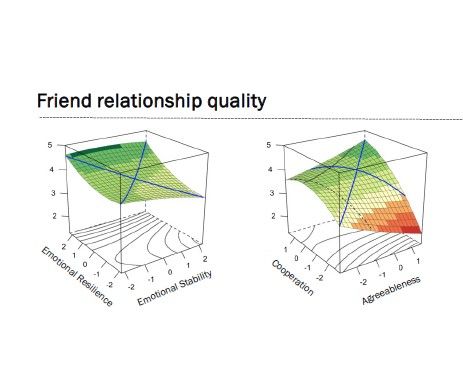
3/ A couple examples:
* High cooperation and emotional resilience skills helped counteract low trait agreeableness and emotional stability in managing friendships.
* High innovation skills (like creativity and cultural competence) outweighed trait open-mindedness in predicting multiple outcomes.
2/ Traits = what you *tend to do* on average.
Skills = what you *can do* when needed.
They're not always perfectly aligned, and mismatches matter. Adolescents with higher skills than traits--who can "rise to the occasion"--fared better across academic, social, and emotional domains.

1/ New paper!
How do personality traits (like the Big Five) and skills (like social engagement and emotional resilience) shape success? What happens when traits and skills don't match up with each other?
Led by @whitneyringwald.bsky.social, accepted at the European Journal of Personality.
Yeah, one helpful outcome of all the replication work is a clearer understanding of how much data you need to get robust estimates.
22.11.2024 01:18 — 👍 1 🔁 0 💬 0 📌 0Individual correlations stabilize around 250 participants. For multivariate stuff like factor analysis, you’d want an extra buffer, so I’d recommend 400 to 500.
22.11.2024 01:10 — 👍 4 🔁 0 💬 1 📌 0
How are the Big Five personality traits like skills? How are they different?
The slides from my keynote address at the 2024 World Conference on Personality are available at osf.io/tyez7/
New blog post in which I discuss measurement invariance from a causal perspective. Come for the amateurish featured image (who needs photoshop anyway), stay for fancy Pooh as figure label. Bonus: You'll finally understand the different levels of invariance (I hope).
www.the100.ci/2024/01/10/a...
