
My first dissertation paper is out in Sexuality Research and Social Policy — open access! 🎉 It's about trans inclusion in sports and what fairness concerns actually do to public support.
link.springer.com/article/10.1...
Short thread below 👇

@eavigano.bsky.social
He/him | Visiting professor at @uc3m.es | Previously at Witten/Herdecke, Aarhus and Milan | Interested in representation, political institutions and political violence http://eavigano.github.io/
My first dissertation paper is out in Sexuality Research and Social Policy — open access! 🎉 It's about trans inclusion in sports and what fairness concerns actually do to public support.
link.springer.com/article/10.1...
Short thread below 👇

Abstract for the article: How does right-wing terrorism affect electoral support for populist radical right parties (PRRPs)? Recent research has produced contrary answers to this question. We argue that only high-intensity attacks, whose motives and targets mirror PRRPs’ nativist agenda, are likely to generate a media backlash that dampens electoral support for PRRPs. We test this argument by combining high-frequency survey and social media data with a natural and survey experimental design. We find that right-wing terror reduced support for the radical right party Alternative für Deutschland after one of the most intense nativist attacks in recent German history. An analysis of all ninety-eight fatal right-wing attacks in Germany between 1990 and 2020 supports our argument. Our findings contribute to an understanding of how political violence triggers partisan detachment and have important implications for media responsibility in the aftermath of terrorist attacks.
🚨 New article out!
“Right-Wing Terror, Media Backlash, and Voting Preferences for the Far Right” in @bjpols.bsky.social
👉 doi.org/10.1017/S000...
We (Alex De Juan, @juvoss.bsky.social & I) examine how right-wing attacks shape support for the far-right in Germany.
Short summary thread below 👇

📢 My last PhD paper is out in Legislative Studies Quarterly 📢
📌 Main finding
➡️ Party control of speaking time in parliament limits MPs’ geographical focus
➡️ Open access increases constituency representation
🔗 Read it open access here: onlinelibrary.wiley.com/doi/10.1111/...

@eavigano.bsky.social, Bruno Della Salla, Stefan Stojkovic, & Nils-Christian Bormann: In interwar Italy, violence boosted Fascist support at the polls but weakened the radical left. Suggests violence asymmetrically empowers nationalist, radical-right parties.
journals.sagepub.com/doi/full/10....
🚨🚨🚨Announcing a special issue on “Political Violence in Democracies” published by @jpeaceresearch.bsky.social and edited by @andrearuggeri.bsky.social, U Daxecker, and me. In this very long 🧵, I will introduce the special issue with its 14 articles. doi.org/10.1177/0022...
08.09.2025 11:09 — 👍 38 🔁 15 💬 1 📌 1
⛏️ After a LOT of digging, here's what I found:
🚩 5 estimates outside their CI
🚩 46 estimate-CI duplicates
🚩 20+ cases of asymmetric CIs
🚩 17 values rounded to 4 decimal places (all others 3dp)
🚩 >50% of all estimates and confidence intervals are multiples of 0.008 (???)
(CI = confidence interval)

👉 Full article: doi.org/10.1177/0022...
01.09.2025 08:10 — 👍 0 🔁 0 💬 0 📌 0
🚨 Very happy to have a new paper out in @jpeaceresearch.bsky.social with @bdellasala.bsky.social, Stefan Stojkovic & Nils-Christian Bormann
Using data from interwar Italy, we show that political violence has asymmetric effects: it benefits the radical right while weakening the radical left ⬇️
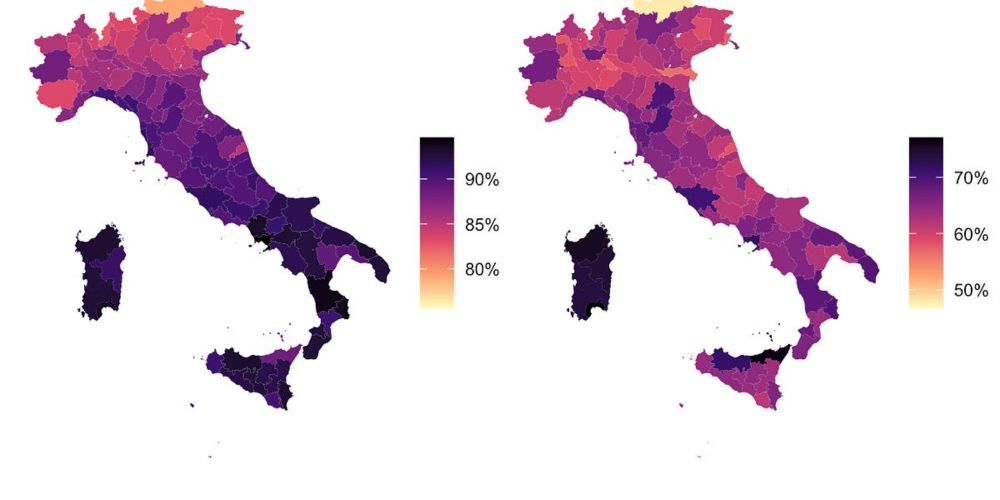
Together with @paugrau.bsky.social, we have just posted our first Substack, which is our quick take on the outcome of the labour rights and citizenship referendums in Italy on 8-9 June
1/
open.substack.com/pub/simonhix...
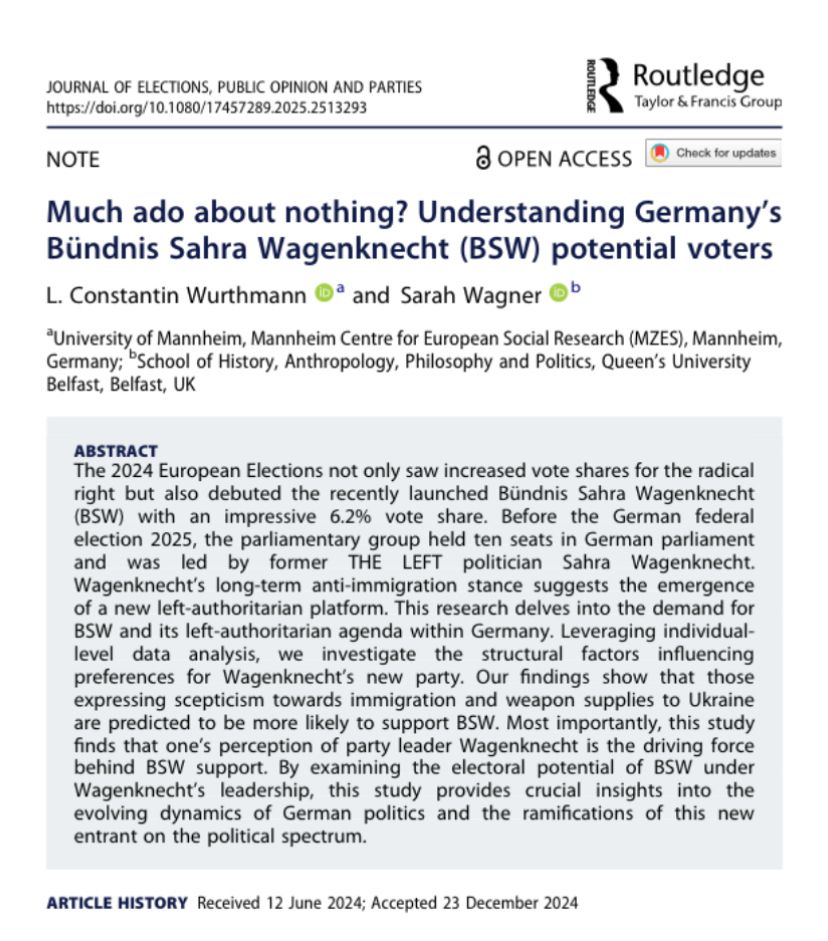
Our newest piece on BSW is now published. We show that when attitudes toward Wagenknecht come into the game, policies are no longer that meaningful in predicting behaviour. Personalisation in a personalised party! What a surprise! 😀
@sarahwagner.bsky.social
www.tandfonline.com/doi/epdf/10....
Big congrats Clint!
02.06.2025 16:20 — 👍 2 🔁 0 💬 0 📌 0
I missed this last month, but the Golder/Bormann Democratic Electoral Systems dataset has an update to v5.0, and now includes democratic elections from 1919 to 1945 mattgolder.com/elections
01.06.2025 14:09 — 👍 18 🔁 5 💬 1 📌 0
🚨New article🚨
Why does the ethnic majority expect that ethnic minorities "free ride" and contribute less to the collective?
In a new article in @bjpols.bsky.social, I show that negative expectations are driven by the correlates of ethnicity rather than ethnicity itself 🧵👇
OA-link: cup.org/4lOX7jN
Happy to have worked on this project with such a brilliant team: @dielea.bsky.social, @bdellasala.bsky.social, @ojrj.bsky.social, Stefan Stojkovic, and Nils-Christian Bormann
🔗 rdcu.be/ehRgD
🚨 We’ve released the Archive of Interwar Europe Election Data and Assemblies (AIEEDA) 🗳️
25 European democracies, 1919–1939: party positions, cabinet formation, elections (and subnational geo-coded data for 6 countries) 1/2 ⬇️
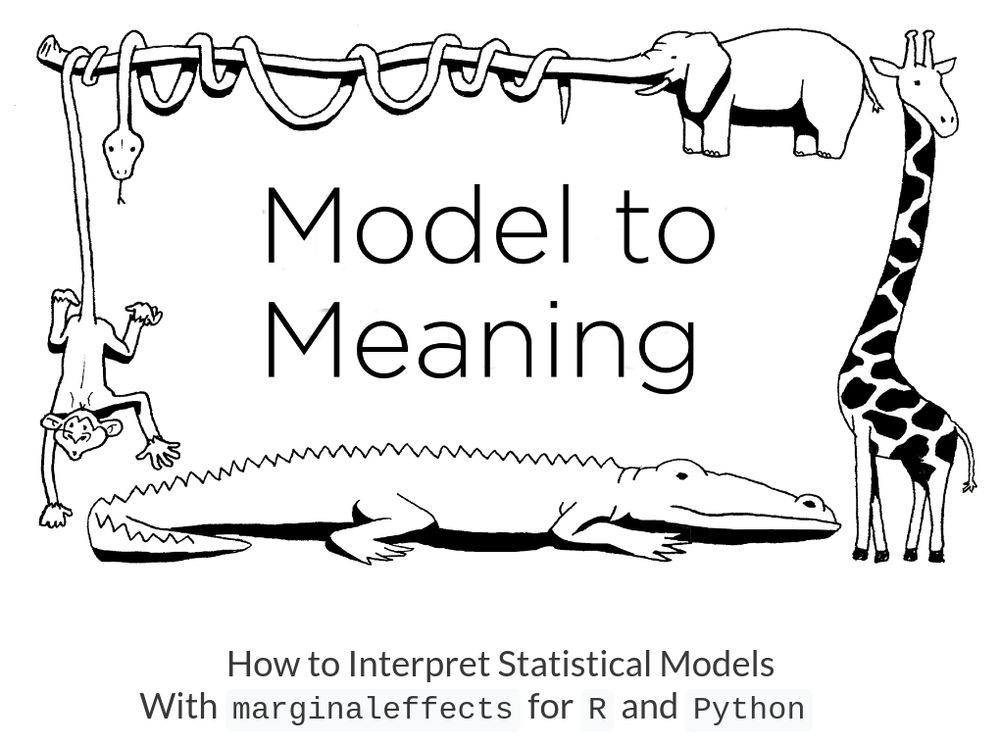
Model to Meaning: How to interpret statistical models with marginaleffects for R and Python
📚😅🎉
Yay!! I just submitted the complete manuscript of my upcoming book to the publisher!
Learn to easily and clearly interpret (almost) any stats model w/ R or Python. Simple ideas, consistent workflow, powerful tools, detailed case studies.
Read it for free @ marginaleffects.com
#RStats #PyData
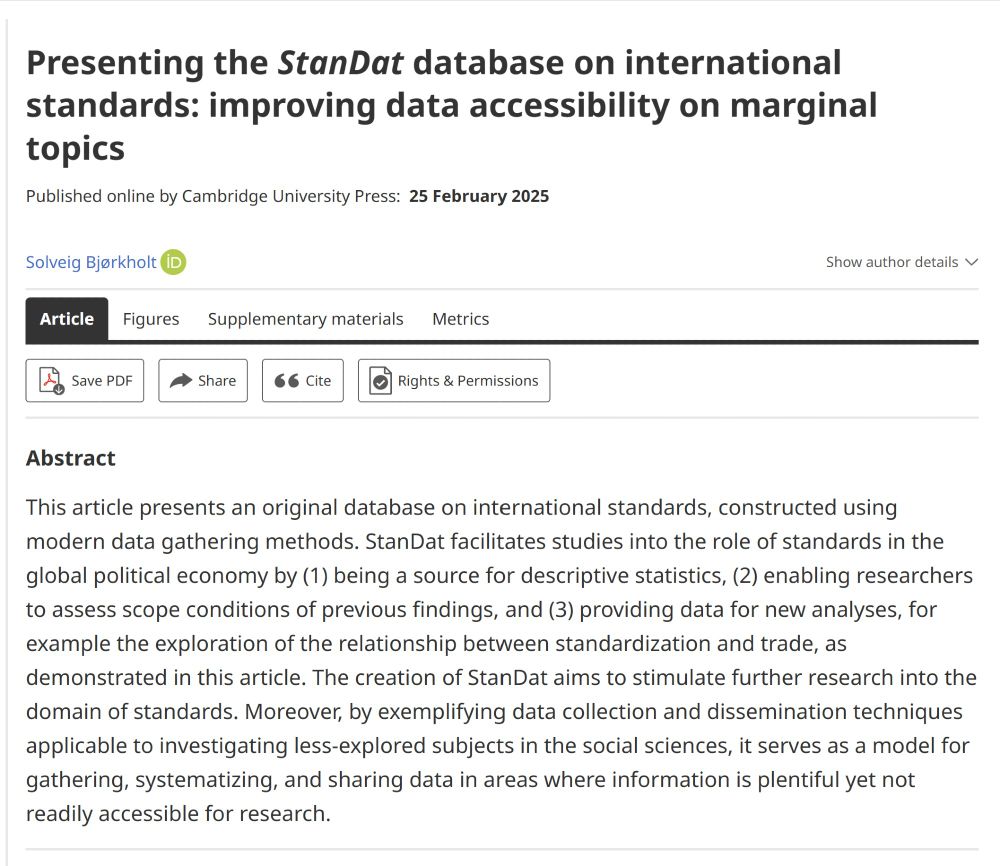
Article
Happy to announce that my first article is finally in print in Political Science and Research Methods (PSRM).
25.02.2025 11:20 — 👍 34 🔁 9 💬 7 📌 1
Why would the CDU accommodate AfD policies, despite a plethora of research telling them not to?
My brilliant friend @philswatton.bsky.social wrote a fantastic, easy to understand piece on measurement: dysfunctionalprogramming.substack.com/p/measuremen...
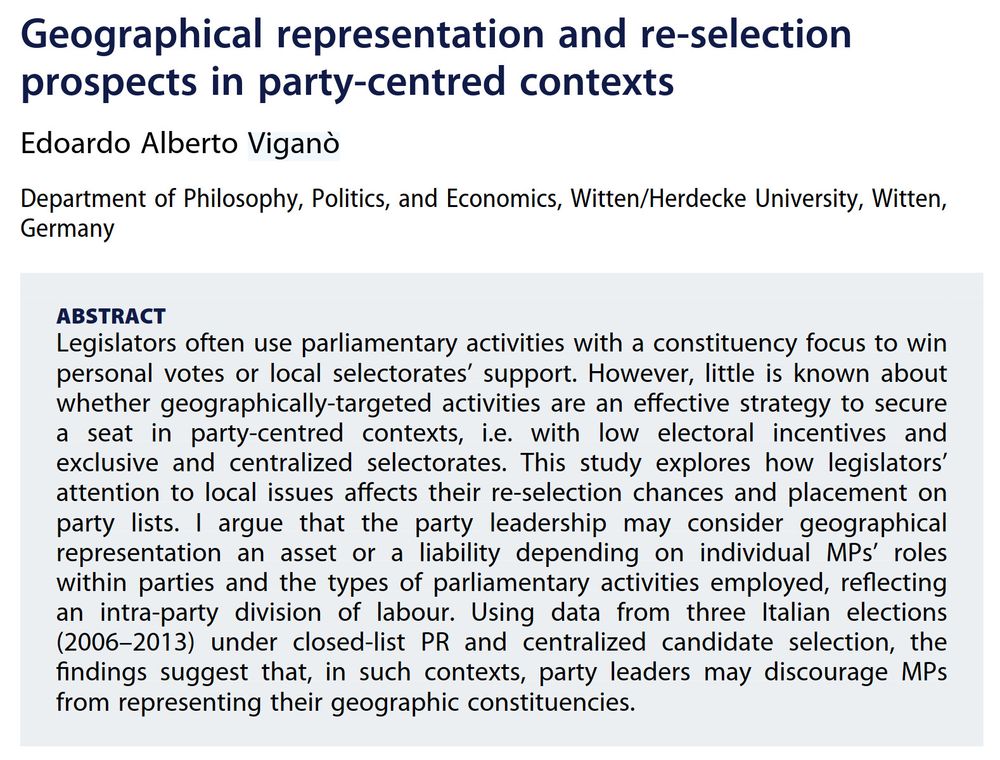
🚨 Happy to see one of my PhD papers out at JEPOP
📚 I examine whether MPs' attention to local issues in parliamentary activities affects their re-election chances in party-centred contexts
www.tandfonline.com/eprint/G2HVG...
Ungated version here: eavigano.github.io/papers/jepop...
📌
20.01.2025 13:00 — 👍 0 🔁 0 💬 0 📌 0📌
16.01.2025 19:18 — 👍 1 🔁 0 💬 0 📌 0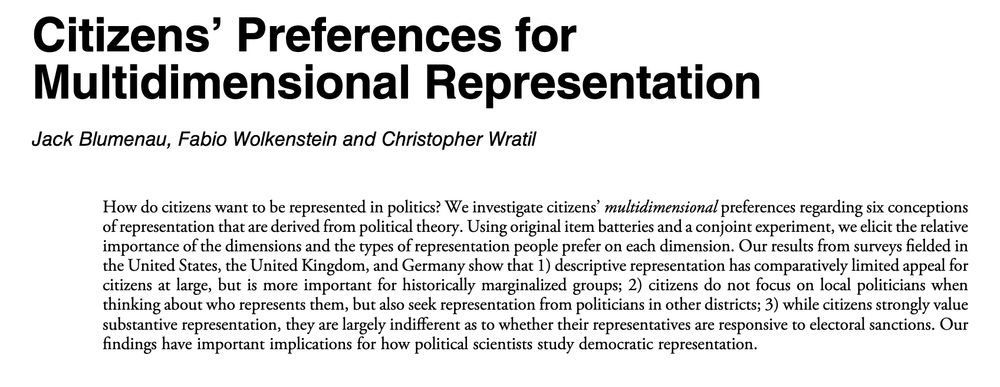
🚨 Out now in @poppublicsphere.bsky.social
: "Citizens' Preferences for Multidimensional Representation". Jack Blumenau, Fabio Wolkenstein & I investigate citizens' preferences regarding 6 dimensions of representation using surveys conducted in 🇬🇧🇺🇸🇩🇪. Short 🧵(1/10) doi.org/10.1017/S15375
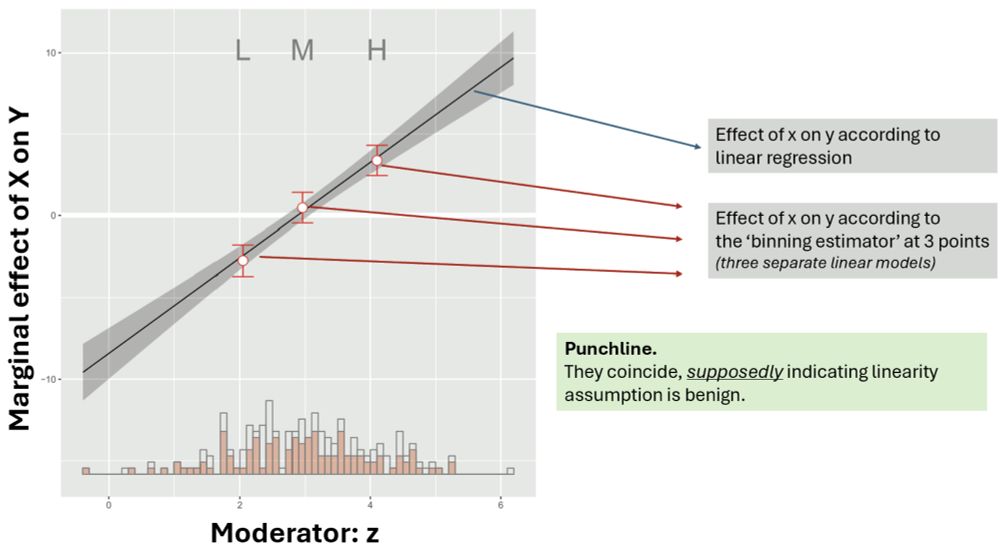
A popular tool in political science for dealing with nonlinearities in invalidated by...
...nonlinearities.
datacolada.org/121
Really impressive paper, huge congrats @valentindaur.bsky.social
10.12.2024 14:52 — 👍 1 🔁 0 💬 1 📌 0Could you add me please? Thank you!
18.11.2024 16:51 — 👍 2 🔁 0 💬 0 📌 0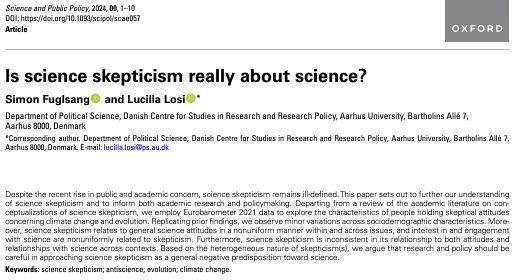
With #Trump soon in office, #science #skepticism is reaching new heights. 🤔But is science skepticism really about science?🔬🧪
In our new paper on Science and Public Policy, me and Simon Fuglsang investigate this question, focusing on 🌦️climate change and 🐒evolution.
academic.oup.com/spp/advance-...

🚨 PhD position in political science at
Witten/Herdecke University
📌 Possibility to work on the project 'Democracy, Anger, and Elite Responses' www.erc-danger.de
⏰ Deadline: 15 May. Feel free to get in touch if you have questions. More info here: uni-wh.softgarden.io/job/44051262...

“The policy agenda effects of problem indicators: a comparative study in seven countries” by Thomas A. Kristensen, Peter B. Mortensen, Christoffer Green-Pedersen and @henrikseeberg.bsky.social has received the Peter John Prize for the best article in Volume 43.
Enjoy the paper here: t.ly/csf4e