Why are these results important? Knowing that visitor presence has limited effects can (a) encourage cognitive research in zoo settings and (b) benefit science (and conservation) education when research settings allow visitors to watch apes taking part in studies.
03.12.2025 13:27 — 👍 2 🔁 0 💬 0 📌 0
We also found that the presence of their conspecifics did not modulate chimpanzees’ performance.
03.12.2025 13:27 — 👍 1 🔁 0 💬 1 📌 0

In short, we found that the presence and activity of zoo visitors did not influence chimpanzees’ working memory.
03.12.2025 13:27 — 👍 1 🔁 0 💬 1 📌 0

Chimpanzees’ working memory is not affected by the presence and activity of zoo visitors - Animal Cognition
Animal Cognition - Cognitive research in non-human primates is increasingly conducted in zoos, where zoo visitors are likely to be present and observe the testing sessions. Previous zoo research...
Our paper (with @emmasmcewen.bsky.social and Amanda Seed) on the effects of visitor presence on chimpanzees’ working memory is out.
This research was supported by a @leverhulme.ac.uk Early Career Fellowship and could not have been done without the help of @edinburghzoo.bsky.social staff!
03.12.2025 13:27 — 👍 7 🔁 3 💬 1 📌 1
🚨 Funded PhD on ageing, social cognition & self/other differentiation! 🚨
🧠 Supervised by myself (University of St Andrews) & Prof. Louise Phillips (University of Aberdeen), the project includes EEG & eye-tracking training.
🌍 Open to UK + international students!
📅 Deadline: 15th Dec 2025
20.11.2025 15:11 — 👍 3 🔁 7 💬 1 📌 0

Chimpanzees rationally revise their beliefs
The selective revision of beliefs in light of new evidence has been considered one of the hallmarks of human-level rationality. However, tests of this ability in other species are lacking. We examined...
Are humans really the only rational animals? Our NEW PAPER 🎉 out in @science.org suggests otherwise! In a large collaboration led with my joint first author @hanna-schleihauf.bsky.social, we show that “Chimpanzees rationally revise their beliefs” 🧵
30.10.2025 18:17 — 👍 1556 🔁 434 💬 163 📌 53
7/7 This study suggests a strong link between self-directed control and proactive control, which are two major developmental transitions in children’s executive function.
12.09.2025 20:22 — 👍 0 🔁 0 💬 0 📌 0
6/7 Interestingly, visual support affected these neural markers differently across age groups, revealing developmental differences in how children and adults prepare proactively.
12.09.2025 20:22 — 👍 0 🔁 0 💬 1 📌 0
5/7 Both children and adults showed higher frontolateral delta/theta power → proactive task selection AND Lower central mu power → motor preparation
on switch vs. repeat trials.
12.09.2025 20:22 — 👍 1 🔁 0 💬 1 📌 0
4/7 Children performed a voluntary task-switching task, with or without visual support for previous actions.
12.09.2025 20:22 — 👍 0 🔁 0 💬 1 📌 0
3/7 Specifically, we asked: do children engage self-directed control proactively like adults? And if so, are there age differences in the neural markers of task selection and motor preparation?
12.09.2025 20:22 — 👍 0 🔁 0 💬 1 📌 0
2/7 In this study, we examined the link between self-directedness (how executive function is engaged with decreasing external scaffolding) and proactiveness (how executive function is engaged in advance of cognitive demands).
12.09.2025 20:22 — 👍 0 🔁 0 💬 1 📌 0
1/7 Short takeaway: 5–6-year-old children engage self-directed control proactively like adults, as evidenced by oscillatory markers, although the effect differs from adults when visual support is provided.
12.09.2025 20:22 — 👍 0 🔁 0 💬 1 📌 0
But before: Big thanks to all the children who were so well-behaved with EEG caps on their heads! 🧠💖
12.09.2025 20:22 — 👍 0 🔁 0 💬 1 📌 0

Roasting in the sun to (closely or not) watch chimpanzee's politics at play.
Another day at work with Liberius, Paul, Qafzeh, Velu, Louis, and all the others not in this picture but not far away.
21.08.2025 19:12 — 👍 3 🔁 0 💬 0 📌 0
In one sentence, we found that this presence slowed response latencies, particularly on proactive control trials, especially for younger children.
18.02.2025 10:38 — 👍 0 🔁 0 💬 0 📌 0

The effects of an unfamiliar experimenter on proactive and reactive control in children
Scientific Reports - The effects of an unfamiliar experimenter on proactive and reactive control in children
Happy to share that our study looking at the effect of the presence (vs absence) of an unfamiliar experimenter on children's executive function with @clembelletier.bsky.social, Valérie Camos and Stella Christie's lab 🇫🇷🇨🇭🇨🇳🇬🇧
rdcu.be/eakDs
18.02.2025 10:38 — 👍 2 🔁 1 💬 1 📌 0
Powered by MHR
You can now apply for our 3 year postdoc looking at the role of culture and group size in social coordination and collaboration in the UK, Uganda and Republic of Korea!
Any questions please don’t hesitate to drop me a dm or email (sophie.milward@port.ac.uk)
mss.port.ac.uk/ce0732li_web...
16.01.2025 12:23 — 👍 3 🔁 14 💬 0 📌 2
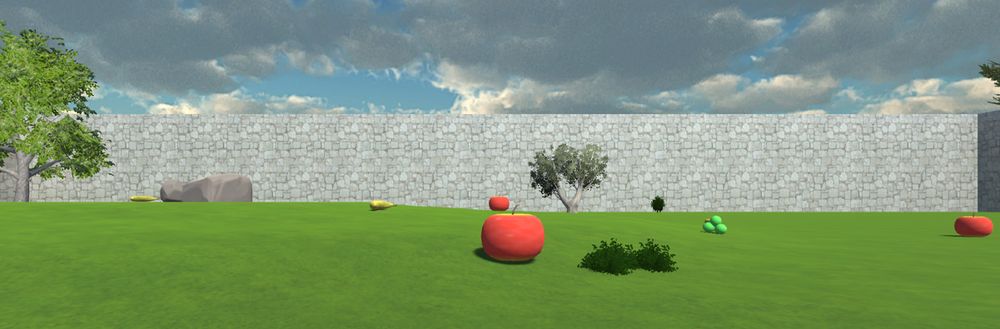
A screenshot from the virtual environment foraging game. The scene shows green grass with a grey stone wall in the background, two trees, a rock, and six pieces of virtual fruit (apples, grapes, and bananas)
🌳 I’m excited to announce that we have published our paper outlining our protocol for training primates to forage in virtual environments! Out now #openaccess
www.sciencedirect.com/science/arti...
16.12.2024 17:16 — 👍 13 🔁 5 💬 1 📌 1
Cognitive zoologist investigating the evolution of animal cognition, particularly in response to fire (pyrocognition). Amateur wildlife photographer based in southern Sweden. More interested in rare behaviours than rare species.
Professor of Cognitive psychology at University Clermont Auvergne
Cognition
Social cognition
Lapsco
Université Clermont Auvergne
Post Doc researcher in social and social cognition psychology at LAPSCO (Clermont-Ferrand, France). I mostly work on social and cognitive consequences of socioeconomic inequalities
Welcome to Edinburgh Zoo 🐧
Meet amazing animals 🐾
Protect, value & love nature 💛
Lecturer in Psychology
University of Stirling
Check here for updates on the EFP 2026 conference, to be held in Montpellier, France, 29th June- 3rd July 2026.
Official website: https://www.alphavisa.com/efp/2026/index.php
An independent charity that seeks to fund blue skies research and scholarship. Follow this channel for details on upcoming grant deadlines, published research, scheme opening dates, grant announcements, events, and more. https://www.leverhulme.ac.uk/
Assistant Professor at Utrecht University, interested in the development and the evolution of reasoning
Origins of the Social Mind • Apes • Dogs • Evolutionary Cognitive Scientist, Assistant Professor @JohnsHopkins • he/him
behavioral ecologist, studying the evolution of social relationships - postdoc @PrimEvo lab @MPI-EVA | team MacaqueNet & @ABCmicrogrants | she/her
linkree: https://linktr.ee/delphinedemoor
Developmental psychologist in JAPAN
he / him / himbo
researcher at gigaphysiologycognition.uliege.be
mind-blanking, spontaneous thinking, brain-body interactions
dnd, cozy fantasy, freddo espresso and cookies
Personality psychology professor.
Edinburgh. Tartu.
Current effort: https://whichjob.me
About psychology:
https://psychologytoday.com/us/blog/people-unexplained
https://personalitypsychologypodcast.com
Researcher @cnrs.fr @unistra.fr
I study primate social cognition to better understand the evolution of cognition and culture. One of @manyprimates.bsky.social
The Department of Psychology at Durham University
Investigating human nature & processes underpinning our thoughts, feelings, & motivations
https://www.durham.ac.uk/departments/academic/psychology/
Exploring our world's diverse forms of mind—human, animal, machine—from diverse perspectives. A project of @divintelligence.bsky.social, @kensycoop.bsky.social, @laukas.bsky.social
www.disi.org/manyminds/
Edge AI
https://jlefortbesnard.fr
Professor of Cognitive Neuroscience at the University of East Anglia (UK). Research on memory and ageing. Music aficionado.
https://research-portal.uea.ac.uk/en/persons/louis-renoult
SCAN is a professional network of 100+ members, building on cross-institutional links in Scottish cognitive ageing research. Do you work within cognitive ageing research or have a professional interest? Join us through our website: https://t.co/Z6zghQf8nc