ℹ️ Did you know we are organized through thematic committees (#equality, #sustainability, #ethics, #wellbeing…)? They drive bottom-up actions and values for a more inclusive, ethical and sustainable Centre🌱🔽 https://www.ceab.csic.es/en/the-ceab/organisation-and-team/ceab-committees/
29.01.2026 13:47 — 👍 0 🔁 0 💬 0 📌 0

En los últimos años, las emisiones globales de CO₂ se mantienen en niveles récord, impulsadas por las actividades humanas. Reducirlas es urgente para garantizar nuestra supervivencia y el equilibrio del planeta 🌍
#DíaMundialporlaReduccióndelCO2
28.01.2026 09:04 — 👍 5 🔁 2 💬 0 📌 0

📚 New publication: "Descriptions of three new species of South African Syllidae Grube, 1850 (Polychaeta) and range confirmation of Syllis amicarmillaris Simon, San Martín & Robinson, 2014". In @ejtaxonomy.bsky.social ⬇️
https://europeanjournaloftaxonomy.eu/index.php/ejt/article/view/3165
27.01.2026 12:31 — 👍 0 🔁 0 💬 0 📌 0
YouTube video by MicrobiomaHub-CSIC
Conectividad del Microbioma Global (Emilio Ortega Casamayor, CEAB-CSIC)
2ª sesión #MicrobiomeTalks en la que nos ha acompañado Emilio Ortega Casamayor @ceabcsic.bsky.social en “Conectividad del Microbioma Global”: cómo los microorganismos conectan ecosistemas y sostienen los ciclos del planeta. De polos a desiertos, ciencia que une la Tierra.
🎥 youtu.be/9DLr_7bn4l8
22.01.2026 14:38 — 👍 1 🔁 1 💬 0 📌 0

📚New scientific article in Limnology and Oceanography @aslo.org . "Flow variability and macroinvertebrates jointly regulate stream periphyton and metabolism...”.✍️By Flavia Tromboni, Susana Bernal et al. 🔗https://aslopubs.onlinelibrary.wiley.com/doi/10.1002/lno.70285
22.01.2026 09:02 — 👍 0 🔁 0 💬 0 📌 0

🏫 El @csic.es organiza la mesa redonda 'Conectar ciencia y escuela: retos y oportunidades' el 27 de enero, a las 17:30, en el salón de actos del CSIC (Madrid). Se retransmitirá en directo en el YouTube CSIC Divulga www.csic.es/es/agenda-de...
@ceabcsic.bsky.social @mncn-csic.bsky.social #EEZ-CSIC
19.01.2026 12:01 — 👍 8 🔁 6 💬 0 📌 0

🌍 How do #aquaticecosystems work, from mountain lakes and streams to the deep sea?Discover our work here 💙✨🔗 https://www.ceab.csic.es/en/
19.01.2026 12:04 — 👍 0 🔁 0 💬 0 📌 0


🔝 Last week, we had the pleasure of welcoming #Som3CAT at @ceabcsic.bsky.social to discuss our research on mosquitoes and their diet.
🧪 Understanding how viruses circulate and which hosts facilitate their transmission is crucial for disease prevention.
More insights, soon!
#E4Warning #OneHealth
19.01.2026 08:33 — 👍 2 🔁 2 💬 0 📌 0

📌 January 20: Annual Prismàtic Conference. The event will focus on #invasivespecies. Once again, it will feature research staff from the CEAB-CSIC. Full details, here ▶️https://www.ceab.csic.es/agenda/jornada-anual-prismatic-sobre-les-especies-invasores/
16.01.2026 13:02 — 👍 2 🔁 1 💬 0 📌 0
📚New scientific article: "The chromosomal genome sequence of the sponge, Corticium candelabrum Schmidt, 1862 and its associated microbial metagenome sequences". ✍️ Maldonado M, Pita L, Erpenbeck D et al.🧬👇https://wellcomeopenresearch.org/articles/10-535/v1
16.01.2026 08:27 — 👍 0 🔁 0 💬 0 📌 0

#RecercaUIB | 🪸 Investigadors de l' @ifisc.uib-csic.es i del @ceabcsic.bsky.social han desenvolupat un nou marc d’intel·ligència artificial que podria revolucionar la manera com observem i protegim les praderies marines de la Mediterrània. #CAMELE
🔗 Llegeix la notícia! diari.uib.cat/Hemeroteca/I...
14.01.2026 08:35 — 👍 6 🔁 3 💬 0 📌 1

@eldiario.es publica @ceabcsic.bsky.social i @ifisc.uib-csic.es
➡️ El desafío de mapear un mundo oculto: IA y científicos se alían para salvar la posidonia
🔗 https://www.eldiario.es/illes-balears/sociedad/desafio-mapear-mundo-oculto-ia-cientificos-alian-salvar-posidonia_1_12886824.html
13.01.2026 14:02 — 👍 3 🔁 2 💬 0 📌 0

🧬📘 New publication! "Invasion Genomics" explores how genomic techniques and data are revolutionising the study of biological invasions. ✍️ by @dan_g_bock and @riuslab.bsky.social 👇https://www.cabidigitallibrary.org/doi/10.1079/9781800626263.0000
13.01.2026 08:27 — 👍 6 🔁 4 💬 0 📌 0

El desafío de mapear un mundo oculto: IA y científicos se alían para salvar la posidonia
Investigadores desarrollan un modelo para registrar las praderas a gran escala, un avance clave para proteger uno de los mayores sumideros de carbono y refugios de biodiversidad
🌊 La IA también puede proteger el Mediterráneo. Investigadores del IFISC y el @ceabcsic.bsky.social desarrollan un modelo con imágenes satelitales para mapear y conservar la posidonia, uno de los grandes sumideros de carbono.
✍Ángeles Durán para @eldiario.es
🔗 www.eldiario.es/illes-balear...
12.01.2026 09:28 — 👍 7 🔁 5 💬 0 📌 0

🧬A nearly 10-year study detects ~40% loss of #biodiversity in the #sea of Cabrera Archipelago and Atlantic Islands National Parks. It applies #metabarcoding as a tool for biodiversity monitoring 🔗https://www.ceab.csic.es/en/long-term-study-detects-a-decline-in-biodiversity-in-marine-national-parks/
09.01.2026 08:30 — 👍 2 🔁 0 💬 0 📌 0

🔎 Looking for opportunities to grow professionally? What if there were one at the CEAB-CSIC? We recommend that you visit this section of our website from time to time: https://www.ceab.csic.es/formacio-i-feina/ 🔽
07.01.2026 08:57 — 👍 0 🔁 0 💬 0 📌 0

ℹ️ What #infrastructure does the CEAB-CSIC have for carrying out #research? You can take a tour of the #laboratories, the facilities with associated #services, and the unique infrastructures by visiting our website ▶️ https://www.ceab.csic.es/infraestructures-singulars/
02.01.2026 09:40 — 👍 1 🔁 0 💬 0 📌 0
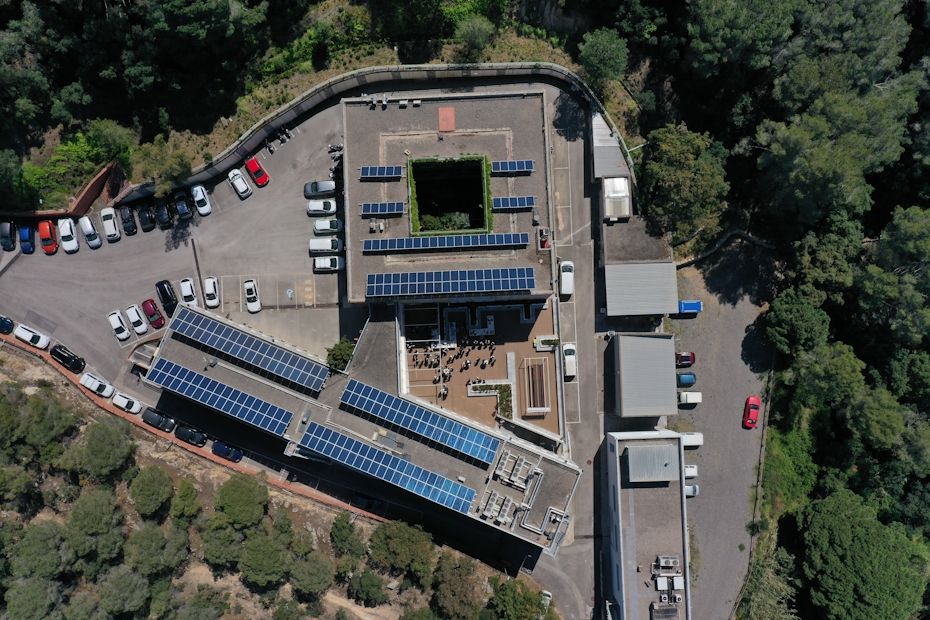
🎉 We’re celebrating 40 years! Founded in October 1985, CEAB-CSIC was born with a multidisciplinary spirit and driven by leading figures in science. Want to learn more? 🧐
https://www.ceab.csic.es/el-ceab/qui-som-i-que-fem/
30.12.2025 10:46 — 👍 2 🔁 0 💬 0 📌 0
🌍 How do #aquaticecosystems work, from mountain lakes and streams to the deep sea?Discover our work here 💙✨🔗 https://www.ceab.csic.es/en/
22.12.2025 09:42 — 👍 0 🔁 0 💬 0 📌 0
ℹ️ Did you know we are organized through thematic committees (#equality, #sustainability, #ethics, #wellbeing…)? They drive bottom-up actions and values for a more inclusive, ethical and sustainable Centre🌱🔽 https://www.ceab.csic.es/en/the-ceab/organisation-and-team/ceab-committees/
17.12.2025 10:37 — 👍 1 🔁 0 💬 0 📌 0

Milers d’ulls sota l’aigua: la ciència ciutadana fa història al litoral català:
Per primera vegada, el litoral català ha estat cartografiat íntegrament des del punt de vista de la biodiversitat marina gràcies a la ciència ciutadana. La cinquena edició de la BioMARató, coordinada pel Grup EMBIMOS de l’Institut de Ciències del Mar (ICM-CSIC), ha assolit una fita sense precedents: cobertura completa de la costa, més de 2.000 espècies registrades i prop de 94.000 observacions aportades per més de 520 participants entre maig i octubre de 2025.
No es tracta només d’un èxit quantitatiu. Les dades recollides ofereixen una fotografia detallada, dinàmica i a gran escala de l’estat del mar català, i reforcen l’evidència científica sobre com el canvi climàtic està transformant els ecosistemes marins.
Un litoral observat pam a pam per la ciutadania:
La cobertura total del litoral s’ha aconseguit dividint la costa en sectors de 10 km², tots ells mostrejats gràcies a la participació d’aficionats al busseig, naturalistes, fotògrafs submarins i entitats ambientals. Les observacions s’han centralitzat a la plataforma de ciència ciutadana MINKA, amb la col·laboració de la FECDAS, Oceánicos, Plàncton Diving, Anèl·lides i Xatrac, entre d’altres ...
🌊 NEREUS is out! with ocean sciences news shared by @icmcsic.bsky.social @ieo.es @ceabcsic.bsky.social @submon.bsky.social Nº 314 - 17 December 2025
💻 Read here:
preview.mailerlite.io/preview/3647...
✍️ Free Subscription:
nereus.ub.edu#PfhDSLJfZriv...
17.12.2025 08:03 — 👍 4 🔁 2 💬 0 📌 0

🔝Sea urchin “halos” reveal when the #ecosystem is at risk. A study led by the CEAB-CSIC proposes this indicator for the #Mediterranean sea.✍️ M. Minguito Frutos(@ifremer.bsky.social)et al. ➕Info🔗
https://www.ceab.csic.es/en/els-halos-de-les-garotes-una-nova-eina-per-detectar-ecosistemes-en-risc/
16.12.2025 11:27 — 👍 1 🔁 0 💬 0 📌 0

¿Es atún rojo lo que me sirven en Navidad? Un estudio denuncia que en el 90% de los casos no lo es
Científicos llevan diez años denunciando un fraude masivo que empieza en los mercados centrales y acaba en los restaurantes
Científicos llevan diez años denunciando un fraude masivo 👇
¿Es atún rojo lo que me sirven en Navidad? Un estudio denuncia que en el 90% de los casos no lo es, por @danielara.bsky.social
15.12.2025 12:03 — 👍 5 🔁 5 💬 0 📌 0
ANERIS: operAtional seNsing lifE technologies for maRIne ecosystemS; #HorizonEurope funded project (GA No: 101094924)
We are a Social Innovation Center specialized in systemic transitions towards Sustainable Human Development. Working with @AC4Columbia
http://linktr.ee/agirrelehendakariacenter
DIARIO DE MALLORCA, periódico de referencia de Mallorca y Baleares.
También en:
📸 IG: tinyurl.com/27ssycl3
📱WhatsApp tinyurl.com/27425zu2
🔵X: https://tinyurl.com/2y33hrfa
💻FB http://tinyurl.com/235rj239
Transforming Our World: Collections at the Heart of life-long learning and Education.
Know more about our Horizon Europe project at https://towched.eu
Group leader at @cbgpmadrid.bsky.social working on #epigenetics and #genomics in Arabidopsis and Brassica crops. Tweets science & related stuff in english and español.
Información libre e independiente. Apuesta por el periodismo de calidad. ¡Hazte socia y actúa! 👉 https://usuarios.infolibre.es/hazte_socio/
Exploring the breadth and diversity of life on Earth 🌍 Updates on research & teaching at @ox.ac.uk. Merged from Departments of Plant Sciences and Zoology August 2022
www.biology.ox.ac.uk
The next ECBB will take place at Anglia Ruskin University in 2026!
https://www.aru.ac.uk/science-and-engineering/conferences-and-events/ecbb-2026
Physicist. PhD in Physics of Complex Systems. Currently at CEAB-CSIC.
Interested in ecology, epidemiology, AI, remote sensing, quantitative finances, economy, philosophy of science... I code in Julia and Python.
🌐 agimenezromero.github.io
complex systems, ecology, biodiversity
Isotope biogeochemist at University of Eastern Finland. Currently working on methane and nitrogen cycles.
Biogeochemist studying high-mountain freshwaters and their watersheds | RyC researcher at @IDAEA_CSIC
Award-winning nonprofit media outlet publishing global environmental science & news in 6 languages via bureaus in India, Brazil, Africa, Latin America, Indonesia & US: https://mongabay.com
UW is an independent establishment of higher education, located in the Westfjords of Iceland. It offers two international multidisciplinary master's programs on coastal issues. Find out more: https://coastal.uw.is
Cuenta oficial de Aragón Radio, la radio autonómica de Aragón. Cercana y participativa. Puedes hablar con nosotros y recuperar contenidos en la web aragonradio.es
Prof of Ecosystem Science at Oxford, working on #naturerecovery, especially loves tropical ecosystems; Director Leverhulme Centre for @NatureRecovery.bsky.social; Trustee @nhm-london@bsky.social; ex-President of @BritishEcolSoc.bsky.social ; CBE FRS
We’re the European Union of Science Journalists' Associations, aiming to promote contact between journalists in the field of scientific and technical communication