📣Fiscal Instruments for International Climate: Call for Abstracts!
🔭 27th Global Conference on Environmental Taxation
#GCET27
🎯 Berlin @bbaw.bsky.social
🗓️ 14-16.09.26
✍ Share your research on carbon pricing, environmental taxes, subsidy reform
📩 Submit abstracts 18.02-15.04
➡️ www.gcet27.de
04.03.2026 12:59 —
👍 8
🔁 6
💬 0
📌 1
Sehr schönes Tool! Könnt ihr die Beteiligung auch in Euro pro Einwohner angeben oder in % der Gemeindefinanzen?
31.07.2025 20:18 —
👍 1
🔁 0
💬 1
📌 0
Still time to apply to our 9th Potsdam PhD Workshop in Empirical Economics, incl. a lecture series by Jens Hainmueller (Stanford) + keynote lecture by Amanda Agan (Cornell )!
We look forward to applications from PhD students & recent postdocs.
📅 Sep 24-25.
⏳ Deadline: June 30.
Further details 👇
19.06.2025 09:27 —
👍 7
🔁 8
💬 0
📌 0
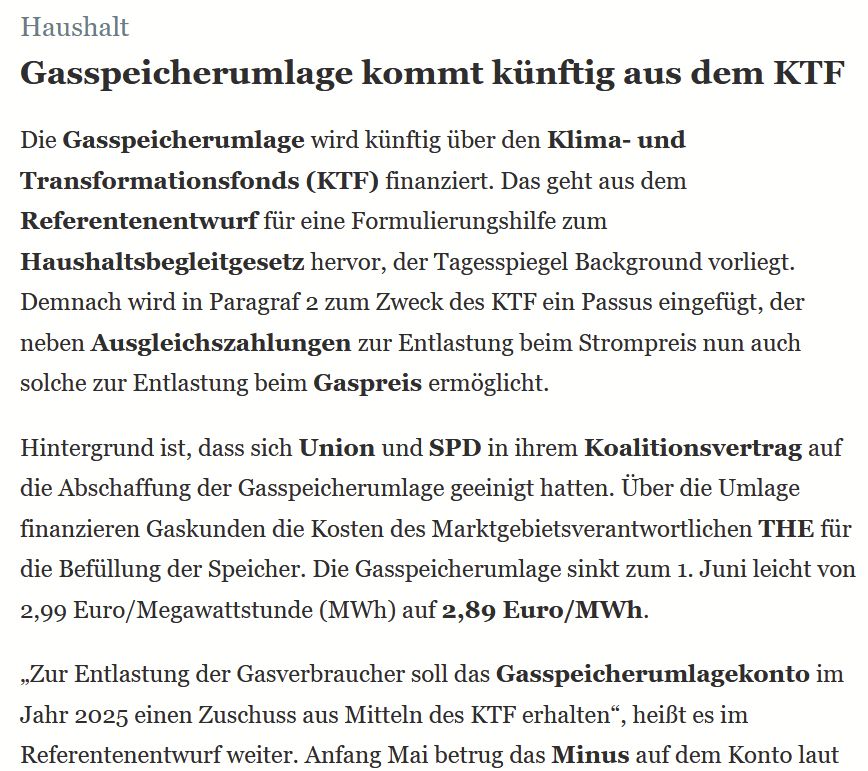
Die geplante Finanzierung der #Gasspeicherumlage aus dem #KTF (TSP Background) entspricht einer Senkung des effektiven CO2-Preises auf Gas um 16 Euro. Größte Ironie: mit Einnahmen aus CO2-Preis bzw. dem Sondervermögen (das in den KTF fließen soll) wird nun fossile Energie subventioniert.
19.06.2025 07:26 —
👍 17
🔁 7
💬 1
📌 2

First day of trading of EU ETS2 Futures at ICE yesterday.
carbon-pulse.com/394515/?utm_...
07.05.2025 05:17 —
👍 16
🔁 13
💬 4
📌 3

Student Research Assistant - Climate Politics (gn) part-time (10 hours/week)
We are looking for a student research assistant supporting a quantitative climate politics literature review.
@jacobedenhofer.bsky.social
👇
hertie-school.dvinci-easy.com/en/p/en/jobs...
10.04.2025 16:35 —
👍 12
🔁 14
💬 0
📌 1
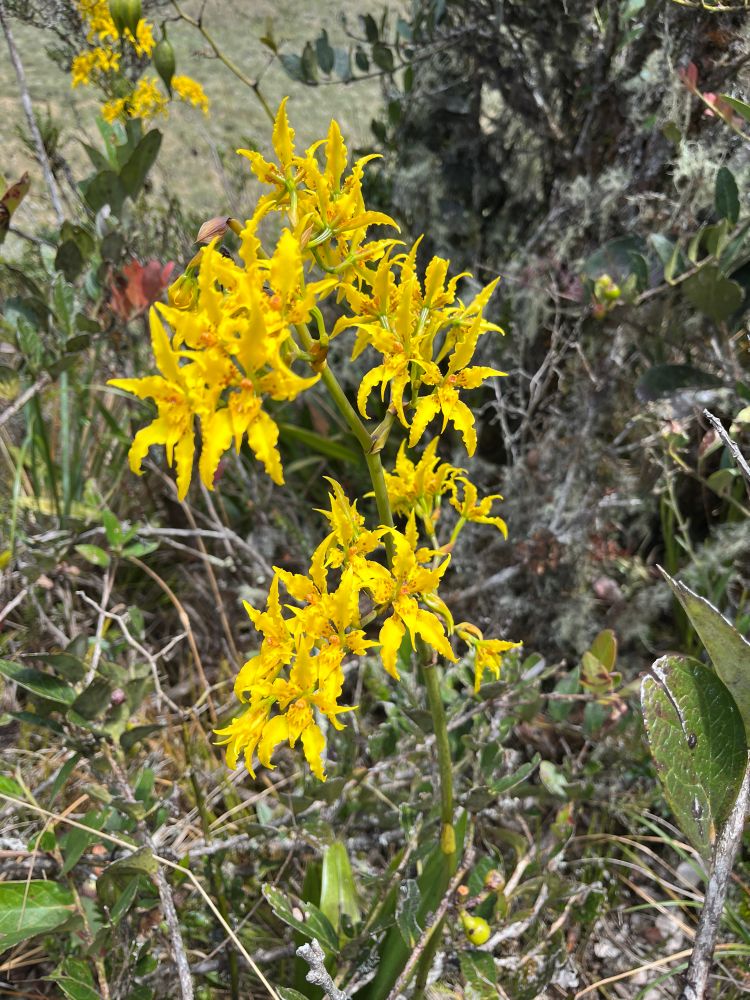
The XXVI Annual BIOECON Conference on "Integrating Biodiversity Conservation and Climate Change Solutions," taking place on 1-2 September 2025 at St. John’s College, Cambridge University. Call is here. SUBMIT!! @GRI_LSE @UniofExeterNews @EAERE_envecon
www.bioecon-network.org/pages/26th_2...
03.04.2025 14:11 —
👍 17
🔁 15
💬 1
📌 1
Happy to have been part of this paper.
Main point:
When EU consumes oil it increases the oil price thus Russia’s oil income. This in turn costs EU since we need to buy more arms.
Central estimate: each Eur of oil implies 37 cents of defense cost to EU.
Implication:
Climate policy is defence policy!
02.04.2025 17:57 —
👍 20
🔁 9
💬 0
📌 1
5/ Policy Brief (DE): www.ifw-kiel.de/fileadmin/Da...
Working Paper (EN): www.ifw-kiel.de/fileadmin/Da...
Dank an alle Koautor*innen @joschkawanner.bsky.social @danielspiro.bsky.social @timbeaufils.bsky.social s.bsky.social @ct-economics.bsky.social, L Stern, P Richter, M de Vries, K. Conyngham
02.04.2025 15:18 —
👍 2
🔁 0
💬 0
📌 0
4/ Eine optimale Internalisierung dieser externen Kosten wäre duch eine europäische Ölsteuer von etwa 40% auf den Ölpreis gegeben - zusätzlich zu den vielen anderen Gründen für Mineralölsteuern bzw. CO2-Preisen. Ähnliches gilt grundsätzlich auch für Erdgas - lohnt sich da Nordstream2 überhaupt noch?
02.04.2025 15:18 —
👍 2
🔁 0
💬 1
📌 0

3/ Quantifizierung ist nicht einfach, aber sehr illustrativ. Zentrale Schätzung dieser externen Kosten sind 37% je Euro Ölkonsum - etwa 60 €/tCO2. Kosten um den Faktor 10 höher sind möglich, wenn durch EU-Verbrauchssenkung und damit verbundene russische Mittelkürzung auch der Krieg verkürzt würde!
02.04.2025 15:18 —
👍 1
🔁 0
💬 1
📌 0

2/ Der Mechanismus dahinter: EU's Ölverbrauch treibt die Weltmarktpreise, was Putin und seinem Militär höhere Einnahmen generiert. Damit nehmen Angriffe und Schäden für die Ukraine sowie das militärische Risiko für die EU zu. Senkung des Ölverbrauchs wirkt entgegengesetzt.
02.04.2025 15:18 —
👍 1
🔁 0
💬 1
📌 0

The Security Dividend of Climate Policy | Kiel InstituteMenu
<ul> <li>By reducing reliance on fossil fuels, EU climate policy substantially lowers Russia’s financial strength, thereby limiting its military capabilities to sustain its aggression on Ukraine and beyond.</li> <li>We provide estimates for the security dividend of EU climate policy.</li> <li>A one-euro reduction in oil consumption in the EU results in a security dividend of 37 cents (central estimate).</li> <li>Based on the security dividend alone, a significant carbon price (central estimate of 60 euros per ton of CO2) on oil consumption is justified – in addition to its climate, terms-of-trade, and local health benefits.</li> <li>Ambitious EU climate policy that reduces demand for oil and natural gas should be seen as an important pillar of the European security architecture, complementing military spending, diplomatic efforts, and continued support to Ukraine.</li> </ul>
1/ In der aktuellen Debatte um Klimaziele & Flottenstandards sollten wir nicht vergessen: Jeder Euro, den die EU für Ölimporte - egal aus welchem Land - ausgibt, führt zu etwa 40 ct militärischen Folgekosten durch Russlands Krieg in der Ukraine. Details unser Analyse www.ifw-kiel.de/publications...
02.04.2025 15:18 —
👍 8
🔁 4
💬 1
📌 1
4/ See the short policy brief here: www.ifw-kiel.de/fileadmin/Da...
the full working paper here: www.ifw-kiel.de/fileadmin/Da...
Thanks to @joschkawanner.bsky.social @danielspiro.bsky.social @timbeaufils.bsky.social @ct-economics.bsky.social, L Stern, P Richter, M de Vries, K. Conyngham
02.04.2025 14:47 —
👍 3
🔁 0
💬 0
📌 0

3/ Quantification is difficult. Our central estimate is 37% or 60€/tCO2. But substantially larger values (by a factor of 10 are also possible if Russian revenue cuts do not only lead to reduced war spending but also to an earlier end of the war)
02.04.2025 14:47 —
👍 4
🔁 0
💬 1
📌 0

2/ The key mechanism is this: EU's oil demand drives up global oil prices which increases revenues in Russia which will ultimately be used to finance the war against Ukraine that leads to substantial military and recunstruction costs for the EU. Lowering EU's oil demand works in opposite.
02.04.2025 14:47 —
👍 4
🔁 1
💬 1
📌 0
The Security Dividend of Climate Policy | Kiel InstituteMenu
<ul>
<li>By reducing reliance on fossil fuels, EU climate policy substantially lowers Russia’s financial strength, thereby limiting its military capabilities to sustain its aggression on Ukraine and b...
1/ Discussions on weakening fleet standards or emission targets should account for the substantial geopolitical and #military #costs that EU's #oil consumption creates for the EU: central estimate is 37% for every Euro spent on oil. See policy brief & working paper: www.ifw-kiel.de/publications...
02.04.2025 14:47 —
👍 8
🔁 3
💬 1
📌 2
Klimapolitik trägt zur Sicherheit Europas bei
Klimapolitik ist ein zentraler Pfeiler der europäischen Sicherheitsarchitektur, das gilt gerade auch in Zeiten globaler Krisen. Ein neuer Report des IfW Kiel quantifiziert den sicherheitspolitischen M...
Klimapolitik ist keine konkurrierende Priorität zur Verteidigung – sie ist ihre strategische Ergänzung. Kiel Policy Brief von @joschkawanner.bsky.social & Co-Autoren zeigt, dass jeder eingesparte Euro für 🇷🇺-Öl einen Mehrwert für die 🇪🇺 wie 37 Ct zusätzl. Ausgaben für Sicherheit & Verteidigung hat 👇
02.04.2025 09:04 —
👍 44
🔁 17
💬 0
📌 4

If EU countries reduce their world market demand by 1 euro, Russia loses 13 cents. This reduces the pressure on EU defense spending by 37 cents. PIK co-authored Kiel Policy Brief @kiel.institute on climate policy, energy prices & geopolitics. @mkalkuhl.bsky.social
www.pik-potsdam.de/en/news/late...
02.04.2025 09:09 —
👍 72
🔁 39
💬 2
📌 5

Klimapolitik trägt zur Sicherheit Europas bei
02.04.2025 – Ein hoher CO2-Preis ist in Zeiten globaler Krisen ein zentraler Pfeiler der europäischen Sicherheitsarchitektur. Ein „Kiel Policy Brief“ unter Mitwirkung des Potsdam-Instituts für Klimafo...
Deutsches #Tempolimit spart jährlich 2 Milliarden Euro #Verteidigungsausgaben. Vom PIK mitverfasster Kiel Policy Brief @kiel.institute zum Zusammenhang von #EU-Ölnachfrage auf dem #Weltmarkt, Einnahmen für Russland und Auswirkungen auf #Militäretats. @mkalkuhl.bsky.social
02.04.2025 09:10 —
👍 8
🔁 6
💬 0
📌 4
Preise sind endogen - der Grund ist entscheidend. Wenn Preis niedrig ist, weil die Nachfrage nach Öl wegen billiger CO2-freier Substitute schwindet, gut für Klima. Wenn Preis niedrig, wegen billigeren Fördertechnologien/neuer Öl-Funde, schlecht fürs Klima.
26.03.2025 19:38 —
👍 4
🔁 0
💬 1
📌 0
Mehr Details zu zwei konkreten Vorschlägen, die im Interview genannte sind, auf unseren beiden Infoseiten:
➡️Gebäudeklimageld: www.pik-potsdam.de/members/mkal...
➡️Grün-goldene Verschuldungsregel: www.pik-potsdam.de/members/mkal...
21.03.2025 11:16 —
👍 6
🔁 0
💬 0
📌 0
Die Kosten-Nutzen-Analyse der 1. Schritt. Co-Benefits können mitquantifiziert und integriert werden. Verteilungseffekte könnten separat ausgewiesen oder per equity weights ebenfalls monetär quantifiziert werden. Man kann dann immer noch anders entscheiden, hat aber eine bessere Grundlage.
19.03.2025 20:25 —
👍 0
🔁 0
💬 0
📌 0
Ich denke man sollte Verteilungseffekte und Co-Benefits nach Möglichkeit mit aufnehmen. Es muss natürlich machbar bleiben: "Don't let the perfect be the enemy of the good".
Wie würden wir "Resonanz" bewerten?
Grundsätzlich: Umgekehrt bringt Abwesenheit von KNA m.E. keinen großen Nutzen denn...
19.03.2025 09:30 —
👍 4
🔁 4
💬 3
📌 0

Für Kosten-Nutzen Analyse der klimapolitischen Instrumente: @mkalkuhl.bsky.social in @tspbackground.bsky.social.
background.tagesspiegel.de/energie-und-...
19.03.2025 07:07 —
👍 10
🔁 4
💬 2
📌 2

I revamped my page with ghg emissions plots and data from the UNEP Emissions Gap Report. 👇
lambwf.github.io/UNEP-Gap-Rep...
I'll be adding to this a bit in the coming months.
13.02.2025 16:40 —
👍 23
🔁 8
💬 0
📌 2
Exciting job opportunity in our energy transition lab @pik-potsdam.bsky.social 👇
13.02.2025 16:54 —
👍 9
🔁 6
💬 0
📌 0

Das #Klima war beim #Kanzlerduell eine völlige Leerstelle. Aber ganz kurz ging es ums #Klimageld. Hier eine Einordnung der Aussagen von Olaf Scholz und Friedrich Merz:
1/n
10.02.2025 07:52 —
👍 114
🔁 35
💬 3
📌 4