Mujeres llorando a sus muertos tras el paso de las tropas franquistas en la Guerra Civil Española en Triana,Sevilla. Juan José Serrano (1936). #photography
26.01.2026 17:40 — 👍 29 🔁 6 💬 1 📌 0
@jimarcor.bsky.social
Trait evolution, sedges, Southeast Asia The Global Cyperaceae Database cyperaceae.org #IamaBotanist #Cyperaceae #veggie 🏳️🌈 Researcher at @pablodeolavide.upo.es jimarcor.github.io
Mujeres llorando a sus muertos tras el paso de las tropas franquistas en la Guerra Civil Española en Triana,Sevilla. Juan José Serrano (1936). #photography
26.01.2026 17:40 — 👍 29 🔁 6 💬 1 📌 0
🌿 El congreso #SEBOT2025 ha reunido en la #UPO a la comunidad científica y amantes de la #botánica para reflexionar sobre la diversidad vegetal y el futuro de su conservación.
👏 Gracias a todos y todas las participantes por convertir Sevilla en el epicentro de la botánica durante estos días.
I'm honored to be giving the American Society of Plant Taxonomists Incoming President's talk at Botany 2025 this summer. Please join us if you're in town!
19.06.2025 18:41 — 👍 34 🔁 4 💬 1 📌 0
¡El #Biomaratón de #FloraEspañola cumple 5️⃣ años!
No te pierdas 3️⃣ #BOTANI_DIAS en la semana de la fascinación por las plantas, accesibles para personas interesadas en las plantas y en la colaboración ciudadana.
Te esperamos !
👉🏻#Calenda Mayo #SEBiCoP
www.conservacionvegetal.org/2025/05/06/b...

💯
04.05.2025 23:59 — 👍 8518 🔁 2388 💬 135 📌 77
Great training today by @pjimmej.bsky.social & @jimarcor.bsky.social on editing the Global Cyperaceae (sedge!) Database.
This will be an extremely useful resource, packed with photos and descriptions, built on a foundation of solid taxonomic expertise. I'm excited to get started!
cyperaceae.org

Efficient near telomere-to-telomere assembly of Nanopore Simplex reads from @lh3lh3.bsky.social lab www.biorxiv.org/content/10.1...
18.04.2025 10:58 — 👍 29 🔁 7 💬 1 📌 0¿Te interesan las áreas megadiversas? En ellas el paisaje puede estar dominado por muy pocas especies (hiperdominancia). Te proponemos un TFM en el RJB @csic.es para explorar este fenómeno en el género de leguminosas 𝘈𝘥𝘦𝘯𝘰𝘤𝘢𝘳𝘱𝘶𝘴 DC. (JAEINT25_EX_0917) @sebot.bsky.social @jovenesbotanica.bsky.social
03.04.2025 17:03 — 👍 18 🔁 11 💬 0 📌 0
Carex multispiculata from Chile, black background.
Congratulations to our Curator of Plant Biology Dr. Carrie Tribble (@tribblelab.bsky.social) who just published a study on how plants rapidly form new species!
Photo: Carex multispiculata from Chile, photographer: José Ignacio Márquez Corro
Study: nph.onlinelibrary.wiley.com/doi/10.1111/...

Take a sedge workshop with @beer-n-botany.bsky.social! Nathanael knows his graminoids! Little Dixie Conservation Area, Fulton, Missouri, May 29-30. Details below:
midwestbiologicalsurvey.com/workshops-an...

📢 Meet the keynote speakers of the XXIV International Symposium on Cryptogamic Botany - Pontevedra 2025!
Dr. Jaume Pellicer (@JAU_m_e), Researcher at the Institut Botànic de Barcelona (Spain), will be our speaker for the #pteridology keynote session
📌 Mark your calendars for #ISCB2025!

Fig. 1: The Chromosome number and Hidden State-dependent Speciation and Extinction (ChromoHiSSE) model. Panel (a) describes the event rates allowed in the model for both cladogenetic (upper) and anagenetic (lower) events. Panels (b) and (c) demonstrate those rates on a tree simulated under ChromoHiSSE. Branches that do not reach the present represent extinct, unsampled lineages. Panel (b) shows the anagenetic and cladogenetic changes in the hidden states, indicated by blue (i) vs orange (ii). Panel (c) shows the anagenetic and cladogenetic gains and losses of chromosomes, as well as speciation with no corresponding change in chromosome numbers. More red colors in (c) correspond to more chromosomes. The vertical blue and orange bars in (c) indicate clades in the blue (i) vs orange (ii) hidden states, displaying that chromosome number changes are less frequent in the blue hidden state than in the orange. The asterisk in (c) demarcates where a cladogenetic dysploidy event could appear as an anagenetic event because of unsampled lineages.
New study by @tribblelab.bsky.social @jimarcor.bsky.social @marcialescudero.bsky.social Michael May, Rosana Zenil-Ferguson and myself just out:
Introduces a novel HiSSE chromosome model and demonstrates the importance of chrom. evol. in #sedge diversity.
nph.onlinelibrary.wiley.com/doi/10.1111/...


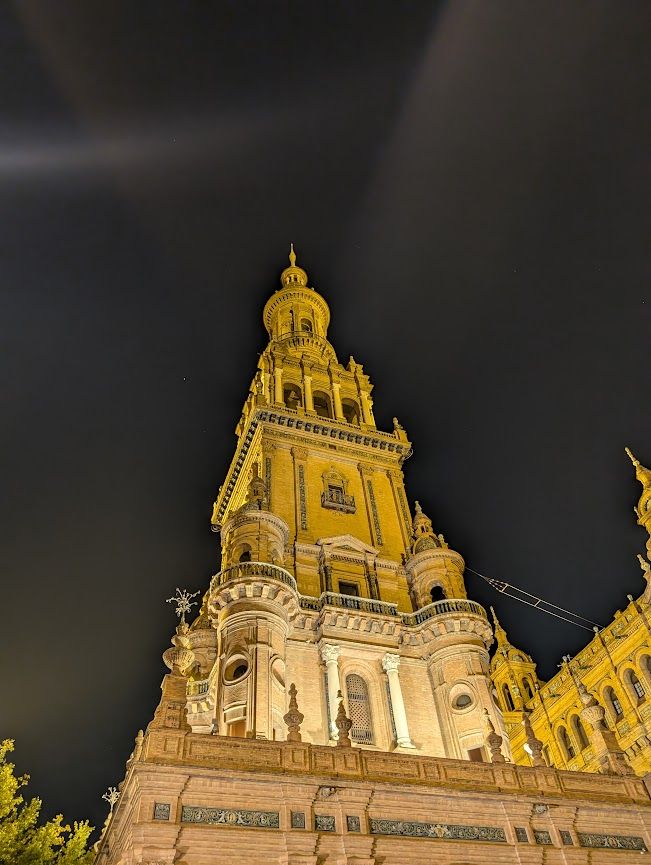
Beautiful Seville and its sedges; a few photos from this summer's international sedge meeting, organized and hosted by @pjimmej.bsky.social @marcialescudero.bsky.social @jimarcor.bsky.social and crew.
18.12.2024 21:02 — 👍 17 🔁 4 💬 2 📌 0


Just out: a new guide to Illinois's species of the largest North American sedge clade, Carex sect. Cyperoideae.
I was really impressed with the treatments and the care the authors took. This will be invaluable in the field; I will be teaching out of it and using it myself. Maybe even today!
Did you know there is a #SoutheastAsia project for #Cyperaceae on @inaturalist.bsky.social? If you want to contribute, upload your pictures and they will be automatically added whenever you spot a sedge🧐🌾Let's speed up sedge knowledge for such a biodiverse region!
t.co/5ohAUsKqm5