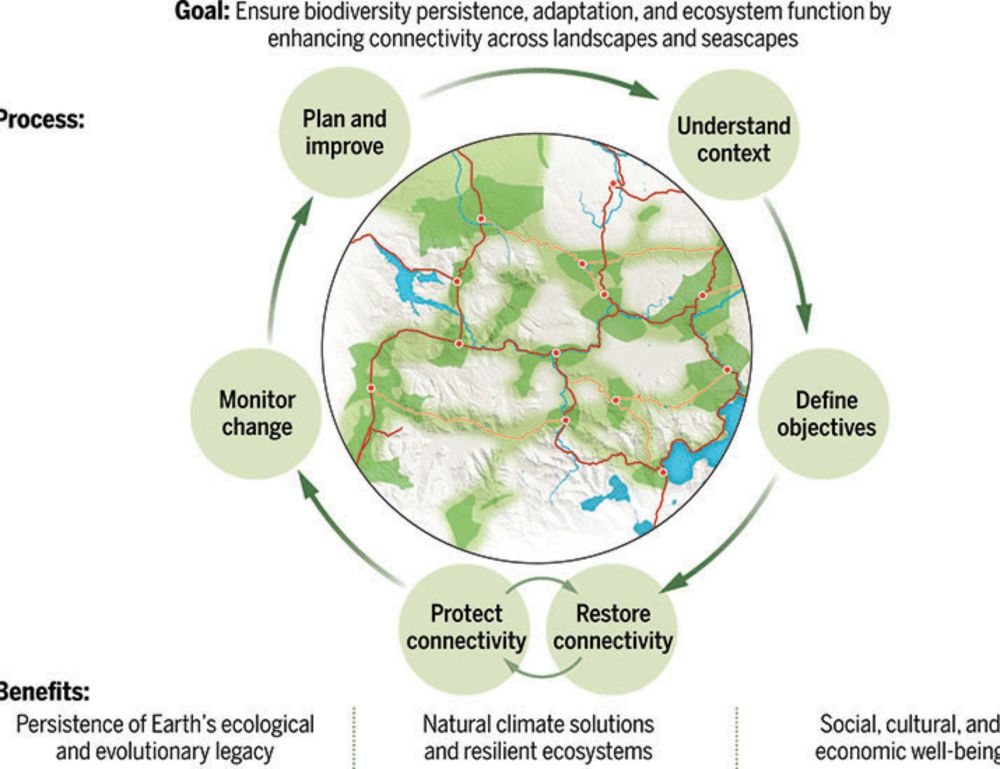
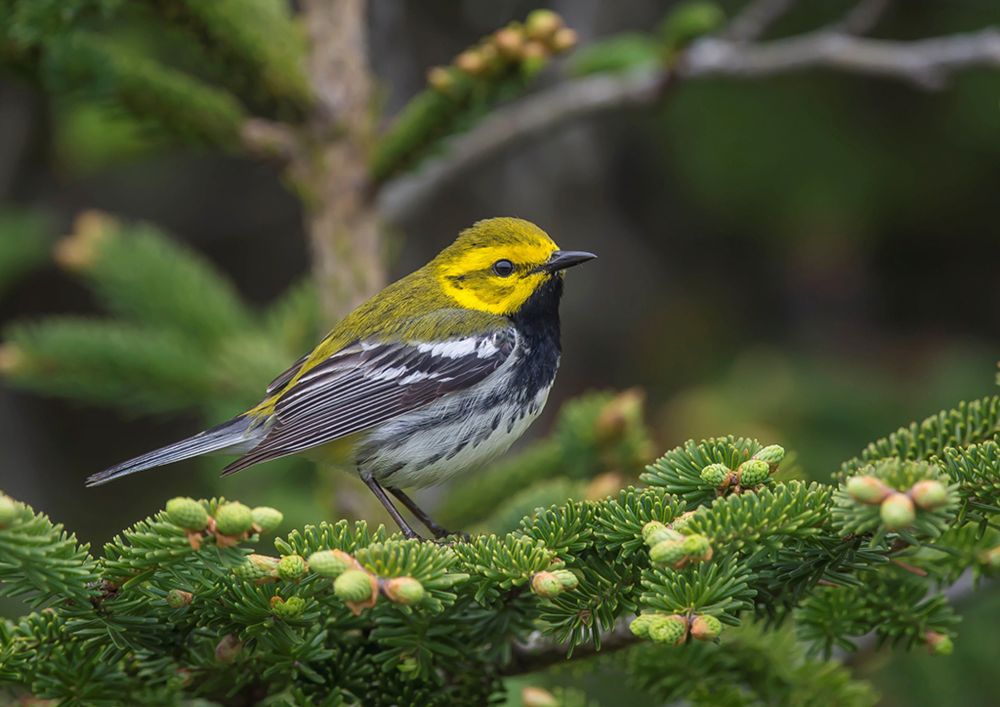
Left panel: A small black, grey, white and yellow songbird wearing a tracking backpack. Right panel: A map of North America showing a migration track beginning in Alaska, crossing east across the boreal forest of Canada, and then turning south to the coast of Texas before retracing the path north.
Out now in Movement Ecology: We used multi-sensor geolocators to track myrtle warblers breeding in Alaska and found that they migrated much farther than expected to the Gulf Coast—rather than to the closer Pacific Coast non-breeding area 🪶🧵 link.springer.com/article/10.1...
23.01.2026 19:29 — 👍 34 🔁 12 💬 1 📌 2
Incredibly honoured and happy to have been awarded a consolidator grant from the ERC!
This grant will expand my group and fund my research at @biologylu.bsky.social for five years, and focus on different factors that disrupt animal migration at large scales 🦅🦋🌍🧲💡🌡️. Exciting times ahead!
09.12.2025 13:31 — 👍 22 🔁 3 💬 6 📌 1
Take three minutes to look at pretty birds, explore radar data, and see how we connect the structure of skies to MacArthur's ideas of niche partitioning. 📡🐦☁️🎧
20.11.2025 18:28 — 👍 33 🔁 16 💬 0 📌 4
A typical Batumi migration scene, illustrating the idea of an ‘aerial niche’. For Steppe Buzzards in our bottleneck, that niche is often somewhere between the clouds: great to watch, tricky to count.
Fascinating paper by @cnilsson.science et al: doi.org/10.1016/j.tr...
📸 @barthoekstra.bsky.social
18.11.2025 20:41 — 👍 10 🔁 6 💬 0 📌 0
So proud of this cover that features @barthoekstra.bsky.social amazing photo!
17.11.2025 08:42 — 👍 9 🔁 3 💬 1 📌 0

November issue out online now
www.cell.com/ecology-evol...
We hope you enjoy it!
The cover article is by Cecilia Nilsson and colleagues, photo by Bart Hoekstra
The penultimate interviews in our Disability series feature John Dennehy and Tara Cronin
12.11.2025 14:40 — 👍 9 🔁 1 💬 1 📌 2

Fig. 2. Maps of nocturnal bird migration across the Netherlands in spring and autumn, with the 100 km radius circles of the weather radars enclosing the onshore study area. Colors represent seasonal migration passage, converted from the original bird densities. Shaded areas mark grid cells for which over 25% of the input data, prior to filtering, were impacted by ground clutter. Migration passage in these regions may be compromised in either direction: overestimated due to remaining clutter artifacts or underestimated where terrain features partially obstruct the radar’s lower scanning angles.

Fig. 1. Flight altitude distributions (in m above sea level (asl)) of nocturnal bird migration for both Dutch weather radars at a coastal Den Helder and inland site Herwijnen. Bar length denotes the proportion of migration within the respective altitude range (50 m vertical resolution). Donut charts aggregate this further to coarser 200-m classes and display the proportion of migration occurring above 1000 m (patterned). Red highlights indicate the altitude range of onshore energy infrastructure in the Netherlands, which is generally present in the lowest 200 m of the atmosphere. Donut chart proportions do not sum to 100% due to rounding. The small inset map of the Netherlands shows the locations of both radars (solid dots) and the surrounding areas up to 35 km (circles) from which altitude distributions are aggregated.

Fig. 3. a, c Observed combinations of migration passage and mean wind power density, a measure of wind power potential, in North-Holland. Red circles represent average values for candidate sites and their size reflects the relative candidate site area. The grid reflects binned values of migration and wind power density, with color shading indicating the type of combination: orange = high migration passage, blue = high wind power density, dark browns and blues = both high. White lines indicate averages for wind power density and seasonal migration passage. b Spatial distribution of autumn migration (orange hues) and wind energy (blue hues) in North-Holland. Candidate wind energy sites are shown in bright red. The highest and lowest autumn migration passage sites are linked to their positions in a and c, emphasizing large differences between sites in autumn, but not in spring. Shaded areas mark grid cells for which over 25% of the input data, prior to filtering, were impacted by ground clutter. Migration passage in these regions may be compromised in either direction: overestimated due to remaining clutter artifacts or underestimated where terrain features partially obstruct the radar’s lower scanning angles.
To reduce negative impacts of #renewables (eg #windenergy) on migrating birds, we need to know *where* and how *high* they fly. Using weather radar, we mapped 6yrs of nocturnal migration over the Netherlands, revealing patterns we can use to avoid and minimize impacts:
doi.org/10.1016/j.je... 🧪🪶
30.10.2025 12:58 — 👍 11 🔁 5 💬 2 📌 0

The structure of the annual migratory flight activity in a songbird | royalsocietypublishi... | Proceedings of the Royal Society B | #ornithology 🪶
16.10.2025 05:33 — 👍 51 🔁 14 💬 0 📌 1

Interested in how animals use the sky? 🌌
I’m recruiting a PhD student (Fall 2026, Purdue University) to study Purple Martin flight behavior and airspace use using barometric transmitters.
Details ➡️ jobs.rwfm.tamu.edu/view-job/?id...
#Aeroecology #AvianEcology
16.10.2025 14:57 — 👍 14 🔁 10 💬 0 📌 0
Truly impressive number of birds migrating tonight. More than 800 MILLION birds up in the air right now❗ #BirdMigration
25.09.2025 02:59 — 👍 1489 🔁 415 💬 34 📌 71
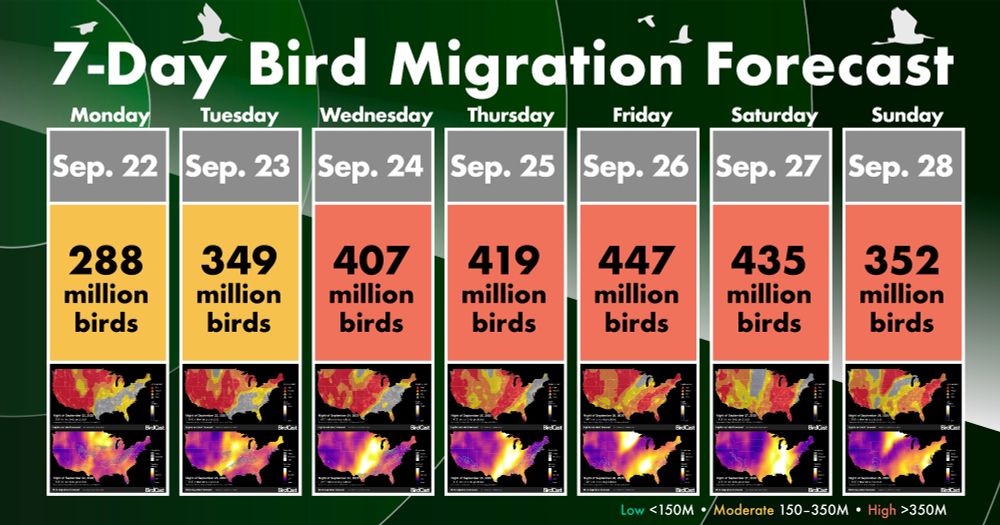
7-Day Bird Migration Forecast
We’re entering the peak of fall migration across most of the U.S. Hundreds of millions of birds are on the move, with Thursday and Friday forecast to be the biggest nights of the season so far — over 400 million birds predicted to be taking flight.
22.09.2025 22:34 — 👍 44 🔁 21 💬 0 📌 0

Animal niches in the airspace
For flying animals, including many birds, bats, and insects, the air is a crucial
arena for a range of behaviors. Technological advances, such as year-round tracking
of flight altitudes and expanded u...
Are animals randomly distributed in the air, or is there a structure to where and when we find them? In our new paper we outline factors that shape habitat use in the air, from abiotic structure to biotic interactions. A lot of fun discussions behind this one! 🦅🦋🦇🌬
www.cell.com/trends/ecolo...
22.09.2025 08:03 — 👍 31 🔁 13 💬 1 📌 0
This is definitely one of those papers that goes in the, 'hm, I never really thought of it that way' category. I love these 'simple' but somehow mind shifting papers. And it's probably more relevant to my own niches than I had previously considered. Cool!
19.09.2025 13:27 — 👍 13 🔁 6 💬 2 📌 0

Animal niches in the airspace
For flying animals, including many birds, bats, and insects, the air is a crucial arena for a range of behaviors. Technological advances, such as year-round tracking of flight altitudes and expanded use of radar, increasingly show how flying animals use the aerial habitat. This enables us to answer questions about the environmental patterns and ecological processes that shape aerial niches, including energetics, biotic interactions, and risk due to growing anthropogenic conflicts. In this review, we identify environmental conditions and biological interactions influencing where animals occur in the airspace throughout their life cycles. We outline an ecological framework to advance understanding of how different properties of the airspace shape fundamental aerial habitat niches and how biotic interactions influence the realized niches.
Online now: Animal niches in the airspace
19.09.2025 12:00 — 👍 15 🔁 8 💬 2 📌 1

Very excited to show the results of this work for the first time!
Shout out to my amazing collaborators @joely-desimone.bsky.social @cenemes.bsky.social Brian Tsuru, Meredith Anderson, Colette Berg, Cat David and @emlbcohen.bsky.social
19.08.2025 13:17 — 👍 7 🔁 3 💬 1 📌 0

4. Flight Behaviors: Birds fly faster (higher airspeeds) and are more selective about flying with tailwinds over the Corn Belt compared to more forested landscapes. This is similar to their strategies for crossing natural barriers like the Gulf of Mexico.
30.05.2025 15:57 — 👍 2 🔁 1 💬 1 📌 0
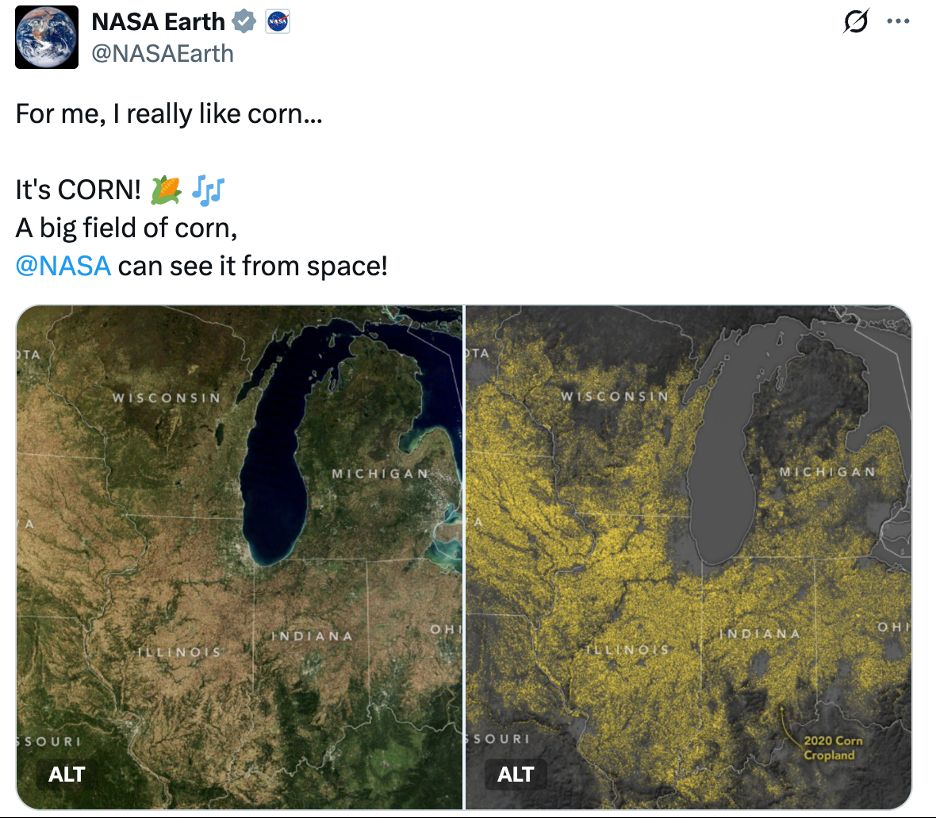
1. Did you know that the Corn Belt in the Midwest USA is so vast you can see it from space? 🌽 How would this affect billions of migrating songbirds passing through each year? 🐦 Check out our new study in @conbiology.bsky.social
to find out! 🧵1/8 conbio.onlinelibrary.wiley.com/doi/10.1111/...
30.05.2025 15:57 — 👍 22 🔁 15 💬 1 📌 0
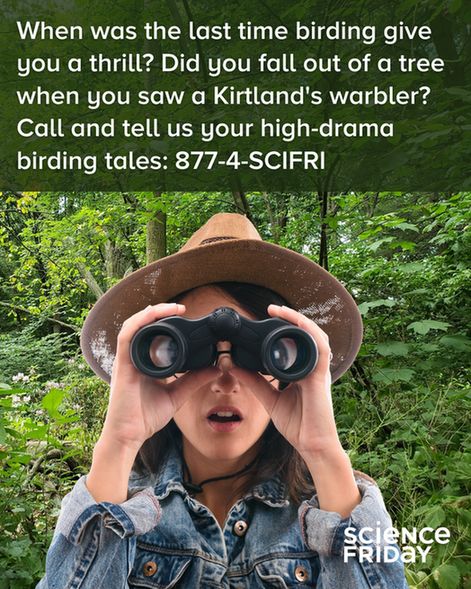
When was the last time birding give you a thrill? Did you fall out of a tree when you saw a Kirtland's warbler?
Call and tell us your high-drama birding tales: 877-4-SCIFRI
Birders, we need your help! Call and tell us your high-drama bird tales: 877-4-SCIFRI
19.05.2025 22:07 — 👍 39 🔁 13 💬 3 📌 1
Brilliant and thought-provoking new paper by @silasfischer.bsky.social with real-world consequences for ecological knowledge and conservation!
04.04.2025 23:22 — 👍 4 🔁 1 💬 1 📌 0

Workshops & Training Opportunities - AOS 2025 Annual Meeting
The workshops and training sessions at AOS 2025 offer opportunities both for hands-on learning exercises, where participants engage in a mix of lectures and activities, and for panel discussions on a ...
Bird #bioacoustics folks: @kitzeslab.bsky.social is hosting a hands-on "Advanced topics in bioacoustic monitoring" workshop at AOS 2025!
We'll make custom sound ID models, estimate birds' positions using acoustic localization, and discuss how to use sound ID results to make ecological insights.
11.03.2025 14:13 — 👍 19 🔁 12 💬 0 📌 1

Poster with bald eagle and legislation that has supported the species recovery

Stand up for science signs

Stand up for science crowd and sign

People at the rally
#standupforscience DC on Friday
09.03.2025 01:41 — 👍 2 🔁 0 💬 0 📌 0

A person in a blue jacket with her back to the camera holds up a sign with the ohm symbol and the word “resistance” at the Stand Up for Science rally

A person holds a sign displaying the federal legislation and agencies that protect Bald Eagles in the US at the Stand Up for Science rally

A view of the Lincoln Memorial with trees in the foreground and thousands of marchers at the Stand Up for Science rally
Thousands of scientists at the #standupforscience2025 @standupforscience.bsky.social protest in DC today demonstrate that we won’t take the attack on science and the federal government lying down!
08.03.2025 02:54 — 👍 8 🔁 4 💬 0 📌 0

Welcome to the Bluesky account for Stand Up for Science 2025!
Keep an eye on this space for updates, event information, and ways to get involved. We can't wait to see everyone #standupforscience2025 on March 7th, both in DC and locations nationwide!
#scienceforall #sciencenotsilence
12.02.2025 17:04 — 👍 11500 🔁 5437 💬 291 📌 670
Happy Friday! We made it through another week. Take care of yourself this weekend, and try to fit in some time in nature. 🐦🌳🍃
28.02.2025 20:01 — 👍 8 🔁 2 💬 0 📌 0
Any talk you hear from the current administration about making the US more competitive in science and technology is utter bullshit. What they are doing is sabotaging our country for years if not decades to come.
22.02.2025 23:03 — 👍 1909 🔁 564 💬 35 📌 14
Advancing nitrogen management | Accelerating innovation | Use-inspired | Data-driven | niccee.org
Global Nitrogen Innovation Center for Clean Energy and the Environment (NICCEE)
We're Maryland's environmental university! UMCES trains the next generation of environmental leaders and leverages world-class research to guide our world toward a more sustainable future.
📍Frostburg/Solomons/Cambridge/College Park/Annapolis/Baltimore
research wildlife biologist @usda | colorado | habitat selection • movement ecology • population dynamics • ornithology
LPBO, a core program of Bird Studies Canada, conducts research and education on migratory birds and other aspects of natural history at Long Point, ON.
Director of Quantitative Science at National Audubon Society. PhD 🏳️🌈 Conservationist, birder, indoor cat mom, gardener, foodie, traveler. She/her
PhD at Lund University. Bird migration tracking and flight energetics. Wind tunnel
https://portal.research.lu.se/en/persons/pablo-mac%C3%ADas-torres
News from the Migration Ecology Group
@University of Oldenburg, Germany
led by Prof. Heiko Schmaljohann
https://uol.de/en/migration-ecology
Research news, events, job openings & more from the Department of Biology at Lund University, Sweden.
Posts in English and Swedish.
Please like, share and interact with us - we love science!
https://www.biology.lu.se/
Biodiversity informatician at @oscibio.inbo.be. Passionate about open data and open science. I develop research software, maintain data standards and publish datasets, mostly for animal movement research 📡🐦/🛰🐦/🔊🐟/📸🐗. He/him
Birder | Research Associate at Swiss Ornithological Institute @vogelwarte.bsky.social
Interested in the evolution of bird movements and how they can influence evolutionary processes
https://pauldufour80.notion.site/pdu
Spatial Data Science, Earth Observation, Machine Learning 🌍🛰️⚙️ Animal-Environment Interactions Modelling, Sat./UAV Remote Sensing for Ecology.
Researcher & Lecturer @earth-observation.org, @uni-wuerzburg.de, #AniMove.
https://jakob.schwalb-willmann.de
Student of winged and flippered things. Studying animal movement to inform the conservation of nature an@.
Behavioural ecologist
Special interest in evolution of animal cognition, plasticity, ecology
birds, spiders, using empirical and theoretical approaches
Senior Research Scientist, Norwegian Institute for Nature Research | Population ecology, demography, wildlife management | Delvis integrert i det norske samfunnet | bksandercock.wordpress.com
Senior scientist leading terrestrial and migratory bird research and monitoring at Pinngortitaleriffik, GL.
Avian biology • Arctic chronoecology • Light cycles
http://nphuffeldt.wordpress.com
Personal account. Opinions & posts my own
PhD student investigating navigation in songbirds at University of Oldenburg, Germany 🧭🐦⬛
Passionate about #birds 🦉🪺🦆
#ornithology #birdmigration #tracking
[she/her]
#ornithology 🥚🐣🐦| #birdmigration #birdringing #birdtracking | #broodparasitism | #TeamBird @ivb-cas.bsky.social @czechacademy.bsky.social | #HABITRACK
https://www.instagram.com/rytikerttunen/
https://scholar.google.com/citations?user=aGO2IjIAAAAJ&hl=en
Movement Ecology PhD candidate @ IBED, University of Amsterdam | Radar Aeroecology | Birds | Energy | Climate | Monitoring & Comms. @batumiraptorcount.org | Remote Sensing | Open Science | He/Him | barthoekstra.com
Maintain and enhance native bird populations and the habitats they use by fostering partnerships with public and private entities and promoting community action. www.marylandbirds.org