PNAS
Proceedings of the National Academy of Sciences (PNAS), a peer reviewed journal of the National Academy of Sciences (NAS) - an authoritative source of high-impact, original research that broadly spans...
Tis the season to indulge 🍗🥧🍷
So what better time to have our new lab paper on cannabis-induced munchies published in PNAS but on Christmas Eve!
A 'joint' effort with @ryanmcpickle.bsky.social, showing that cannabis enhances the rewarding value of food. Dig in!
www.pnas.org/doi/10.1073/...
26.12.2025 15:27 — 👍 23 🔁 4 💬 1 📌 0

Dr. Baglot is a postdoc at UCLA, exploring the effects of cannabis & its constituents on pain, cognition, subjective drug effects, & abuse liability in clinical populations, as well as mitigation of neuropathic and inflammatory pain in 🐭 models / #ACNP2026
08.12.2025 18:55 — 👍 6 🔁 2 💬 1 📌 0
Early life stress induces social behavioral deficits and peripheral biomarker alterations in adolescence that perpetuate intergenerationally https://www.biorxiv.org/content/10.1101/2025.11.27.690841v1
02.12.2025 07:15 — 👍 3 🔁 2 💬 0 📌 0
Thanks Kira!!
27.11.2025 00:48 — 👍 2 🔁 0 💬 0 📌 0

Risk reshapes amygdala representation of choice
Modifying behavior in response to changing environmental conditions is a crucial adaptive function. This capacity is exemplified when animals curtail pursuit of a valued outcome that risks being punis...
for anyone interested in the amygdala and risky decision-making, check out our new preprint: biorxiv.org/content/10.1...
amygdala neurons track reward-seeking actions, and punishment risk dramatically alters this function. lots of other (BLA-accumbens!) data included.
09.10.2025 13:52 — 👍 21 🔁 9 💬 0 📌 1

The effect of methamphetamine and 3,4-methylenedioxymethamphetamine on peripheral endocannabinoid concentrations: a study in healthy adults - Psychopharmacology
Rationale Stimulant drugs such as methamphetamine (MA) and 3,4-methylenedioxymethamphetamine (MDMA) can impact neurobiological systems implicated in stress, reward processing, and drug use. Although recent preclinical evidence implicates the endocannabinoid (eCB) system in these processes, little is known about the acute effects of stimulants on eCB levels in humans. Objectives The aim of the present study was to investigate the effects of acute administration of the prototypical psychostimulant MA and the psychostimulant-empathogen MDMA on circulating eCB levels in healthy adults. Methods Using a within-subject, double-blind design, this study assessed the acute effects of MA (20 mg), MDMA (100 mg), and placebo on plasma eCB levels in healthy human participants (N = 22) during three separate sessions. Blood samples assessing concentrations of the eCBs anandamide (AEA) and 2-Arachidonoylglycerol (2-AG) were collected between 150- and 180-minutes post-drug administration, and subjective measures of drug effects were collected at regular intervals. Results MA, but not MDMA, was associated with significantly lower 2-AG plasma concentrations compared to placebo. Neither drug impacted AEA concentrations. However, during the placebo condition, higher AEA concentrations were correlated with disliking the ‘drug effects’, suggesting a possible relationship between AEA levels and negative expectations of subjective drug effects. Conclusions These findings provide novel insights into how stimulant drugs act on the eCB system and may help to develop treatments for SUDs.
Congrats to @pact-lab.bsky.social PhD student @anadeutsch.bsky.social on her 1st first-author paper from the lab! 🎉
She explored how MDMA & methamphetamine impact cortisol, endocannabinoids, & BDNF levels in healthy humans and how this relates to the subjective drug experience 💊👇
06.10.2025 19:03 — 👍 31 🔁 12 💬 0 📌 0
🔵 I'm interrupting my social media hiatus to flag this important preprint from the Bruchas lab (is he not on Bluesky!?) together with @davidweinshenker.bsky.social. Very difficult experiments to show that dopamine release from LC terminals is independent of VTA 🔥
www.biorxiv.org/content/10.1...
17.09.2025 05:44 — 👍 34 🔁 12 💬 0 📌 0
Activity of CRF neurons in the BNST reduces anxiety-potentiated startle in female rats in an estrous phase-dependent manner
www.biologicalpsychiatryjournal.com/article/S000...
28.07.2025 10:08 — 👍 4 🔁 3 💬 0 📌 0
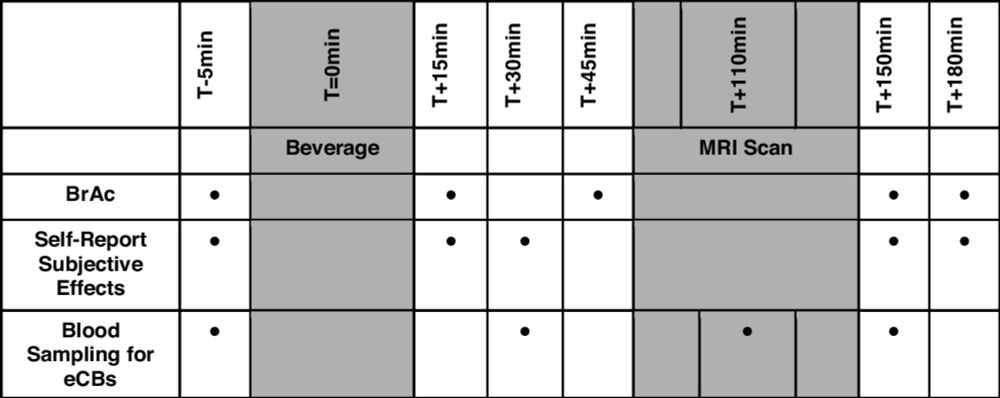
Effects of acute alcohol administration on endocannabinoids and relation to subjective effects - Psychopharmacology
Rationale Harmful alcohol use remains a significant global public health challenge. Examining variability in the acute subjective effects of alcohol and related neurobiological mechanisms may advance the understanding of susceptibility to harmful alcohol use. Research suggests the endocannabinoid (eCB) system may play an important role in mediating the reinforcing effects of alcohol. This study examined the relationship between alcohol-induced changes in eCB concentrations and the subjective psychoactive effects of acute alcohol consumption. Method Healthy social drinkers (n = 28, aged 20–35 years) participated in a within-subjects, single-blind, placebo-controlled laboratory alcohol challenge study. Alcohol (0.6 g/kg; with 20% adjustment for women) and placebo sessions were counterbalanced. Subjective alcohol effects were assessed from self-report questionnaires administered pre- and post-dosing, including the Biphasic Alcohol Effects Scale (BAES), Drug Effects Questionnaire (DEQ), and Profile of Mood States (POMS). The eCBs, N-arachidonoylethanolamine (anandamide; AEA) and 2-arachidonylglycerol (2-AG), were assessed from blood plasma taken throughout the dosing session. Results Acute alcohol was associated with an overall decrease in 2-AG concentrations compared to placebo. Further, we found that a drop in 2-AG concentrations was associated with less drug ‘liking’ and feelings of ‘friendliness’, whereas under placebo conditions, a rise in 2-AG was associated with a smaller decrease in feelings of ‘stimulation’ (e.g., feeling energized, talkative). Alcohol did not significantly affect AEA concentrations. Conclusion Our study provides the first evidence that eCBs may contribute to individual differences in sensitivity to alcohol's reward-related mechanisms by influencing subjective experience, offering insight into the potential role of eCBs in the processes underlying harmful alcohol use.
New @pact-lab.bsky.social paper out today led by [current postdoc] Gavin Petrie & [former postdoc] Raegan Mazurka exploring how acute alcohol impacts endocannabinoid levels & their relation to the subjective effects of alcohol 🍻
link.springer.com/article/10.1...
25.07.2025 13:46 — 👍 16 🔁 8 💬 0 📌 0
Exciting new work from @jmoronconcepcion.bsky.social & team just dropped! 👇🤩
25.06.2025 14:02 — 👍 1 🔁 1 💬 0 📌 0

Fear generalization is a hallmark of PTSD, but its regulating factors remain elusive
Sachin Patel, @mayoonthebrain.bsky.social & team now show low levels of the endocannabinoid 2-AG is associated with increased generalization of fear in mice and humans: buff.ly/Sw00Fs0
09.06.2025 15:33 — 👍 5 🔁 3 💬 0 📌 0
Finally getting to post the thread on this, and excited to force you all to read some of the new work from our group on trying to understand if traumatic stress might impact reactivity to basic stimuli.
Or, honestly, where we asked “what if we just flash a checkerboard at trauma survivors?” 1/🧵
27.05.2025 20:40 — 👍 15 🔁 8 💬 1 📌 0
Awesome, thanks so much!
27.03.2025 10:45 — 👍 1 🔁 0 💬 0 📌 0
This looks awesome! How do trainees submit an application for a talk?
25.03.2025 21:31 — 👍 2 🔁 0 💬 1 📌 0

Early-life stress induces persistent astrocyte dysfunction associated with fear generalisation
Amygdala astrocytes play a critical role in mediating the effects of stress during infancy on neuronal excitability, synaptic plasticity, and memory.
Version of Record of our work at @elife.bsky.social has been published! Super proud of this one after all the hard work of the lab seeing it to the end.
Make sure to click through figure supplements as there is so much good stuff in there - sex differences, etc.
elifesciences.org/articles/99988
05.02.2025 16:13 — 👍 60 🔁 20 💬 9 📌 1
Two back to back papers on cannabis exposure to rats, both lead by Savannah Lightfoot!
1st paper: the impact of cannabis vapor on neuroendocrine responses to stress
www.sciencedirect.com/science/arti...
2nd paper: the impact of cannabis vapor on fear learning
link.springer.com/article/10.1...
31.01.2025 22:54 — 👍 22 🔁 7 💬 0 📌 0

save the date (may 21) for the second-annual "neural circuits and behaviour" satellite meeting at the @canacn.bsky.social annual meeting, cohosted by @franklandlab.bsky.social&myself. fantastic lineup of speakers, and we'll be looking for 4 trainees to speak as well (with a prize for best talk)!
13.01.2025 14:34 — 👍 26 🔁 11 💬 1 📌 1

You can narcan kit containing 2 doses
If you live in Massachusetts you can now get a naloxone kit through the YouCan website! Here’s a picture of the one I got in the mail - note the SafeSpot card included in every kit!!
Link to order: store.youcan.info
01.01.2025 22:01 — 👍 100 🔁 52 💬 7 📌 4
Neuroscientist, Canadian, Cannabis Enthusiast, Husky Lover, Husband, Father, Human Being
Japan based neuroscientist, Team Director at RIKEN Center for Brain Science, studying the neural basis of emotional learning & memory, adventure cyclist
Outdoors 🏞 and tea enthusiast🍵 Studying neurovasculature and endocannabinoid system in stress resillience👩🔬
behavioral neuroscientist @ NIAAA | climber & lover of sport | he / him |
not @PiantadosiSean (but close)
postdoc @ UCalgary in the PaCT Lab @pact-lab.bsky.social | neuroimaging, psychiatry, endocannabinoids, psychedelics, development | radio host @ CJSW 90.9 FM | Education & Outreach Chair @ohbmenvironment.bsky.social | she/her
Official account for the Biological Psychiatry family of journals.
Publishing cutting-edge research in psychiatric neuroscience, cognitive neuroimaging, and global open science.
Mayor of Boston • Mom to Blaise, Cass & Mira • Personal account
michelleforboston.com
Pain and Addiction Neuroscientist and Pharmacologist
Neuroscience Research Director
@ French Institute of Health (INSERM)
@ University of Bordeaux
PhD research fellow @ McLean Hospital 🇺🇸 & University of Bergen 🇳🇴 | epigenetics in psychiatry 🧠🧬 | she/her
Neuroscientist. All (bad) opinions are my own.
Postdoctoral neuroscientist at JHU working at the intersection of neural circuits, bioinformatics, and psychiatric disorders.
https://mictott.github.io
Neuroscience PhD 🧠 | Somatosensory Biologist 👉🏽👈🏽 | Studying Psychedelics & Touch 🍄 | 🏳️🌈🇲🇽 | ramosneuro.com | opinions are my own
PhD candidate in the Lerner Lab at Northwestern | Oberlin College ‘19 | Stress, basal ganglia, amygdala, dopamine
PhD student at the Hartmann Lab at McLean Hospital - interested in stress-susceptibility and (excited about) stress-resilience
Professor of Behavioral Neuroscience at UCLA. Family-loving, vinyl-listening Angeleno 🫶🏼 she/her
Posts are my own and do not reflect my employer.
Neuroscientist - YYC / MEL / SYD
Neuroscientist @ Mightex Systems
🇬🇧➡️🇨🇦
She/her
Behavioral Neuroscience 🧠
PhD student in the Shansky Lab at Northeastern University