It feels like the geographically structured oral mucosa undergoes 100s of contingency-like seed/soil experiments, with almost no mutant able to break out from their local niche, while in "well-mixed" blood we see a winner (1st or most advantageous mutant) takes all situation. Food for thought!
09.10.2025 14:53 —
👍 1
🔁 0
💬 0
📌 0
Congrats Iñigo for a(nother) great article. Figure 4a is my personal favourite finding, because of what it reveals about the role of tissue organisation in keeping clonal expansions in check.
09.10.2025 14:11 —
👍 2
🔁 0
💬 1
📌 0
We're now advertising three faculty positions:
* Lecturer in Applied Maths (as below) www.citystgeorges.ac.uk/about/jobs/a...
* Lecturer in Maths (teaching & research) www.citystgeorges.ac.uk/about/jobs/a...
* Lecturer/Senior Lecturer in Maths (teaching only) www.citystgeorges.ac.uk/about/jobs/a...
07.05.2025 12:31 —
👍 3
🔁 3
💬 0
📌 0
Last days to apply! Deadline 6th April. Looking for a motivated Postdoc and Computational Biologist to join our lab! If you're passionate about single-cell and spatial omics, this is an exciting opportunity.
04.04.2025 15:33 —
👍 4
🔁 3
💬 0
📌 1
I'd suggest forking out the money for a new keyboard. But since it's a Mac, you may have to talk to your bank first.
03.04.2025 10:02 —
👍 0
🔁 0
💬 1
📌 0
Our #Cancer #Evolution summer school runs again 30 June-3 July at the beautiful Genome Campus in Hinxton, UK sponsored by @wellcometrust.bsky.social
Ideal for starters in the field; this year's focus is on using genomic data for cancer evo research.
Brilliant & inspiring faculty! bit.ly/40nLdDD
07.03.2025 13:58 —
👍 27
🔁 17
💬 0
📌 1
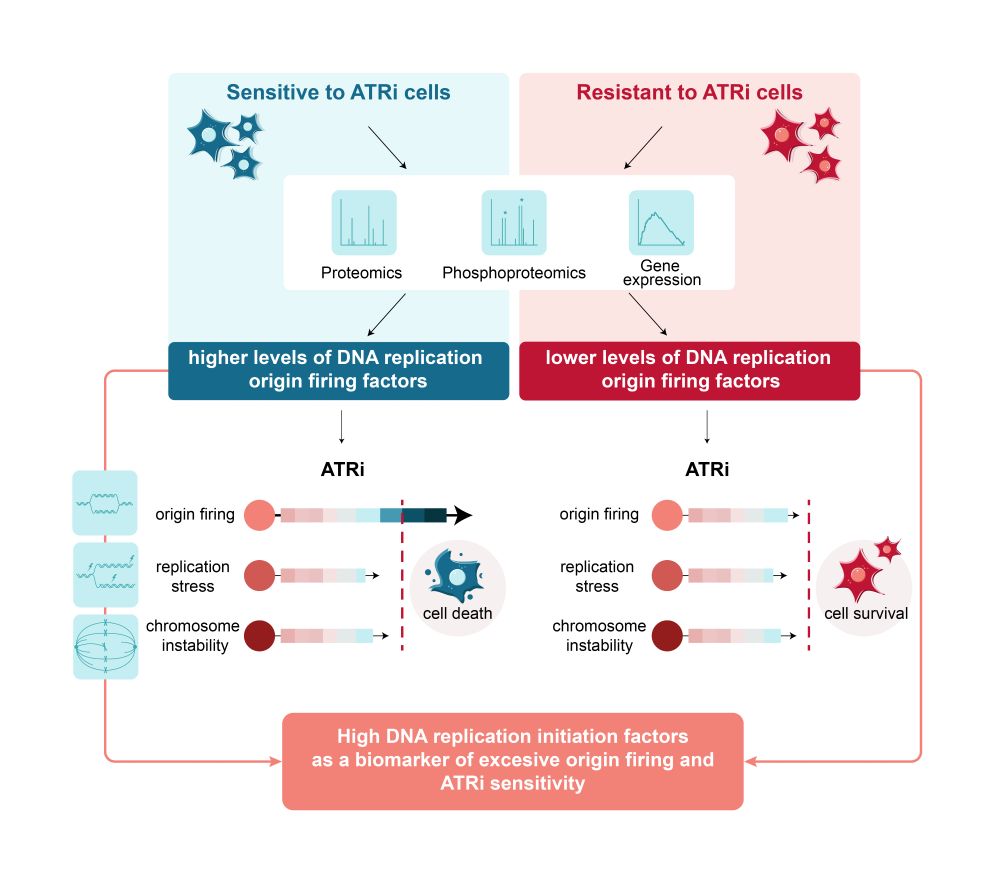
Happy to post our first preprint in a while! www.biorxiv.org/content/10.1.... This was a slightly new direction for us, spearheaded by amazing post-doc @audreylumeau.bsky.social. Short thread to follow 🧬
07.03.2025 16:54 —
👍 17
🔁 7
💬 1
📌 1
Come learn how to apply approaches in evo-eco to cancer biology 🧬 ✨
14.02.2025 18:06 —
👍 6
🔁 5
💬 0
📌 1
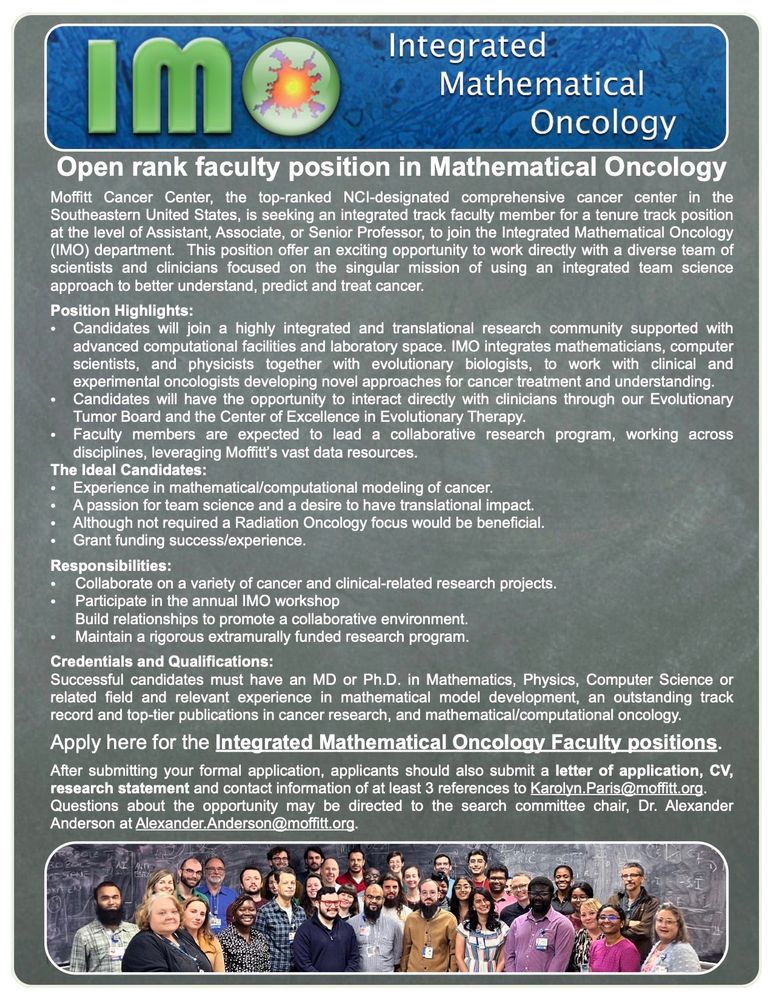
Are you interested in joining the only mathematical oncology department @mathonco.bsky.social in a cancer center @moffittnews.bsky.social in the world? We have an open rank position (assistant/associate/full) available now! Apply here: moffitt-cancer-center-careers.hctsportals.com/jobs/1859278...
14.02.2025 23:15 —
👍 12
🔁 12
💬 1
📌 1

Disease as a mediator of somatic mutation-life history coevolution
Multicellular organisms are confronted not only with mutation in germline, but also mutations emerging in somatic cells. Somatic mutations can lead cancers and possibly contribute to aging phenotypes....
How would you expect somatic mutation rate to correlate with species longevity? Study in 2022 by @atjcagan.bsky.social etal in @nature.com discovered key patterns. Our model predicts some of these and highlights possible mechanisms driving co-evolutionary dynamics. www.biorxiv.org/content/10.1...
07.02.2025 14:56 —
👍 6
🔁 4
💬 1
📌 0
Big thanks and congratulations to my wonderful colleagues @mariaouzounova.bsky.social, Lauriane Muller, Frédérique Fauvet, Anne-pierre Morel & @cyrildegletagne.bsky.social
05.02.2025 13:09 —
👍 2
🔁 0
💬 0
📌 0
Our results however suggest that plasticity fosters prospective phenotypic diversification, which facilitates the emergence of “pre-adapted” cells, that are by chance already able to adapt to a given environmental change that hasn’t occurred yet.
05.02.2025 13:01 —
👍 1
🔁 0
💬 1
📌 0
We could not see evidence of selection of genetic clones harbouring specific CNAs, but our short (3w) timeframe and the limitations of our purely scRNA-seq-based data do not allow us to fully and accurately characterise selection and genomic evolution.
05.02.2025 13:01 —
👍 0
🔁 0
💬 1
📌 0
We used two in vitro TNBC models, in which EMT-driven plasticity was either induced by ZEB1 expression, or spontaneously occurred upon oncogenic transformation. We used single-cell cloning experiments and scRNA-seq data pre and post doxorubicin treatment to investigate phenotype dynamics.
05.02.2025 13:01 —
👍 0
🔁 0
💬 1
📌 0
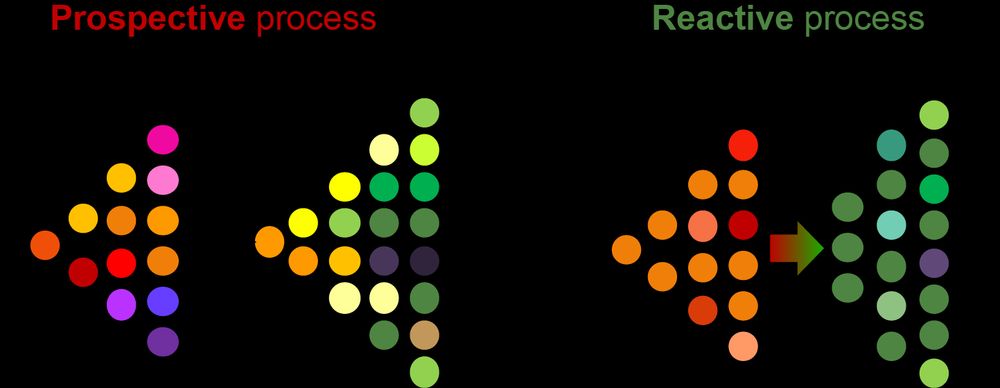
We were interested in the impact of EMT-driven plasticity on the dynamics of phenotypic diversity. And, in particular, whether plasticity-mediated resistance is a prospective or a reactive process.
05.02.2025 13:01 —
👍 0
🔁 0
💬 1
📌 0
For my first Bluesky post (bye bye Elon), I’m happy to share our latest article “EMT-driven plasticity prospectively increases cell-cell variability to promote therapeutic adaptation in breast cancer”, published this week:
cancerci.biomedcentral.com/articles/10....
05.02.2025 13:01 —
👍 6
🔁 0
💬 2
📌 0