The 1990 Democracy movement in Nepal changed my life, and set me on the path to doing human rights work and the Tibetan Freedom Concerts. Hoping freedom comes to Nepal, and the violence stops. And thanks to friends there for giving us first hand accounts of what they are seeing and hearing.
10.09.2025 16:21 —
👍 1
🔁 0
💬 0
📌 0
It was the first time I experienced martial law, the first time I hid in the dark after curfew while soldiers marched past, the first time I had a rifle aimed straight at me...the first time I witnessed people risking everything for the freedoms I was born into.
10.09.2025 16:21 —
👍 0
🔁 0
💬 1
📌 0
Every night, massive protests filled the streets—and every morning, the signs of resistance were scattered across the ground. Some were just torn-out pages from school notebooks, with slogans like “We Want Democracy” scribbled over math homework and vocabulary lists.
10.09.2025 16:21 —
👍 0
🔁 0
💬 1
📌 0
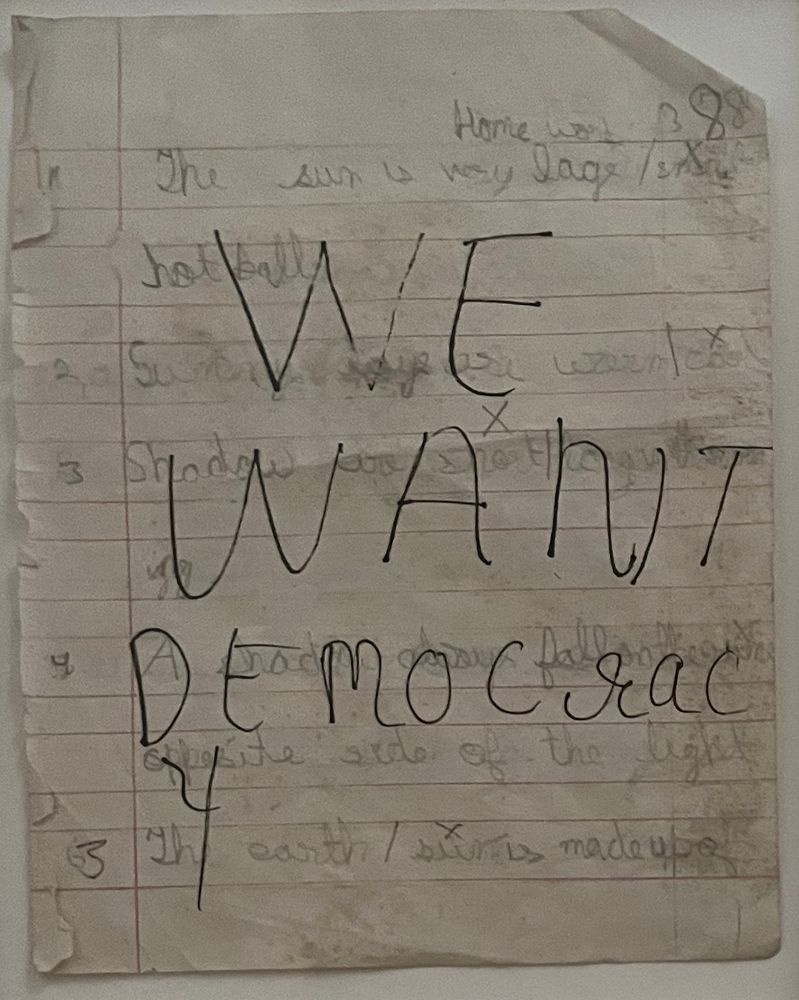
Watching the young people leading protests in Nepal has me thinking about the first time I was there in 1990, when I was 17 yrs old. At that time, Nepal was still ruled by a king, but the people were demanding a constitutional democracy.
10.09.2025 16:21 —
👍 0
🔁 0
💬 1
📌 0
Want to honor him on his birthday? Support the work he’s dedicated his life to by following Tibetan-led organizations like @tibetaction.bsky.social and @sft-international.bsky.social and help amplify their efforts.
#TibetWillBeFree
06.07.2025 11:04 —
👍 1
🔁 0
💬 0
📌 0
I’ve been fortunate to meet him. Adam & I sat with him before the Tibetan Freedom Concerts. Later, when Jon and I were getting married, he offered us a prayer. When we asked for advice, he laughed: “What do I know about marriage? I’m a monk.” Then added the best advice ever: “Not too much emotion.”
06.07.2025 11:04 —
👍 0
🔁 0
💬 1
📌 0

Happy 90th to His Holiness the 14th Dalai Lama.
For over 60 years, he’s led with grace, grit, humility, and humor—guiding Tibetans through exile, stepping down from political power so they could lead themselves, and ensuring China can’t control his reincarnation.
06.07.2025 11:04 —
👍 0
🔁 0
💬 2
📌 0
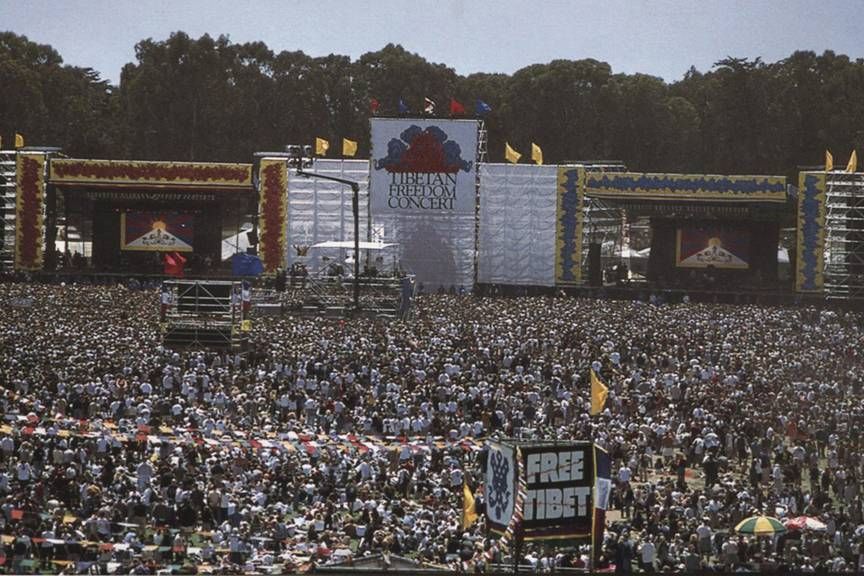
June 15 - 16, 1996. San Francisco. The first Tibetan Freedom Concert brought 100,000 people together—and the world listened. Celebrate by sharing this post with the name of your favorite freedom song. Because songs move people, and people move history. #TibetanFreedomConcert #TibetWillBeFree
15.06.2025 12:31 —
👍 0
🔁 1
💬 0
📌 0
Over the next year, we’ll be sharing the sounds, sights, and sparks that show how culture infuses power into freedom movements—and how we can use that power now for Tibet and beyond.
🎶 Follow along. Share widely. Join us.
#FreedomNeedsASoundtrack #TibetanFreedomConcert #TibetWillBeFree
15.06.2025 12:28 —
👍 1
🔁 0
💬 1
📌 0

We’re back—with the stories that started it all. Follow our next big project here and @freedomneedsasound.bsky.social as we unearth never-before-heard stories, rare photos, and movement ephemera from the fight for a Free Tibet—before, during, and after the first Tibetan Freedom Concert.
15.06.2025 12:28 —
👍 1
🔁 0
💬 1
📌 0
The Sounds of US Artist Nomination Form
Turn data collection into an experience with Typeform. Create beautiful online forms, surveys, quizzes, and so much more. Try it for FREE.
this $10k fellowship just came across my screen for musicians who work at the intersection of community and change. please spread the word. you can nominate yourself and others. due march 10th.
form.typeform.com/to/faKPRLMs
01.03.2025 14:06 —
👍 3
🔁 2
💬 0
📌 0

Protestors holding signs, the most prominent one reads: "The want 1939 Germany. They'll get 1789 France."
FAFO. Let us make it so.
27.02.2025 23:13 —
👍 194
🔁 57
💬 5
📌 3

Speed of Trust
How to seize rapid response moments to transform our narrative environment
Just stumbled on this report from 2022 that I wrote with Tracy Van Slyke and Pop Culture Collaborative about rapid response work in the narrative and cultural strategies field. Thought it might be helpful in this moment of never-ending rapid responding... popcollab.medium.com/speed-of-tru...
24.02.2025 19:24 —
👍 1
🔁 0
💬 0
📌 0
sure wish this wasn’t on mardi gras, but I guess I’ll just have to incorporate some more resistance metaphors into my soldier of love outfits.
20.02.2025 15:30 —
👍 1
🔁 0
💬 0
📌 0
They want us to think we’re alone. We are not. The Resistance is Everywhere.
Welcome to Resist List. Your online hub of the ongoing resistance to the growth of authoritarianism in the United States.
20.02.2025 01:56 —
👍 1102
🔁 337
💬 21
📌 50
“It’s a process that can bring us into the company of people who share our beliefs quite explicitly, but to create movements, rather than clubhouses, we need to engage with people with whom we do not fully identify and may even dislike.” words by Kelly Hayes and Mariame Kaba from…3/4
12.02.2025 15:00 —
👍 1
🔁 0
💬 1
📌 0
“…Organizing on the scale that our struggles demand means finding common ground with a broad spectrum of people, many of whom we would never otherwise interact with, and building a shared practice of politics in the pursuit of more just outcomes… 2/4
12.02.2025 15:00 —
👍 1
🔁 0
💬 1
📌 0
let’s build movements, not clubhouses! “Efforts to build diverse, intergenerational movements will always generate conflict and discomfort. But the desire to shrink groups down to spaces of easy agreement is not conducive to movement building… 1/4
12.02.2025 15:00 —
👍 1
🔁 0
💬 1
📌 0
ps. some of the predictions of what causes the solutions to be possible in “ministry for the future” is already happening.
29.01.2025 16:14 —
👍 0
🔁 0
💬 0
📌 0
engaging in solar punk is a way to strengthen our imagination of positive practical futures and to counter our very well-practiced ability to embrace the doom. perhaps one — or all — of these books helps someone out there feel that a positive and practical future is actually possible.
29.01.2025 14:36 —
👍 1
🔁 0
💬 1
📌 0
solnit’s book is written in another moment of despair & feels like medicine for today. “ministry for the future” & “walkaway” are fiction, reflecting a genre called solar punk, which is like cyber punk, but instead of dystopia it finds solutions to the most pressing problems in the near future.
29.01.2025 14:36 —
👍 1
🔁 0
💬 1
📌 0

these three books have given me a lot of hope, and hope is what we are going to need to cultivate and share in the coming weeks and months and years…(more on why below.)
29.01.2025 14:36 —
👍 1
🔁 0
💬 1
📌 0
Homes as Sanctuaries: Audience and Storytelling Insights from YouTube | PolicyLink
Excited to share a cultural audit on housing, conducted with Laura Hughes from PolicyLink and Harmony Labs, where we explored storytelling opportunities on platforms like YouTube to shift the narrative around housing. Check out the full report here: www.policylink.org/resources-to...
02.12.2024 19:15 —
👍 1
🔁 0
💬 1
📌 0