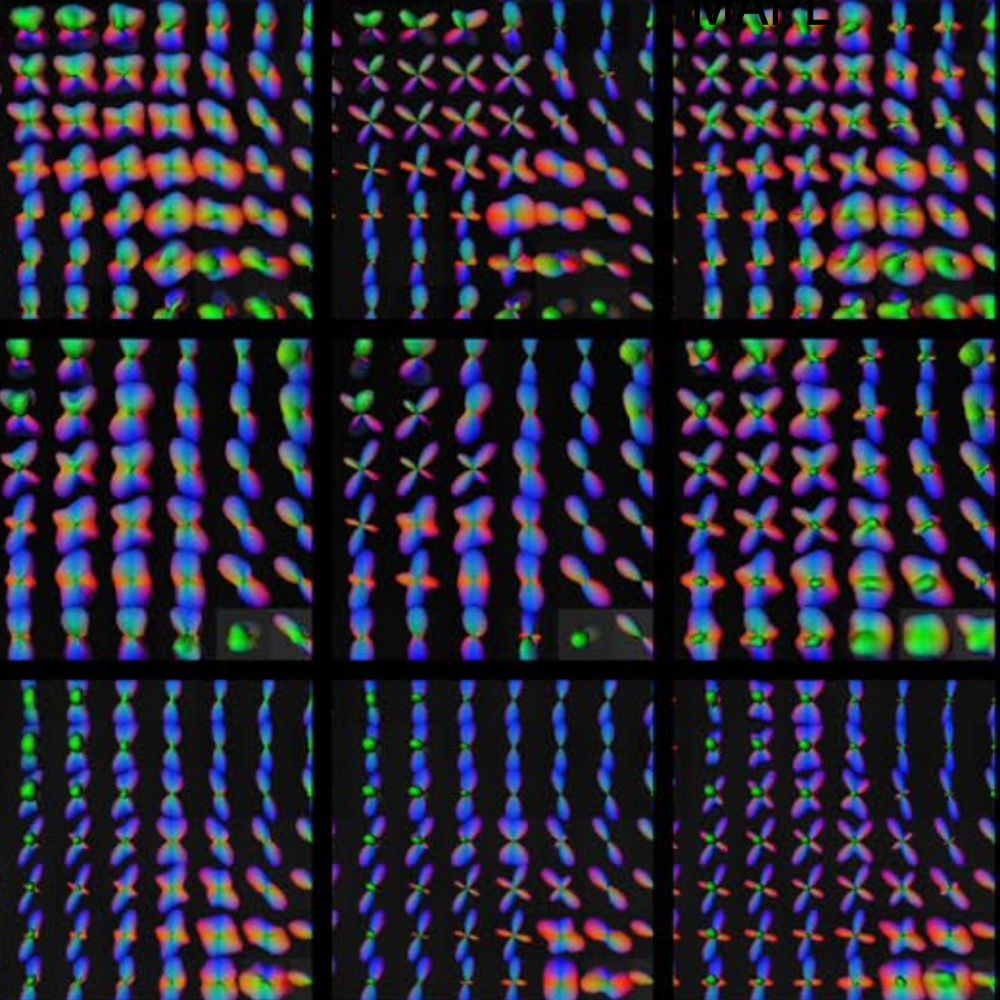
🚨Thrilled to share I am able to hire someone (PhD preferred) with coding expertise to work on our HAPPE software for EEG! Knowledge of Matlab, Python, and EEG signal processing required. Enthusiasm for teaching/mentoring, collaboration, and developmental science preferred!
29.01.2026 02:00 — 👍 46 🔁 40 💬 3 📌 1
Reproducible Brain Charts
The official website for the Reproducible Brain Charts project.
This work would also not have been possible without use of the @childmindinstitute.bsky.social Healthy Brain Network Study, as well as the Reproducible Brain Charts Project (reprobrainchart.github.io). Thank you to the teams involved in data collection, release, and preprocessing!
14.01.2026 18:59 — 👍 2 🔁 0 💬 0 📌 0
Huge thanks to the scientific team that made this study possible—the amazing @dylanggee.bsky.social, Taylor Keding, Allison Drew, and Emilie Ma, as well as wonderful collaborators @goliashf.bsky.social, @cieslakmatt.bsky.social, and @ted-satterthwaite.bsky.social. 🎊
14.01.2026 18:59 — 👍 6 🔁 0 💬 1 📌 0
Together, these findings suggest key roles for neural circuits related to stress regulation and memory in adapting to support optimal functioning after adversity exposure, and highlight the concordance of neural structure and function as an important indicator of individual risk and resilience! 🧠🌱
14.01.2026 18:59 — 👍 3 🔁 0 💬 1 📌 0

A figure showing hippocampal-limbic circuit connectivity, a faceted scatter plot, and a Johnson-Neyman plot.
Exploratory analyses found that hippocampal-limbic network SFC also moderated the link between adversity and internalizing symptoms, but in the OPPOSITE direction of amygdala-vmPFC SFC—that is, the association between adversity and symptoms was weaker for youth with LOWER hippocampal-limbic SFC.
14.01.2026 18:59 — 👍 2 🔁 0 💬 1 📌 0
We found that the pattern of increased SFC was specific to the amygdala-vmPFC circuit, and also observed a significant effect of adversity in the hippocampal-limbic network circuit—specifically, adversity exposure was negatively associated with hippocampal-limbic SFC across development.
14.01.2026 18:59 — 👍 3 🔁 0 💬 1 📌 0

A figure showing SFC-age associations across different circuits.
Next, we wanted to see if this pattern was specific to the amygdala-vmPFC circuit. To do this, we examined whether adversity moderated developmental change in SFC between the hippocampus/amygdala and the seven major functional networks.
14.01.2026 18:59 — 👍 2 🔁 0 💬 1 📌 0

A figure shoeing circuit connectivity, a faceted scatterplot, and a Johnson-Neyman plot.
Further, we found that stronger amgydala-vmPFC SFC buffered the association between adversity exposure and internalizing symptoms, such that the association between adversity exposure and internalizing symptoms was weaker for youth with stronger amygdala-vmPFC SFC.
14.01.2026 18:59 — 👍 2 🔁 0 💬 1 📌 0

A figure showing faceted scatterplots
We found that amygdala-vmPFC SFC differed among youth with exposure to high levels of adversity, such that amygdala-vmPFC SFC increased with age, in contrast to youth with lower levels of adversity exposure who did not show age-related change in this circuit.
14.01.2026 18:59 — 👍 3 🔁 0 💬 1 📌 0

A methods diagram showing how measures were computed and analyzed.
Using the @childmindinstitute.bsky.social Healthy Brain Network sample, we examined how subcortical-cortical SFC was associated with adversity exposure across development, and whether SFC would moderate associations between adversity and clinical symptoms. 💭
14.01.2026 18:59 — 👍 2 🔁 0 💬 1 📌 0
Understanding how adversity exposure alters neurodevelopment is important for elucidating the neural underpinnings of risk for psychopathology. Structure-function coupling (SFC) indexes the correspondence between structural and functional connectomes, and is sensitive to developmental plasticity 🧠📈
14.01.2026 18:59 — 👍 5 🔁 0 💬 1 📌 0
Excited to share a new preprint that examines how adversity exposure across development is associated with subcortical-cortical structure-function coupling and youth mental health! 🧠
Thread below: 🧵⬇
14.01.2026 18:59 — 👍 23 🔁 8 💬 1 📌 3
... Jason Haberman, SadieZacharek, H. Hodges, Camila Caballero, Gillian Gold, Audrey Huang, Ashley Talton, and of course superstar mentor and scientist Dylan Gee! (8/8)
14.11.2023 19:53 — 👍 0 🔁 0 💬 0 📌 0
This was a huge team effort that would not have been possible without contributions from many folks over the years. Beyond grateful to all collaborators on this project:
Taylor Keding, Emily Cohodes, Sarah McCauley, Jasmyne Pierre, Paola Odriozola, Sahana Kribakaran... (7/8)
14.11.2023 19:53 — 👍 0 🔁 0 💬 1 📌 0
Our findings also highlight middle childhood as a period during which adversity may confer heightened risk for future mental health problems. Research into developmentally-informed interventions for youth during middle childhood may aid in offsetting adversity-related risk (6/8)
14.11.2023 19:52 — 👍 0 🔁 0 💬 1 📌 0
Together, these findings suggest that adversity exposure in middle childhood may potentiate systematic experience-dependent changes in white matter integrity throughout the brain, that differ by circuit function and intersect with ongoing circuit maturation (5/8)
14.11.2023 19:52 — 👍 0 🔁 0 💬 1 📌 0
Further, latent patterns of white matter tract integrity (indexed using quantitative anisotropy) linked with middle childhood adversity exposure were associated with trauma-related symptoms (4/8)
14.11.2023 19:51 — 👍 0 🔁 0 💬 1 📌 0
That is, our results suggest that middle childhood adversity exposure may be simultaneously linked with higher integrity in sensorimotor tracts (such as the corticospinal tract), and lower integrity in cortico-cortical tracts (such as the superior longitudinal fasciculus) (3/8)
14.11.2023 19:51 — 👍 0 🔁 0 💬 1 📌 0
Using a multivariate approach, we identified a systematic pattern whereby adversity exposure during middle childhood was differentially linked with white matter tract integrity according to whether the tract supported sensorimotor or cortico-cortical communication (2/8)
14.11.2023 19:51 — 👍 0 🔁 0 💬 1 📌 0

Multivariate links between the developmental timing of adversity exposure and white matter tract int...
bioRxiv - the preprint server for biology, operated by Cold Spring Harbor Laboratory, a research and educational institution
‼️ Excited to share a new preprint! Using a novel measure of adversity exposure (the DISTAL), we characterized links between the developmental timing of adversity, integrity of brain-wide white matter tracts, and mental health symptoms bit.ly/46e083V (1/8)
14.11.2023 19:50 — 👍 10 🔁 0 💬 1 📌 0
Please encourage any psych, cog, and/or neuroscience undergrads wanting an intensive, immersive, supportive, and *paid* summer research experience to apply! WashU’s ENDURE program is world class, and my lab would be delighted to support a mentored research project 🙂
endure.wustl.edu/apply/
03.11.2023 03:09 — 👍 40 🔁 44 💬 1 📌 1

That's a wrap! Statement feedback has been returned to applicants! Check spam/junk folders and email applicant-support@asfp.io if you didn't get an email but believe you should have. Graphic reads: "Check your email! Statement feedback has been emailed to applicants." Graphic shows a woman carrying a large envelope and shows ASFP logo.
💫 That's a wrap! 💫
Statement feedback has been returned to applicants!
Check spam/junk folders and email applicant-support@asfp.io if you didn't get an email but believe you should have.
03.11.2023 15:44 — 👍 8 🔁 4 💬 0 📌 0
Neuro PhD Student @UCSD | Jernigan & Dale Lab | Voytek Lab | BRIDGE Lab | Music Therapist, MT-BC | UCSD Colors of the Brain | UCSD Neuro Outreach | Stories of WiN | #DisabledinSTEM | #BiInSci
neuroscience phd candidate @ stanford.
knight-hennessy, nsf graduate research fellow, quad fellow, NASEM ford fellow. formerly yale, dzne_en, and umn neuroscience.
@Columbia '25 | Neuroscience & Clinical Psychology
Curious about stress, brain development, and mental health outcomes in youth
Currently @candylab-ihn.bsky.social
Research Assistant @Yale @Stanford
Postdoctoral Researcher at Vanderbilt University interested in how social environments and school policy impact youth’s mental health, peer relationships, and human capital accumulation
Assistant Professor, Clinical Psychologist, Department of Psychiatry, University of Colorado Anschutz Medical Campus
Post-doc at the MPI-cbs Leipzig
PhD student @PennStateBBH | interoception, affective science, adolescence, & brain dev | formerly CSUN
systems neuroscientist | stability vs. plasticity
neuro postdoc in the Turrigiano Lab, Brandeis University | Boston, MA
Our scientists are unlocking the secrets of the developing brain and speeding the pace of discovery through open science and data-sharing initiatives.
Independent nonprofit dedicated to transforming the lives of children & families struggling with mental health & learning disorders.
CIHR Postdoctoral fellow at Penn | Previously at McGill
Director of Informatics at PennLINC. Diffusion MRI, open science, computation and statistics
neuroscientist, psychiatrist, writer
optogenetics.org
karldeisseroth.org
https://www.amazon.com/Projections-Story-Emotions-Karl-Deisseroth/dp/1984853694
Professor of Radiology at University of Calgary; MRI, neuroimaging, brain development, learning, behaviour, mental health, prenatal environment
clinical intern @ Harvard/Mclean | clinical & dev psych PhD @ Pitt | childhood adversity, prosociality, & antisociality | cat mom x2, menu prowler | she/her 🇱🇧
www.isabellakahhale.com
Postdoc at @PromentaC | 🧠 + puberty + adolescent mental health | 🇮🇪🇳🇴 |
Developmental health psychologist
Associate professor at the University of Denver
Director of the DOOM Lab
Academic mama
JenaleeDoom.com
he/him | Clinical psych PhD @Yale| Childhood stress & anxiety disorders | Affective neuroscience | Memory | Structural inequity & early development | NSF-GRFP fellow