Thanks to the Majoris Lab, TPWD and the McCracken Lab for photos and videos!!! #TAMUCC
27.02.2026 17:39 — 👍 0 🔁 0 💬 0 📌 0Thanks to the Majoris Lab, TPWD and the McCracken Lab for photos and videos!!! #TAMUCC
27.02.2026 17:39 — 👍 0 🔁 0 💬 0 📌 0


Texas examples:
• Regal Damselfish (Neopomacentrus cyanomos) — non-native, potentially invasive
• Red Lionfish (Pterois volitans) — invasive
• Tilapia — invasive
• Giant Salvinia (Salvinia molesta) — invasive
• Water Hyacinth (Pontederia crassipes) — invasive
What is an invasive species?
An invasive species is a non-native organism that causes (or is likely to cause) economic, environmental, or human health harm.
Not all non-native species are invasive! The key difference is measurable harm.


Although International Day of Women and Girls in Science was last week, we want to take a moment to recognize the outstanding women in our lab 🔬🥼🧪
Thank you for the impact you make ✨
#WomenInSTEM #TAMUCC #internationalwomenandgirlsinscienceday #research


This week our team got out into the field to download our Aransas Bay acoustic receiver array. This data will be used by both PhD student Jaz and MS student Katie for their projects tracking the movement of flounder, sharks, and rays. Thanks to TPWD for their support! #TAMUCC
13.02.2026 18:47 — 👍 1 🔁 0 💬 0 📌 0


 05.02.2026 19:58 —
👍 0
🔁 0
💬 0
📌 0
05.02.2026 19:58 —
👍 0
🔁 0
💬 0
📌 0


To complete our research along the Texas Coast, these are helpful skills for collecting data, analyzing it, and reporting it to the public! We have a variety of projects that require different jobs from us, so these are just a few of the ways we do that!🎣🦈🤿 #TAMUCC
05.02.2026 19:58 — 👍 1 🔁 0 💬 1 📌 0#tamucc #fishresearch #dietanalysis
28.01.2026 21:09 — 👍 0 🔁 0 💬 0 📌 0


 28.01.2026 21:08 —
👍 0
🔁 0
💬 1
📌 0
28.01.2026 21:08 —
👍 0
🔁 0
💬 1
📌 0


Understanding marine predators’ diets helps reveal their foraging, trophic roles, niches, and habitat use. Researchers use various methods—none are perfect, but all give valuable insights 🧪🔬
28.01.2026 21:08 — 👍 0 🔁 0 💬 1 📌 0
For more information on how to participate, volunteer opportunities, or program guidelines, please contact your local Texas Parks and Wildlife Department Coastal Fisheries office @texasparkswildlife
#TAMUCC #STEM #Research #Fieldwork #volunteer
📍 Drop-Off Locations
Aransas Bay
• Goose Island State Park Boat Ramp
Corpus Christi Bay
• South Conn Brown Harbor Public Boat Ramp
• Ransom Channel Public Ramp
Upper Laguna Madre
• Kaufer–Hubert Memorial Boat Ramp

2026 Abandoned Crab Trap Removal Program 🦀♻️
February 20 – March 1, 2026
The Annual Abandoned Crab Trap Removal Program helps reduce ghost fishing, improve water quality, and protect coastal habitats by removing lost or abandoned crab traps from Texas bays.


The Movement Ecology Lab kicked off 2026 at the TCAFS meeting in Galveston, TX!
Cali & Jaz presented posters; Katie, Kimber & Kyle gave oral talks. Congrats to Yamilla & Kimber (Harry Tennison Student Scholarship) and Katie (TCAFS Student Travel Award)! 👏 #TAMUCC

Friendly reminder as flounder season in Texas is open again: if you catch a tagged fish, please report 😊 #flounder #texas #tamucc #fishresearch
15.12.2025 15:23 — 👍 0 🔁 0 💬 0 📌 0@cerfscience.bsky.social @amfisheriessoc.bsky.social
10.12.2025 13:44 — 👍 0 🔁 0 💬 0 📌 0
Call for papers! Estuaries and Coasts special collection on estuarine connectivity & management 🌊📄
🗓 Due June 1, 2026


Biofouling: the ocean’s way of dirtying up our gear 🌊
Before deploying our acoustic receivers, we wrap parts with electrical tape to make it easier to clean off barnacles and algae later. A small step that saves time, protects equipment, and keeps our long-term monitoring running smoothly #TAMUCC


We’re excited to welcome three undergraduate students joining the Movement Ecology Lab this semester to assist MS student Kyle with his shark depredation research. Welcome Macie, Grace, and Mason! #tamucc
26.11.2025 17:54 — 👍 0 🔁 0 💬 0 📌 0


#nationalscientificdivingday #TAMUCC #scuba #research
22.11.2025 16:58 — 👍 0 🔁 0 💬 0 📌 0Happy National Scientific Diving Day! Our lab’s incredible divers use their AAUS skills to conduct underwater field work like catching invasive lionfish and out-planting receivers! 🤿
22.11.2025 16:58 — 👍 0 🔁 0 💬 1 📌 0


We had a great time at the annual CCA Poco Rojo Kids Fishing Tournament this past Saturday! Thank you to @cca_texas for allowing us to share our research with the community! 🎣 #TAMUCC #outreach
19.11.2025 17:06 — 👍 1 🔁 0 💬 0 📌 0


We study movement and trophic ecology of mobile fishes, shark depredation, and estuarine habitats using tagging, biologging, video, and stable isotopes 🔬🎣🔊
12.11.2025 19:34 — 👍 1 🔁 0 💬 0 📌 0
We are the Movement Ecology Lab at Texas A&M University-Corpus Christi, providing evidence-based solutions through stakeholder collaboration and training future researchers 🧪🐟🦈 #tamucc
12.11.2025 19:34 — 👍 1 🔁 0 💬 1 📌 0
We study movement and trophic ecology of mobile fishes, shark depredation, and estuarine habitats using tagging, biologging, video, and stable isotopes 🎣 🔊 🧪
12.11.2025 19:32 — 👍 0 🔁 0 💬 0 📌 0
We study movement and trophic ecology of mobile fishes, shark depredation, and estuarine habitats using tagging, biologging, video, and stable isotopes 🔊🧪🎥
12.11.2025 19:30 — 👍 0 🔁 0 💬 0 📌 0

Texas Southern Flounder Closure: November 1 – December 14 🚫🎣
During this period, no southern flounder may be harvested by any method, including gigging or rod and reel.

Happy Halloween! Did you know that while fish have skeletons of bones, the skeletons of sharks are made entirely of cartilage, the same material that makes up our noses and ears! This lighter and flexible material allows sharks to be more energy-efficient and agile swimmers 🦈 #TAMUCC
31.10.2025 14:36 — 👍 1 🔁 0 💬 0 📌 0

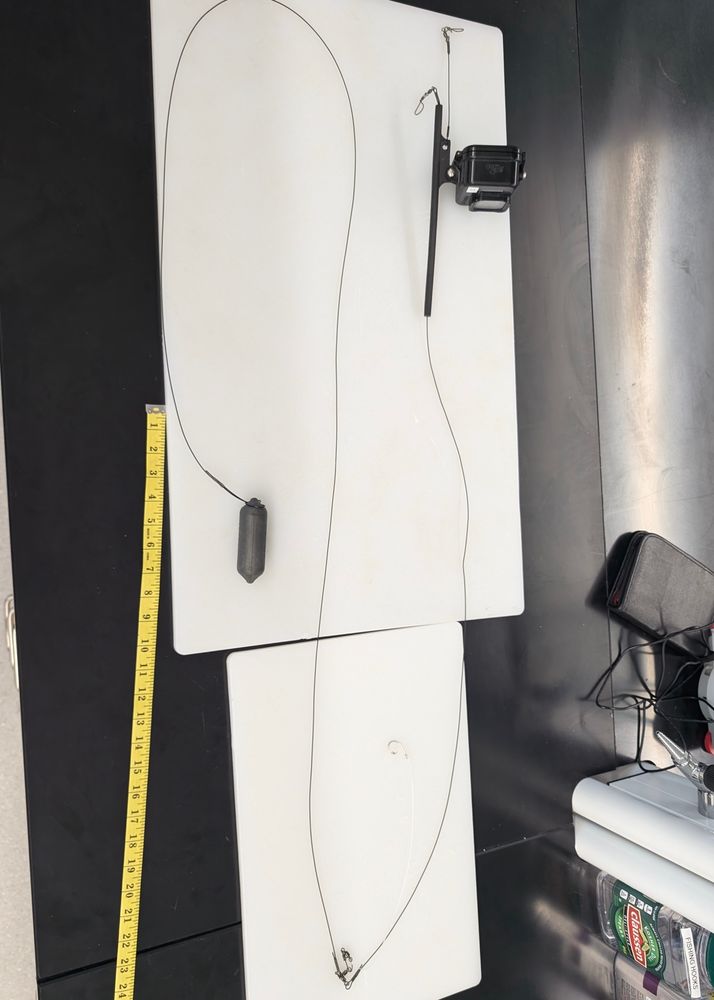

Ever wonder what tools we use to study movement ecology? Acoustic transmitters (internal tags to track fish) and receivers (underwater listening device), VR100 and hydrophone, salinity loggers, GoPros, and microscopes are some tools that help us uncover the ecology of fish 🐟🔊🔬 #TAMUCC
15.10.2025 21:07 — 👍 2 🔁 0 💬 0 📌 0


Researching fish isn't always about being on the water. Lab work can be just as exciting! PhD candidate Yamilla Samara is using compound-specific stable isotope analysis of amino acids of carbon to study red drum, spotted seatrout, sheepshead resource use at estuarine habitats 🦪🐟🌱 #TAMUCC
08.10.2025 15:12 — 👍 1 🔁 0 💬 0 📌 0
