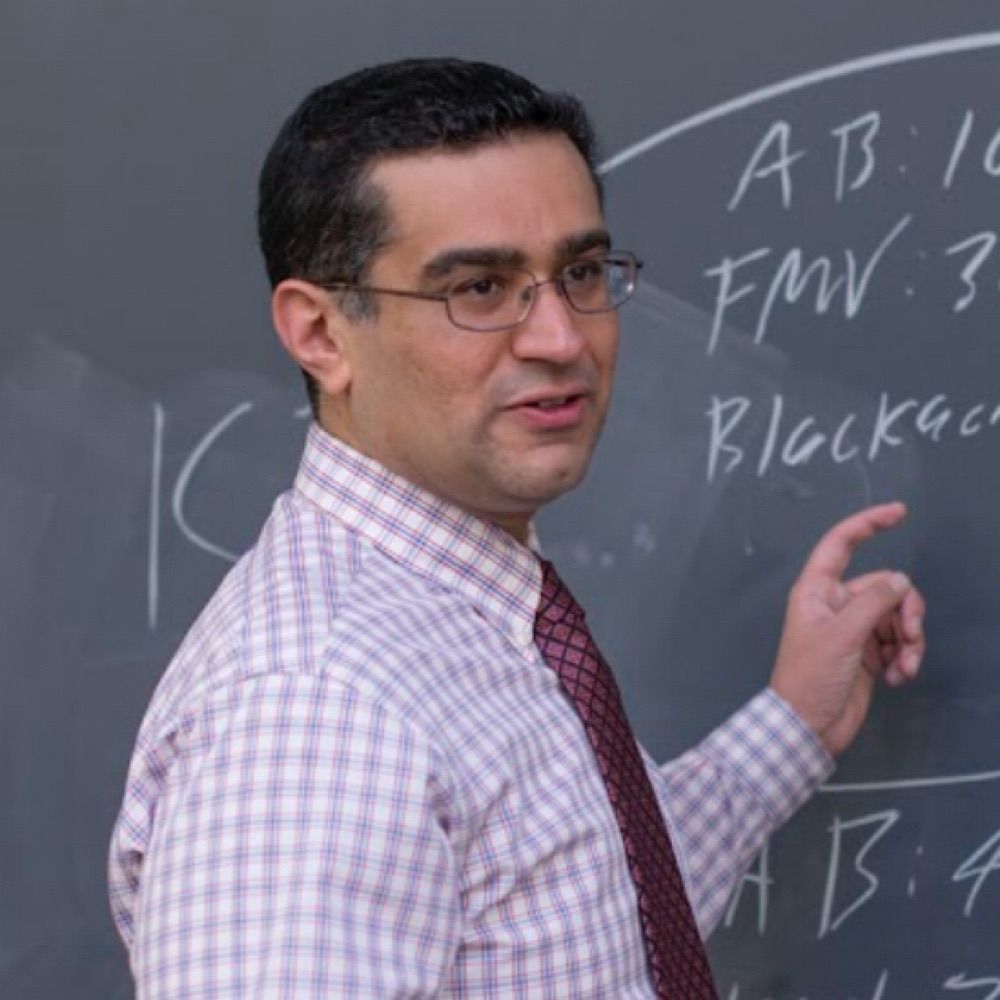
Huge congrats, @evidenceprof.bsky.social Terrific paper!!! 🎉🎉🎉
20.02.2026 18:00 — 👍 1 🔁 0 💬 0 📌 0
Congratulations, @benmcjunkin.bsky.social ! Terrific news!!! 🎉🎉🎉
16.02.2026 23:20 — 👍 1 🔁 0 💬 0 📌 0

So excited to announce that my latest article, “Reckless Accomplices,” will be published by Northwestern University Law Review!
The article critiques a trend of expanding criminal causation and instead calls for a new statutory form of accomplice liability.
SSRN: papers.ssrn.com/sol3/papers....
16.02.2026 16:50 — 👍 36 🔁 10 💬 3 📌 0
So glad to see that this terrific paper has found such a wonderful home! Congrats, @justinnyls.bsky.social ! 🎉
16.02.2026 01:29 — 👍 2 🔁 0 💬 1 📌 0

My paper, Habeas and the 1948 Judicial Code, is forthcoming in the Stanford Law Review (@stanlrev.bsky.social).
I argue that the 1948 Judicial Code, not the 1867 Habeas Corpus Act, should be the statutory focus for inquiry into the scope of habeas review.
papers.ssrn.com/sol3/papers....
09.02.2026 13:18 — 👍 96 🔁 20 💬 4 📌 2
Such a terrific piece! I thoroughly enjoyed reading it! Congrats, @itayravid.bsky.social ! 🎉🎉
03.02.2026 23:54 — 👍 1 🔁 0 💬 1 📌 0
Veteran Disability Hierarchies
American disability law purports to operate on principles of equality, yet it consistently distinguishes between worthy and unworthy disabled individuals based
🚨🚨🚨New article with @jennoliva.bsky.social, forthcoming in @uclalawreview.bsky.social Discourse: Veteran Disability Hierarchies. Now on @ssrn.bsky.social! On disability as mitigation in veterans’ treatment courts and the politics of service-connected compensation: papers.ssrn.com/sol3/papers....
26.01.2026 22:31 — 👍 20 🔁 12 💬 0 📌 3
Huge congrats, @yeargain.bsky.social ! Looking forward to reading! 🎉🎉🎉
16.01.2026 19:41 — 👍 1 🔁 0 💬 0 📌 0

Breaking my partial social-media hiatus w/3 new papers:
Missing Children Discrimination (Wis. L. Rev 2025(4)) w/ Tanisha Brown— shorturl.at/5rl86 abstract 👇)
Anti-Holistic Algorithms (forth. Vanderbilt L. Rev)
(Re)Individualizing Criminal Law (forth. B.C. L. Rev)
More soon on SSRN—comments welcome!
26.11.2025 22:42 — 👍 13 🔁 4 💬 1 📌 0

Opinion | New Jersey's ban on 'shaken baby syndrome' claims in court points up a larger problem in the legal system
John Pfaff: The state Supreme Court ruling underscores how thin empirical support is for much of the forensic evidence used in criminal cases.
I have a new piece up at @msnownews.bsky.social, on the recent NJ supreme court case banning shaking baby syndrome evidence, using it to discuss both the generally shoddy nature of all forensic evidence but also the legal profession's on-going refusal to confront our current data-driven world.
25.11.2025 14:38 — 👍 81 🔁 23 💬 6 📌 2
Congrats! Amazing news, Brian. So thrilled for you! ! 🎉🎉🎉
11.11.2025 00:37 — 👍 2 🔁 0 💬 0 📌 0
And thank YOU for your continuous support and encouragement! ❤️
30.10.2025 19:18 — 👍 1 🔁 0 💬 0 📌 0
Such a well-deserved recognition of Professor @maybell.bsky.social ‘s groundbreaking work! Huge congratulations, Dean Romero! 🎉🎉
30.10.2025 16:14 — 👍 8 🔁 2 💬 1 📌 0

Third-Party Accommodations, Doron Dorfman
Abstract
Does disability rights law impose an obligation on employers, schools, and other places of public accommodation to control the behavior of coworkers, students, or other third parties to accommodate an individual with disabilities? This Article examines that unexplored legal question and shows that the law frequently fails to protect people with disabilities from the choices and behaviors of third parties. Judges often consider these major barriers to access beyond the reach of the Americans with Disabilities Act’s reasonable accommodation mandate. This Article argues that this problem results from improperly imposing the privity paradigm, a doctrine that limits the inquiry about the reasonableness of an accommodation relative to the relationship between the first party (the disabled individual) and the second party (the employer or other entity covered by the Americans with Disabilities Act). Using disability studies, legal theory, and political economy analysis, this Article shows how a narrow interpretation of the reasonable accommodation mandate has failed to adapt to our modern understanding of disability as a complex interaction between the impairment and the social environment. To address the issue, this Article introduces a new theory of third-party accommodations, which would require others to alter or cease behaviors to accommodate an individual with disabilities. This Article then suggests a normative framework that courts can use to analyze cases involving requests for third-party accommodations, including the factors that judges should balance to determine the reasonableness of a request. In highlighting the need to move beyond a constricted interpretation of reasonable accommodation, this Article imagines a new horizon for disability justice.
I am just thrilled to have my new article Third-Party Accommodations officially out @michlawreview.bsky.social! The MLR editors were a pleasure to work with and sharing the same volume as @kovarsky.bsky.social & Daniel Fryer is the cherry on top. Read it: repository.law.umich.edu/mlr/vol124/i...
28.10.2025 18:43 — 👍 61 🔁 17 💬 1 📌 1

Professor @buchhandler.bsky.social spoke with @pennlive.com about the evidentiary challenges in prosecuting rape cases. She explained that PA law limits the use of other sexual assault evidence, though it can sometimes be admitted to show intent, plan, or lack of mistake. tinyurl.com/2jcrdw9v
20.10.2025 20:56 — 👍 1 🔁 1 💬 0 📌 0
Legal Moralism in Disguise in Child Custody Cases
<p>Conventional wisdom is that family law has moved away from morality-based decision-making, with moral questions left more to individuals than to the courts.
"Legal Moralism in Disguise in Child Custody Cases" is forthcoming in Family Law Quarterly (FLQ). Morality hasn’t disappeared from family courts but has taken on new rhetorical forms with courts judging parents’ choices on moral grounds w/o evidence of harm to child.
papers.ssrn.com/sol3/papers....
29.09.2025 16:31 — 👍 1 🔁 1 💬 0 📌 0

A poster for the talk: The Limits of the ADA: Exploring the Duty to Accommodate in Law & Society by Doron Dorfman, Thursday, Sep. 25 at 5 pm at the Riggs Library - Healy Hall. ASL interpreted. A photo of a man with dark hair and glasses smiling alongside a photo of signing the ADA into law.
Thrilled to be giving a talk on The Limits of the ADA’s Duty to Accommodate @oneillinstitute.bsky.social (@georgetownlaw.bsky.social) & the Georgetown Program in Disability Studies tomorrow (Sep. 25) at 5 pm. If you’re around, please join us. Details below 👇
24.09.2025 14:19 — 👍 29 🔁 10 💬 0 📌 1
Annual Colloquium on Scholarship in Employment and Labor Law (COSELL) - Seton Hall Law School
Thrilled to be hosting the 20th Annual Colloquium on Scholarship in Labor & Employment Law (COSELL) at Seton Hall Law tomorrow & on Saturday (Sep. 19-20). Over 70 legal scholars come to discuss cutting edge work on work! Check out the program: law.shu.edu/events/annua...
19.09.2025 00:31 — 👍 9 🔁 4 💬 0 📌 2
Thank you @lsolum.bsky.social for recommending my new piece, Coercive Settlements, recently published with the George Washington Law Review! @templelaw.bsky.social
08.09.2025 12:28 — 👍 11 🔁 5 💬 1 📌 0
11 years after the horrific murder of Professor Dan Markel, a brilliant criminal law scholar and a wonderful human being, the woman who orchestrated his killing is finally behind bars. Justice is served. RIP Danny.
05.09.2025 01:03 — 👍 5 🔁 2 💬 0 📌 0

An add for the chemical sensitivity podcast: light green background with a photo of a middle aged man with dark hair with glasses. Stating Professor Doron Dorfman MCS and Third-Party Accommodations.
Thrilled to have my work on Third-Party Accommodations (forth. @michlawreview.bsky.social) featured on the Chemical Sensitivity Podcast (@podcastingmcs.bsky.social) that amplifies voices of people with Multiple Chemical Sensitivity (MCS) & research about the illness. Take a listen: shorturl.at/RbT4e
25.08.2025 11:16 — 👍 22 🔁 10 💬 0 📌 0

A calico cat next to a book called Regulating the Body
Autonomy, Control, and the Broken Promise of Equality in American Law Edited by Austin Sarat and Susanna Lee .The cover is black with a statue of lady justice with mask and gloves.

A calico cat next to a book called Regulating the Body
Autonomy, Control, and the Broken Promise of Equality in American Law Edited by Austin Sarat and Susanna Lee .The cover is dark grey with a statue of lady justice with mask and gloves.

The table of content for the book Regulating the Body Autonomy, Control, and the Broken Promise of Equality in American Law Edited by Austin Sarat and Susanna Lee .

Abstract: Wearing face masks has been an important strategy to mitigate the spread of COVID-19. Yet this practice has also been highly politicized since the beginning of the pandemic. In this chapter, I explore how shaming tactics—the stigmatization and public disgrace of the norm violator—have been used to regulate masking. This strategy highlights how mask policies in the U.S. have depended on private enforcement throughout all stages of the pandemic; that is, enforcement by laypeople rather than public entities. I trace this phenomenon through early, top-down mask mandates, to the present moment, after universal mask mandates have been lifted, and masking has shifted to become an individualized disability accommodation. While paying close attention to how norms about mask wearing intersect with gender and race, I highlight dichotomous approaches to private, ideologically-driven, enforcement of public health policy: as the Right has doubled down on shaming people for wearing masks, people in the disability community have reacted by enforcing mask wearing in public spaces and holding people who they see as members of the in-group (activists and allies) accountable. This chapter thus contributes to the legal debate on shaming as a law enforcement tactic, as well as to the understanding of how disability law plays out in everyday life.
Thrilled that my book chapter, "Mask Shaming: On Private Enforcement and Disability Politics," in print as part of the important @nyupress.bsky.social book Regulating the Body: Autonomy, Control, and the Broken Promise of Equality in American Law, ed. by the legendary Austin Sarat & Susanna Lee! 1/3
18.08.2025 21:44 — 👍 45 🔁 11 💬 3 📌 3
It’s sooooooo good, y’all! If I were a law review editor I’d really want to snap this up for publication.
16.08.2025 15:09 — 👍 13 🔁 4 💬 2 📌 0
תודה רבה! אבל אני לא מבזבזת דקה מיותרת מהחופשה שלי בישראל על זה. אני על המטוס ביום שלישי!✈️✈️✈️הזה.
20.07.2025 00:44 — 👍 0 🔁 0 💬 0 📌 0
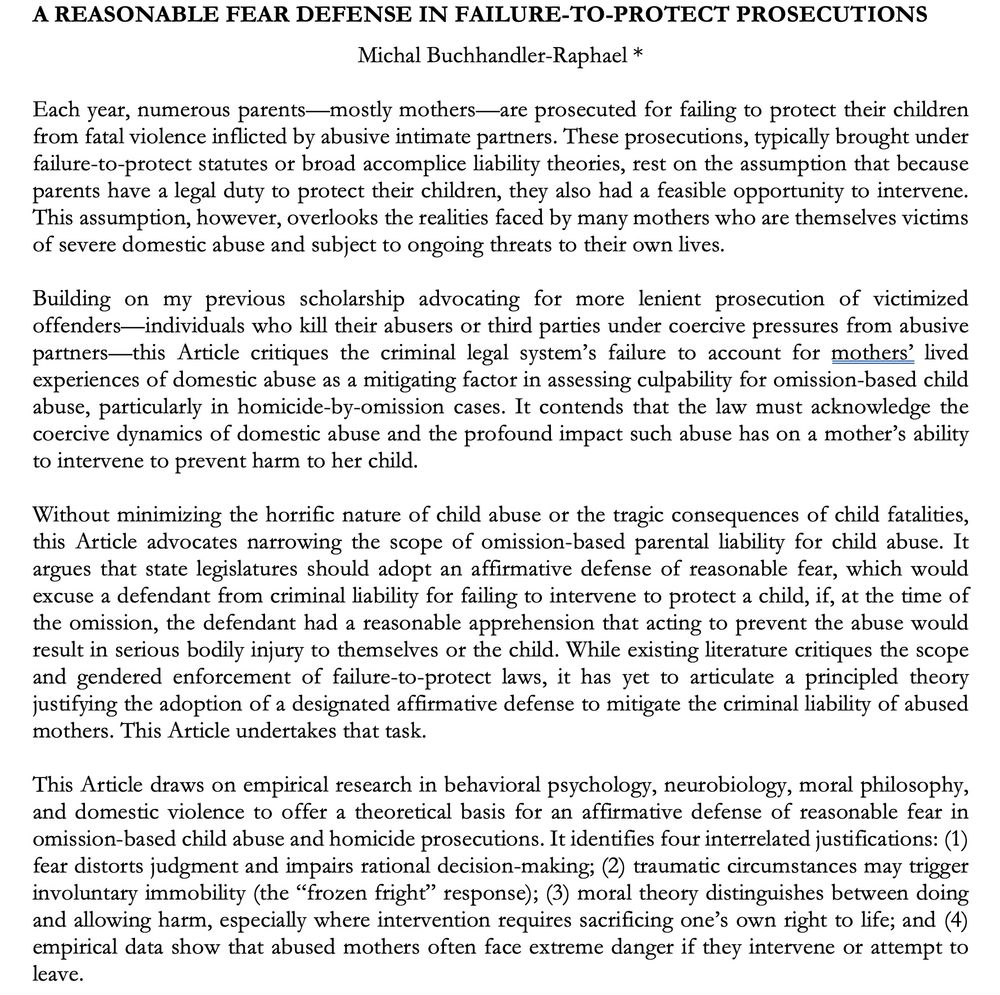
Had a terrific time presenting my new project "A Reasonable Fear Defense in Failure-to-Protect prosecutions" at #CrimFest. I advocate for legislatures to adopt an affirmative defense for defendants charged with homicide-by-omission when they reasonably feared escalation of harm if they intervened.
16.07.2025 20:50 — 👍 4 🔁 1 💬 0 📌 0
It was so great to see you!!!
16.07.2025 00:36 — 👍 1 🔁 0 💬 0 📌 0
Second that!!! It was so great to see you, Ben!
16.07.2025 00:35 — 👍 2 🔁 0 💬 0 📌 0
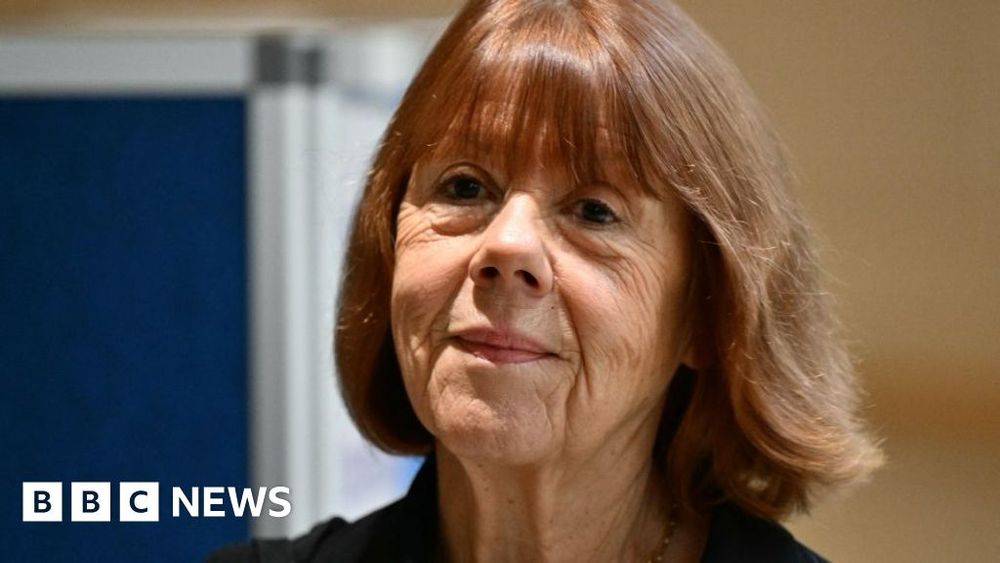
Gisele Pelicot awarded France's Legion of Honour - BBC News
Pelicot was named knight of the Legion of Honour on a list announced ahead of France's Bastille Day.
An amazing honor and recognition for a brave survivor. A role model for all rape and sexual assault survivors. Her courageous choice to waive her anonymity has changed the legal landscape for many survivors of gender-based violence. #StopSexualViolence #MeToo
www.bbc.com/news/article...
13.07.2025 18:51 — 👍 3 🔁 1 💬 0 📌 0
Congratulations, @profnroemer.bsky.social !
26.06.2025 19:16 — 👍 2 🔁 1 💬 1 📌 0
Thank you, @SSRN for highlighting my work.
Check it out in the link 👇
20.05.2025 18:08 — 👍 4 🔁 1 💬 0 📌 0
Assistant Professor and Co-Director of the Center for Environmental Law & Sustainability at Widener University Commonwealth Law School | ABCI Institute Board Member | Ballet Lover 🩰
Law prof & co-host of “Strangers on the Internet” podcast at strangersoninternet.com
Empowering and inspiring lawyers to publish online since 2003. World's largest community of legal bloggers. Our blog: http://99ParkRow.com
Named one of the best legal blogging platforms of 2025 by Clio.
#LegalTech #LegalBlogging
Law Prof at Baylor--criminal law, criminal procedure, & civil rights. Former civil rights lawyer & DOJ civil rights prosecutor
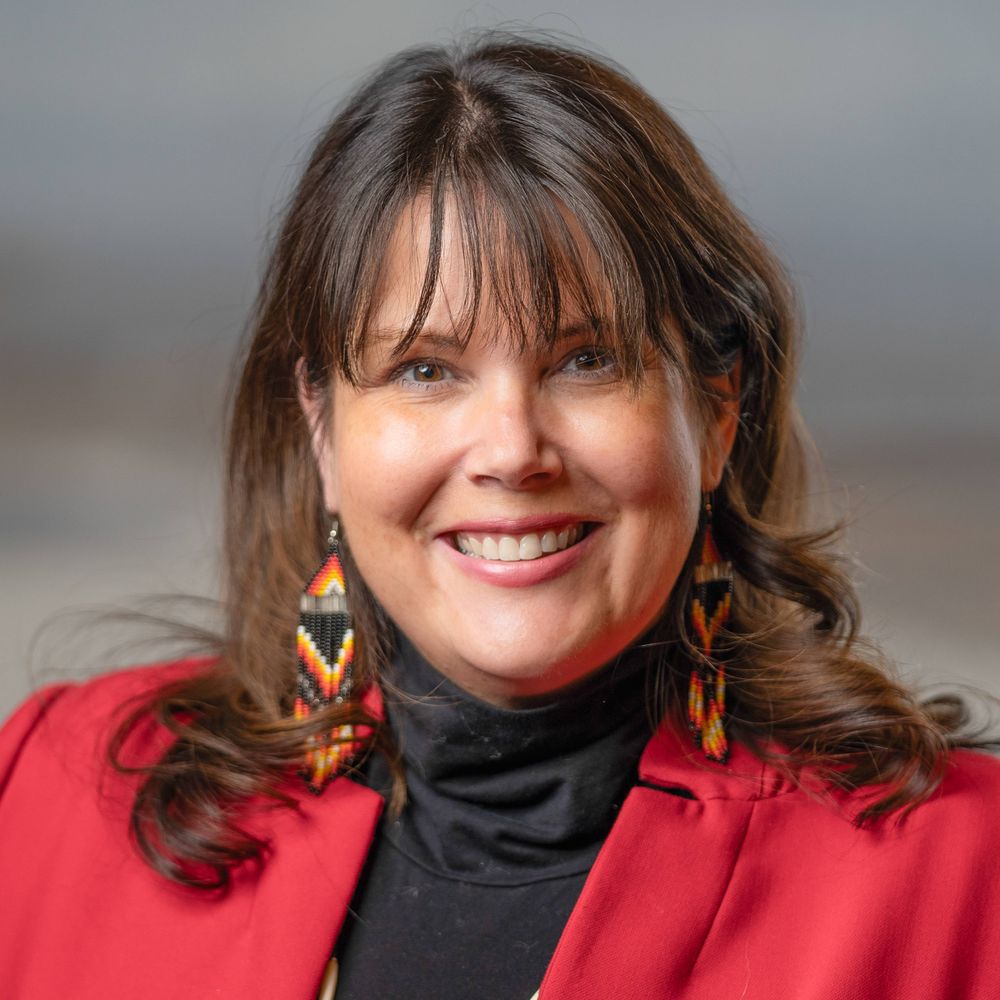
Dean of the S.J. Quinney College of Law (@sjquinney.bsky.social) at the University of Utah (@utah.edu). Member of the SSM Chippewa tribe. Expert in environmental law. She/her.
prof at WashU Law. teaches criminal law & procedure. papers at https://ssrn.com/author=1660906. occasional thoughts at https://postcardsofthehanging.substack.com/.
Professor, CUNY Law | award-winning scholar, author, speaker
scuba diver | environmental justice, climate justice, human rights, NYC history, urban policy, comic books | mom | optimist (mostly) www.RebeccaBratspies.com
UNC-Chapel Hill professor studying debt/commercial law/bankruptcy & connections to everything else. Wrote a book https://www.mbjacoby.org/unjustdebts.
Deeply committed to opposing MAGA. my pup, books, TV, old movies, jazz, rock, and classical music, beach walks, writing (fiction and non-fiction), abstract painting, stone sculpting, deep sleep, and non-violent villainy.
Ralph Brill Endowed Chair at Chicago-Kent College of Law. Corporate and securities law scholar. Researching at the intersection of race and systemic risk. Alumni of foster care and advocate for the underprivileged.
Lawyer and proud double Tar Heel researching and writing about prosecutorial discretion, power, and accountability (find my scholarship here: https://papers.ssrn.com/sol3/cf_dev/AbsByAuth.cfm?per_id=5911977)
Straight-shooting information and analysis at the intersection of national security, law, and policy.
Support Lawfare at https://www.lawfaremedia.org/support
Professor of Law at the University of South Carolina. Former drafter of laws for the U.S. House of Representatives.
Principal @parsonslaw.bsky.social | Senior Legal Advisor @fairvote.bsky.social | Senior Counsel @electionreformers.bsky.social | election law, voting rights, constitutional law | he/him
Felicity Jones is the pseudonym of a Con Law prof and attorney in the US. Every one of us must take calculated risks to further liberty and justice for all. Visit https://thefelicitypapers.substack.com/ and thefelicitypapers.etsy.com for more.
Our tech helps you research, write and edit law review articles. Try our free tools at https://scholarsift.com. Try our new Add-in for Word! https://appsource.microsoft.com/en-us/product/saas/wa200009387
Committed to academic excellence, leadership and collegial learning since 1819.
LawProf, University of Iowa
Tracking new Supreme Court petitions. Currently a work in progress. From @denniscrouch.bsky.social.