Typical day with @mendeley.bsky.social
16.01.2026 12:40 — 👍 0 🔁 0 💬 0 📌 0
@robingauff.bsky.social
Marine ecologist focusing on Climate Change, invasive species and Urbanization.
Typical day with @mendeley.bsky.social
16.01.2026 12:40 — 👍 0 🔁 0 💬 0 📌 0I love research that nuances
established ideas in socio-scoentifc contexts. A new one by @karencastro.bsky.social and @evanschwindt.bsky.social shows how shipwrecks can have both, positive and negative effects, challenging their wide deployment for recreation
doi.org/10.25260/EA.25.35.1.0.2388

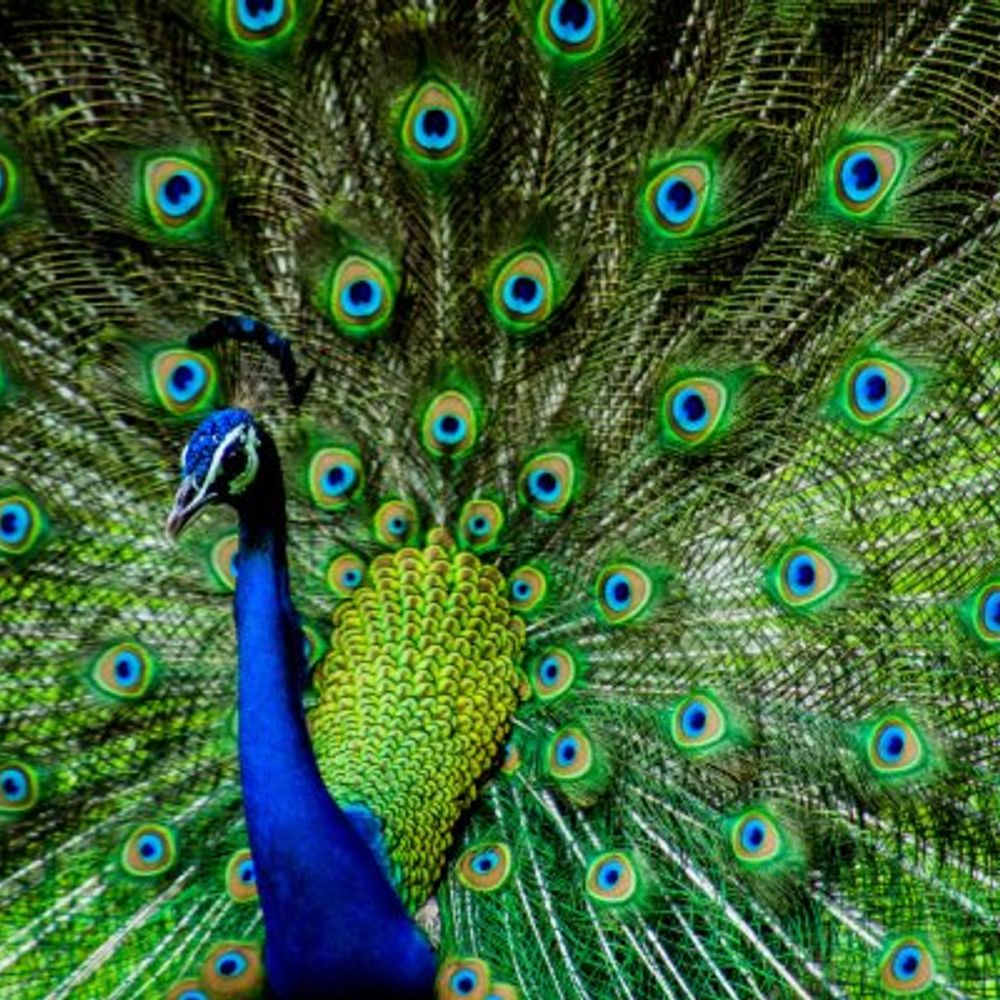
Sorry for using AI, but I just want to illustrate a concept.

Sorry for using AI, but I just want to illustrate a concept.
Embracing that eco-engineering helps little for ecol. restoration, but still increases biodiversity, lets us think differently and actually design beautiful marine urban green spaces with humans in mind. We could make these areas attractive for recreational activities and increase human wellbeing.
02.09.2025 09:57 — 👍 1 🔁 0 💬 0 📌 0our new paper shows that artif. tidepools increased biodiversity, but their community was distinct from natural habitats and prone to introduced species presence. We make the point that eco-eng. has no true value for restoration but they could be considered as marine green spaces akin to parks (3/3)
22.08.2025 16:16 — 👍 3 🔁 1 💬 0 📌 0@louisefirth.bsky.social has written some excellent papers which discuss how greening could be prone to conflicts of interest and #greenwashing. I think some problems might be (willingly) overlooked by stakeholders… (2/3)
doi.org/10.1111/1365...

Artificial concrete tide pool on an Atlantic shoreline

Artificial tidepool with complex 3D printed concrete on a Mediterranean coastline

Artificial fish nurseries in a Mediterranean harbor
#Ecoengineering increases species diversity by increasing habitat patchiness and complexity, this is well documented. Unfortunately this is linked to increasing #invasivespecies diversity in several
Eco-engoneered systems. 1/3
Did a night dive 🌌🤿 on Mediterranean sea grass yesterday evening and noticed that we were surrounded by … frogs!? Found out that scorpionfish sing at night, which is my favorite fish info of the moment 💙
Sound recording: www.facebook.com/share/v/14JG...
Article doi: doi.org/10.1242/jeb....
While I think that #ecoengineering has some value to provide ecosystem services to humans, I am critical concerning its use for rehabilitation/impact compensation. For example it may increase the risk associated to introduced species. doi.org/10.1016/j.ma...
15.07.2025 09:47 — 👍 0 🔁 0 💬 0 📌 0
Awesome presentation by Giada Riva on the absence of biotic homogenization at regional scale at the #ITRS #ITRS2025 This was one of the unexpected outcomes of the HERMES campaign and shows that we still have a lot to learn about marine urban #ecosystems
01.07.2025 15:33 — 👍 3 🔁 0 💬 0 📌 0Une énorme raie manta en plongée. Elle est venu juste au dessus de moi pour jouer avec les bulles. J’avais l’impression de me faire recouvrir par ses ailes
01.07.2025 07:14 — 👍 0 🔁 0 💬 0 📌 0My talk on the #ITRS #ITRS2025 will be on friday 4th at 15:45. If you're not available at this time don't hesitate to talk to me during todays Icebreaker!
30.06.2025 10:24 — 👍 3 🔁 0 💬 0 📌 0
Another #ITRS #ITRS2025 presentation from the HERMES campaign will be given by the amazing Giada Riva Tuesday 1 July from 16:45 to 17:00! Don't miss it, the results may surprise you!
27.06.2025 11:18 — 👍 5 🔁 0 💬 0 📌 0
My favorite substrate so far was this abandoned fin with over 20 different Bryozoa species 🌈
22.06.2025 15:17 — 👍 1 🔁 0 💬 0 📌 0


Participating to the #ATLASea #DIVE-Sea project aiming to identify and sequence as many marine species as possible. It’s fun being surrounded by other taxonomists in all domains! For the moment one of my favorite substrates was this discarded hat full with bryos!
18.06.2025 09:36 — 👍 6 🔁 1 💬 0 📌 0


🧪 Mission @atlasea.bsky.social à la Station Marine d'Endoume – Jour 1 🌊
À peine la mission lancée, les premiers échantillons arrivent dès ce matin ! 🐚🪸🧬
Notre équipe collecte, trie et documente la biodiversité marine du littoral méditerranéen.
#BiodiversitéMarine #Échantillonnage


The HERMES campaign will feature in two presentations at the International Temperate Reefs Symposium #conference
I will present how some urban artificial habitats may have insular properties. The implications of this insight on understanding urban community assembly are huge! #ITRS #ITRS2025

Laura Airoldi holding down our flexible benthic respirometry chamber despite the waves.

Giada Riva and Hassan Almetwaly in the lab identifying all flora and fauna from our scraping samples
For the HERMES 2023 #fieldwork we spent hundreds of hours under water to measure ecosystem functions like photosynthesis, but also months in the laboratory to generate our #taxonomic dataset of 500 (!) species. This helped investigate biotic homogenization and island biogeography in urban habitats.
28.05.2025 12:04 — 👍 5 🔁 1 💬 0 📌 0


In 2023 we conducted the Homogenization and Ecogeography on Regional scale in Manmade EcoSystems (HERMES) campaign which aimed to study biogeographic processes on regional scale along the whole Italian coast. We drove camper to sample urban and natural habitats on 33 sites in 2 months
28.05.2025 07:54 — 👍 1 🔁 0 💬 0 📌 0Together with the previous works on local adaptation, this might indicate that some NIS species invest energy in disturbance resistance. As these investments are costly, this renders them less competitive in less disturbed areas, maybe explaining why many NIS stay restricted to urban habitats.
22.05.2025 08:18 — 👍 1 🔁 0 💬 0 📌 0
A native mussel distributed along a gradient with lower abundance in the inner parts, while the invasive more resistant one did the opposite. Recruits matched this pattern for the native, but the invasive species recruits settled everywhere indicating post recruitment effects
doi.org/10.3389/fmar...
Even more striking, is that local adaptation of some Bryozoa to local pollution is present on such a tiny scale (<100m). This is shown by higher pollution accumulation of Entrance-->Inner transplants compared to inner control (red boxes), and lower LysoPE content (fitness marker, white arrow).
19.05.2025 13:45 — 👍 0 🔁 0 💬 0 📌 0The difference in community structure between areas of the same marina can be actually quite striking as demonstrated by our settlement plates. We were able to causally link community and pollution via a transplant experiment.
19.05.2025 13:38 — 👍 0 🔁 0 💬 0 📌 1
One of the main focuses of my research lays on how disturbance gradients (mostly pollution) results in different communities along these gradients in marine urban habitats and how invasive species capitalize on them.
doi.org/10.1016/j.sc...


We’re currently doing some field sampling in harbors and natural environments to test whether biotic homogenization happens on a temporal scale too! #fieldwork
26.04.2025 11:46 — 👍 2 🔁 0 💬 0 📌 0
In a new paper, we simulated a strong heatwave in a harbor, which did ... nothing! The community was unchanged, as was the metabolome of a Bryozoan. The harbor community showed high resistance which is consistent with observations from other disturbances
doi.org/10.1016/j.marenvres.2024.106813

In marine urban habitats #pollution leads to strong variation in envir. conditions , thus, to differences in community structure. However this can be masked by high intensity marine #HeatWaves favouring resistant species leading to small scale biotic homogenization.
doi.org/10.1016/j.je...
The study shows that Climate Change does not affect all regions equally and that some might be at higher risk. This may be due to current local environmental conditions, but also to the species composition of the local community. Thus more studies with in situ experiments are crucial.
22.03.2025 15:36 — 👍 0 🔁 0 💬 0 📌 0
Within the species that suffered from climate change, one introduced #Bryozoa had significant changes in its metabolism as shown by #metabolomics analyses. Some typical molecules associated to membrane fluidity changed, but also a molecule named Caelestine A linking this molecule with heat stress.
22.03.2025 15:33 — 👍 0 🔁 0 💬 0 📌 0
The system worked simulating a future #ClimateChange scenario in an Atlantic and Mediterranean Marina. In both cases the local communities differed between the heated and the control. Yet, the response of #IntroducedSpecies #NIS #InvasiveSpecies was opposite profiting in one but not the other marina
22.03.2025 15:29 — 👍 0 🔁 0 💬 0 📌 0
Climate change is affecting ecosystems worldwide, but remains difficult to study due to the difficulty of implementing in situ experiments. With our great team from @sbroscoff.bsky.social we constructed a system reliably simulating +3°C climate change on harbor communities doi.org/10.1007/s108...
22.03.2025 15:26 — 👍 3 🔁 2 💬 3 📌 0