WoProc 2026 | 13th International Word Processing Conference
Join WoProc 2026, the 13th International Word Processing Conference, in Lisbon, Portugal, from 6–8 July 2026.
Call for papers!📢
Join us in Lisbon next year for the International Word Processing Conference, on 6–8 July 2026!
We welcome contributions on all aspects of word processing. Submit by 6 Feb 2026!
www.woproc2026.com
23.12.2025 16:38 — 👍 1 🔁 2 💬 0 📌 0
WoProc 2026 | 13th International Word Processing Conference
Join WoProc 2026, the 13th International Word Processing Conference, in Lisbon, Portugal, from 6–8 July 2026.
Call for papers!📢
Join us in Lisbon next year for the International Word Processing Conference, on 6–8 July 2026!
We welcome contributions on all aspects of word processing. Submit by 6 Feb 2026!
www.woproc2026.com
23.12.2025 16:38 — 👍 1 🔁 2 💬 0 📌 0
Proudly published with @andreaeyleen.bsky.social:
A metatheory of classical and modern connectionism. doi.org/10.1037/rev0...
We touch on what has been up with connectionism as a framework for computational modelling — & for everything it seems these days with AI and LLMs — pre-2010 vs post.
1/n
17.10.2025 12:53 — 👍 79 🔁 25 💬 6 📌 16
OSF
If you use divergence point analysis code from Stone et al. 2020 or 2021, note that we made a code revision recently, detailed in the Analysis folder: osf.io/exbmk/ Shouldn't majorly affect previous analyses, but the revised version should be used going forward.
14.10.2025 12:13 — 👍 5 🔁 1 💬 1 📌 0
We welcome contributions on all aspects of word processing (submit by 23 Jan 2026)!
Very happy to announce these two fantastic keynotes:
- Davide Crepaldi @davidecrepaldi.bsky.social
- Jana Reifegerste
31.07.2025 06:59 — 👍 2 🔁 0 💬 0 📌 0

WoProc 2026 | 13th International Word Processing Conference
Join WoProc 2026, the 13th International Word Processing Conference, in Lisbon, Portugal, from 6–8 July 2026.
SAVE THE DATE! Join us in Lisbon next year for the International Word Processing Conference (6–8 July 2026)!
WoProc continues the legacy of MoProc―a conference that, since 1999, has brought together researchers working on morphological processing.
www.woproc2026.com
31.07.2025 06:59 — 👍 4 🔁 1 💬 1 📌 1
maybe she's a proponent of the bootstrap-based method... 🤔
28.07.2025 13:41 — 👍 1 🔁 0 💬 0 📌 0
Instead, better tone identification was predicted by pitch acuity. This suggests that domain-general auditory processing―not universal phonological principles―is a more important determinant.
16.06.2025 18:24 — 👍 3 🔁 0 💬 1 📌 0
Redirecting
How do memory retrieval and prediction work together during sentence comprehension?
We use computational modelling and visual world eye-tracking to unpack their interaction in German pronouns. New article led by Elise Oltrogge, together by João Veríssimo, and Umesh Patil: doi.org/10.1016/j.jm...
16.06.2025 08:05 — 👍 8 🔁 3 💬 1 📌 0
Postdoc
🚀Postdoc position @unimarburg.bsky.social in the project:
"Bridging the Gap Between Verbal Psychological Theories & Formal Statistical Modeling with Large Language Models"
(funded by @volkswagenstiftung.de)
📅Start: 01.10.2025 | ⏳4 years
🔗 Apply now: uni-marburg.de/jhbCen
🔄 Thanks for sharing!
28.05.2025 11:52 — 👍 28 🔁 23 💬 1 📌 1
It's an intro to the foundational principles of Bayesian stats AND a practical tutorial on estimation and hypothesis testing using brms. I build up from simple regression to mixed-effects models.
24.05.2025 16:19 — 👍 1 🔁 0 💬 1 📌 0
New paper!
"A gentle introduction to bayesian statistics, with applications to bilingualism research", now out in LAB: doi.org/10.1075/lab....
24.05.2025 16:19 — 👍 7 🔁 1 💬 1 📌 0
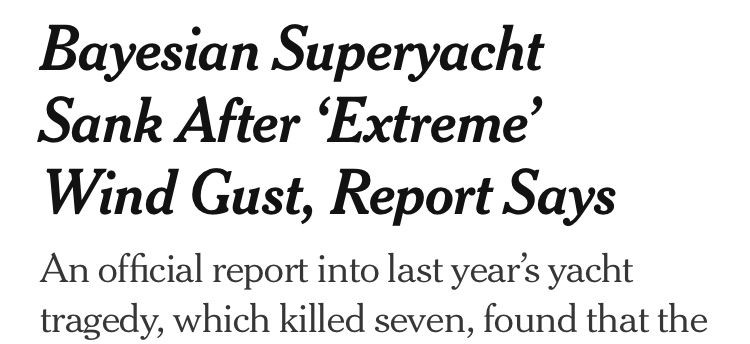
Ok frequentists, let’s call a truce. This has gone too far.
15.05.2025 01:50 — 👍 89 🔁 20 💬 5 📌 2
The 3rd Workshop on Eye Movements and the Assessment of Reading Comprehension 👁️📖
3rd Workshop on Eye Movements & the Assessment of Reading Comprehension 👁️📖
The full program with abstracts is now online!
🔗 tmalsburg.github.io/Comprehensio...
21.05.2025 12:27 — 👍 2 🔁 2 💬 0 📌 0
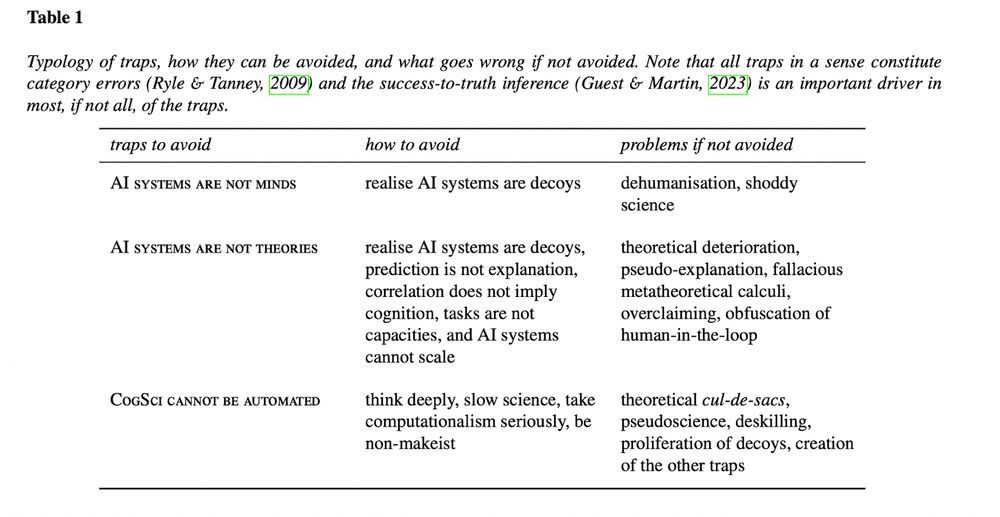
Table 1
Typology of traps, how they can be avoided, and what goes wrong if not avoided. Note that all traps in a sense constitute category errors (Ryle & Tanney, 2009) and the success-to-truth inference (Guest & Martin, 2023) is an important driver in most, if not all, of the traps.
NEW paper! 💭🖥️
“Combining Psychology with Artificial Intelligence: What could possibly go wrong?”
— Brief review paper by @olivia.science & myself, highlighting traps to avoid when combining Psych with AI, and why this is so important. Check out our proposed way forward! 🌟💡
osf.io/preprints/ps...
14.05.2025 21:23 — 👍 347 🔁 105 💬 15 📌 25
Interesting... Tried mgcv::rmvn() and mvnfast::rmvn(). Both seems to produce the same random numbers (with and without the perturbations in the cov matrix).
19.05.2025 11:47 — 👍 1 🔁 0 💬 0 📌 0
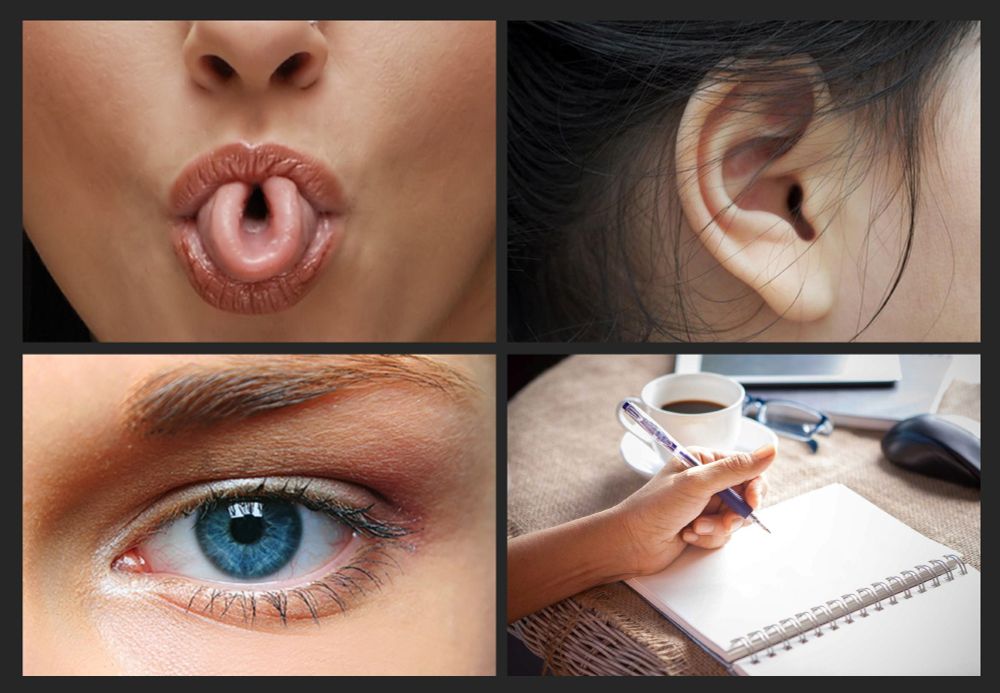
Four images to illustrate some prominent single-gene myths. Top left shows a photograph of a person deftly rolling their tongue into a U-shape. Top right shows a photograph of a person’s ear, highlighting the shape and features of the earlobe and cartilage. Bottom left shows a close-up photograph of a person’s eye, with a vivid blue colouration. Bottom right shows a photograph of a person poised to write with their left hand on the blank white page of a spiral-bound notebook.
Remember when you first learned about genetics at school? All those fascinating examples of human traits that are each apparently determined by just a single gene? Time to check in on some of your favourites to see how they’re doing. 🧬🧵🧪 1/n
02.05.2025 14:50 — 👍 1268 🔁 595 💬 51 📌 84
right! mgcv can fit a binomial AR(1) model, but it's a little particular... you have to use bam() with discrete=T, for example (which, in turn, this precludes using something other than fREML)
05.05.2025 23:08 — 👍 0 🔁 0 💬 0 📌 0
OSF
package in the works! for now, you can source "OnsetDetection_Functions_0.4.7.R" from here and see the get_onset() examples in the analyses of Studies 1 and 2: osf.io/9ethq/files/... (note that the function still has some limitations, e.g., it only handles 1 random factor)
05.05.2025 22:58 — 👍 1 🔁 0 💬 0 📌 0
Interesting! We do fit a logistic GAMM with (temporal) autocorrelation... but we don't address the spatial autocorrelation at all. In any case, I think it's compatible? Our innovation is using posterior simulations to obtain a temporal CI, but there is some freedom in terms of the model building.
05.05.2025 22:41 — 👍 1 🔁 0 💬 1 📌 0
cool! we'd be super interested in hearing how well it works webcam VWP!
05.05.2025 22:17 — 👍 0 🔁 0 💬 2 📌 0
We formally evaluate a popular bootstrap-based method (Stone et al., 2021) and find that it can produce delayed estimates and inflated type I error rates. We propose a novel GAMM-based method that allows more accurate comparison of onsets between experimental conditions and/or speaker groups.
05.05.2025 21:22 — 👍 1 🔁 0 💬 1 📌 0
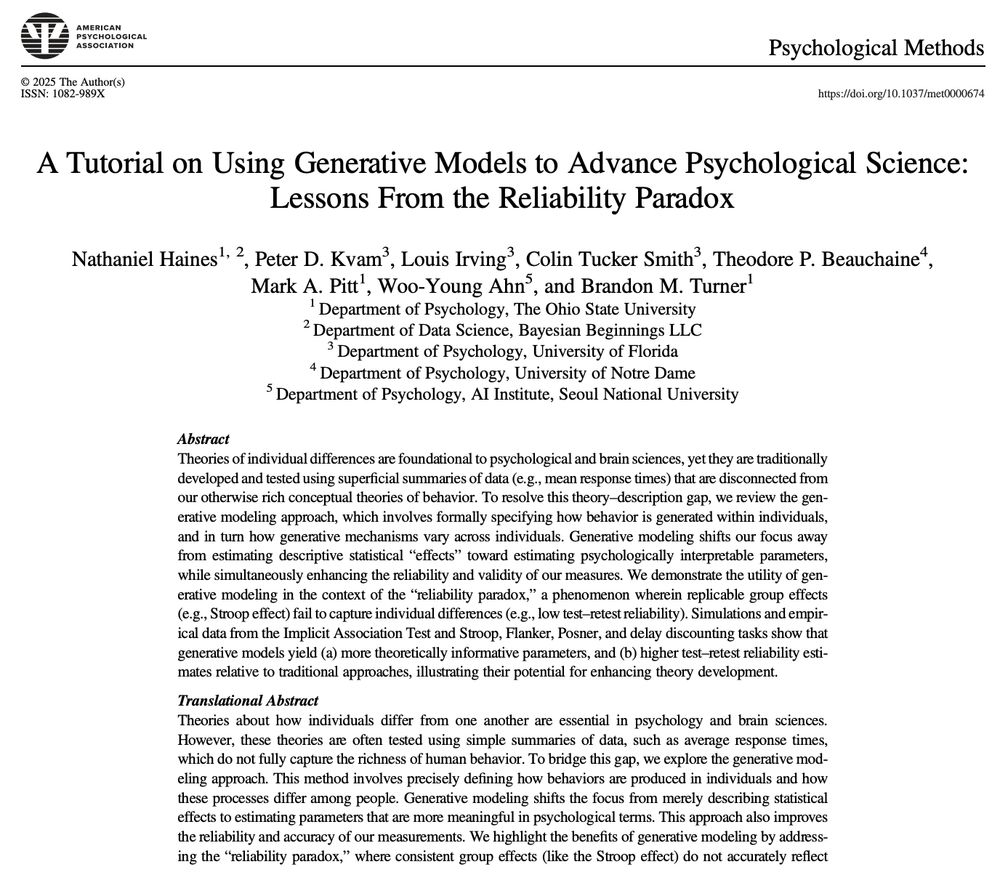
SIX YEARS after the initial blog post, this paper is finally published.. what a wild ride
- the blog: bit.ly/3GbOqQa
- original tweet thread: x.com/Nate__Haines...
- published (open access) paper: doi.org/10.1037/met0...
17.04.2025 13:22 — 👍 33 🔁 9 💬 2 📌 2
Bioinformatics Nerd. Coder. Inventor. Critical Thinker. Design Engineer Pioneering Generative AI that democratizes Brain Health as CEO at Vibes AI + Fellow @ AI Design Corps | Alum: Alexa, Amazon, IBM & Uber | https://linktr.ee/joannapenabickley
Computational cognitive neuroscientist @cnrs.fr. Visiting scholar at Duke University.
Inner speech, mental/motor imagery, cognitive/statistical modelling, EMG, M/EEG, open and slow science. More info and job opportunities at https://lnalborczyk.github.io
Theoretical and experimental linguist. New York University Abu Dhabi.
https://www.robertopetrosino.com
Statistics lecturer | Freelance statistical consultant & research analyst | #rstats dev @easystats.github.io
home.msbstats.info
(He/Him)
Lecturer Psych & Crim @kingscollegelondon.bsky.social | Deception Detection; Emotions; JDM | Open Science; R; Bayes | @ukrepro ReproTea & StatsTea | #statstab | 🇷🇴 🇬🇧🌍
Stats blog: https://mzloteanu.substack.com/
PhD Student @ https://selflearningsystems.uni-koeln.de/
Working on the intersection of (visual) neuroscience, orthographic processing, computer vision and machine learning
#Reading #CognitiveNeuroscience
Academic books, journals and news from the Linguistics department at De Gruyter Brill @degruyterbrill.bsky.social, including its imprint Mouton. Posts by our editors.
master’s student of linguistics ; university of florida ; psycholinguistics, predictive processing, dialectal variation
language & mind-ish things (mostly fun sometimes sin), interested in what science is and does, pretend stoic but for-real epicurean (but for-real-real hedonist), we're in this together, la do la si, &c &c
tryna be drunk (comme Baudelaire)
Open-access, peer-reviewed journal dedicated to publishing research on language, language use, language acquisition, language teaching, and language assessment. https://tesolal.columbia.edu
Phonetics & Phonology Research Group at Newcastle University. Researchers uniting around language and sound. For enquiries, please contact us at phoneticsphonology.ncl@gmail.com.
Psycholinguist | Bilingualism | Morality | Speech Perception | Statistics | Radboud University | http://tiny.cc/Susanne
linguist, leipziger
www.andreasopitz.net
Ecology, evolution, epidemiology, statistics (mixed models). McMaster University, Hamilton, Ontario https://math.mcmaster.ca/bolker
The Enhancing NeuroImaging Genetics through Meta-Analysis Consortium is a network of 2500+ scientists across 47 countries working to discover factors that help or harm the brain. http://enigma.usc.edu
Prof at UniMelb. I'm a computational cognitive scientist studying human inference, learning, information systems, culture, and (mis/dis)info. Nerd & opinionated loudmouth in Oz, originally from America, citizen of both. Parent of two. 🏳️⚧️ perfors.net
::language, cognitive science, neural dynamics::
Lise Meitner Group Leader, Max Planck Institute for Psycholinguistics |
Principal Investigator, Donders Centre for Cognitive Neuroimaging, Radboud University |
http://www.andreaemartin.com/
lacns.GitHub.io
In the CSL-Lab at Cornell, we study the evolution, acquisition and processing of language from a cognitive science perspective. Directed by Morten H. Christiansen.
Website: https://csl-lab.psych.cornell.edu