A deep-sea Graneledone octopus with arms spread out sitting on a basalt rock at Axial Seamount
This deep-sea octopus wants to wish you a happy Valentine’s Day on behalf of the OOI Regional Cabled Array team! ❤️
🌊🚢🧪

@ooi-cabledarray.bsky.social
A deep-sea Graneledone octopus with arms spread out sitting on a basalt rock at Axial Seamount
This deep-sea octopus wants to wish you a happy Valentine’s Day on behalf of the OOI Regional Cabled Array team! ❤️
🌊🚢🧪
I tried a couple of other people to get other opinions, but you were the fastest (and @frable.bsky.social is on a cruise). It's hard to see through the frenzy! 😂
06.02.2026 23:09 — 👍 1 🔁 0 💬 1 📌 0Feeding frenzy! A swarm of hagfish tear apart a N Pacific Frostfish (?) at Hydrate Ridge offshore of OR. They look like eels but evolved ~550 million years ago, before sharks and bony fish! 🌊🚢🧪
PC: UW/NSF-OOI/WHOI, J-1719, V25; thanks to Dr. Brian Sidlauskas (Tulane) for the tentative carcass ID!

The top of a hydrothermal vent: black basalt rock with smaller, vertically projecting chimneys covered in white, filamentous bacteria, yellowish limpets, tube worms, and blue protist colonies. Black clouds of superheated water that look like smoke billow out of the top. In the center, a long thin metal rod is sticking out of one of the chimneys, lying along the top of the vent with a small white float attached. Rod and float are covered in biofouling organisms.
The Inferno edifice in the ASHES hydrothermal vent field in 2025. Superheated fluids streaming out of the chimneys contain dissolved gases and metals used by microbes within chemosynthetic organisms, which can completely encase sensors faster than you’d expect!
PC: UW/NSF-OOI/WHOI, J-1707, V25 🌊🚢🧪
Fried Egg or “Egg-Yolk” jelly seen by the ROV Jason at Axial Base. These large jellyfish feed on other jellies and inverts at deep-water sites, and other species often live on or around them for protection. 🌊🚢🧪
More videos: www.youtube.com/@interactive...
PC: UW/NSF-OOI/WHOI: J-1709, V25

Three people opening and prepping a numbered series of large, gray bottles for holding water on the side deck of a ship.
R/V Atlantis SSSG Allison Heater helps V’25 student Nate Bodensteiner and RCA scientist Joe Duprey cock Niskin bottles for water sampling at Axial Seamount (2600 m depth). Analyses of the recovered fluids help verify data from the RCA moorings and seafloor sensors. 🌊🚢🧪
PC: M. Elend, UW, V25

Two purple skates (one facing left, the other in the background and partially buried, facing right) lying on the greenish-brown mud of the seafloor at Southern Hydrate Ridge. Small carbonate rocks are scattered around, along with a crab, an anemone, a red rockfish, and other animals.

A purple roughtail skate facing the left side of the image, lying on the greenish-brown mud of the seafloor at Southern Hydrate Ridge. Small, yellowish carbonate rocks are scattered around it.
Two roughtail skates sit in the mud among carbonate rubble at Southern Hydrate Ridge. These shark relatives are often seen lying partially buried on the seafloor at productive sites like this, where their prey (shellfish, worms, and small fish) are abundant. 🌊🚢🧪
PC: UW/NSF-OOI/WHOI, J2-1715, V25

A group of four UW students in purple gloves sitting on the floor in the ship's dry lab. They surround a triangular frame that they are assembling into a flow sampling instrument using a set of cylindrical coils of tubing and tools that are sitting on the floor next to it.
VISIONS students help tech Alex Rose (2nd from left) prep a “Mosquito” instrument. It injects dye into the seafloor at Southern Hydrate Ridge then sucks fluid into coiled tubes to measure sediment seawater flow. It's complicated to assemble so more hands are always helpful! 🌊🚢🧪
PC: M. Elend, UW, V24
One month in a minute and a half! Enjoy this video highlight reel from our 2025 OOI-RCA maintenance cruise, and check out our YouTube channel (www.youtube.com/@interactive...) for more underwater video and sea life highlights. Happy Holidays! 🌊🚢🧪
20.12.2025 02:03 — 👍 15 🔁 7 💬 1 📌 0
A black spiral of volcanic basalt rock on the seafloor in the caldera of an underwater volcano. It is sprinkled with some greenish-brown mud and surrounded by white tube worms and mussel shells.
A lava "whirlpool" formed during the 2011 Axial Seamount eruption and frozen in time. When subsurface magma erupts onto the seafloor as 1200°C lava, it hits near-freezing seawater and crusts over with a layer of glass, forming incredible river-like shapes! 🌊🚢🧪
PC: UW/NSF/OOI/WHOI; J2-1737, V25.

Two UW students in the ship's laboratory wearing purple gloves adjust a triangular frame containing cylinders of coiled tubing that make up a diffuse fluid sampler.
VISIONS'25 student technicians Alex Rose and Emily Pinneo help sample diffuse fluids entrained in a recovered osmosampler from the ASHES hydrothermal field. The samples provide a year-long record of hydrothermal fluid composition. 🌊🚢🧪
PC: M. Elend, University of Washington, V25

Two crabs, one on top of the other, face the camera seemingly embarrassed to be caught in this situation.
Crustacean love! Two Dungeness crabs we encountered in a mating posture during a dive at the Oregon Shelf (80 m) site.
PC: UW/NSF/OOI/WHOI, J2-1742, V25.
🌊🚢🧪

OOI-RCA student worker Jolee Thirtyacre and a student wearing UW- appropriate purple gloves while they sample water from a CTD rosette on the side deck of the R/V Atlantis off the coast of Oregon.
UW RCA student worker Jolee Thirtyacre and one of our VISIONS’25 students assisting with CTD water sample processing. VISIONS students experience life at sea, stand ROV watches, and assist with many aspects of science conducted onboard the ship. 🌊🚢🧪
PC: M. Elend, University of Washington, V25.
The week brought together ocean leaders, innovators, and students from both sides of the Atlantic to strengthen global collaboration for a sustainable ocean.
PC: M. White. University of Washington


On October 24, 2025 the RCA team participated in One Ocean Week Seattle aboard the historic sailing ship Statsraad Lehmkuhl from Bergen, Norway! Over 200 people came to view poster presentations and demonstration tables-ours included! 🌊🚢🧪
14.11.2025 23:55 — 👍 6 🔁 2 💬 1 📌 0ROV video of an absolute mob of sablefish (black cod) swirling around the OOI-RCA benthic experiment package (BEP) at our Oregon Offshore site, about 40 miles offshore and 582 m deep. The yellow frame contains 8 different cabled oceanographic sensors. Credit: UW/NSF-OOI/WHOI, J2-1741, V25 🌊🧪🚢
28.08.2025 06:34 — 👍 7 🔁 3 💬 0 📌 0Photo credits: UW/NSF/OOI/WHOI; J2-1737, V25.
27.08.2025 01:28 — 👍 1 🔁 0 💬 0 📌 0
A lava swirl formed and frozen in place during a previous Axial eruption

A fuzzy spider crab (minus one leg) was intrigued by the ROV and posed for a photo.

A deep-sea octopus resting on some jumbled basalt, next to a bacterial mat.

Pillars holding up a "roof" of basalt, formed by a pool of lava that slowly drained away, leaving "bathtub rings" and a hollow chamber behind.
The UW-RCA group just spent about a week turning OOI equipment at Axial Seamount, an active volcano about 200 miles off the Oregon coast. The seafloor in the caldera is covered with fantastic basalt formations, hydrothermal flows, and unique biological communities. 🌊🧪🚢
26.08.2025 22:35 — 👍 16 🔁 2 💬 1 📌 0
The Jason ROV being brought back aboard the Atlantis at dawn following dive J2-1725. Credit: M. Vardaro, University of Washington, V25.

The high definition video camera as seen from Jason imaging the Mushroom hydrothermal vent in ASHES. Credit: UW/NSF-OOI/WHOI; J2-1728, V25.

A high-temperature probe sticking out of a small hydrothermal chimney at Tiny Towers, a vent in the International District vent field. Credit: UW/NSF-OOI/WHOI; J2-1729, V25.

Sunset over the Pacific, as seen from the R/V Atlantis above Axial Seamount. Credit: M. Vardaro, University of Washington, V25.
The OOI-RCA cruise has been conducting multiple dives at Axial Seamount (an underwater volcano off the Oregon coast), including deployments at several different hydrothermal vent fields. The weather has been excellent for ROV operations - hopefully that will hold for the next few days!
22.08.2025 05:18 — 👍 2 🔁 2 💬 0 📌 0
A methane bubble plume obscuring one of our camera tripods at Southern Hydrate Ridge, surrounded by bacterial mats. Credit: UW/NSF-OOI/WHOI, J2-1719, V25.

A group of scavenging hagfish tearing apart a dead sablefish at Southern Hydrate Ridge. Credit: UW/NSF-OOI/WHOI, J2-1715, V25.

A roughtail skate sits next to some rockfish at SHR. Credit: UW/NSF-OOI/WHOI, J2-1715, V25.

Exposed gas hydrate (methane ice) in a crevice near Einstein's Grotto at Southern Hydrate Ridge. Credit: UW/NSF-OOI/WHOI, J2-1715, V25.
We visited Southern Hydrate Ridge earlier in the cruise, a dynamic site with active methane venting, exposed gas hydrate (methane ice!), and a diverse biological community - including rockfish, skates, and scavenging hagfish swarming around a sablefish carcass! 🌊🚢🧪
20.08.2025 07:18 — 👍 14 🔁 1 💬 0 📌 1
Two sea slugs (possibly Hermissenda opalescens, also known as the opalescent nudibranch) crawling on the side of the Axial Base Shallow Profiler (200 meters depth). Credit: NSF-OOI/UW/WHOI; Dive J2-1702; V25

Spectacular feather stars, urchins, brittle stars, and scallops colonize the Shallow Platform at 200 m water depth at the Oregon Offshore site. Credit: UW/NSF-OOI/WHOI, J2-1698, V25.

A swarm of krill engulfs the Oregon Offshore Shallow Profiler mooring as the ROV Jason conducts a survey after replacing the profiler pod. Credit: NSF-OOI/UW/WHOI; Dive J2-1698; V25
The OOI-RCA Shallow Profiler mooring platforms sit at 200 meters depth, over time becoming midwater islands of biodiversity as organisms like feather stars and nudibranchs settle on the hard surfaces of the flotation and instrument housings. 🌊🚢🧪
18.08.2025 03:06 — 👍 7 🔁 3 💬 0 📌 0
VISIONS'25 students Nadia and Lacie helping with water sampling in the lab of the R/V Atlantis. Credit: M. Elend, University of Washington, V25.

VISIONS'25 students Anshul and Ari helping with water sample filtering in the lab of the R/V Atlantis. Credit: M. Elend, University of Washington, V25.

VISIONS'25 student technicians Jolee Thirtyacre, Alex Rose, and Emily Pinnemi help sample the recovered osmosampler from ASHES. Credit: M. Elend, University of Washington, V25.
Since 2013, the VISIONS program has allowed more than 260 students to participate in at-sea experiential learning. This year we have 11 excellent students sailing with us as part of the UW’s educational mission (VISIONS’25), along with UW student technicians who are integral to the work of the RCA.
14.08.2025 02:30 — 👍 3 🔁 1 💬 0 📌 0
Hi Manuel! We operate the NSF Ocean Observatories Initiative (oceanobservatories.org) Regional Cabled Array and would love to be added to the feed. The OOI is a large observatory project aimed at studying short- and long-term changes in the ocean. Thanks!
10.08.2025 16:15 — 👍 1 🔁 0 💬 1 📌 0Hi! Could you add us to the feed? We operate the Ocean Observatories Initiative Regional Cabled Array off the coast of Oregon (and plan to be slightly more active over here than previously). Thanks!
10.08.2025 16:09 — 👍 0 🔁 0 💬 1 📌 0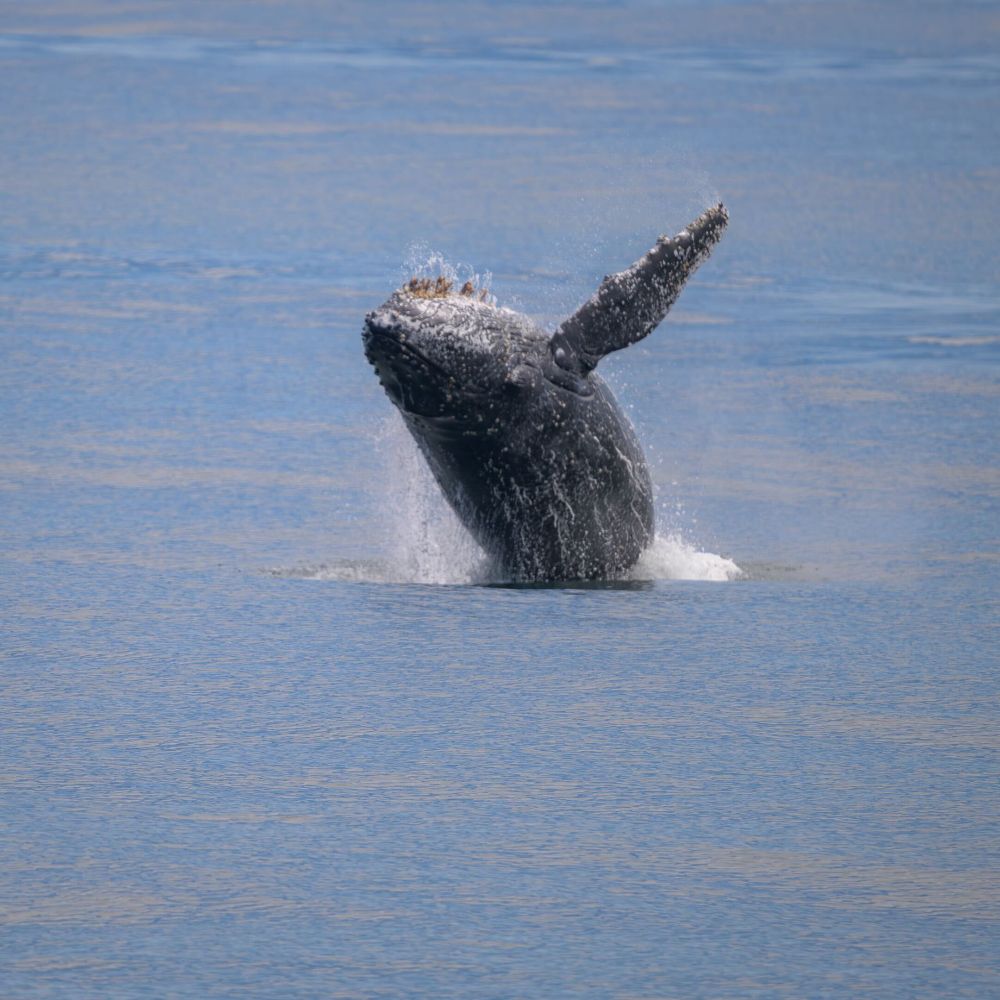
Breaching Humpback whale off the coast of Newport, OR. Credit: J. Tilley, UW-APL, V25
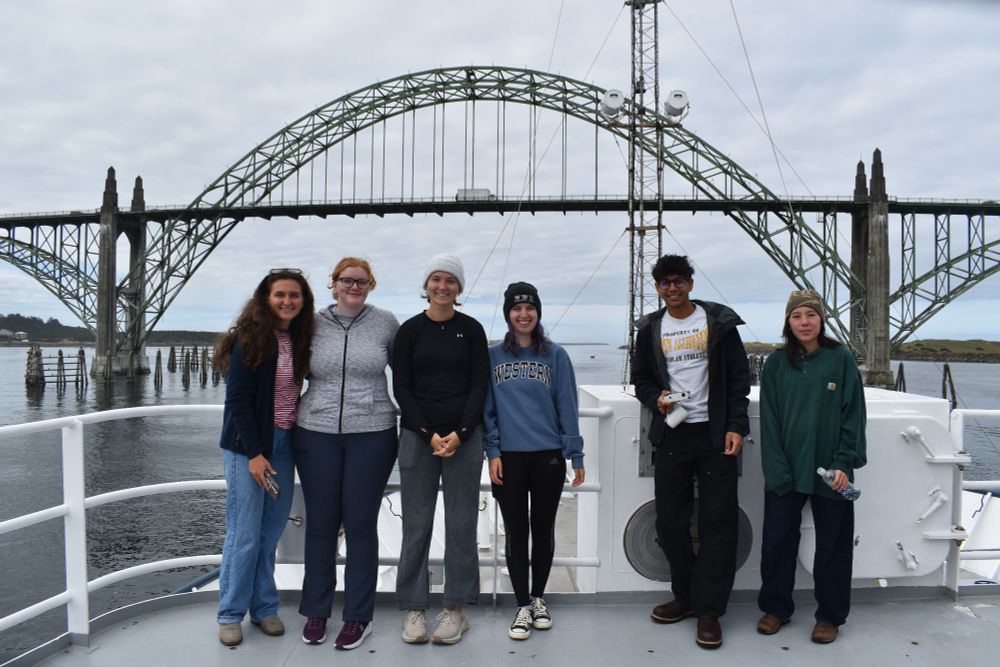
Leg 1 VISIONS'25 students on the bow of the R/V Atlantis as the ship departs Newport. Credit: M. Elend, University of Washington, V25
The 11th O&M Expedition for the cabled component of the NSF-OOI has begun, 7/31 - 8/31/2025! Live video from the R/V Atlantis & Jason ROV can be seen here: interactiveoceans.washington.edu/visions25-li...
🌊🧪🚢
PC 1: J. Tilley, UW-APL, V25.
PC 2: M. Elend, University of Washington, V25
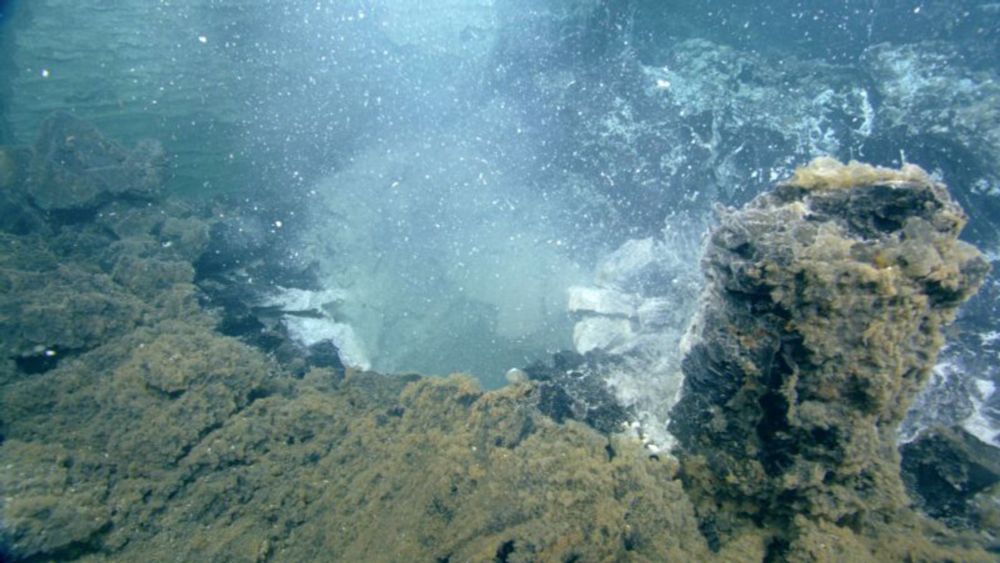
Learn about the most instrumented underwater volcano in the world, and the work being done by the NSF-funded Ocean Observatories Initiative, on the front page of CNN today. We'll be heading out to visit Axial Seamount this summer, so stay tuned!
www.cnn.com/2025/05/08/s...
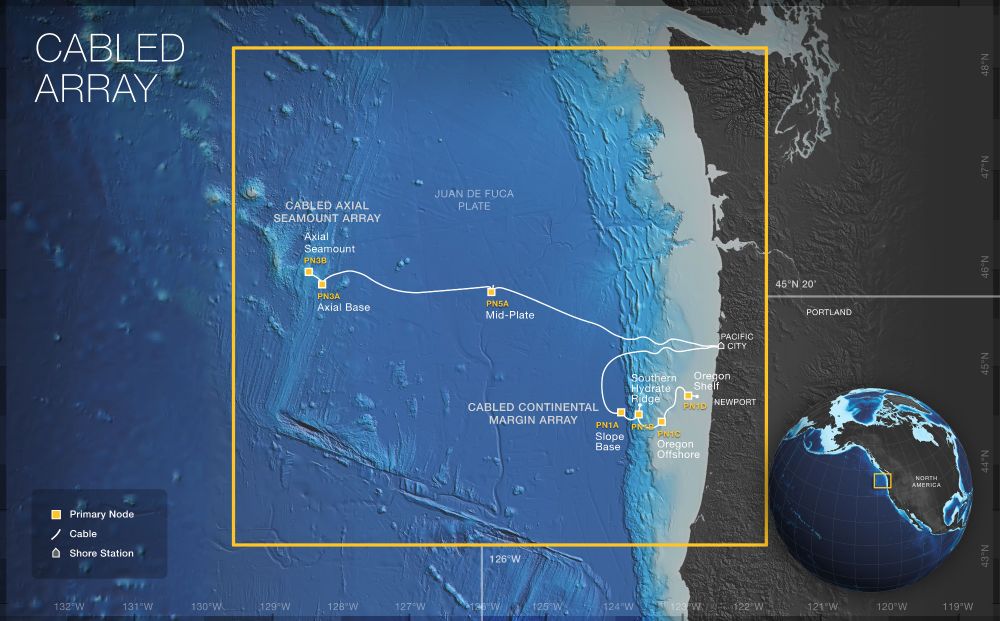
Overview map of the NSF-funded Ocean Observatories Initiative Regional Cabled Array off the Oregon coast, including the kilometers of undersea electro-optical cable that extend to seafloor nodes at Axial Seamount (a volcano 300 miles offshore) and back onto the slope and shelf to Southern Hydrate Ridge and near-shore sites. Credit : H. Hadaway, UW Center for Environmental Visualization
Welcome to the NSF-funded OOI Regional Cabled Array Bluesky account! Follow along for never-before-seen photos and ocean science content 🌊🧪🚢
For more from OOI Regional Cabled Array Cruises: interactiveoceans.washington.edu/images-visio...