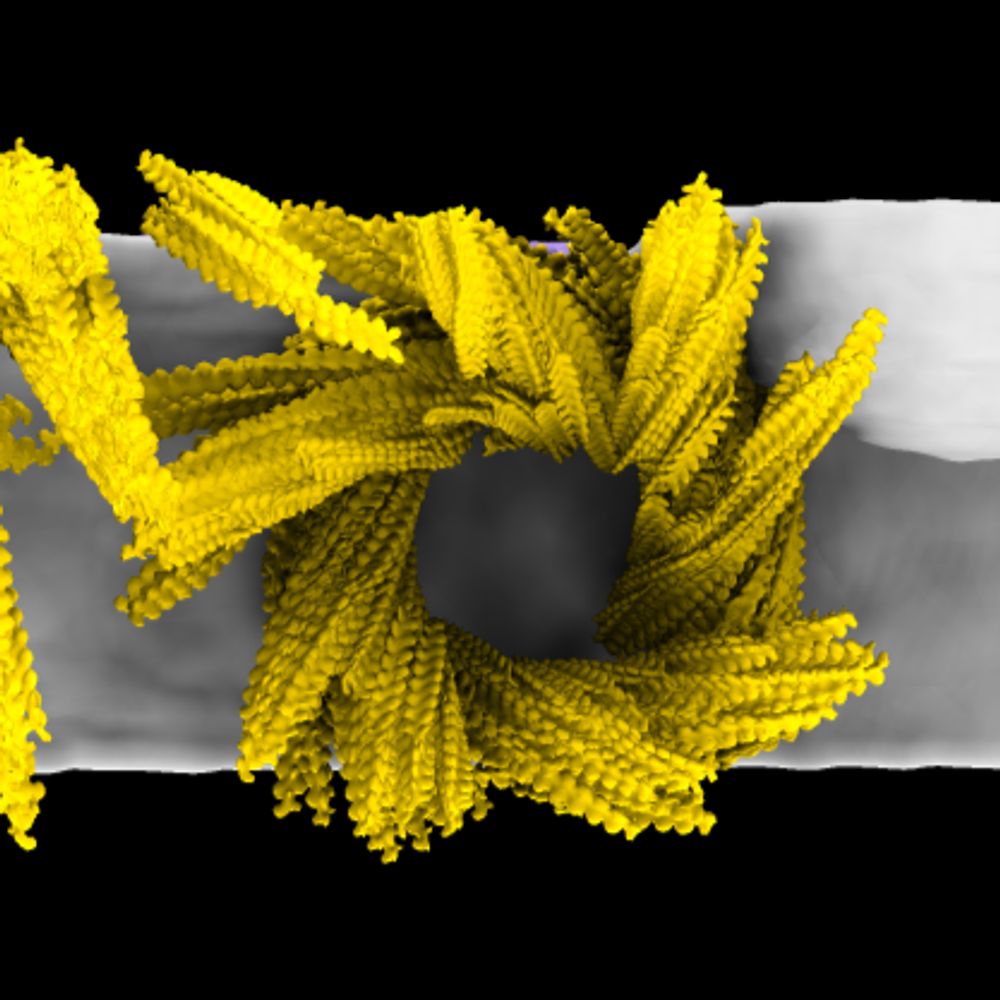
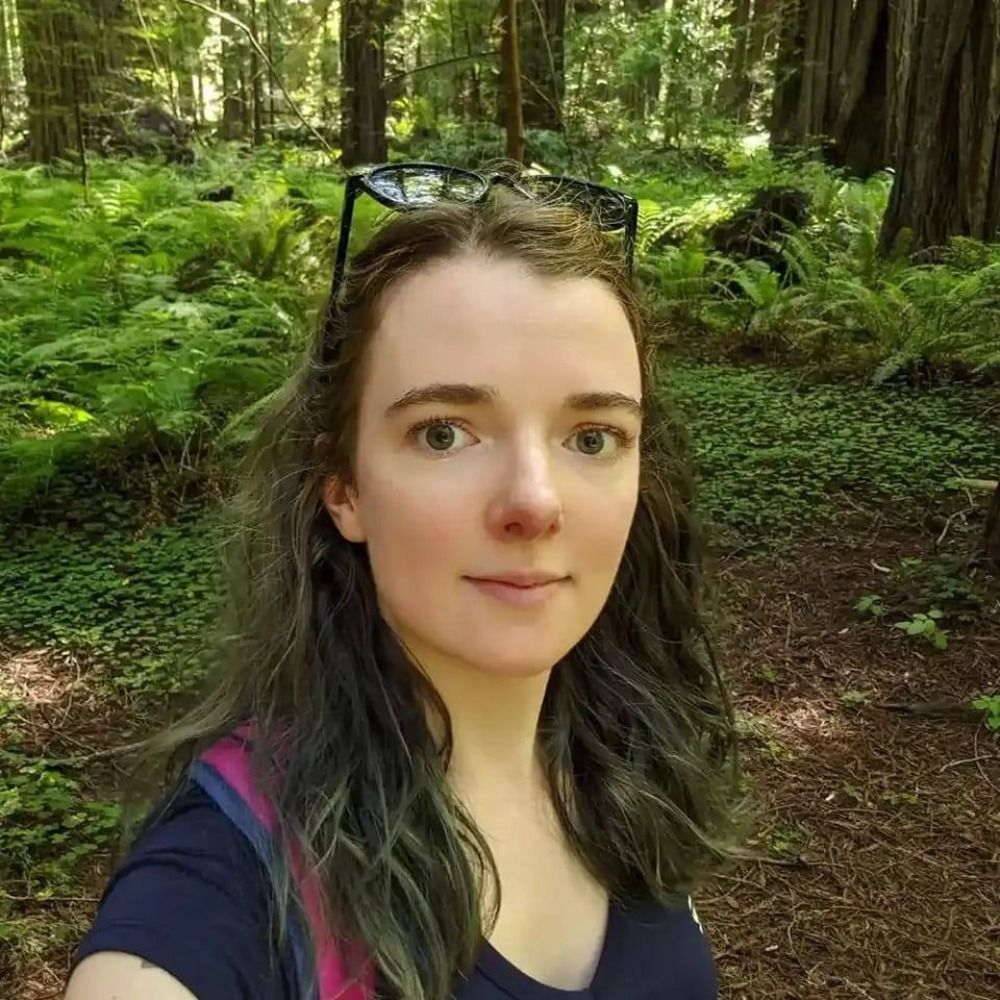
Here is an example of GFP-CARa localization at the extrahaustorial membrane that did not make it into the manuscript but still is nice.
09.12.2025 10:21 — 👍 7 🔁 2 💬 1 📌 0
Postdoc (m/f/d) position on synthetic approaches to promote arbuscular mycorrhiza symbiosis
Are you interested in using synthetic approaches to promote arbuscular mycorrhiza symbiosis? Then our PostDoc position may be for you: jobs.mpimp-golm.mpg.de/jobposting/b...
05.12.2025 21:52 — 👍 29 🔁 34 💬 0 📌 0
@talbotlabtsl.bsky.social giving our annual Blackman Lecture today. An incredible career investigating the biology of rice blast fungus
04.12.2025 12:19 — 👍 11 🔁 2 💬 1 📌 0
I remember this very well circulating when I was a postdoc.
04.12.2025 21:43 — 👍 2 🔁 0 💬 0 📌 0

Honoured to give the Blackman Lecture today @ox.ac.uk and see the fantastic new Life and Mind Building.
04.12.2025 21:12 — 👍 14 🔁 1 💬 0 📌 0
Congratulations Camille! @puginiercamille.bsky.social - well deserved !
03.12.2025 13:10 — 👍 5 🔁 0 💬 1 📌 0

CC-NLRs exhibit diverse conformations in the resting state.
Figure depicts different NLR resting and activated states. While ZAR1 exists as a monomer bound to its guardees in its resting state, several forms have been observed for the NRC2 helper, including dimers, tetramers, and filaments. While filament-like structures were observed via confocal microscopy for NRC2 upon overexpression in planta, these structures were not detected for its paralog NRC4, suggesting a potentially different resting state configuration for NRC4. Our work suggests that the Pik CC-NLR pair forms a hetero-complex bound to the plasma membrane in its resting state. How effector binding to the integrated domain (ID) of the Pik-1 sensor leads to the activation of the complex remains to be determined.
Excited to share our latest work on plant immune receptor biochemistry! @kamounlab.bsky.social @hsuanpai.bsky.social @mpcontreras.bsky.social Jose Salguero Linares @danielluedke.bsky.social @adnroide.bsky.social @jiorgoskourelis.bsky.social
www.biorxiv.org/content/10.6...
03.12.2025 09:20 — 👍 76 🔁 39 💬 3 📌 1

The image shows a picture of Camille Puginier, Postdoctoral Researcher in the Talbot group and Lecoq prize winner, saying “This award is a real honour. I am delighted that lichen research is in the spotlight, as these fascinating organisms still hold many mysteries."
Congratulations to @puginiercamille.bsky.social on her @academiesciences.bsky.social prize for her PhD work at @lrsv-toulouse.bsky.social!
@talbotlabtsl.bsky.social says "I am really proud to see Camille receive this honour and excited about the expertise she's brought to my group"
buff.ly/SCb17kf
03.12.2025 12:15 — 👍 11 🔁 5 💬 0 📌 0

Very proud of my PhD alumnus George Greiff for passing his viva and submitting his corrections last week. Not to mention all the other things, a new job at the Cardiff Museum, paper submission and a new house all in the last few weeks! Huge congrats and loved the celebrations 🥳😁.
01.12.2025 16:44 — 👍 7 🔁 1 💬 3 📌 0
New preprint from our group led by @metalichen.bsky.social on the discovery of a Starship giant transposable element in the genome of a lichen-forming fungus.
28.11.2025 14:58 — 👍 27 🔁 8 💬 0 📌 0
Huge thanks to all coauthors: @talbotlabtsl.bsky.social, @angusb.bsky.social, Ellen Cameron, Mark Blaxter, @robdfinn.bsky.social, and @mcdonaldmeganc.bsky.social!
28.11.2025 14:20 — 👍 5 🔁 1 💬 0 📌 0

text. It says: “Ford and Zaphod looked and passed on.
“And this baby,” said Ford, “the tangerine star buggy with the black sunbusters…”
Again, the star buggy was a small ship-a totally misnamed one in fact, because the one thing it couldn’t manage was interstellar distances. Basically it was a sporty planet hopper dolled up to something it wasn’t. Nice lines though. They passed on.”
Now, all Starship transposons are named after fictional spacecrafts, so naturally we followed suit. After being up till 2 one night, I settled on Tangerine star buggy, which made a brief appearance in D. Adams’ The Restaurant at the End of the Universe. Given the color of Xanthoria, it was perfect
28.11.2025 14:20 — 👍 8 🔁 1 💬 1 📌 0

phylogenetic tree. Lowest clade is highlighted in orange and has a pointer labelled ‘Methyltransferase from Tangerine in Xanthoria (Lecanoromycetes). This clade is nested within a different clade highlighted in green and labelled “Chaetothyriales (Eurotiomycetes). It, in turn, is nested within a purple clade labelled as “Sordariomycetes”. A sister branch to this big clade contains multiple leaves highlighted in yellow and labelled “other Lecanoromycetes”.
Most interesting part: it seems that Tangerine mediated HGT between symbionts present within a lichen body, as two genes from Tangerine appear to be horizontally transferred from Chaetothyriales, a group of black fungi containing many lichen-associated species, which have been found in Xanthoria.
28.11.2025 14:20 — 👍 4 🔁 1 💬 1 📌 0

Zoomed-in Tangerine. A genome fragment is shown in line with blocks in different colors showing genes. A portion of the fragment is highlighted in orange and labeled as ‘Tangerine’. Below, the legend shows starship genes, in three groups. The first contains only the captain. The second is labelled as ‘accessory genes’ and contains DUF3723, PLP, and NLR. The third group is labelled “Cargo genes” and contains the methyltransferase
Tangerine is found in genomes of X. parietina, common sunburst lichen. It has all hallmark features of a Starship: 100 kb in length, the captain gene responsible for transposition, as well as accessory genes and ‘cargo’. The captain gene couldn’t be assigned to any of the described families!
28.11.2025 14:20 — 👍 4 🔁 1 💬 1 📌 0
New preprint: 🚀🧬 Starship in the genome of the lichen fungus Xanthoria. Discovery of giant transposons Starships challenged what we thought we knew about fungal genomes. But what about Starships in #lichen fungi? Let us present Tangerine! 🖥️ 🧪 🦠 🧫 #SymbioSky doi.org/10.1101/2025...
28.11.2025 14:20 — 👍 55 🔁 21 💬 1 📌 1
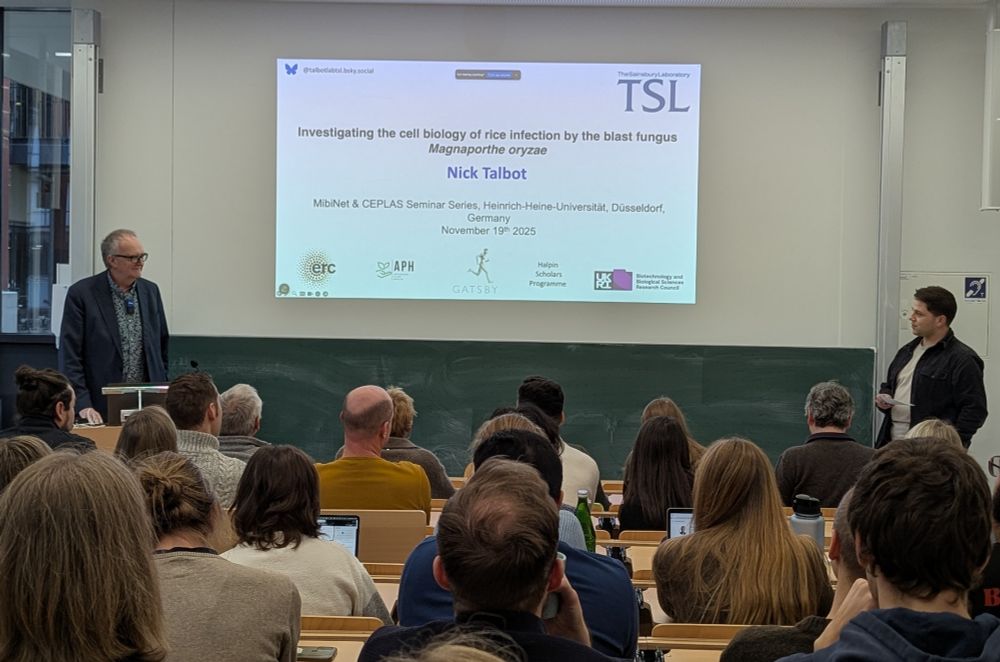
Huge thanks to Prof. Dr. Nick Talbot! We were fascinated by his MibiNet talk, exploring how the appressorium uses turgor pressure to infect rice & how the transpressorium spreads the fungus. Brilliant insights!
@talbotlabtsl.bsky.social
#MibiNet
25.11.2025 08:36 — 👍 6 🔁 2 💬 0 📌 0

Next generation of 1001 Genomes Plus browser and data download
Please indicate all features you would like to see in a browser that displays features of completely sequenced Arabidopsis thaliana genomes
We (Nordborg & Weigel labs) need input on the next generation of genome browsers & data download modes for the #Arabidopsis #1001GenomesPlus project. We have now a curated collection of over 500 long read genomes.
Please help us by filling out this questionnaire: docs.google.com/forms/d/e/1F...
24.11.2025 14:49 — 👍 58 🔁 64 💬 1 📌 1
Some news 🎉
After five incredible years in Tübingen, it’s time to say goodbye.
Starting February, the Mutualisms Lab will relocate to the John Innes Centre, right next door to @berasymbionts.bsky.social and her group at The Sainsbury Laboratory 🪲🦠
24.11.2025 18:42 — 👍 126 🔁 23 💬 20 📌 2

Glorious morning in London
20.11.2025 10:42 — 👍 8 🔁 0 💬 0 📌 0

Early start in Düsseldorf after great visit to Mibinet and CEPLAS consortia discussing Magnaporthe biology and lichens! @ceplas.bsky.social @MibiNet.bsky.social
20.11.2025 05:52 — 👍 10 🔁 0 💬 0 📌 0
Our new lab logo (created by the amazing @hsuanpai.bsky.social)!
tatsuyanobori.com
18.11.2025 10:44 — 👍 99 🔁 10 💬 0 📌 0

Living Maps: Uncovering the Spatial Biology of Plants
Tatsuya Nobori brings high-resolution multiomic approaches to plant biology to map how plants interact with microbes on a cellular level in 3D.
Looking for a good read?
@tatsuyanobori.bsky.social is featured on The Scientist sharing his scientific journey from Japan to the UK.
“It circles back to my initial ecological interest and how single-cell level interactions might have a ripple effect on the actual ecosystem."
06.11.2025 18:03 — 👍 19 🔁 7 💬 0 📌 1


Great talk today from Luis Larrondo on the remarkable circadian clock control exhibited by fungi and the exquisite light-sensing behaviour that possess, which can be evidenced by image capture using their hyphae as a canvas @thesainsburylab.bsky.social @johninnescentre.bsky.social
14.11.2025 13:44 — 👍 34 🔁 5 💬 1 📌 1
If you discover more species in this way, one of them needs to be "Dromius sp. nov"
14.11.2025 13:18 — 👍 2 🔁 0 💬 0 📌 0
This is a remarkable study describing a new fungal species in a 407 million year old plant - Rugososporomyces lavoisierae Strullu-Derrien and Schornack sp. nov - using some amazing technology. Worth a read 👇
14.11.2025 09:37 — 👍 43 🔁 13 💬 1 📌 0
New light on old stones: a fossil #fungus in #symbiosis with one of the oldest known land plants
@chistinesd.bsky.social, et al.
nph.onlinelibrary.wiley.com/doi/10.1111/...
@dromius.bsky.social @ffercoq.bsky.social #PlantScience
Summary also available in French and Spanish.
14.11.2025 07:35 — 👍 23 🔁 19 💬 1 📌 0
Plant biologist interested in development and evolution 🌱👩🔬🔬 Looking at roots' edges at RDP Lab in Lyon 🇨🇵. Previously looking at moss at Uni of Bristol 🇬🇧. Italian 🇮🇹🇪🇺 Books, cats and hikes. She/her
BBSRC Discovery Fellow @oxfordbiology.bsky.social | Working on cell-to-cell connectivity in C4 photosynthesis
PhD candidate at PLEN, Københavns Universitet 🇩🇰 evobio, fungal genomics and accessory chromosomes 🧬🍄
Neurospicy🌻🌻🌻
We study interactions and evolutionary genomics of fungi
PhD student at @ualberta.bsky.social (University of Alberta)
lichen symbiosis | evolution | fungal biology
Canada 🇨🇦
he/him, but for #fungi, such concepts are irrelevant
Epigenetics, transposable elements, plant biology.
Postdoc @ Gregor Mendel Institute (Vienna, Austria).
@gmivienna.bsky.social
Associate Professor at University of Parma, Italy
Plant Pathologist; interested in molecular plant-microbe interactions and plant disease epidemiology. RTs are not necessarily endorsements. Private account. Homepage @TUM: https://www.mls.ls.tum.de/en/pp/
Scientist, fascinated by the molecular foundation of plant development. Loves microscopy and photography.
MibiNet aims to understand microbial networking in its full complexity to explain how organelles evolve and how the microbiome functions.
https://www.sfb1535.hhu.de/
Plant scientist studying how climate change affects plant toxicity (#cyanide). Born 314ppm.
Interested in science, tech, plants. #MECFS ally #botanist 🌾🪴🧪🌱🌿💉
Views my own
Associate Professor at Imperial College London. Develops novel microfluidic technologies for applications in the life sciences 🍄🌱🦠🔬
Gardening, botany, photography
Staff scientist @biozentrum.unibas.ch using algorithms to look at tiny stuff inside cells, or #cryoET if you prefer. Here I talk mostly about my research. Views my own. 🇧🇷 in 🇨🇭
Plant scientist working on PhD at the University of Bristol. Interested in evo-devo and natural history. Microbotanist - bryology and bryo-mycology
She/Her
🧬 Scientist || 🎨 Artist || 🪲 Bug, frog and mushroom-enthusiast
NRPDTP PhD at UEA
Interested in Gene-Editing, Protein Engineering, Insect Development and Plant-Insect Interactions!
Associate Professor, Inst. Plant & Microbial Biology, Taipei, Taiwan
Adjunct Faculty, National Taiwan University
EMBO Global Investigator
#Evolution #Eukaryote #Algae #GiantVirus #Genomics
#Microbes in our environment
https://chuanku-lab.github.io/kulab
Eukaryotic evolution, protist diversity, mitochondrial evolution
At OIST, Japan with @filiphusnik.bsky.social; formerly at IBE, Barcelona with @multicellgenome.bsky.social and Dalhousie University with @andrewjroger.bsky.social
🏳️🌈She/her. Views my own
Emmy Noether/Junior Group Leader at ZMBP Tübingen 🌱 plant development | cell identity | gene regulation | time | embryogenesis 🎨 amateur printmaker | linocut