Oops, wrong time in the original post! It will be 15:30 CET 😉
25.09.2025 12:11 — 👍 3 🔁 3 💬 1 📌 0
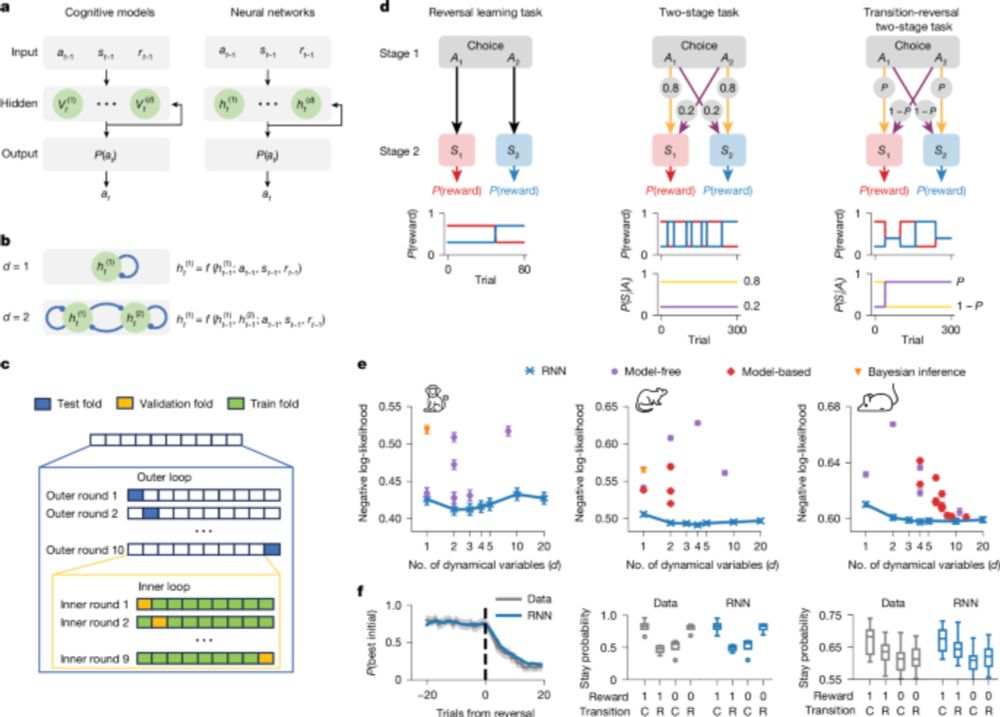
I’m super excited to finally put my recent work with @behrenstimb.bsky.social on bioRxiv, where we develop a new mechanistic theory of how PFC structures adaptive behaviour using attractor dynamics in space and time!
www.biorxiv.org/content/10.1...
24.09.2025 09:52 — 👍 219 🔁 86 💬 9 📌 9

Ultrasound system for precise neuromodulation of human deep brain circuits - Nature Communications
Modulating deep brain structure can lead to therapies for neurological conditions. Here, the authors show a transcranial ultrasound stimulation (TUS) system featuring a 256-element helmet-shaped trans...
Might focused ultrasound one day replace DBS?
UK Scientists built a 256-panel focused ultrasound helmet that can precisely target deep brain regions. Using theta-burst TUS, they stimulated the LGN and found visual cortex activity with effects lasting up to 40 minutes.
#neuroskyence #ultrasound
14.09.2025 10:19 — 👍 26 🔁 14 💬 1 📌 2

a penguin is sticking his head out of a hole next to a job application
ALT: a penguin is sticking his head out of a hole next to a job application
📢 We are hiring! 📢
For our @wellcometrust.bsky.social grant on information gathering biases in #OCD and #Schizophrenia, we are looking for a Postdoc in Computational Modelling, supervised by Peter Dayan and myself.
Interested? See all the details in the job advert here: devcompsy.org/wp-content/u...
19.08.2025 11:32 — 👍 51 🔁 47 💬 2 📌 1

📢 We're hiring a Research Assistant in cognitive neuroscience & computational psychiatry! 📢
Join us at UCL to conduct an MEG study of reward & memory, exploring how brain signals link to variability in apathy and anhedonia.
🔗 apply from next week: lmdlab.github.io
🚨closes September 12th!
28.08.2025 08:05 — 👍 30 🔁 27 💬 2 📌 1
The unexpected value of communicating science to the public
Nature Reviews Neuroscience - As a group, our scientific community has a responsibility to unpack the ‘what’ and ‘why’ behind our work for the public, not least because much...
Some scientists haven't yet internalized the "why" behind science writing for the public - not just as a service, but for themselves. (I didn't always get it). In this piece for @natrevneuro.nature.com, I draw on the neuroscience of curiosity & decision making to unpack its value.
rdcu.be/eCGr7
27.08.2025 11:21 — 👍 136 🔁 41 💬 3 📌 13
🚨We believe this is a major step forward in how we study hippocampus function in healthy humans.
Using novel behavioral tasks, fMRI, RL & RNN modeling, and transcranial ultrasound stimulation (TUS), we demonstrate the causal role of hippocampus in relational structure learning.
28.08.2025 14:00 — 👍 130 🔁 47 💬 2 📌 6
Also check out the TUS study from @mkflugge.bsky.social lab! Hope TUS opens up a new avenue for exploring deep brain functions in healthy humans!
30.08.2025 08:26 — 👍 4 🔁 0 💬 0 📌 0
We also thank @mkwittmann.bsky.social, @marcelomattar.bsky.social, and people from Behrens Lab
@behrenstimb.bsky.social, for their helpful comments on this work!
Also had a lot of fun presenting this at #RLDM2025 and #CCN2025. We really appreciate all the generous feedback.
28.08.2025 22:21 — 👍 1 🔁 0 💬 1 📌 0
Huge thanks to people in the Rushworth Lab and collaborators @oxexppsy.bsky.social who made this work possible:
@alimahmoodi.bsky.social @mkflugge.bsky.social @simonedambrogio.bsky.social @mirunarascu.bsky.social, Naomi Kingston, Pranav Sankhe, Shuyi Luo, and my incredible mentor Matthew Rushworth.
28.08.2025 22:18 — 👍 2 🔁 0 💬 1 📌 0

6. 🚀 This is enabled by transcranial ultrasound stimulation (TUS)—a safe, reversible, precise method to non-invasively probe deep brain function, which finally makes the hippocampus accessible in healthy humans.
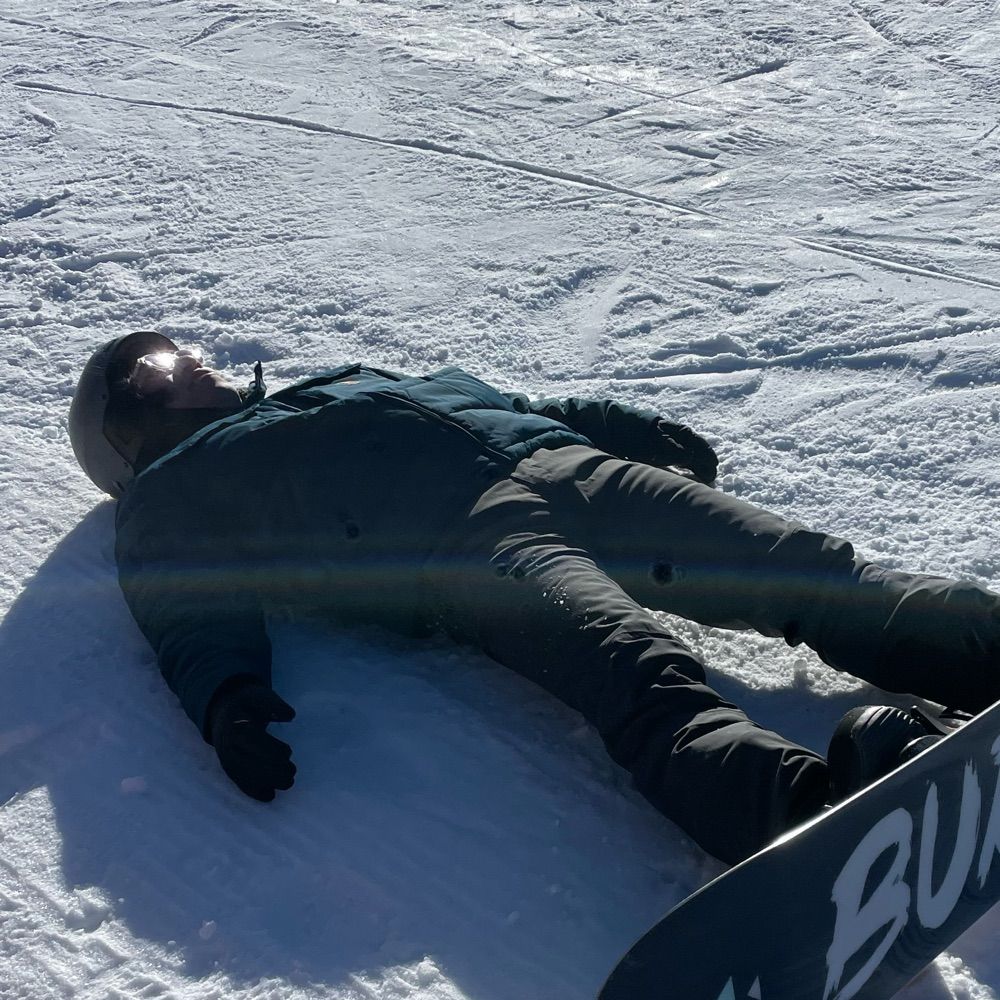
Here is me being stimulated to test the TUS effect myself.
28.08.2025 20:34 — 👍 1 🔁 0 💬 1 📌 0

5. 🌟Empirical evidence: Using TUS to temporarily modulate hippocampal activity in healthy humans, we primarily disrupted their ability to use relational knowledge for inference, confirming its causal necessity for relational structure learning.
28.08.2025 20:33 — 👍 1 🔁 0 💬 1 📌 0

4. ⏩Computational predictions: An RNN trained on our task developed hippocampus-like units encoding relational structure. Lesioning these units selectively disrupted inference — predicting the hippocampus’s causal role.
28.08.2025 14:11 — 👍 2 🔁 0 💬 1 📌 0


3. 🧠 Neural basis: using fMRI, we show that such relational knowledge is consistently represented in the hippocampus across diverse contexts, in a manner distinct from other brain regions.
Next, we asked: Is this representation causally necessary for structure-based inference?
28.08.2025 14:08 — 👍 0 🔁 0 💬 1 📌 0

2. 🤖 Our RL models show that only models with relational knowledge capture human behaviour, outperforming experience-only models.
28.08.2025 14:07 — 👍 3 🔁 0 💬 1 📌 0
1. 👥 When meeting new people, we don’t learn about them from scratch — in our “Goalkeeper Game”, participants showed structure-based inference by leveraging relational knowledge to rapidly learn new relationships in changing environments.
28.08.2025 14:05 — 👍 0 🔁 0 💬 1 📌 0
🚨We believe this is a major step forward in how we study hippocampus function in healthy humans.
Using novel behavioral tasks, fMRI, RL & RNN modeling, and transcranial ultrasound stimulation (TUS), we demonstrate the causal role of hippocampus in relational structure learning.
28.08.2025 14:00 — 👍 130 🔁 47 💬 2 📌 6
Causal necessity of human hippocampus for structure-based inference in learning https://www.biorxiv.org/content/10.1101/2025.08.19.664920v1
19.08.2025 14:15 — 👍 13 🔁 3 💬 0 📌 2

UCL – University College London
UCL is consistently ranked as one of the top ten universities in the world (QS World University Rankings 2010-2022) and is No.2 in the UK for research power (Research Excellence Framework 2021).
📢 Job announcement: Two (!) 3-year postdoc jobs in our lab at UCL 📢
🧠💫🔊 We are looking for postdocs interested in the abstract mechanisms underlying social cognition. Modelling, fMRI and non-invasive ultrasound, a new deep-brain stimulation method.
Please RT
www.ucl.ac.uk/work-at-ucl/...
07.08.2025 14:25 — 👍 63 🔁 55 💬 3 📌 4
CCN Lab
🚨 We’re hiring! The Computational Cognitive Neuroscience Lab at Virginia Tech is looking for a postdoc to join our team studying the neural + computational mechanisms of structure learning and flexible cognition: ccnvt.github.io#positions
10.07.2025 12:17 — 👍 29 🔁 19 💬 1 📌 1

OxCIN logo
We're excited to announce that WIN is now the Oxford University Centre for Integrative Neuroimaging: OxCIN! Our mission: developing and deploying neuroimaging and related technology to solve big challenges in basic neuroscience and brain health. oxcin.ox.ac.uk/about/vision
28.04.2025 16:23 — 👍 43 🔁 14 💬 0 📌 2
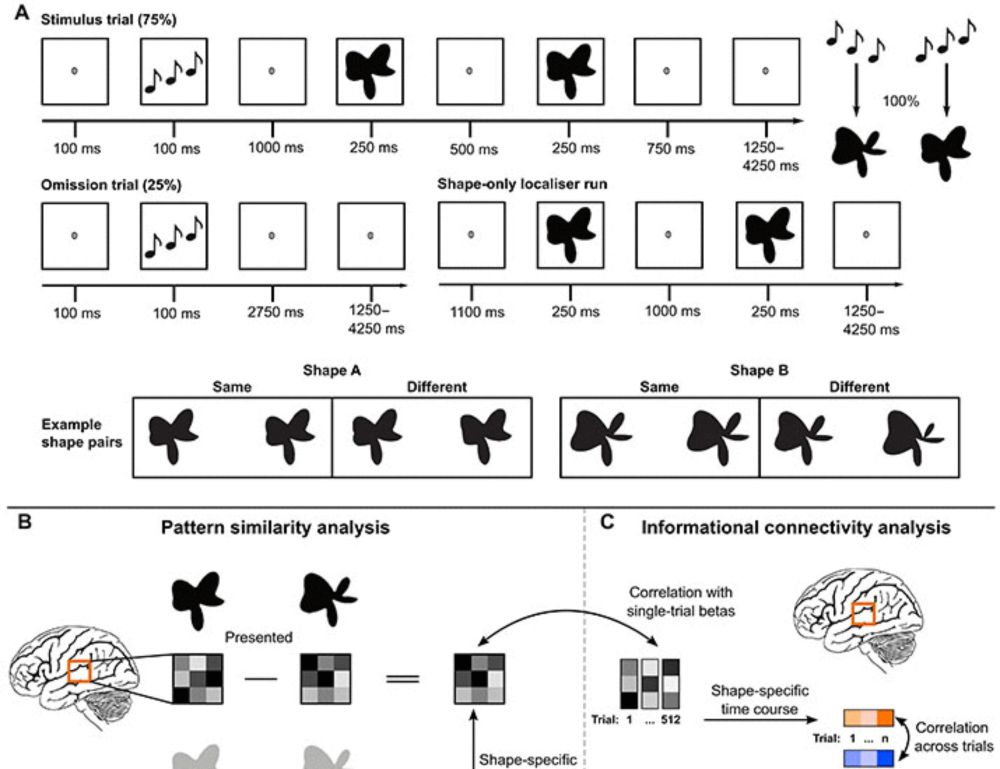
Communication of perceptual predictions from the hippocampus to the deep layers of the parahippocampal cortex
High-resolution neuroimaging reveals stimulus-specific predictions sent from hippocampus to the neocortex during perception.
Our study using layer fMRI to study the direction of communication between the hippocampus and cortex during perceptual predictions is finally out in Science Advances! Predicted-but-omitted shapes are represented in CA2/3 and correlate specifically with deep layers of PHC, suggesting feedback. 🧠🟦
22.05.2025 01:55 — 👍 166 🔁 53 💬 4 📌 1
Neuroeconomics Summer School
announcing this year's neuroeconomics summer school, this time outside paris. too many great lecturers to list, even too many great organizers (plassmann,glimcher,tymula,kable,me). & you wouldnt believe all the past students and where they are now. sign up: www.insead.edu/events/neuro...
10.02.2025 02:26 — 👍 43 🔁 17 💬 0 📌 1


🚨 SUMMER SCHOOL!
Announcing the 2nd Birmingham-Leiden Summer School in Computational Social Cognition, Sep 2-5, 2025.
Fantastic line-up of keynote: Matthew Rushworth, Diana Tamir @dianatamir.bsky.social, and David Amodio @davidamodio.bsky.social .
👇
Apply by 18 April (compsoccog.com) and RT!
17.02.2025 16:16 — 👍 37 🔁 22 💬 0 📌 4
PhD student in CogSci at FeldmanHall Lab, Brown University
PhD candidate @dartmouthpbs.bsky.social
Cognitive Neuroscientist | Assistant Prof at VU Amsterdam | Active vision, memory, imagery | Multi-task studies, fMRI, eye tracking | https://matthiasnau.com
Asst Professor Psychology & Data Science @ NYU | Working on brains & climate, separately | Author of Models of the Mind: How physics, engineering, and mathematics have shaped our understanding of the brain https://shorturl.at/g23c5 | Personal account (duh)
Assistant Professor / Faculty Fellow @nyudatascience.bsky.social studying cognition in mind & brain with neural nets, Bayes, and other tools (eringrant.github.io).
elsewhere: sigmoid.social/@eringrant, twitter.com/ermgrant @ermgrant
Cognitive neuroscientist (Assistant Professor at NYU), human episodic memory, M/EEG, ECoG, and behavior. How do we reinstate temporally dynamic, information-rich memories?
Annual Meeting: https://www.bacn.co.uk/conferences
Edinburgh
11-12 September 2025
#BACN25
Account managed by @engra.me
Prof of Cognitive Neuroscience & Vice Dean at UCL, Fellow of the Royal Inst. of Navigation. I study how we remember, navigate & imagine space
Photo: Our upcoming field research in the Marshall Islands
https://spierslab.wixsite.com/wavesandwayfinding
Computational Machinery of Cognition (CMC) lab focuses on understanding the computational and neural machinery of goal-driven behavior | PI: @neuroprinciplist.bsky.social | https://shervinsafavi.github.io/cmclab/
Neuroscientist investigating neuronal bases of reward and learning. Associate Prof at Oxford University. www.laklab.org
Postdoc at Helmholtz Munich (Schulz lab) and MPI for Biological Cybernetics (Dayan lab) || Ph.D. from EPFL (Gerstner lab) || Working on computational models of learning and decision-making in the brain; https://sites.google.com/view/modirsha
searching for principles, adaptive behaviors, empirical approach, integration | doing comp neuroscience & psychiatry | PI @cmc-lab.bsky.social | previously @maxplanckcampus.bsky.social (Peter Dayan & Nikos Logothetis)
Tea drinking assistant professor of cognitive psychology at Stanford.
https://cicl.stanford.edu
PhD candidate w/ Helen Barron and Jill O’Reilly at NDCN, University of Oxford. Interested in cognitive maps, memory and psychosis.
psychology prof @yale
http://actcompthink.org
Joint postdoc at Columbia/NYU. Sponsored by New York Academy of Sciences through Leon Levy Foundation. PhD from Princeton University, Yale '19
Professor at Stanford. Psychology/Neuroscience/Data Science. Books include: The New Mind Readers, Handbook of fMRI Data Analysis, Hard to Break, and Statistical Thinking.
https://poldrack.github.io/
neuroscientist in Korea (co-director of IBS-CNIR) interested in how neuroimaging (e.g. fMRI or widefield optical imaging) can facilitate closed-loop causal interventions (e.g. neurofeedback, patterned stimulations). https://tinyurl.com/hakwan