Thankfully I’ve not been mistaken for this guy.
02.12.2025 19:39 — 👍 1 🔁 0 💬 1 📌 0
@tjarnold.bsky.social
Researcher at the Heseltine Institute, University of Liverpool. Regional development, infrastructure, planning, Leicester City FC, cricket and pictures of my dog.
Thankfully I’ve not been mistaken for this guy.
02.12.2025 19:39 — 👍 1 🔁 0 💬 1 📌 0 01.12.2025 18:49 — 👍 4 🔁 0 💬 0 📌 0

A small dog in a park with a rainbow behind him.
Timeline cleanse: dog + rainbow.
30.11.2025 14:45 — 👍 9 🔁 0 💬 0 📌 0
A map illustrating proposed local government reorganisation in Lancashire. The map shows the county split into three proposed unitary council areas: Coastal Lancashire, Central Lancashire and Pennine Lancashire.
The three unitary proposal isn't perfect but makes more sense I think. new.fylde.gov.uk/wp-content/u...
28.11.2025 13:24 — 👍 1 🔁 0 💬 1 📌 0Americans on Twitter, I imagine
28.11.2025 12:09 — 👍 1 🔁 0 💬 0 📌 0My brother lives in Cardiff and every time I go to see him I’m surprised how few decent pubs there are in the city centre.
26.11.2025 20:21 — 👍 0 🔁 0 💬 1 📌 0
Percentage Model (an ad valorem rate structure) 5.2.2. The government’s proposed approach is for the rate to be a percentage-based model, as this is the fairest and more flexible way to structure a levy. A percentage-based model calculates the visitor levy as a 29 proportion of the cost of the accommodation being provided. This approach is increasingly used internationally and is our preferred option for England. This model offers several advantages. In particular, it is proportionate, with higher-cost stays incurring higher charges, ensuring that those who can afford more or choose to stay in more expensive accommodation types or locations will contribute more. This contrasts to other models where visitors pay the same, regardless of the cost of their accommodation. An ad valorem charge also naturally captures fluctuations in prices over time – either with seasonal price changes, or as prices change year-on-year – without the need to add complexity through seasonal tiers, or annual updates that would be required in a flat rate model. Furthermore, this approach would reflect actual spending behaviour, making a levy more proportionate to the economic activity it is linked to. 5.2.3. The government recognises that a percentage-based model may, in some cases, create additional complexity. Accommodation providers may, for example, need to calculate a levy based on variable pricing, though many providers already handle dynamic pricing, and a levy could be integrated into existing payment processes. The government acknowledges that some providers may find it more challenging to adapt payment processes to accommodate additional prices, and would like to understand the views of these providers through this consultation process. Additional rules may also be needed if, for example, local leaders had the flexibility to exempt certain types of visitors, and it was necessary to establish what portion of the overall cost is attributable to different visitors in a group.
Not sure I agree with government's preference for a percentage-based levy though. In the age of online booking and dynamic pricing this could add unneccessary complexity. A flat rate may seem less fair in theory but might be easier for visitors.
26.11.2025 17:31 — 👍 2 🔁 0 💬 0 📌 0
3.2. Funding priorities and local allocation 3.2.1. The Government is of the view that local leaders should be able to invest visitor levy revenues in pro-growth projects, including both 19 initiatives directly related to the visitor economy and broader initiatives which have a positive impact on the region’s economic health. This includes, for example, improved public transport, regeneration of the public realm, or providing housing to allow employees to live closer to their places of work, and investing in cultural and visitor attractions. This could be achieved by allowing local leaders to use levy revenues towards capital investment and to access borrowing. This type of investment will enhance the overall visitor experience and the wider local economy, which could in turn drive up tourism and overnight stays. 3.2.2. Local leaders should also be able to use levy funds for revenue spending, towards ongoing service delivery that supports local economic growth, including by enhancing the area’s appeal as a destination for visitors. This could include local authority delivered services, where these support growth, including in the local visitor economy. It would also include Strategic Authority-level functions such as funding: • Existing and new cultural and sporting events that attract visitors to the area, supported by new powers in the English Devolution and Community Empowerment Bill (EDCEB) that allow Mayors to invest in concerts, exhibitions, and local tourism promotion, including in shoulder seasons; • Transport services, such as bus franchising and integrated ticketing schemes, which improve accessibility for visitors and residents; and, • Support for businesses in training and skills development, recognising the significant labour and skills shortages in the hospitality sector.
Very good news that Mayoral Strategic Authorities will be allowed to introduce tourist taxes. I feared government might seek to restrict how funds raised by a visitor levy would be used (e.g. only for transport or public safety), but the proposals are quite flexible. www.gov.uk/government/c...
26.11.2025 17:31 — 👍 2 🔁 0 💬 1 📌 0This is a significant difference from what many expected, particularly for postgraduate programmes. A full-time MSc Planning at Liverpool costs £28,000 for international students.
26.11.2025 16:39 — 👍 1 🔁 0 💬 1 📌 0I know - maybe it's a margins thing? Can't think of many drinks manufacturers that just increased prices in line with the sugar tax, which I find surprising. Irn Bru for example changed their recipe.
26.11.2025 12:13 — 👍 0 🔁 0 💬 0 📌 0That was the thing that surprised me but in hindsight should have been obvious. I'd assumed you'd end up with a more expensive, sugary version and a sugar-tax compliant one. But clearly the economics of that don't stack up for producers so they just cut the sugar.
26.11.2025 11:49 — 👍 1 🔁 0 💬 1 📌 0Changes to the San Pelligrino Limonata recipe after the sugar tax was introduced briefly turned me into Ayn Rand.
26.11.2025 10:51 — 👍 6 🔁 0 💬 0 📌 1Probably a more sensible way of going about it than I had, which mostly involved me completely losing track of time and realising after a 3-0 away defeat at Walsall that it was 3am. I knew one lad at school who wore a suit and buttonhole when his team reached the FA Cup final.
26.11.2025 10:34 — 👍 0 🔁 0 💬 0 📌 0The main thing I learnt after becoming dangerously addicted to CM and later FM was that I cannot be trusted with dopamine-inducing tech, which serves as a useful reminder to never download Tik Tok, own a games console etc. But I still fondly remember my all conquering Macclesfield team from FM06.
26.11.2025 10:26 — 👍 1 🔁 0 💬 1 📌 0Think it’s great that Ben Houchen has ruled out introducing a tourist tax. You’d imagine visitor numbers are more price elastic in some places than others. Similarly the University of Manchester might see little effect from a 6% increase in international fees but for other HEIs it could tank demand.
25.11.2025 22:19 — 👍 1 🔁 0 💬 0 📌 0Your question was why there appears to be widespread support for tourist taxes and opposition to the international levy. I’m suggesting it’s partly because with the tourist tax there is local discretion on whether to introduce it, while the student levy is a universal top-down imposition.
25.11.2025 22:08 — 👍 2 🔁 0 💬 1 📌 0Mayors/Combined Authorities don’t have to introduce a tourism tax - they’re just being given powers to do so. Universities are being forced to add 6% onto international student fees and most don‘t want to.
25.11.2025 19:21 — 👍 6 🔁 0 💬 1 📌 0Yeah I mean I wouldn’t start from here. But cost of living is the number one issue that will kill this or any other government, it’s already doing a bunch of things that work against its stated objectives on that front, and there’s a bigger battle ahead in figuring out how to tax EVs.
25.11.2025 18:14 — 👍 0 🔁 0 💬 0 📌 0I think it was dumb to retain the cut last year but given how much other policies are contributing to inflation (minimum wage increase, employer NI, increase in business rates for supermarkets) plus imminent changes to taxing EVs it’s probably sensible to hold off any changes to fuel duty for now.
25.11.2025 17:54 — 👍 0 🔁 0 💬 1 📌 0
Emerging evidence from the (geographically limited) Manchester room tax suggests it hasn't had a negative impact on visitor numbers www.sciencedirect.com/science/arti.... Evidence from big European cities finds similar. Visits to smaller cities/rural areas/resorts seem a little more price elastic.
25.11.2025 16:16 — 👍 0 🔁 0 💬 0 📌 0This is excellent knowledge for future pub chat, please tell me more! When and why did they disappear?
22.11.2025 19:32 — 👍 1 🔁 0 💬 1 📌 0Let’s have a bit of community wealth building and allow every city and town across this great nation to build their own Blackpool Tower.
22.11.2025 19:24 — 👍 4 🔁 0 💬 1 📌 0Losing Kante in summer 2016 was a blow but anticipated. The main issue was we then spent loads of money on absolute rubbish and Ranieri tried to shoehorn the new signings into an already very effective and tight knit unit.
22.11.2025 18:53 — 👍 1 🔁 0 💬 0 📌 0
Don Mattingly/Travis Head.
Travis Head, fair play.
22.11.2025 09:47 — 👍 2 🔁 0 💬 0 📌 0
*PSA EVENT* 'English #Devolution & Community Empowerment Bill - Possibilities & (Missed?) Opportunities' Hybrid workshop with PSA Local Governance & #Politics Group @psalocalpol.bsky.social
📆 24 November, Online & London
➡️
I canvassed in that ward for GE2024. Similar to Altrincham, there are some really quite affluent middle aged people in lovely houses but rather than playing golf, driving a Jag and voting Tory as they would have done in the 90s they were doing pottery classes, riding nice bikes and voting Labour.
21.11.2025 11:12 — 👍 4 🔁 0 💬 0 📌 0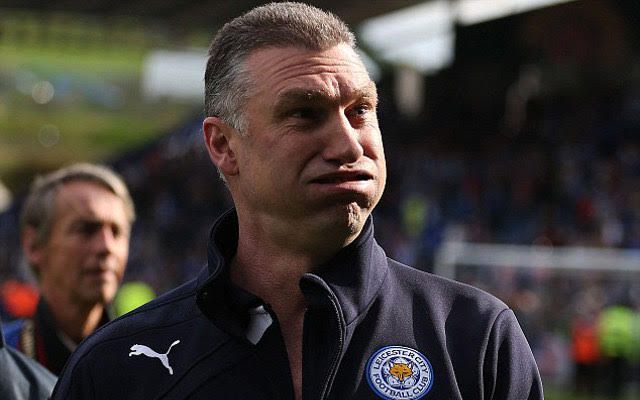
Big Nigel Pearson looking relieved/exhausted.
21.11.2025 09:57 — 👍 1 🔁 0 💬 0 📌 0Very similar to when India played there last year so far.
21.11.2025 08:20 — 👍 0 🔁 0 💬 0 📌 0Stages of realisation as I turned on the tv this morning:
1. Australia are batting 🤔
2. They are 1 down 👍
3. Was there a delayed start? 🤷🏻♂️
4. England have already batted 😭
Feel like I’m watching Trans World Sport. Just needs a languid Bruce Hammal voiceover.
21.11.2025 07:06 — 👍 0 🔁 0 💬 0 📌 0