Book cover: The Ministry of Time by Kaliane Bradley
Summer reading:
Been on my TBR pile for a while. Really enjoyed it. Recommend.
The Ministry of Time by Kaliane Bradley

@educiting.bsky.social
Secondary English Teacher (UK) Deputy HOD, KS4 lead; Examiner; Reading/Oracy lead; MA Women and writing; CELTA, MA English in Education; BBC Bitesize writer and reviewer #UKEd #EduSky #UKteaching #EdUK
Book cover: The Ministry of Time by Kaliane Bradley
Summer reading:
Been on my TBR pile for a while. Really enjoyed it. Recommend.
The Ministry of Time by Kaliane Bradley
Sorry forgot alt-text. The image is the front page of the novel Clear by Carys Davies.
31.07.2025 14:44 — 👍 0 🔁 0 💬 0 📌 0
A beautiful gem of a book - just 154 pages. Highly recommend.
31.07.2025 14:42 — 👍 1 🔁 0 💬 1 📌 0
"Give me a little less
with every dawn."
@marjorielotfi.bsky.social performs John Burnside's "Prayer" in a film directed by Savannah Acquah, from our new series created with @writersmosaic.bsky.social.
www.brinkerhoffpoetr...
📢COMPETITION📢
My book "Closing the Disadvantage Gap in Schools: A Visual Workbook" is finally here & I'm giving away 2 copies. To win all you have to do is like a share this post before June 1st & I'll pick 2 winners.
Find out more about the book here: https://amzn.to/3YK7sDD
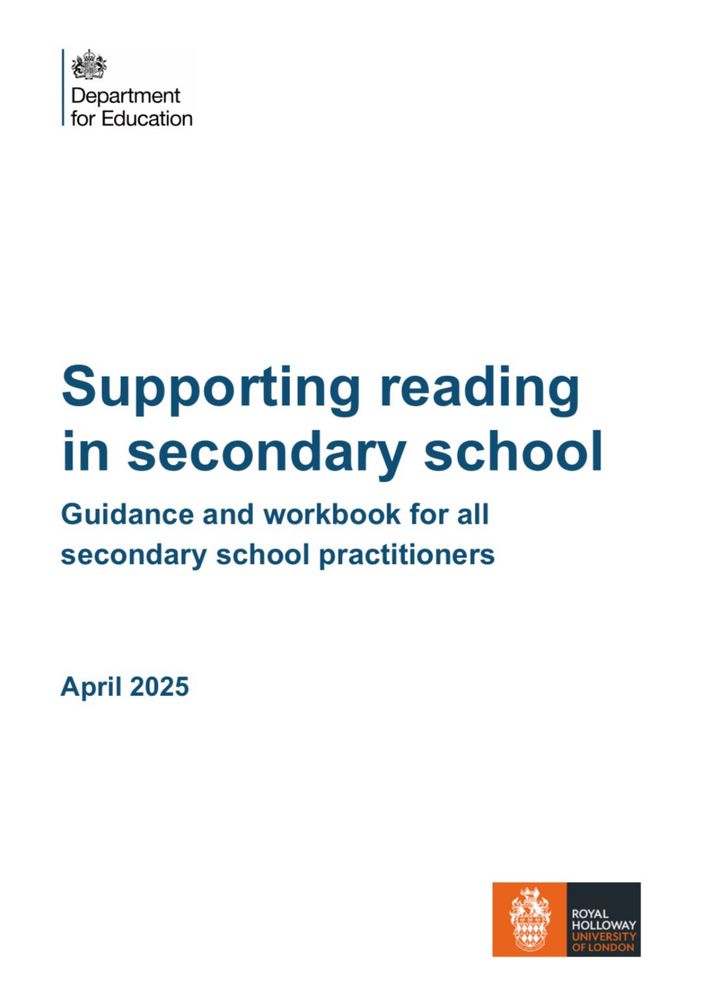
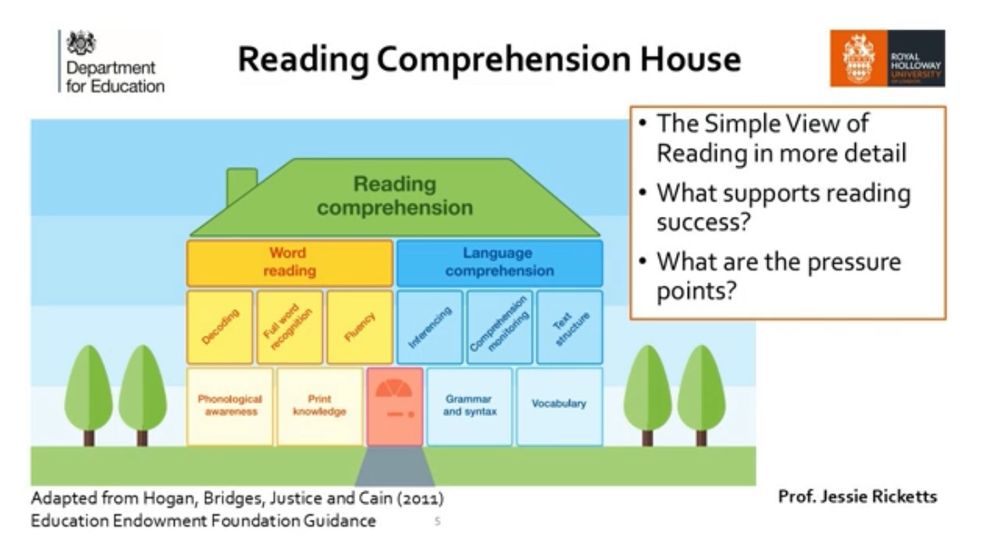
This Department for Education short course on ‘Supporting reading in secondary school’ is an excellent free resource with useful video to build understanding for this crucial area:
www.gov.uk/government/p...

In the first of our new series of films in collaboration with the
@brinkerhoffpoetry.bsky.social the poet @marjorielotfi.bsky.social reads from 'The Hebridean Crab Apple'. The film is directed by Savannah Acquah bit.ly/42EqUTq

Powerpoint and IWBs - time to reclaim analogue teaching. My latest blog.
thinkingflexibly.com/2025/04/19/p...

A poetry prompt by Alison Brackenbury that reads: (quote by William Blake: Ah! shall the Dead live again?) From the dead, who would you most like to know more about? Someone close, who left that cryptic letter? The uncle nobody mentioned? The woman in a biography - in a single footnote? Begin to tell their story. You may find your own.
✍️ #NaPoWriMo is here with the challenge to write a poem a day! Throughout April, The Poetry Society will be featuring poetry writing prompts created by poets that we've worked with recently through competitions, publications and projects.
18.04.2025 07:01 — 👍 6 🔁 3 💬 1 📌 0Thanks - now thinking an A level trip to Bath would be nice!
18.04.2025 10:43 — 👍 1 🔁 0 💬 0 📌 0Love these. Where’s the exhibition, Chris?
18.04.2025 10:30 — 👍 1 🔁 0 💬 1 📌 0
*New post*
This time on systems and school leadership.
Beguiling events and how systems can fool school leaders
birminghamteacher.wordpress.com/2025/04/17/b...

New post⤵️
▸The fad's purpose is what it does◂
...and not what its authors thought it would do
Educational fads seen through systems theory (AKA cybernetics).
Please share (tough for bloggers recently)
#UKEd #EduSky #EruditePedagogy #Cybernetics
cmooreanderson.wixsite.com/teachingbiol...

A really brilliant blog on writing in secondary English by my colleague @andrewemc.bsky.social. A must-read in my view! www.englishandmedia.co.uk/blog/the-wri...
02.04.2025 13:18 — 👍 10 🔁 2 💬 2 📌 010. Vocabulary Explainers
Use in: Science, Geography, Languages, etc.
What: Pupils explain a key term or concept in their own words and use it in context.
Impact: Deepens word-level understanding, especially for tier 2/3 vocab.
Example:
• “Define and explain ‘photosynthesis’.
9. Group Explain or “Pop-Up Presenting”
What: One group explains a topic to the class from memory or with short prep.
Impact: Promotes collaboration, confidence, and ownership of revision.
8. Hot-Seating
Use in: English, History, Languages
What: One student takes on the role of a historical figure, character, or expert; others ask them questions.
Impact: Encourages empathy, recall, and understanding of motivations.
7. Debate and Discussion
Use in: Humanities, Science, English, RE
What: Pupils explore arguments for and against a viewpoint, using evidence.
Impact: Develops critical thinking and evaluative skills.
Example:
• English: Jekyll is good; Hyde is evil - to what extent do you agree?
6. Oral Quizzing in Pairs or Groups
Use in: All subjects
What: Students quiz each other using pre-written or self-made flashcards or question banks.
Impact: Peer teaching and retrieval in one activity.
Variation: Add a challenge — explain your answer, not just state it.
5. Verbal Problem-Solving
Use in: Maths, Science, Computing
What: Pupils talk through the steps of solving a problem as they do it.
Impact: Makes thinking visible and supports reasoning.
Example:
• “Talk me through how you’d solve this equation.”
• “Explain what each part of the circuit is doing.”
4. Think, Pair, Share — with Oracy Prompts
What: After individual thinking, students pair up and verbally explain or justify their thinking.
Impact: Encourages metacognition and deeper thinking.
Sentence starters to support:
• “The key idea here is…”
• “This links to…”
• “One challenge is…”
3. Just a Minute (No Hesitation, Repetition, or Deviation)
What: Students speak for 60 seconds on a topic without pausing or repeating themselves. (Allowed: key topic words!)
Impact: Improves fluency and consolidates vocabulary.
Example:
• Geography: “Speak for 1 minute about coastal erosion.”
2. Verbal Retrieval Practice
Use in: All subjects
What: Pupils talk through what they remember about a topic before checking notes.
Impact: Boosts memory and independence.
Variations:
• One-minute recap
• “What can you remember about…?” round-robin
• Mind map from memory — then explain it aloud
1. Teach It to Someone Else (Feynman Technique)
What: Students explain a concept, process, or topic to a peer as if they’re teaching it to someone younger or unfamiliar.
Impact: Strengthens understanding and highlights misconceptions.
Example:
• Science: Explain how osmosis works.
10 techniques for oracy-based revision strategies. Please share. I’d love some feedback.
16.04.2025 18:42 — 👍 0 🔁 0 💬 1 📌 0As a new #oracy lead in a secondary school, I’ve been thinking about Oracy based #revision techniques. I thought I’d share ten of my favourites here as we hit the final weeks before exams. 🎓 🍎 #edusky #uked #gcse #Alevel Let me know if you find them useful!
16.04.2025 18:42 — 👍 6 🔁 1 💬 1 📌 2
A really good blog on the power of poetry in schools - with important messages for implementation both now and in the discussions about a newly reformed curriculum. Applies to both primary & secondary. @piecorbett.bsky.social childrenspoetrysummit.com/2025/03/27/p...
27.03.2025 10:38 — 👍 8 🔁 3 💬 0 📌 1
Slide showing importance of oracy education - confident speakers and agile communicators

Slide showing one school’s implementation plan. Year 1 explicitly teach oracy

Slide showing how to harness oracy to elevate learning

Slide showing links between speech and language struggles and exclusion from school.
Enjoyable day at Voice 21’s Speaking Summit in London. Particularly good to hear from teachers enacting an oracy education.
25.03.2025 16:17 — 👍 0 🔁 0 💬 0 📌 0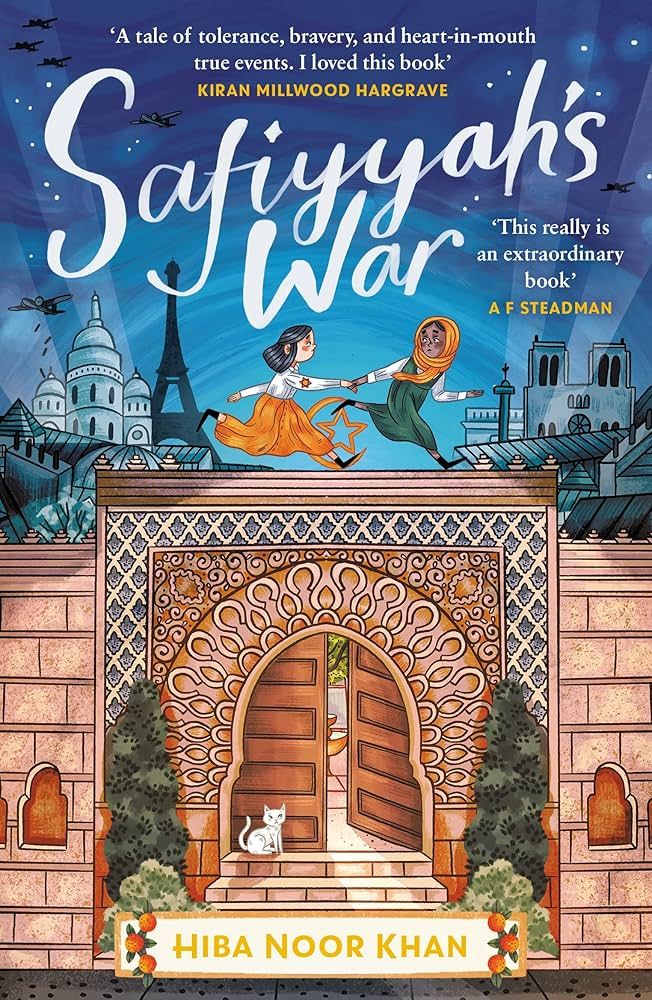
Cover of Safiyyah's War by Hiba Noor Khan, showing two children running through the Paris night, over the roof of a moque
My favourite children's book of the year: SAFIYYAH'S WAR by Hiba Noor Khan. Absolutely beautiful & brilliant; every school & library should have a copy. To which end, I am giving away FREE COPIES TO SCHOOLS & LIBRARIES! Repost & follow to enter; closes 25th Jan 2025!
#BooksOfTheYear #books #giveaway