📢 Call for Participation: Transcribathon on Ottoman Arabic Court Registers
Our contributor Ilyes Mechentel (@unibe.ch) is organizing a transcribathon dedicated to Arabic sources. If you are interested, please contact mohamed.mechentel@unibe.ch !
📅 20 Feb 2026
🏛️ University Bern & Online
Link below⬇️
03.02.2026 17:51 — 👍 2 🔁 3 💬 1 📌 0

In our new blog post, Adrien de Jarmy ( @unistra.fr ) and Clarck Junior Membourou Moimecheme ( @sorbonnenouvelle.bsky.social ) introduce the BADR Project “Writing and Memory of the Battle of Badr (7th–21st c.)”, which uses TEI-XML, relational database, and quantitative visualization tools.
Link⬇️
03.02.2026 17:30 — 👍 4 🔁 3 💬 1 📌 1

Our latest blog post by Adrian Plau presents the digitization project of Sinhala and Pali manuscripts at the Wellcome Collection. The project uses TEI for cataloguing and aims to be the Sri Lankan equivalent of Fihrist for Islamicate manuscripts and SAMHiTA for South Asian manuscripts.
Link below⬇️
30.01.2026 14:53 — 👍 4 🔁 3 💬 1 📌 0
Advanced #HTR for #Arabic significantly enhances Arabic #codicology. By automating the transcription of diverse scripts it allows us to analyze material features and scribal habits. Also, greater digital legibility means deeper insights into the physical and intellectual history of #manuscript.🔎
29.01.2026 17:12 — 👍 6 🔁 2 💬 0 📌 0

For #TBT this week, we’re revisiting Ilyes Mechentel’s (@unibe.ch ) two-part posts on the research history of Handwritten Text Recognition for Arabic texts in France. The posts survey past and ongoing research projects, including Callfront, Kraken, CALFA, and other research initiatives.
Link below⬇️
29.01.2026 14:21 — 👍 10 🔁 7 💬 1 📌 1
Le travail de l'ErC Langarchiv, dirigé par @camillelefebvre.bsky.social (EHESS/CNRS, IMAF) et plus particulièrement l'engagement dans la diffusion des connaissances sur les acteurs africains par Wikipedia sont à l'honneur dans ce billet :
28.01.2026 05:41 — 👍 4 🔁 2 💬 0 📌 0

In our new post, @transcrireada.bsky.social introduces the work of the Langarchiv project at IMAF Paris, which trains graduate students to write Wikipedia articles on African intellectuals and historical sources, addressing the encyclopedia's uneven representation of African history.
Link below ⬇️
27.01.2026 15:18 — 👍 4 🔁 4 💬 1 📌 0
私が大会委員長を務めました、令和7年5月開催の『The Digital Orientalist @digitalorientalist.bsky.social 』誌主催国際会議「AI and the Digital Humanities for the Study of Asia, Africa, and Oceania」のプロシーデイングス無料Web公開が進んでいます。今回は、神戸大学の清原萌歌先生による「Suggesting a Language-Specific Gender Perspective for AI Translation Research」です!
23.01.2026 16:11 — 👍 1 🔁 1 💬 0 📌 0

In our latest blog post, Moeka Kiyohara (University of East Anglia) discusses the relationship between gender-specific speech styles (女ことば and 男ことば) in Japanese and English-to-Japanese machine translation.
Read more on our blog:
🔗 digitalorientalist.com/2026/01/23/s...
23.01.2026 15:09 — 👍 4 🔁 3 💬 0 📌 1
and with it, your reminder that you can write for the #DO as guest contributor any time!
We want to publish your work! All info here digitalorientalist.com/submit-your-...
21.01.2026 14:39 — 👍 1 🔁 2 💬 0 📌 0

#tbt #otd 2022: a #guestpost by Ulrich Rebstock and Marvin Müller, introducing the AABC – African Alphabets of the Bayreuth Cluster, an application to provide a common linguistic base for all kinds of communication and transfer of information about African vernacular affairs
Check it out 👇
21.01.2026 14:37 — 👍 0 🔁 0 💬 1 📌 1

Our latest blog post by Enes Yılandiloğlu presents a computational pipeline for Ottoman Turkish spatial data. From extracting place names with NER to mapping toponyms, Enes highlights hurdles like the absence of punctuation and the complexities of geographic disambiguation.
Link below⬇️
20.01.2026 15:56 — 👍 4 🔁 3 💬 1 📌 0

#OnThisDay
On 2024 Jan 19, Maddalena Poli @madpoli.bsky.social shared with us several new online resources and databases for the study of ancient Chinese manuscripts, including 戰國竹簡全文資料庫, 中國古代簡帛字形辭例數據庫 , 開放古文字字型庫, and 漢語多功能字型庫.
Read more:
🔗 digitalorientalist.com/2024/01/19/o...
19.01.2026 12:04 — 👍 7 🔁 6 💬 0 📌 0

Our latest blog post summarizes the proceedings of The Digital Orientalist’s Virtual Conference 2025. This year’s materials include both written papers and video recordings!
Find out more: 🔗 digitalorientalist.com/2026/01/16/a...
16.01.2026 18:18 — 👍 2 🔁 0 💬 0 📌 0

#onthisday
Following up Zach Butler's new post for us yesterday, a year ago, in his post on January 14th 2025, Zach introduced to us Apatosaurus, a tool created by David Flood (Harvard) for creating, editing, visualizing, and analyzing digital apparatus.
🔗 digitalorientalist.com/2025/01/14/a...
14.01.2026 13:31 — 👍 4 🔁 3 💬 0 📌 0
@labhd-ilc.bsky.social
14.01.2026 07:17 — 👍 1 🔁 1 💬 0 📌 0

In our latest blog post, Zach Butler guides us through Marimo, a tool similar to Jupyter Notebooks and Google Colab, but one that can be saved and executed directly as Python files!
Find out more on our website:
🔗 digitalorientalist.com/2026/01/13/m...
#digitalhumanities #python
13.01.2026 15:53 — 👍 3 🔁 1 💬 0 📌 1
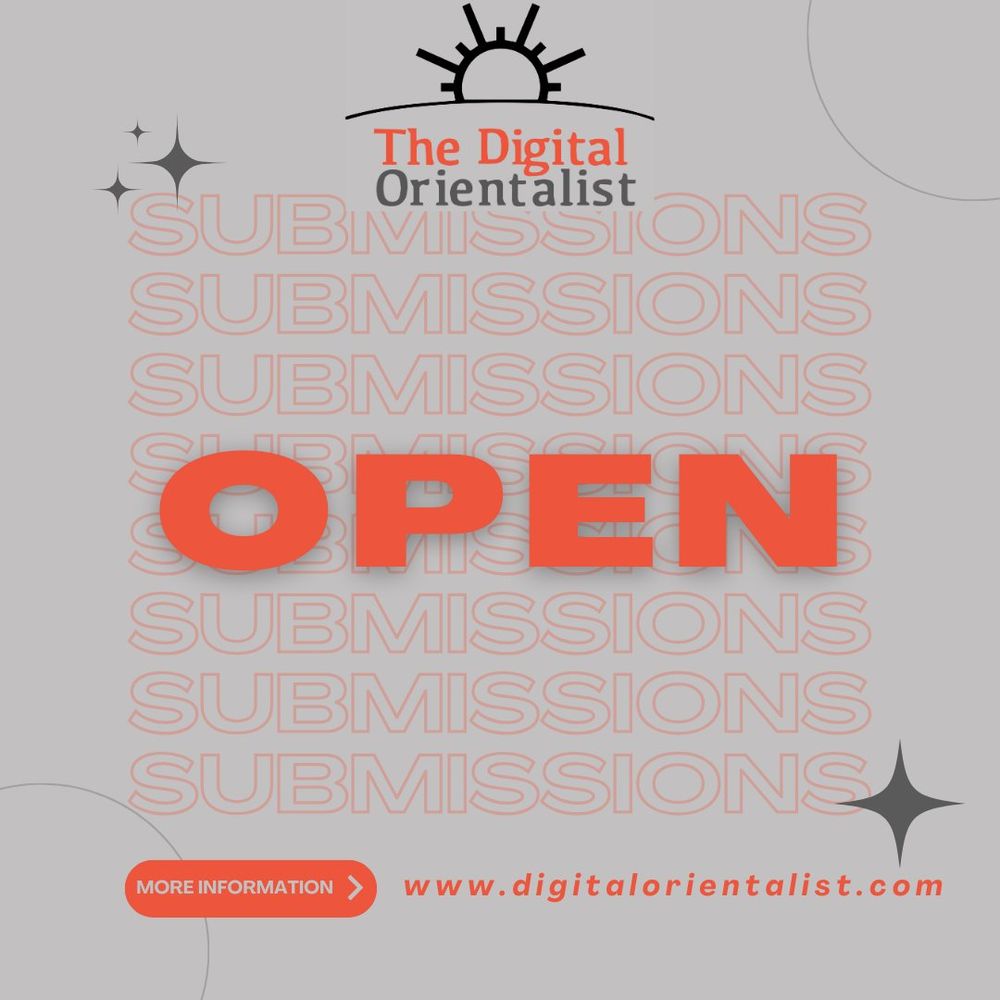
The #DO was started with the idea of brining to a wide audience developments and topics in the #DH worlds of Asian, N. African and Middle Eastern fields. It is currently the only platform that does so, as open-access resource.
Write for us!
10.01.2026 13:21 — 👍 4 🔁 3 💬 0 📌 0

In today’s post, Raúl Cervera Álvarez (Universitat de Barcelona) introduces the REDIF Database, an ongoing project that allows users to learn about and research different agents of the Hispanic Monarchy across the globe.
🔗 www.ub.edu/redif/
🔗 digitalorientalist.com/2026/01/09/t...
09.01.2026 16:23 — 👍 2 🔁 1 💬 0 📌 0
Creating the digital infrastructure for the study of the premodern Islamicate world. openiti.org
Account managed by @jparkesallen.bsky.social
historian of the Islamicate with @openiti.bsky.social; community food forest/garden organizer with @foodforestchatt.bsky.social. ☦ Christian, father, deep time delver. 🏴 anarcho-agrarian 🌻 upholder of Gustav Landauer thought 🌹
Columbia Ph.D. // Ottoman and Iranian History // Other Random Stuff
Former Postdoc at UniGenova | alumnus UToronto | First Gen + ASD | studies Mediterranean economic history 1350–1750, focusing on Genoa, slavery, commerce, networks, notarial contracts, and law | also digital humanities, semantic data and environment.
Hello from Medievalists.net, where the Middle Ages begins - check out our website at www.medievalists.net
Anthropologist of Art. 🎓
Researching the intersection of sacred rituals, symbols, nature, and material culture in Southeast Asia.
Founder: @asianheritagesilva.org
📍 Mekong basin area + Indonesia | https://linktr.ee/arcangelo.dipaolo
Documenting the sacred arboreal heritage of Southeast Asia. 🌿 Mapping the intersection of Ecology, Buddhism & History. Not just plants, but living monuments. 📍 A digital research initiative. 👇 Explore the Archive: https://www.asianheritagesilva.org/
Der Fachinformationsdienst Romanistik (FID) wird betrieben von der ULB Bonn und der @stabihh.bsky.social und gefördert von der @dfg.de. 👉 http://fid-romanistik.de
Blogger, Hispanist und Bibliothekar an der @stabihh.bsky.social und beim @fidromanistik.bsky.social
#SocialMedia #DigitalHumanities #FCSP #FCS
PhD candidate, Indian Ocean history
Offizieller Kanal. News rund um die Uni Bern. Motto: Wissen schafft Wert. Universität Bern #unibern
Mastodon: @unibern@mastodon.online
Impressum: http://ow.ly/mXYsG.
Netiquette: https://www.unibe.ch/aktuell/soziale_medien/netiquette/index_ger.html
Modern Japanese Lit. & Cul. Studies, Digital Humanities; 『帝国の書店』(2025)
Historienne
Directrice de recherche/Research professor CNRS-EHESS
Spécialiste du Sahara et du Sahel
19e-20e s.
PI ERC Langarchiv
https://langarchiv.hypotheses.org/
PhD, Associate Professor in Poli Sci, interested in political systems of the Global South, increasingly concerned about democratic backsliding in my own country. Polyglot. Eyes wide open.
Reposts are sometimes endorsements
This is the official profile of The GLOCAL,The global council for Anthropological Linguistics
PhD New Testament and Early Christianity, University of Edinburgh (UK); Arts and Humanities Research Computing at Harvard University
Historian. Senior Lecturer. early modern & maritime history & forced labor & Ottoman history & German local history & connected history || hiking 🌄
Linguist leading the Chair for Multilingual Computational Linguistics at the University of Passau. Working on computer-assisted approaches to historical and typological language comparison.