Is there a new embrace of religion among the young? News reports have found examples of flourishing young congregations. But Pew national polls find stability over last 5 years and some decline among the young. Some perspective. charlesatpollsandvotes.substack.com/p/religion-a...
09.12.2025 18:22 — 👍 4 🔁 3 💬 0 📌 0

At the same time, today's youngest adults are at least as religious - if not moreso - than the second youngest adults.
But this isn't the first time we've seen this pattern, with young people entering adulthood just as religious as their predecessors before gradually diverging.
pewrsr.ch/4pKHIC7
08.12.2025 21:57 — 👍 0 🔁 0 💬 0 📌 0

Our new study takes a close look at religion among young adults. It shows that young adults in the U.S. today
1) Are less religious than older people
2) Are less religious than young people were a decade ago
3) Have not become more religious in recent years
pewrsr.ch/4pKHIC7
08.12.2025 19:24 — 👍 9 🔁 5 💬 3 📌 1

New report takes a fresh look at religion trends in the U.S. In 2025 data, key measures of religiousness continue to hold steady:
pewrsr.ch/4pKHIC7
08.12.2025 19:19 — 👍 7 🔁 4 💬 1 📌 0

Hi! BLACK AND CATHOLIC is available from @undpress.bsky.social or your favorite retailer!
06.12.2025 17:22 — 👍 7 🔁 2 💬 0 📌 0

U.S. Catholics are still getting to know Pope Leo XIV. But they like what they've seen so far.
pewrsr.ch/46j5YDo
12.09.2025 14:46 — 👍 2 🔁 0 💬 0 📌 1

In an experiment, Pew Research Center demonstrated that opt-in and probability-based surveys produced very different results about young adults' views of the Holocaust and abortion.
Remember, if you encounter what seems like an implausible survey finding, ask:
1. Were survey respondents selected randomly or was this an opt-in poll?
2. Could the results, especially for young adults, be driven by bogus respondents?
Keep this post in mind: www.pewresearch.org/short-reads/... 🧪
08.09.2025 18:42 — 👍 259 🔁 115 💬 6 📌 5

Core measures of religiousness, by decade born
From @pewresearch.org's 2023-24 Religious Landscape Study
Read more: pewrsr.ch/3EXnfrS
05.09.2025 19:15 — 👍 14 🔁 7 💬 1 📌 0
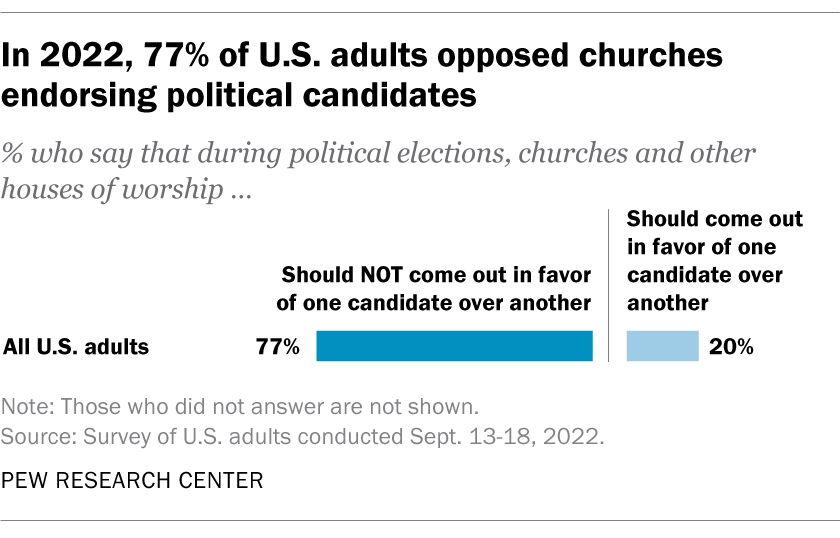
Bar chart showing that in a 2022 Pew Research Center survey, 77% of U.S. adults said churches and other houses of worship should not come out in favor of one political candidate over another.
With the IRS planning to let churches endorse political candidates, past surveys show that a majority of Americans oppose the idea. In 2022, 77% of US adults – including 84% of Democrats and 70% of Republicans – said churches shouldn't endorse candidates. www.pewresearch.org/short-reads/...
10.07.2025 18:19 — 👍 18 🔁 6 💬 1 📌 0
Does the CES accurately reflect America’s religious landscape? – Cooperative Election Study Blog
it's been 10 years since the last @pewresearch.org Religious Landscape Study, but the release of a new study gave Caroline Soler a chance to see how the CES stacked up against this benchmark. overall, the surveys produce very similar portraits of religion in America!
sites.tufts.edu/cooperativee...
18.06.2025 16:45 — 👍 5 🔁 2 💬 0 📌 0
New @pewresearch.org report takes a deep look at Catholic life in U.S. It finds
20% of U.S. adults are Catholic (religiously speaking)
9% are "cultural Catholics"
9% are former Catholics
9% are connected to Catholicism in other ways (through spouse, parent, etc.)
Much more: pewrsr.ch/4eaMtk2
16.06.2025 18:04 — 👍 28 🔁 12 💬 3 📌 1
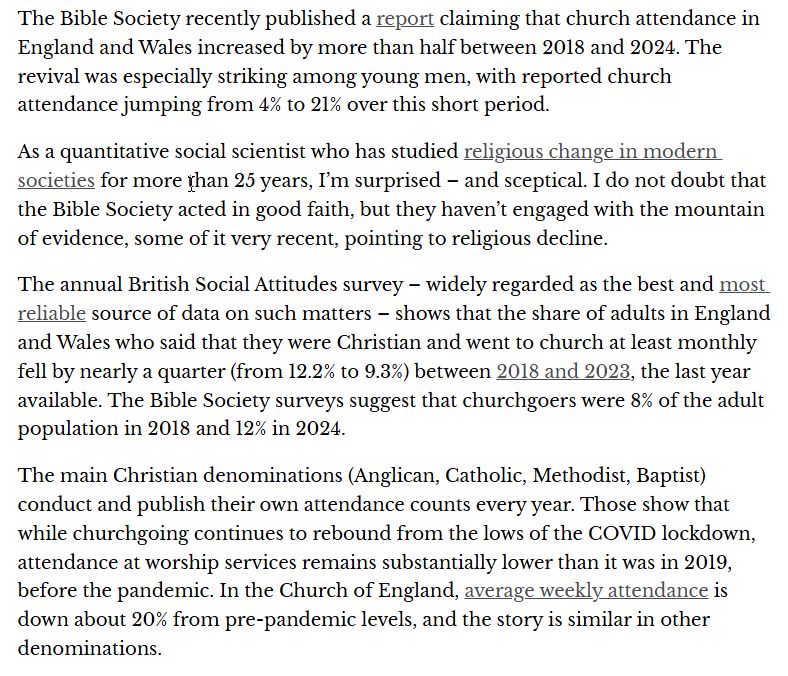
The Bible Society recently published a report claiming that church attendance in England and Wales increased by more than half between 2018 and 2024. The revival was especially striking among young men, with reported church attendance jumping from 4% to 21% over this short period.
As a quantitative social scientist who has studied religious change in modern societies for more than 25 years, I’m surprised – and sceptical. I do not doubt that the Bible Society acted in good faith, but they haven’t engaged with the mountain of evidence, some of it very recent, pointing to religious decline.
The annual British Social Attitudes survey – widely regarded as the best and most reliable source of data on such matters – shows that the share of adults in England and Wales who said that they were Christian and went to church at least monthly fell by nearly a quarter (from 12.2% to 9.3%) between 2018 and 2023, the last year available. The Bible Society surveys suggest that churchgoers were 8% of the adult population in 2018 and 12% in 2024.
The main Christian denominations (Anglican, Catholic, Methodist, Baptist) conduct and publish their own attendance counts every year. Those show that while churchgoing continues to rebound from the lows of the COVID lockdown, attendance at worship services remains substantially lower than it was in 2019, before the pandemic. In the Church of England, average weekly attendance is down about 20% from pre-pandemic levels, and the story is similar in other denominations.
What could be the problem with the data?
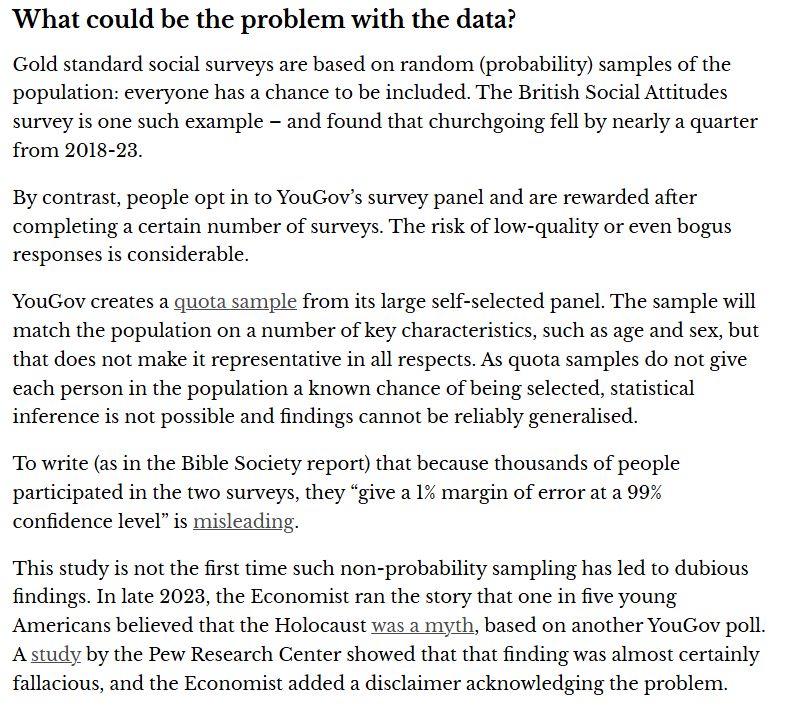
Gold standard social surveys are based on random (probability) samples of the population: everyone has a chance to be included. The British Social Attitudes survey is one such example – and found that churchgoing fell by nearly a quarter from 2018-23.
By contrast, people opt in to YouGov’s survey panel and are rewarded after completing a certain number of surveys. The risk of low-quality or even bogus responses is considerable.
YouGov creates a quota sample from its large self-selected panel. The sample will match the population on a number of key characteristics, such as age and sex, but that does not make it representative in all respects. As quota samples do not give each person in the population a known chance of being selected, statistical inference is not possible and findings cannot be reliably generalised.
To write (as in the Bible Society report) that because thousands of people participated in the two surveys, they “give a 1% margin of error at a 99% confidence level” is misleading.
This study is not the first time such non-probability sampling has led to dubious findings. In late 2023, the Economist ran the story that one in five young Americans believed that the Holocaust was a myth, based on another YouGov poll. A study by the Pew Research Center showed that that finding was almost certainly fallacious, and the Economist added a disclaimer acknowledging the problem.
England is experiencing a churchgoing revival, according to a recent report based on nonprobability polls.
David Voas is skeptical. He explains that probability-based survey data doesn't point to a revival. Nor does data from Christian denominations.
theconversation.com/is-there-rea...
16.06.2025 17:17 — 👍 47 🔁 12 💬 5 📌 7
Hi Sam, is there something particular you need? We do our best to make our data publicly available while also doing our best to protect respondent privacy!
13.06.2025 19:56 — 👍 2 🔁 0 💬 0 📌 0
Today at noon! @sssreligion.bsky.social is hosting a webinar on "From Francis to Leo XIV: Looking into a Post "Who Am I to Judge?" Catholic Church" feat. 2024 Student Paper Award winner Fr. Lucas Sharma S.J. w/ Tia Noelle Pratt & Tricia Bruce, moderated by Ariela Keysar.
04.06.2025 13:00 — 👍 3 🔁 2 💬 1 📌 0
Come work with me!
03.06.2025 17:46 — 👍 4 🔁 5 💬 0 📌 0
The Experiences of LGBTQ Americans Today
How lesbian, gay, bisexual, transgender and queer adults view the impact of Obergefell and social acceptance for LGBTQ people more broadly 10 years after the Supreme Court decision legalizing same-sex...
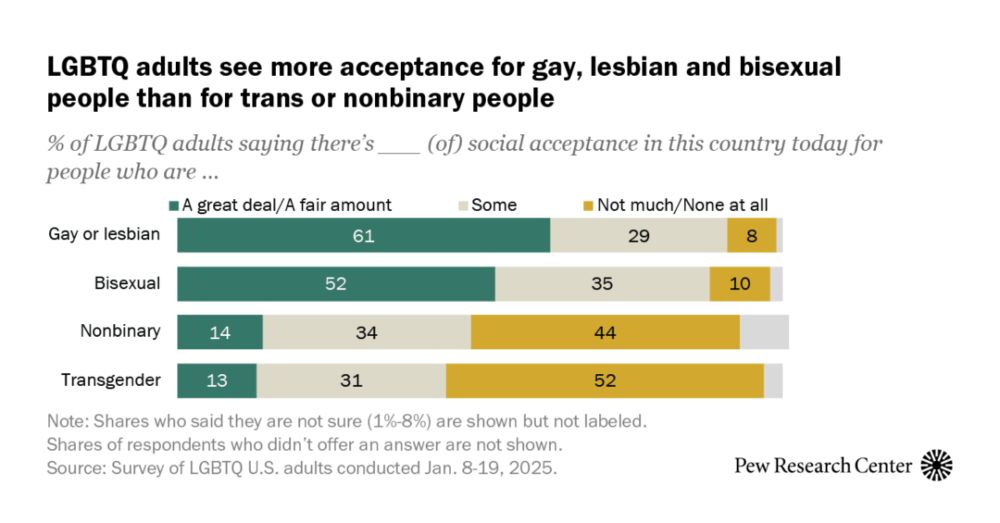
Today we released a major @pewresearch.org survey of LGBTQ adults looking at:
▶️ Views of social acceptance for LGBTQ people
▶️ Personal experiences with acceptance, discrimination
▶️ Experiences with coming out
▶️ Identity
▶️ Community, friends and LGBTQ spaces
Read on for findings from each section.
29.05.2025 16:17 — 👍 47 🔁 28 💬 1 📌 6
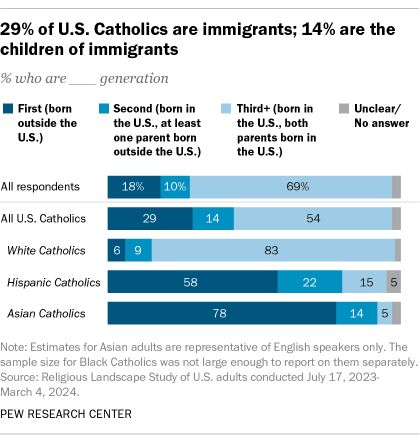
Interested in trends in the makeup of the US Catholic population?
20% of U.S. adults are Catholic, a figure that's been stable for years.
A growing share are Latinos, and upwards of 4-in-10 Catholics are immigrants or the children of immigrants.
Much more from @pewresearch.org pewrsr.ch/3VRqirS
09.05.2025 13:58 — 👍 3 🔁 0 💬 0 📌 0
Americans’ Trust in One Another
Americans trust each other less than they did a few decades ago. We explore why this is, and why some are more trusting than others.
We took a broad look at social trust in America today. With a survey of almost 37,000 people we were able to look at levels of trust across the states and even in metro areas. Check out our new report here www.pewresearch.org/SocialTrust
08.05.2025 14:44 — 👍 16 🔁 13 💬 1 📌 2
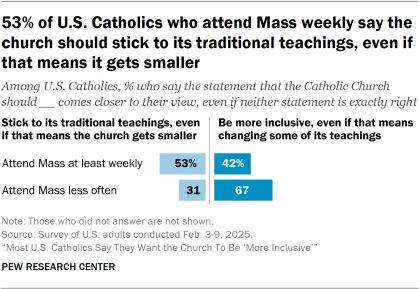
New @pewresearch.org
60% of US Catholics say the Church should be more inclusive even if that means changing some teachings. 37% say Church should stick to traditional teachings even if gets smaller.
Big differences on this & other questions by Mass attendance.
Much more pewrsr.ch/44AA8mv
30.04.2025 18:27 — 👍 18 🔁 6 💬 4 📌 2
White evangelicals continue to stand out in their support for Trump
Most White evangelicals (72%) say they approve of how Trump is doing as president. Other religious groups are more divided or disapprove.
NEW: White evangelicals continue to stand out in their support for Trump, including 72% who approve of the way Trump is currently handling his job as president.
Here's how White evangelicals and other major U.S. religious groups view the second Trump administration.
pewrsr.ch/42L6bNS
28.04.2025 18:10 — 👍 3 🔁 4 💬 1 📌 2
YouTube video by The Aspen Institute
Faith Angle Forum: A New US Religious Landscape
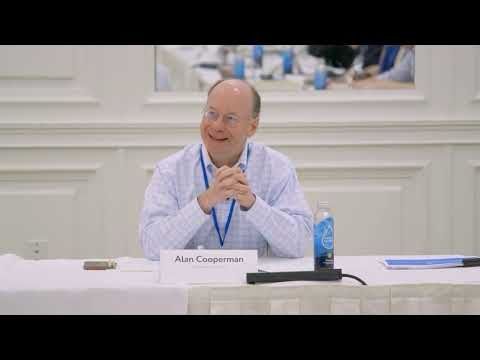
You can watch Alan Cooperman of @pewresearch.org ‘s opening presentation at Faith Angle Miami here youtu.be/yYM75CDZ4m0?...
24.04.2025 18:00 — 👍 1 🔁 1 💬 0 📌 0
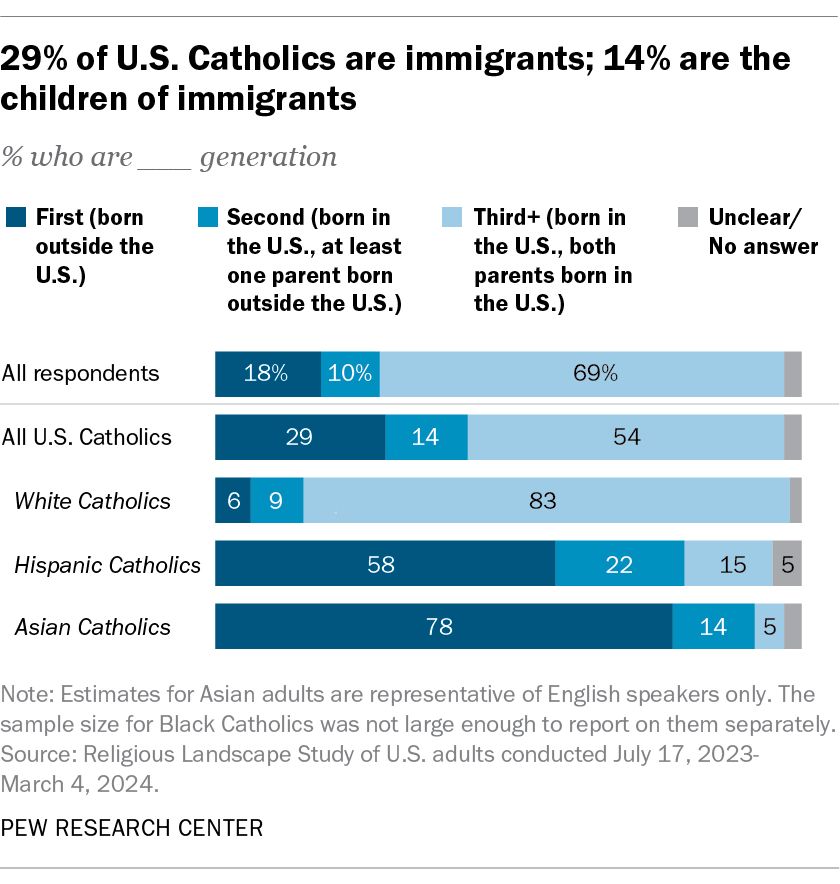
Our recent post includes our latest info on the size of the U.S. Catholic population and data about their demographics, beliefs and practices.
One interesting finding - more than four-in-ten U.S. Catholics are immigrants (29%) or the children of immigrants (14%).
Much more here: pewrsr.ch/3VRqirS
22.04.2025 13:16 — 👍 3 🔁 2 💬 0 📌 0
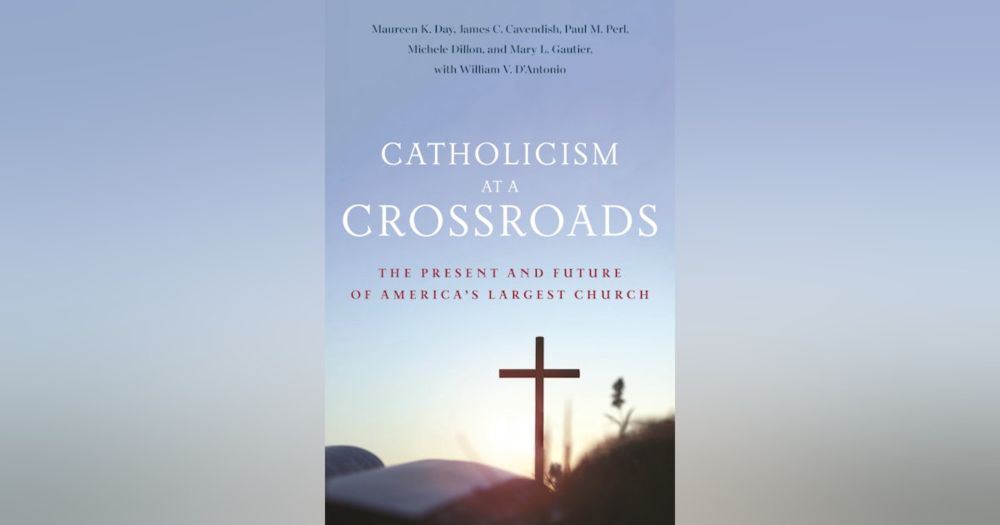
Catholicism at a Crossroads
Offers a big picture analysis of American CatholicismThe Catholic Church is at a crossroads. In the United States alone there are many challenges facing the ...
New @nyupress.bsky.social book is "the latest in a series of important sociological overviews drawing on nation-wide surveys administered every six years, Catholicism at a Crossroads charts this new era of Catholic worship, belonging, and identity in America today." nyupress.org/978147983218...
12.04.2025 16:19 — 👍 4 🔁 1 💬 1 📌 0
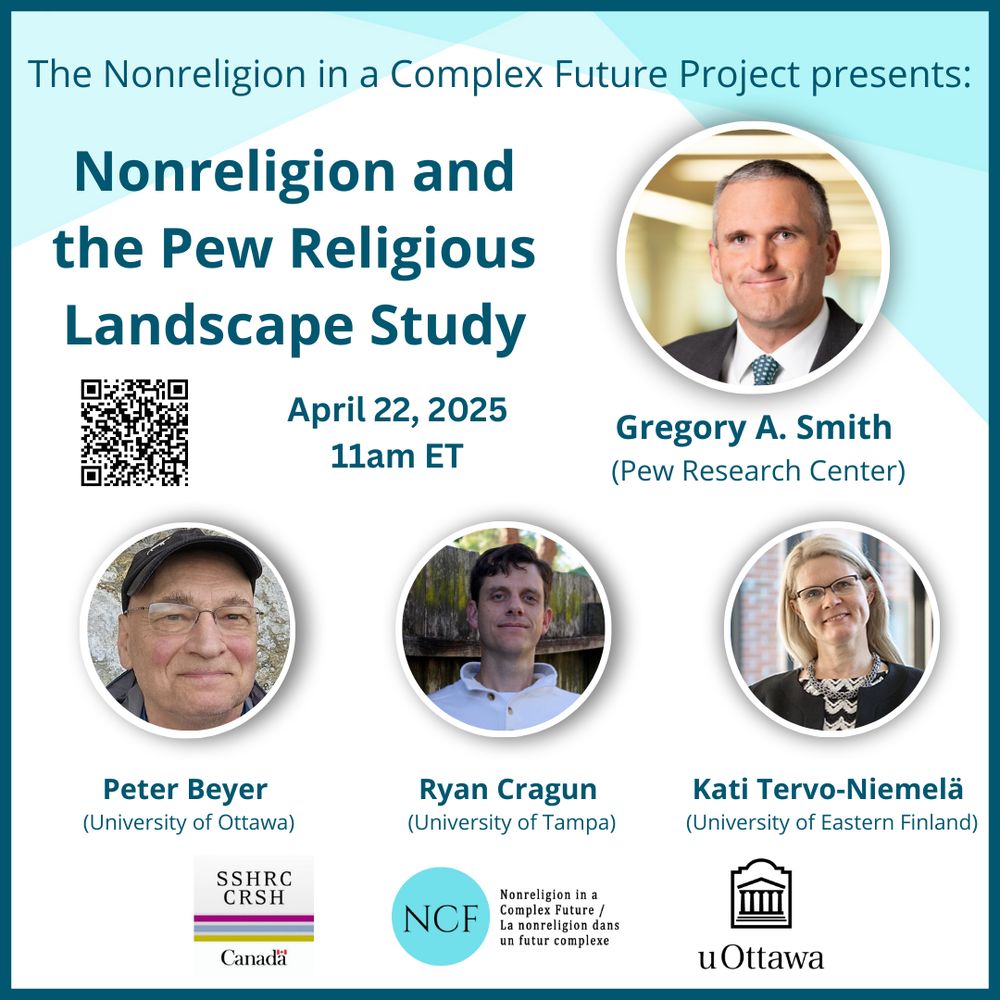
Nonreligion and the Pew Religious Landscape Study
In this webinar, Gregory A. Smith (Pew Research Center) will discuss findings from the Pew Religious Landscape Study 2023-2024, followed by commentary from Kati Tervo-Niemelä (University of Eastern Finland), Peter Beyer (University of Ottawa), and Ryan Cragun (University of Tampa).
Date: April 22, 2025
Time: 11:00 am ET
Register now for our upcoming webinar where @gregsmithpolls.bsky.social (Pew Research) will discuss findings from the Pew Religious Landscape Study 2023-2024, with comments by Kati Tervo-Niemelä, Peter Beyer, and Ryan Cragun
Date: Apr. 22
Time: 11 am ET
Register uottawa-ca.zoom.us/meeting/regi...
10.04.2025 14:29 — 👍 2 🔁 3 💬 1 📌 0
New on the ARDA: American Trends Panel Wave 99 — Artificial Intelligence (AI) and Human Enhancement
This survey concentrates on public views about six developments related to AI applications and human enhancements.
Dive into the dataset at thearda.com/data-archive?fid=ATPW99.
25.03.2025 20:12 — 👍 4 🔁 1 💬 0 📌 0
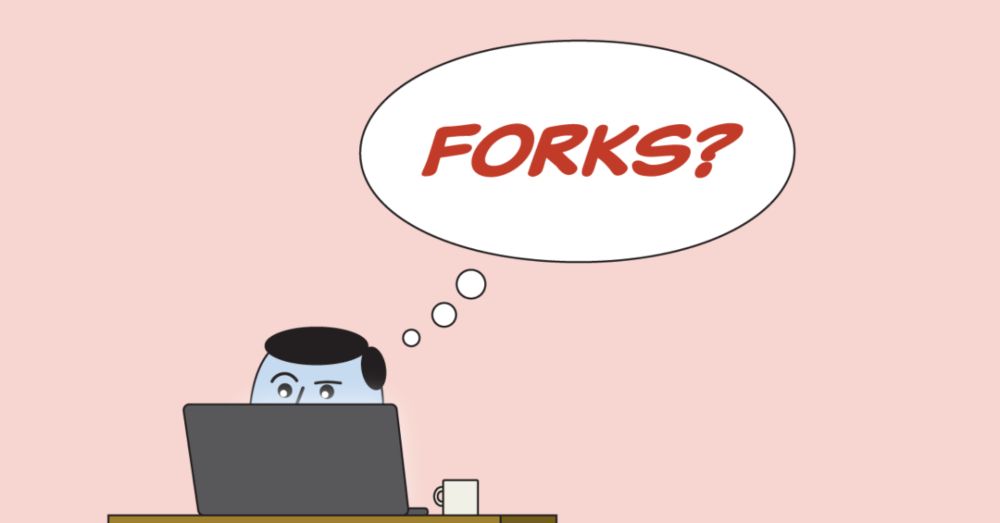
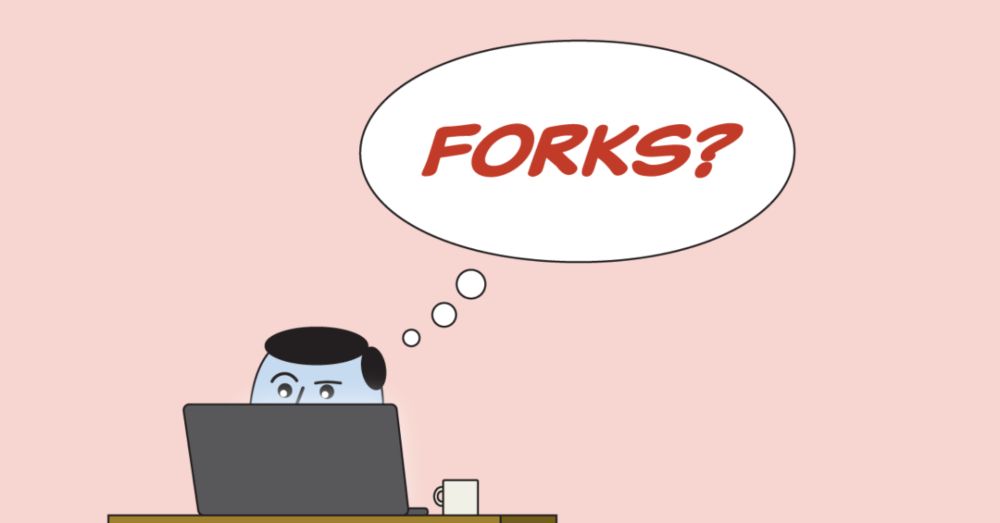
How a glitch in an online survey replaced the word ‘yes’ with ‘forks’
Dating back to at least early 2023, a bizarre and alarming technical glitch started popping up in some organizations’ online surveys and forms.
Last year we encountered a strange glitch in one of our surveys…the word “yes” was being replaced with the word “forks” in response options. Read on to learn how we unraveled what was causing it, how we ensured it didn’t impact the data quality, and what to do if it happens to you!
21.03.2025 18:25 — 👍 67 🔁 28 💬 9 📌 13
Since 1999, the Boisi Center for Religion and American Public Life at Boston College have been hosting lively events at the intersection of religion and American culture.
Senior Research Analyst at Political Research Associates. Writer about religion & politics for four decades. Author. Editor. Public speaker. Occasional commentator. Former caregiver to my late parents.
Sociologist at the University of Colorado Boulder. I do ethnographic and interview research on gender, religion, and social change, with a focus on Indonesia. Faculty Director of the Center for Asian Studies.
Professor of Political Science at Stanford | Exploring money in politics, campaigns and elections, ideology, the courts, and inequality | Author of The Judicial Tug of War cup.org/2LEoMrs | https://data4democracy.substack.com
Public scholar of the Bible and religion
For speaking requests: live@thewatermarkagency.com
PhD Candidate @scharschool.bsky.social | religion & politics, sports & politics, computational methods, pol comm
juliannathomson.com
PhD in History of Religions, Deputy Director Swedish Research Institute in Istanbul (SRII). Malmö/Istanbul.
“It is more fun to talk with someone who doesn’t use long, difficult words but rather short, easy words like, ‘What about lunch?’”
Washington Bureau chief at The Independent, MSNOW Columnist. Author: We’re Not Broken. Tar Heel. He/Him Eric.garcia@the-independent.com
Emory PhD student in US Religious History | Writer on religion, politics, and queer culture | Raised in Southern Appalachia 🏔️
Assistant Professor of Sociology at the University of Toronto
I study transnational religion, memory, rights & violence in the Middle East and its diasporas
📸 "our demise doesn't have to be like this"
www.mirayphilips.com
Prof of Demography & Population Health @oxforddemsci.bsky.social | Mortality, Epidemiology, Infections/Immunity, Biosocial science, COVID-19. | Science Communicator 🇺🇸 in 🇬🇧.
Substack: https://jenndowd.substack.com
Director of the Centre for Culture and Evolution, Brunel University London @brunelcce.bsky.social. President of the European Human Behaviour and Evolution Association @ehbea.bsky.social
https://www.rebeccasear.org/
Co-founder & editor, Works in Progress. Writer, Scientific Discovery. Podcaster, Hard Drugs. Advisor, Coefficient Giving. // Previously at Our World in Data.
Newsletter: https://scientificdiscovery.dev
Podcast: https://harddrugs.worksinprogress.co
🏳️🌈
Writer. Tired Dad. Minivan Driver.
Editor of The Left Hook Substack (https://thelefthook.substack.com); Co-host of Democracy-Ish; Author of a Memoir and a Play; @YouTubeWajahatAli
wajali.com
wajahatmali@protonmail.com
Political science, Syracuse University
Information effects, misperceptions, egg sandwiches
My book is "The Invented State: Policy Misperceptions in the American Public"
Medical sociologist. Postdoctoral scholar at Vanderbilt. Studying end-of-life health disparities, health policy, labor unions, and aging. Views my own.
cliffordjross.com
https://healprojectvu.org
Secularism and Nonreligion is the world's first journal dedicated to the investigation of secularism and nonreligion in all forms.
Founder of The Difference Engine. Researcher, strategist, truth-teller. Host of Cross Tabs. Asking better questions since forever.
Thinking too hard about climate, culture, and Catholicism. UW-Madison Sociology PhD student, occasional optimist. Fueled by iced coffee, quiet rage, and active hope.