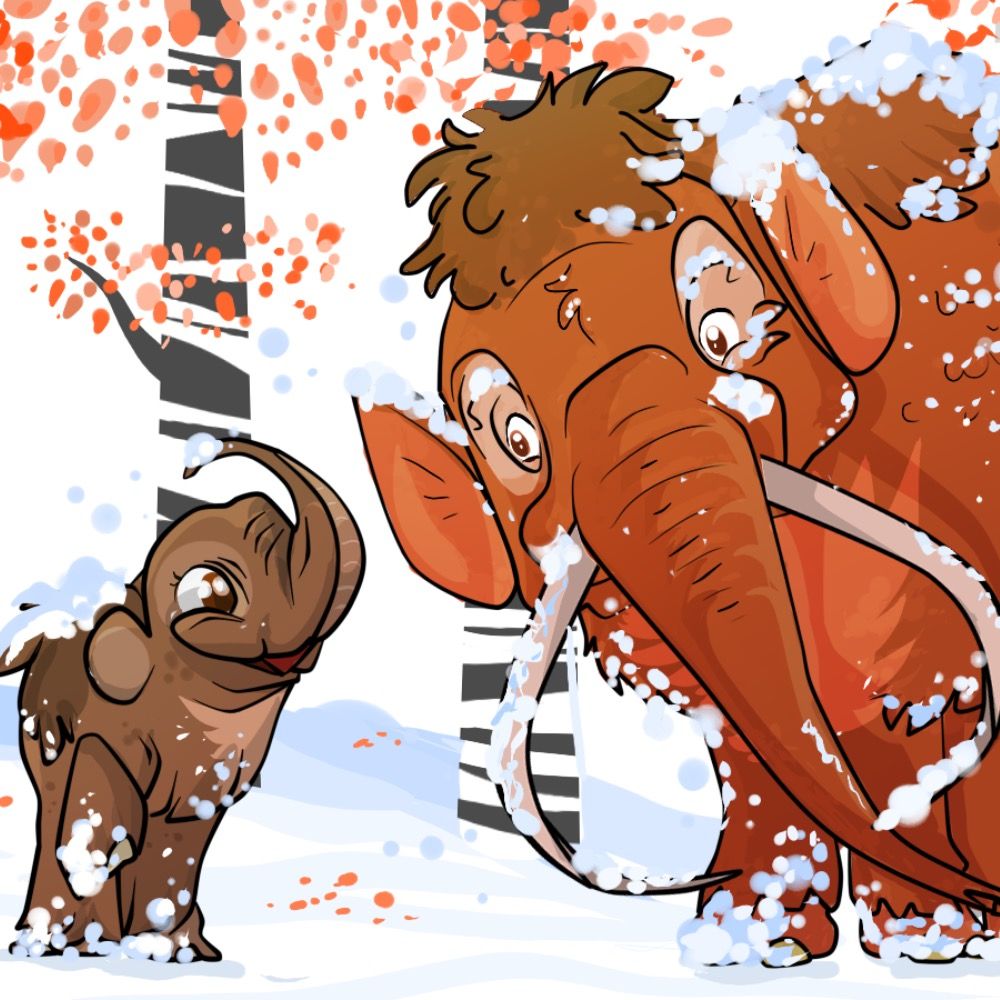
Very cool
19.02.2026 20:28 — 👍 1 🔁 0 💬 0 📌 0

Axolotls wow scientists by regenerating this complex organ
Axolotls can completely rebuild their thymus, a key immune organ
Scientists just found that Axolotls—the cute and cuddly pink salamanders native to Mexico—can regrow an intricate part of their immune system from scratch.
The regenerated organ functions indistinguishably from those that grew normally.
#Axolotl #Regeneration 🧪🏺
New for @sciam.bsky.social
15.02.2026 09:01 — 👍 5 🔁 1 💬 0 📌 0

Sediments Offer an Extended History of Fast Ice - Eos
Scientists used sediments to create a millennia-long archive of Antarctic fast ice. Along the way, they discovered that the freezing and thawing of this enigmatic ice appear to be linked to solar cycl...
Scientists from @cnr-isp.bsky.social and @unibonn.bsky.social just found that enigmatic Antarctic “fast ice” is linked to well-known solar cycles, allowing future research to better disentangle how the important ice responds to the ongoing impact of climate change.
eos.org/articles/sed...
12.02.2026 15:19 — 👍 8 🔁 3 💬 1 📌 1

Space dust reveals rapid evolution after dino-killing asteroid
New data detail how tiny forms of life rebounded much more quickly than previously believed
Microscopic marine organisms called forams began to proliferate relatively rapidly after the dino-killing asteroid struck Earth.
Learn more: https://scim.ag/4rywh19
06.02.2026 18:06 — 👍 47 🔁 17 💬 1 📌 1

Space dust reveals rapid evolution after dino-killing asteroid
New data detail how tiny forms of life rebounded much more quickly than previously believed
Scientists just found that a curious group of plankton began to flourish rapidly after the dino-killing asteroid—a key sign life was on the mend.
They made their discovery by measuring the slow accumulation of space dust after the impact.
#Paleontology #PlankticForams
New for @science.org 🧪🏺
05.02.2026 01:10 — 👍 45 🔁 21 💬 0 📌 0
Whoever crafted that title deserves a raise.
29.01.2026 21:50 — 👍 0 🔁 0 💬 0 📌 0

Image of a 60-million-year-old fossil beak from a now-extinct species of penguin.
Among these specimens is the 61-million-year-old Sequiwaimanu rosieae.
It was reported in 2018 and excavated from the famous Waipara Greensand in Canterbury, New Zealand.
These rocks hold the world’s first penguins, which evolved shortly after the asteroid that killed the dinosaurs.
📸 Gerald Mayr
20.01.2026 19:40 — 👍 4 🔁 1 💬 0 📌 0

Early penguins may have used dagger-like beaks to skewer prey
Four new species of aquatic birds related to modern penguins have been described from fossils found in New Zealand, showing how these creatures flourished around 60 million years ago
Fossil evidence reveals some of the earliest penguins brandished long, dagger-like beaks.
These sharpened snouts may have helped the diving birds hunt and skewer fish.
#PenguinAwarenessDay #Paleontology
@newscientist.com 🏺🧪
20.01.2026 19:40 — 👍 13 🔁 5 💬 1 📌 0

This dino’s fossil claw suggests it snatched eggs, not insects
A 67-million-year-old claw fossil reveals a new dinosaur species that may have used its hand spikes to snatch and pierce eggs.
In new research, scientists report a diminutive dino that was perfectly adapted to pilfer eggs.
Its bones were excavated from the Mongolian Desert and reveal a “bizarre” claw that enabled it to quickly filch eggs before fleeing.
🧪🏺
#Paleontology #EggSnatcher
New at @sciencenews.bsky.social
14.01.2026 21:55 — 👍 13 🔁 4 💬 0 📌 0

Deep-sea earthquakes fuel huge plankton blooms in Antarctica
Hydrothermal vents spurred by seismic activity feed vital nutrients to Antarctic microbes
Hydrothermal vents spurred by seismic activity feed vital nutrients to Antarctic microbes. https://scim.ag/4qxojow
12.01.2026 23:00 — 👍 43 🔁 9 💬 1 📌 2

Scientists uncover hearth Neanderthals may have used to make tar
Researchers re-create process of burning branches to make tarry adhesive to haft stone tools
If you’d like even more info, I wrote about this for Science shortly after it was discovered.
One researcher I spoke with suggested the tar might even be used to create perfumes!
08.01.2026 18:10 — 👍 3 🔁 1 💬 0 📌 0

Against all odds, a curious sea creature survived the dino-killing asteroid
Coil-shelled mollusks called ammonites staved off extinction for thousands of years
Sixty-six million years ago, a cataclysmic asteroid impact triggered a global mass extinction. New research suggests that, contrary to prior thinking, some members of an ancient group of mollusks managed to survive the initial carnage after it struck. https://scim.ag/4994w9k
08.01.2026 14:30 — 👍 34 🔁 10 💬 0 📌 2
The chances that they found these fossils in those sediments is crazy. Such a cool finding
07.01.2026 17:12 — 👍 3 🔁 0 💬 0 📌 0

This ancient human may be the root of the Homo sapiens family tree
New fossils unearthed in Morocco could help solve the mystery of how Homo sapiens diverged from other ancient humans like Neanderthals.
Scientists find new Moroccan fossils might represent the oldest ancestor to Homo sapiens yet.
Remarkably, they were able to date the specimens by identifying Earth’s magnetic pole reversal in the surrounding sediments.
#Paleoanthropology #Archaeology
🧪🏺
New for #NationalGeographic
07.01.2026 16:15 — 👍 6 🔁 3 💬 0 📌 0
Solid recommendation, Tony! However, I take full credit for the “curious ammonite” phrase haha
06.01.2026 23:07 — 👍 2 🔁 0 💬 0 📌 0

Against all odds, a curious sea creature survived the dino-killing asteroid
Coil-shelled mollusks called ammonites staved off extinction for thousands of years
Scientists report that a hardy group of ammonites survived the dino-killing asteroid for over 68,000 years.
Once considered a “textbook victim” of the calamity, the new research shows mass extinctions aren’t always as tidy as portrayed.
#Paleontology #MassExtinctions
🧪🏺
New for @science.org
06.01.2026 20:16 — 👍 39 🔁 13 💬 2 📌 0

Deep-sea earthquakes fuel huge plankton blooms in Antarctica
Hydrothermal vents spurred by seismic activity feed vital nutrients to Antarctic microbes
An Antarctic phytoplankton bloom that can grow the size of New Zealand is nourished by a surprising source—underwater earthquakes.
Researchers find the seismic activity triggers deep-sea vents to burp up vital nutrients like iron that then fuel giant blooms at the surface.
🧪🏺
New at @science.org
05.01.2026 17:12 — 👍 29 🔁 7 💬 0 📌 2

Chemicals in million-year-old fossils reveal animals’ lives in detail
Ancient meals and infections reconstructed from preserved metabolic markers
Small samples of fossilized materials contain molecular signatures that correspond with those animals’ diets and habitats.
A new study uses those biomarkers to reconstruct the environments where ancient hominins lived in Africa more than 1 million years ago. https://scim.ag/3N6W2Xv
01.01.2026 17:12 — 👍 38 🔁 6 💬 0 📌 0

Chemicals in million-year-old fossils reveal animals’ lives in detail
Ancient meals and infections reconstructed from preserved metabolic markers
In new research, scientists find fossilized bones and teeth can contain metabolites—tiny byproducts of internal chemical processes.
These metabolites can reveal unprecedented insights into an ancient animal’s age, diet, and environment.
#Paleometabolomics #Paleontology
🏺🧪
New for @science.org
29.12.2025 18:21 — 👍 28 🔁 8 💬 0 📌 0
If we base on understanding of past civilizations on recovered statues, these ancient peoples were also likely missing another important appendage.
07.12.2025 19:25 — 👍 2 🔁 0 💬 0 📌 0
Thanks!
02.12.2025 15:19 — 👍 1 🔁 0 💬 0 📌 0
Do any other examples come to mind?
02.12.2025 14:06 — 👍 1 🔁 0 💬 2 📌 0

This bright orange life-form could point to new dino discoveries
Colorful lichen living on dinosaur bones reflect infrared light that can be detected by drones, which might lead to finds in remote areas.
Scientists find fossil-loving lichen might act as a beacon for new dino discoveries.
The new research used drones to detect light reflected by colorful lichen species that prefer to inhabit dinosaur bones in the Canadian badlands.
#Paleontology #Lichenology
🏺🧪
New at @sciencenews.bsky.social
29.11.2025 16:06 — 👍 11 🔁 3 💬 0 📌 0

This Fossil Is Rewriting the Story of How Plants Spread across the Planet
An enigmatic group of fossil organisms has finally been identified—and is changing the story of how plants took root on land
A new analysis suggests lichen evolved millions of years earlier than previously believed.
The discovery shows that fungi-algae symbiotes might have helped pave the way for early land-dwelling plants to successfully colonize Earth.
🏺🧪
#Paleontology #Lichenology
New at @sciam.bsky.social
25.11.2025 20:05 — 👍 8 🔁 3 💬 0 📌 0
Interdisciplinary Earth Scientist; Professor at University of Southampton, UK
thomasgernon.co.uk
He/him
Paleoenthusiast. #UbirajaraBelongstoBR
DeviantArt https://www.deviantart.com/paleogalli
PhyloPic https://www.phylopic.org/contributors/5980355f-2a79-4a98-99cf-ce313f388fe5/ryan-santos-soledade-silhouettes
Paleontologist and educator
Contributing writer at DiscoverMag, Words: NYTimes, Scientific American, NatGeo
Previously: The Post and Courier, Discovery Channel saranovakwrites.com/
Stuttering Science Writer and occasionally charismatic megafauna.
Covering all things natural history at Smithsonian and elsewhere. Bylines NY Times, Scientific American, etc.
Amateur scientific illustrator
https://jacktamisiea.com/
Freelance science journalist covering Earth, space, and science policy🌎🪐
Writing for Science's ScienceAdviser newsletter📧
M.S. MIT Science Writing '24✏️
Read me: https://www.hannah-richter.com/ | Contact me: hannahroserichter@gmail.com
Adjunct prof, PhD in Historical Archaeology ✨️
Mortuary Archaeologist & Museum Educator. I like graves, the C17th, landscapes, & protective magic. I preserve gravestones, write books, & paint pictures (she/her)
https://linktr.ee/RLacy
Newsroom Meteorologist at the San Francisco Chronicle
Snow lover, Seattle sports fan, University of Washington graduate
sfchronicle.com/author/anthony-edwards/
Associate Professor | CU School of Medicine & CU Denver Anthropology | Paleoanthropology, Primate Morphology, Teaching Anatomy, Noisy Rock & Roll, Felis catus | Research: ucdenver.academia.edu/CaleyOrr
Paleontóloga 🦴🦖🦕, Profa. no Departamento de Geologia ⚒️ da UFRN e Divulgadora Científica 🧪 | Professor of Paleontology at UFRN, Brazil, and Science Communicator | ✨Opinions are my own✨ | #UbirajaraBelongstoBR
🦋elder #4,156
https://linktr.ee/alinemghilardi
Mind of Sid James in Jenny Agutter's body. Descended from Frenchified Vikings. Gen X. Former Record Shop Snoot. Former Egyptian Archaeologist. English. Tangata Tiriti. She/they. 🏳️🌈
Traces & trace fossils. Wrote 'Life Sculpted' (2023), 'Dinosaurs Without Bones' (2014), 'The Evolution Underground' (2017), & more. Hubby, Trekkie, reading, cooking, craft-beer imbibing, childless cat dude, 🚫AI. 🧪🐾🦖🦕🪨⚒️🌍📚✍️ 🖖 https://ajmartinauthor.com
Assistant news editor at New Scientist (health) | award-winning journo | author | irritating feminist | Taylor Swift fanatic | amateur ballerina
Senior editor at ProPublica.
Freelance writer (she/her) interested in paleontology and archaeology. Avatar by Natalia Jagielska.
https://mostlymammoths.wordpress.com/freelance-work/
Cutting-edge research, news, commentary, and visuals from the Science family of journals. https://www.science.org
Archaeologist and #rstats enthusiast
Zoologist, author, natural historian Dr Darren Naish | Dinosaurs animals evolution | Books: DinosaursHTLE - DINOPEDIA - AncientSeaReptiles. PREHISTORIC PLANET lead consultant AppleTV | DINOCON leader | Mesozoic Art II out now
https://linktr.ee/tetzoo
Freelance writer, editor, columnist & consultant. Formerly at Scientific American, Washington Post, National Geographic, Slate, Smithsonian & Science. Past president of National Association of Science Writers. Birder.
Not too sure what I’m doing here, but otherwise an archaeologist UBA Patagonia collaborative work w/indigenous communities
She/her/Ella 🇦🇷🇺🇸🇵🇷
https://about.me/mjofiguerero