UCL Evolutionary Anthropology seminars starting up again for the new term every Tuesday pm. Anthropology Dept. 14 Taviton St. DFL 3.30-5pm followed by 🍷. All welcome.
www.ucl.ac.uk/social-histo...

@ehowaspi.bsky.social
Researching primate behaviours | Postdoc at UZH Evo Anthro & NCCR Evolving Language | Former Postdoc at MPI Animal Behavior & DPhil at Oxford Biology | Tools & Culture, Language Evo, Development & Senescence | He/They 🌈
UCL Evolutionary Anthropology seminars starting up again for the new term every Tuesday pm. Anthropology Dept. 14 Taviton St. DFL 3.30-5pm followed by 🍷. All welcome.
www.ucl.ac.uk/social-histo...

Statistical Rethinking 2026 Lecture B01 Multilevel Models is online. This is the first lecture of the "experienced" section, in which we start with multilevel models and venture into vast covariance spaces. Full lecture list still here: github.com/rmcelreath/s...
09.01.2026 10:34 — 👍 97 🔁 17 💬 0 📌 1
Our Science Perspective on Ianni et al - neural control of facial expressions involves voluntary pathways
@jamiewhitehouse.bsky.social
www.science.org/eprint/EKJTZ...

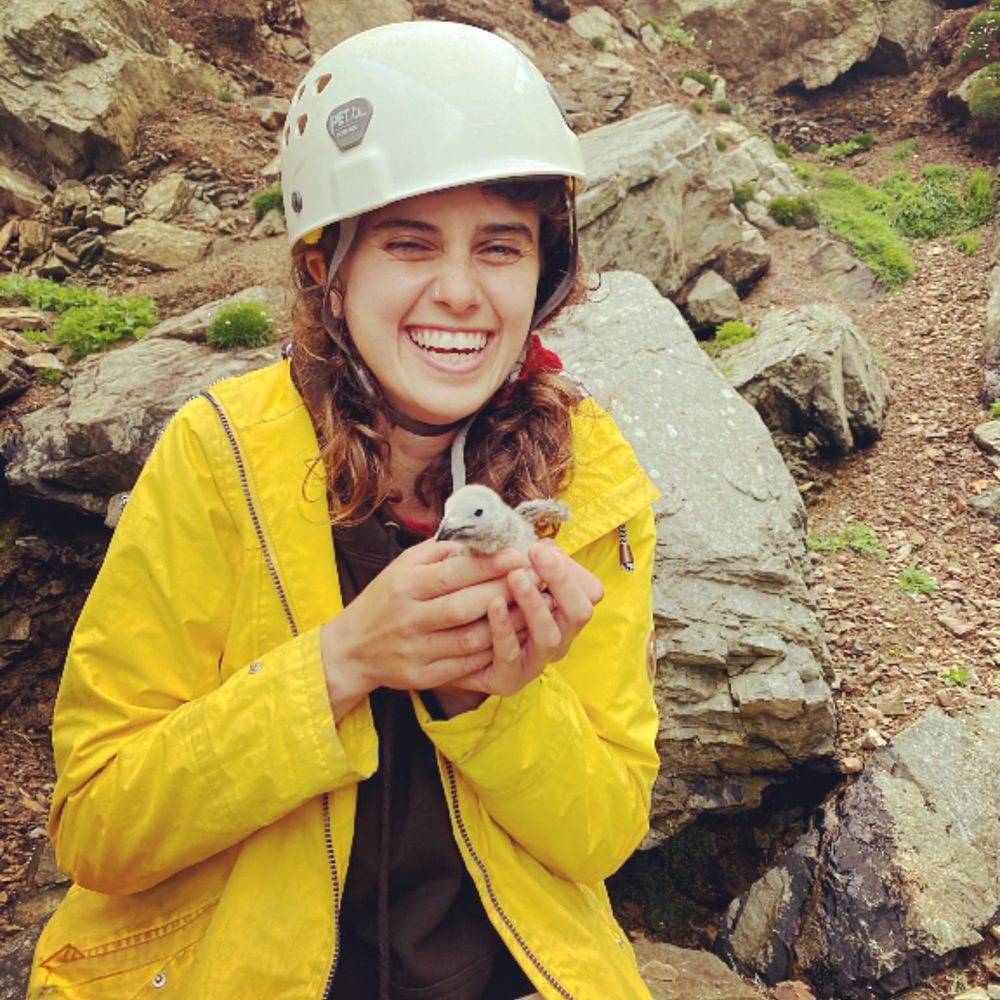
Last years field assistant holding a Manx Shearwater on the isle of Rum (under a towel), retrieving a GPS device after a bird has returned from a foraging trip!
We are looking to hire a Seabird Field Assistant for 2026 for our Manx Shearwater research project.
Please share this to anyone who'd like to get out in the field this summer and learn about biotelemetry, bird handling and research into animal behaviour.
drive.google.com/file/d/1SGZt...
If you work on corvid ecology, behaviour, cognition, or conservation, this might be useful for you 👇
I’ve just published CORVIDATA in Scientific Data 🐦
doi.org/10.1038/s415... (1/4)

But we note that more research on this topic would be very helpful to understand the magnitude of this risk. :-) For more info please feel free to check our discussion: www.nature.com/articles/s41...
05.01.2026 15:40 — 👍 1 🔁 0 💬 0 📌 0The original paper is open access and we touch on this in the discussion briefly. Mainly, we argue that upregulating exploration to compensate for small diets (that lacked cultural input during development) in adulthood is likely risky due to inedible/toxic foods in the environment, (1/2)
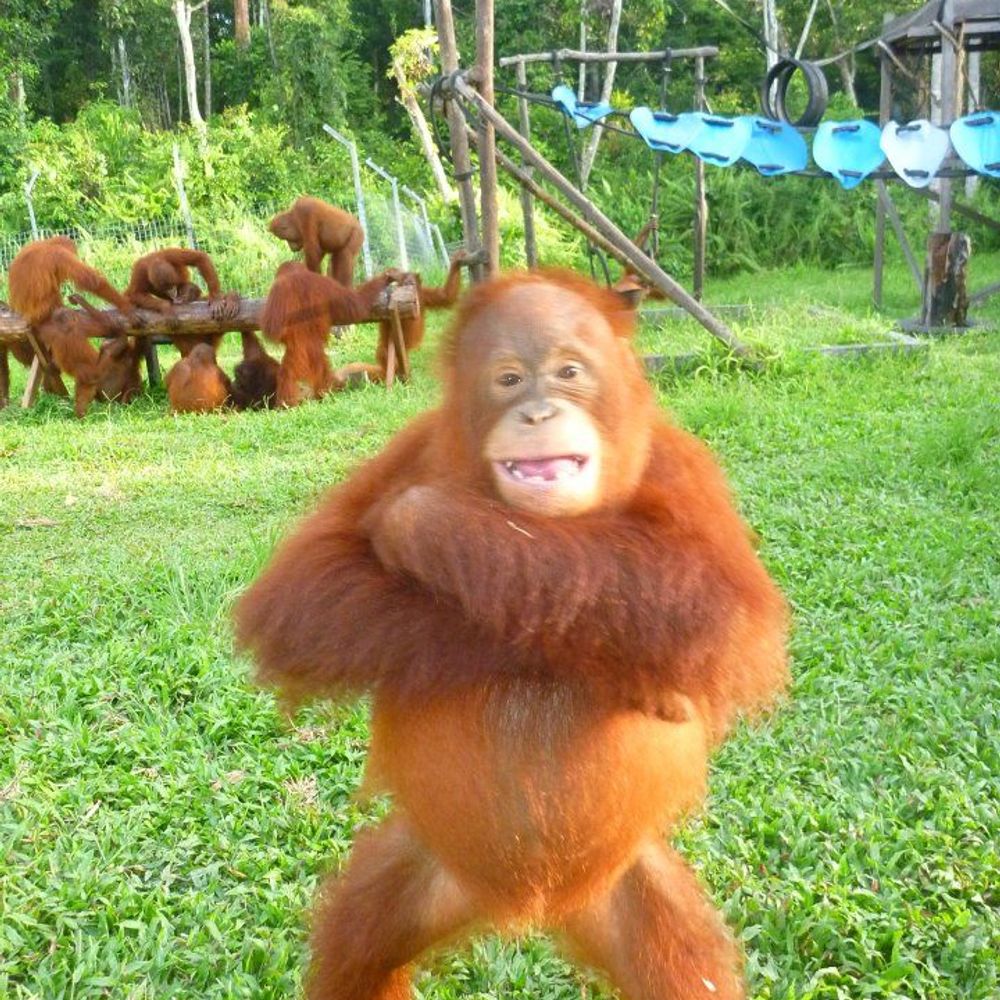
05.01.2026 15:40 — 👍 1 🔁 0 💬 1 📌 0Have you been too busy to read our recent paper on orangutans' culturally-dependent diets? 😔 Never fear, we have published a two-page research briefing to give you a quick overview of our paper's aims, findings, and implications! 🤩 Check it out here: www.nature.com/articles/s41...
05.01.2026 11:11 — 👍 11 🔁 3 💬 1 📌 0
New science demonstrates how orangutans learn what to eat in their rainforest habitat.
Read the latest scientific blog from guest writer Dr Elliot Howard-Spink:
www.orangutanlandtrust.com/post/orangut...
@ehowaspi.bsky.social

📢 Calling all primatologists 📢
EFP2026 in Montpellier is now open for abstracts & registration!
🗓 Deadline for abstract : 13 March 2026 (before if mobility grant application)
Submit: www.alphavisa.com/efp/2026/abs...
Register: www.alphavisa.com/efp/2026/reg...
All abstracts will be accepted!

course schedule as a table. Available at the link in the post.
I'm teaching Statistical Rethinking again starting Jan 2026. This time with live lectures, divided into Beginner and Experienced sections. Will be a lot more work for me, but I hope much better for students.
I will record lectures & all will be found at this link: github.com/rmcelreath/s...
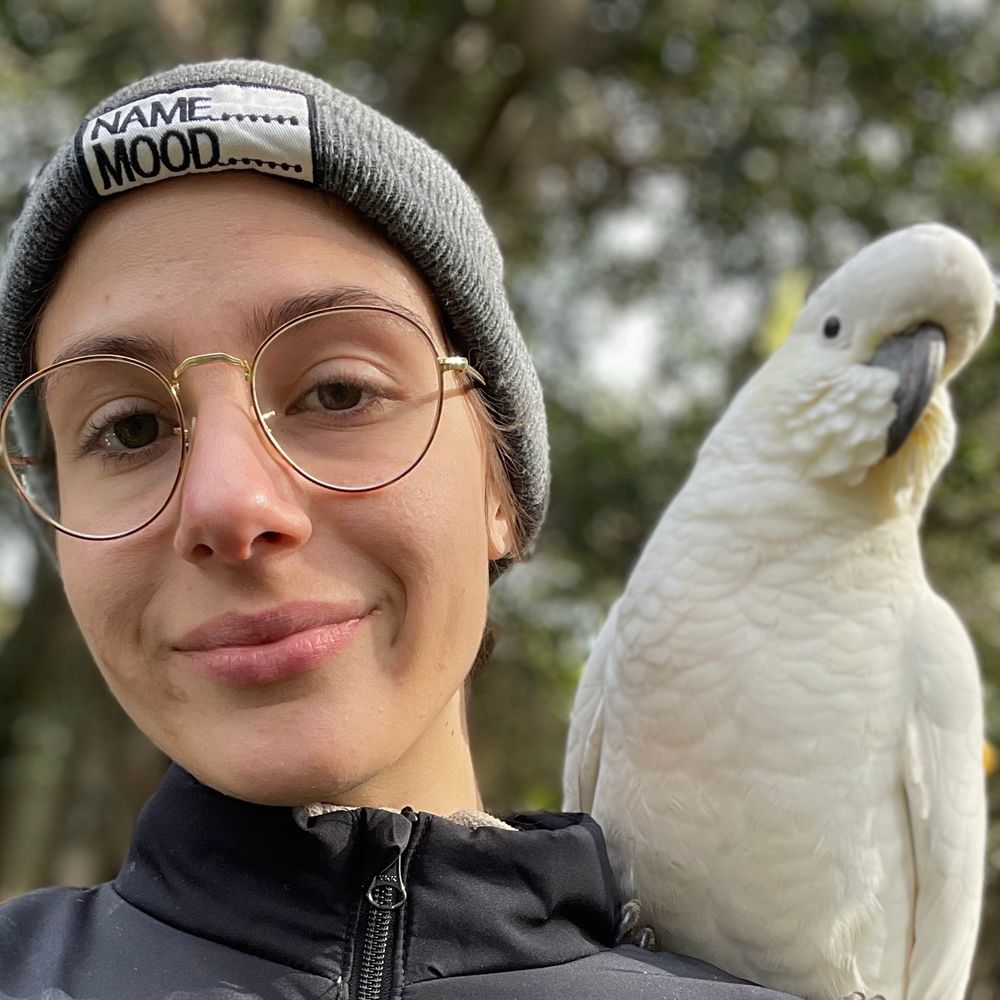
New paper out today w @dalmaijer.bsky.social @barbaraklump.bsky.social and @lucymaplin.bsky.social as part of the Phil Trans special issue doi.org/10.1098/rstb.... Over 2 years, we studied a population of cockatoos thought to be the source of the innovation of bin-opening.
04.12.2025 13:31 — 👍 104 🔁 42 💬 3 📌 8
Picture of front cover of Theme Issue entitled "Transforming cultural evolution research and its application to global futures." The image on the front cover is of a Yao honey hunter in Mozambique holding retrieved honeycomb.
Today sees the publication of the Theme Issue featuring the CES Transformation Fund grant scheme. Enjoy! royalsocietypublishing.org/rstb/issue/3...
@durhamdcerc.bsky.social @durhamanthropology.bsky.social @cultevolfunding.bsky.social @culturalevolsoc.bsky.social

New Paper out in Proceedings of the Royal Society B! 🎉 Sequence organization of mother–infant interactions in chimpanzees (Pan troglodytes schweinfurthii) in the wild. See the thread below for a quick explanation, and check out the paper: royalsocietypublishing.org/doi/10.1098/...
26.11.2025 13:13 — 👍 17 🔁 6 💬 1 📌 0Thanks Ani! :-)
25.11.2025 07:43 — 👍 1 🔁 0 💬 0 📌 0
In this study, Howard-Spink et al. develop an empirically based model of orangutan diet development, which suggests that social learning is vital for allowing orangutans to acquire varied diets.
24.11.2025 20:53 — 👍 15 🔁 8 💬 1 📌 1New paper from the Schuppli group and colleagues!
Video summary 👉 youtu.be/W_eOg7vsL_M?...
Thanks so much Iuia! I hope you enjoy reading it :-)
24.11.2025 12:52 — 👍 1 🔁 0 💬 0 📌 0Thank you Cedric!
24.11.2025 12:41 — 👍 1 🔁 0 💬 0 📌 0
Also, read our official press release @mpi-animalbehav.bsky.social, including a video summary of our study! www.ab.mpg.de/793308/news_...
24.11.2025 11:07 — 👍 12 🔁 4 💬 0 📌 0
For more details, check out our paper. A huge thank you to everyone who has collected data for this project at SUAQ, and to all collaborators! Also thank you to the SUAQ project for providing all images above. www.nature.com/articles/s41...
24.11.2025 11:05 — 👍 9 🔁 3 💬 2 📌 0This suggests that early hominin cultures were more expansive than can be predicted from surviving artifacts alone, including key information used for daily decision making.
24.11.2025 11:05 — 👍 8 🔁 1 💬 1 📌 0Whilst accumulating culturally-dependent expanses of knowledge is a key facet of humans' generative and open-ended cultures, our results suggest that this capacity is likely ancestral to (at least) great-ape species.
24.11.2025 11:05 — 👍 8 🔁 1 💬 1 📌 0In extension, we evidence that the breadth of cultural knowledge possessed by orangutans is likely more expansive than any one individual could produce independently (thus, a 'culturally-dependent repertoire').
24.11.2025 11:05 — 👍 6 🔁 1 💬 1 📌 0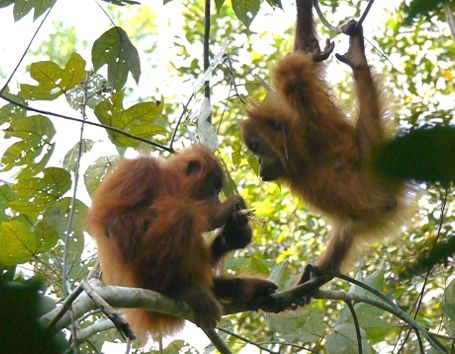
We show that cultural transmission is essential for orangs to learn basic subsistence information in the wild. The repertoire of cultural information possessed by apes is likely to be far more expansive than social customs and highly technical skills, including simple info about 'what to eat'.
24.11.2025 11:05 — 👍 11 🔁 2 💬 1 📌 0Preventing peering significantly slowed diet development, and removing enhancement effects on top of peering led to a larger stepwise reduction in diet size. Social enhancement (as well as maternally directed exposure to different foods) influence the majority of diet learning in orangutans.
24.11.2025 11:05 — 👍 8 🔁 1 💬 1 📌 0
Even when orangutans were presented with over 148,000 opportunities to interact with different food items over long-term development, orangs only developed adult-like diets (at least 90% adult repertoire) by adulthood if they also engaged in social learning.
24.11.2025 11:05 — 👍 7 🔁 1 💬 1 📌 0
Every single parameter of our ABM was estimated from wild data. When simulated orangs could engage in forms of social learning seen in the wild, the timings of diet development matched those observed in wild individuals (validating that our ABM captured wild orangs' learning from real-world inputs).
24.11.2025 11:05 — 👍 6 🔁 1 💬 1 📌 0
Leveraging over a decade of behavioral data collected in the wild, we constructed an agent-based simulation (ABM) of orangutan diet development between birth and adulthood (~15 years), focusing on individual exploration + social influences on exploration, e.g. exposure, enhancement and peering.
24.11.2025 11:05 — 👍 10 🔁 1 💬 2 📌 0
To answer these questions, we investigated whether social learning has important, long-term effects on the rate and outcomes of diet development in wild Sumatran orangutans. Moreover, we circumvent these methodological difficulties through running biologically relevant experiments ‘in-sillico’.
24.11.2025 11:05 — 👍 6 🔁 1 💬 1 📌 0