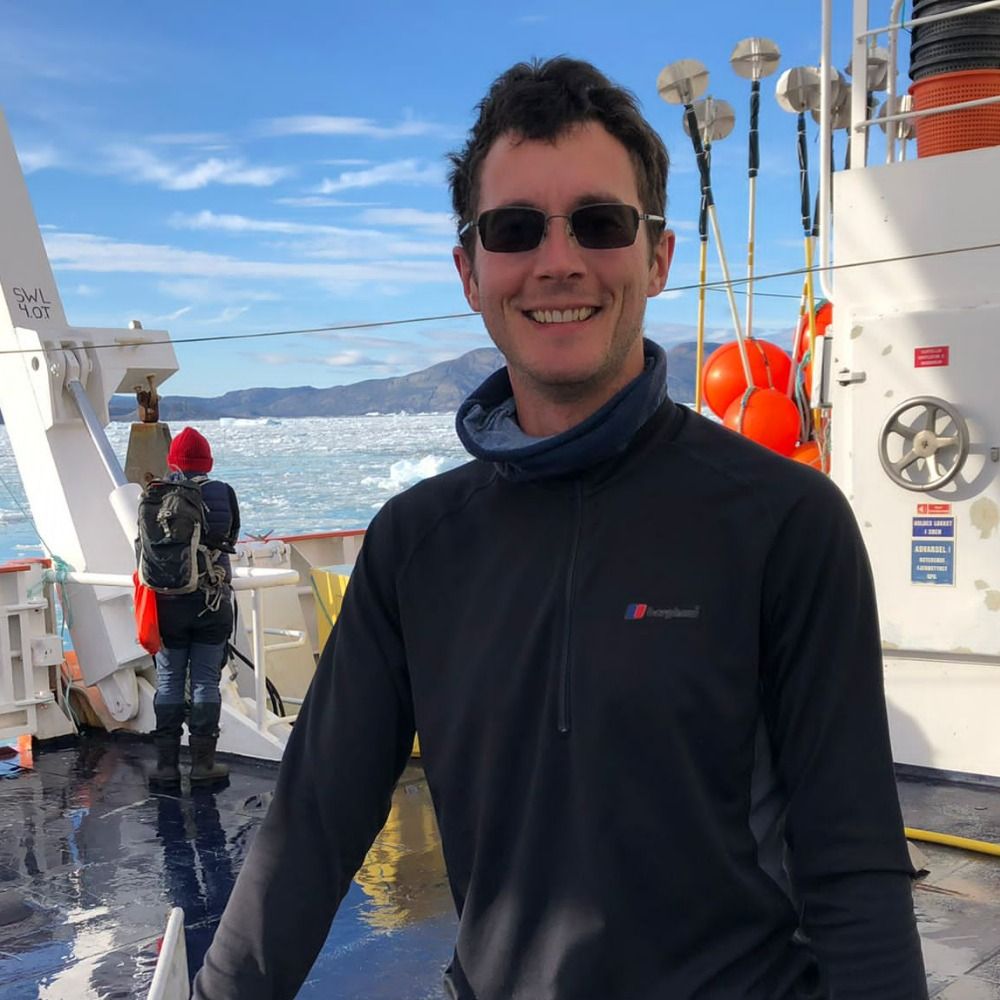
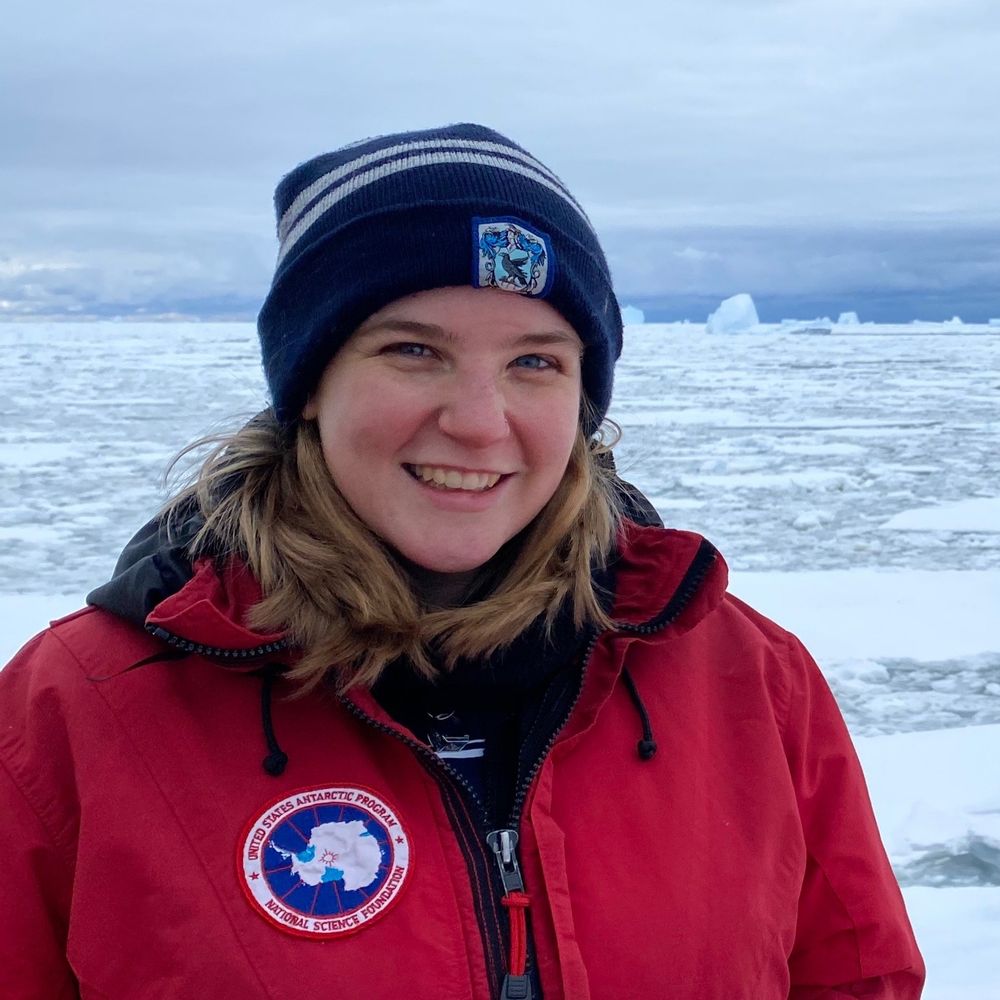
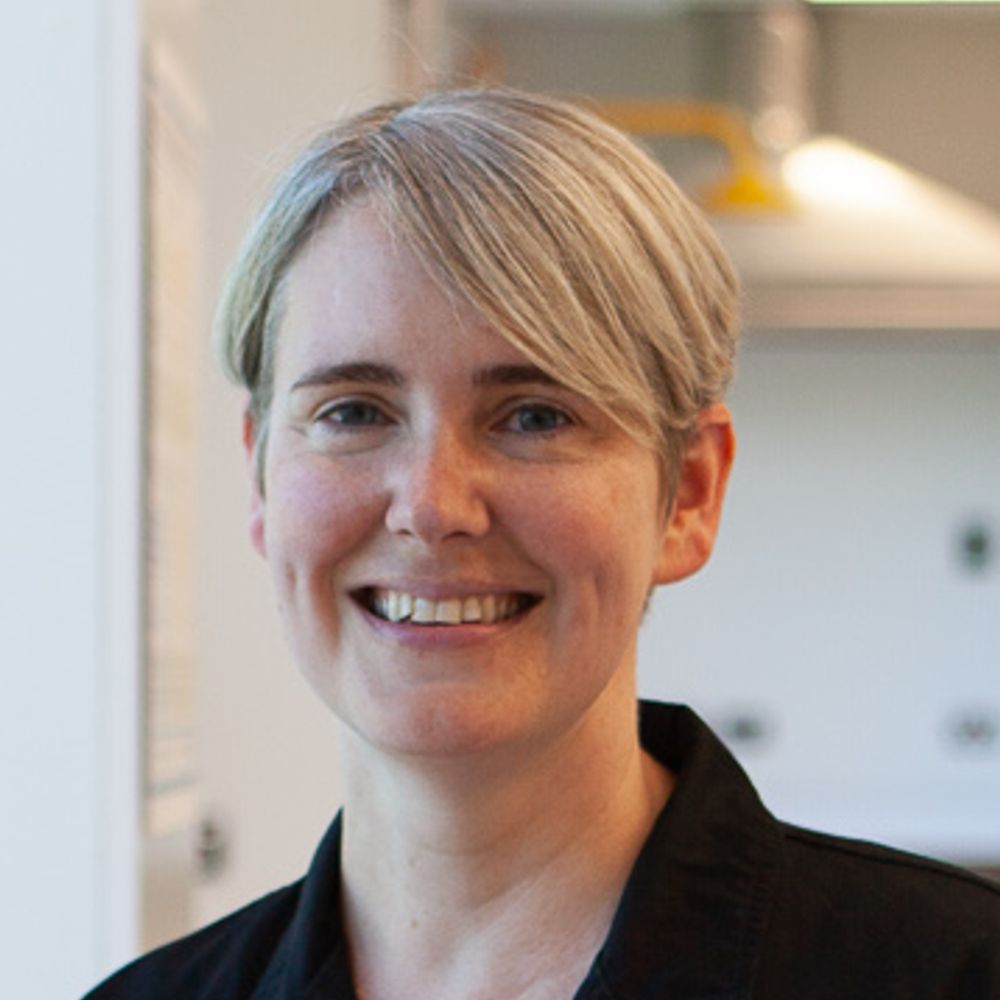
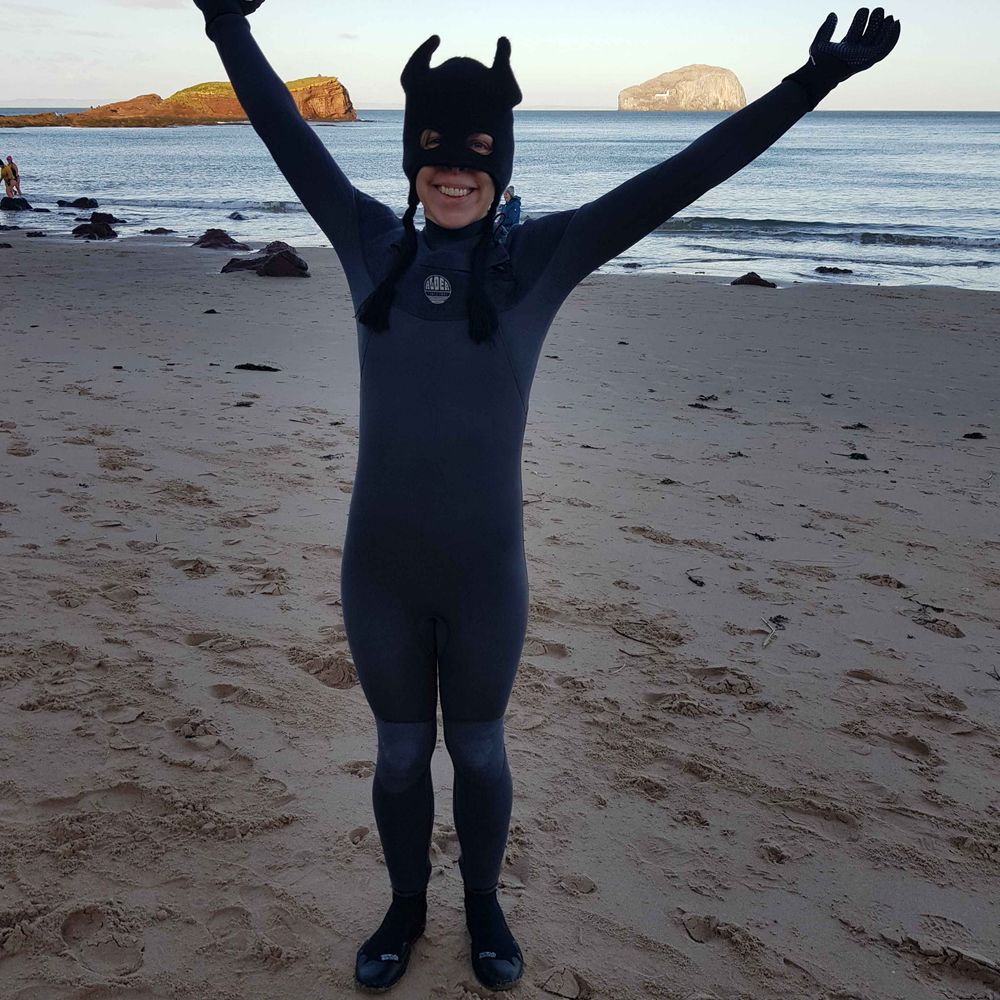
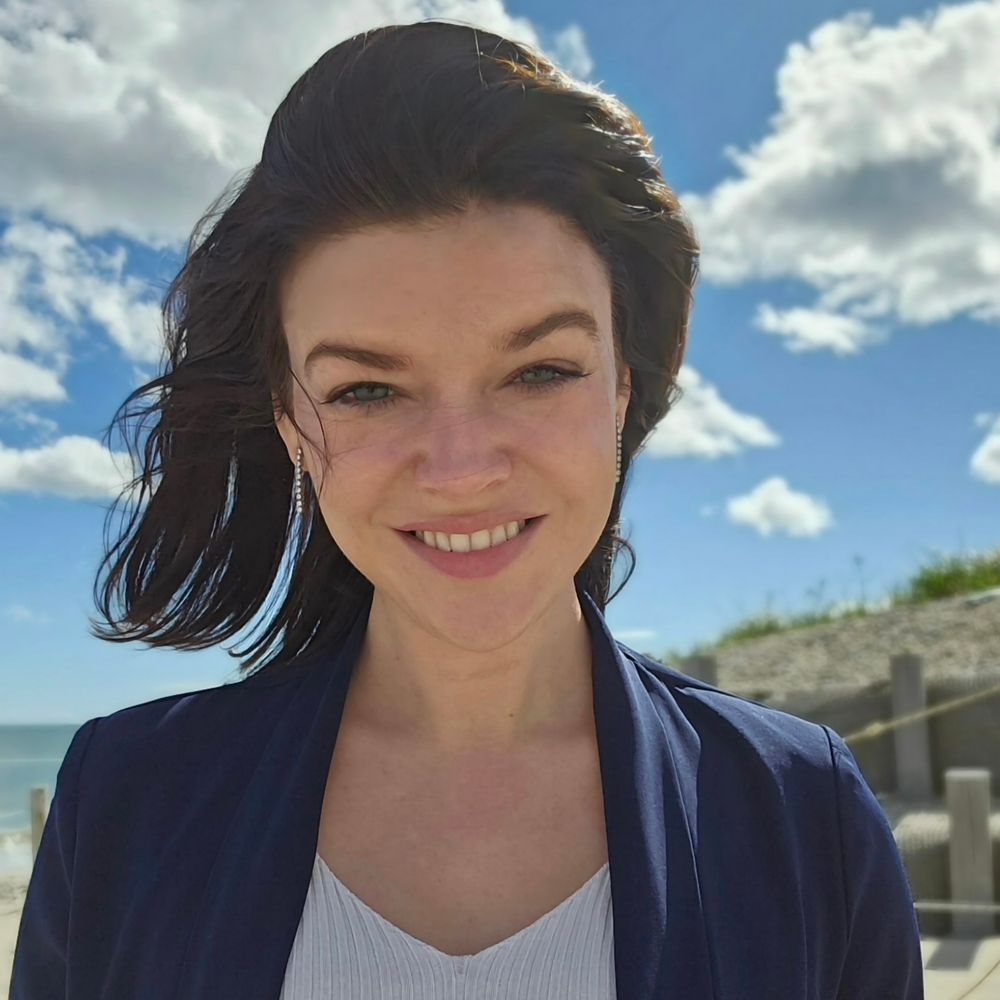
Visiting the flower market for new year trinkets and decorations

Family meal out in Dapeng Fortress city

Our little dragon

Friends enjoying the Shenzhen winter sun
Best wishes for the Spring festival. As our lab breaks for Chinese New Year my family are visiting to spend some time with our little dragon 🧧🏮🐎
07.02.2026 09:10 — 👍 0 🔁 0 💬 0 📌 0

AGU is now accepting applications for Editors-in-Chief across five publications, with terms starting Jan 1, 2027. These roles help shape editorial standards, research quality, and peer review in Earth & space science. Apply by May 1, 2026.
buff.ly/8Mxy8vq
03.02.2026 13:33 — 👍 5 🔁 5 💬 0 📌 2

Quote from the cruise log of Maria S Merian on science expedition MSM130
In 2024, we encountered a perilous MAYDAY.
A small yacht sailed blind into dense ice with heavy fog and got stuck for 3 days. Drinking water froze, ice pressed the hull & polar bears were nearby. With 0 chance of rescue by helicopter or icebreaker, only a lucky change in weather saved 6 people.
31.01.2026 06:41 — 👍 1 🔁 0 💬 0 📌 0
Study@SJTU - Shanghai Jiao Tong University
In July, I will be teaching in Shanghai at SJTU for their UN Sustainable Development Goals summer school. 9 summer courses are available suitable for any interested students. I will co-teach "The marine carbon pump jigsaw: science, sustainability and management"
global.sjtu.edu.cn/en/study-sjt...
31.01.2026 05:32 — 👍 1 🔁 1 💬 0 📌 0
YouTube video by Fukushima InFORM
Polar Bears Trying to Eat Research Equipment in the Beaufort Sea
Not all earthlings appreciate CTD’s but the can be very curious about them. Here are a mother polar bear 🐻❄️ with her two cubs inspecting our sea cable in the Canadian 🇨🇦 Arctic Ocean back in 2015 youtu.be/JC2befsNa1Y The CTD is 2000 m down. The bears were not hurt and swam off shortly after 🌊
22.01.2026 15:32 — 👍 16 🔁 7 💬 0 📌 1
This is often suggested (& some grant agencies do 😆👍). Yet the difficulty with society journals is reviewer fees would presumably get added to article charges... which already deter most scientists
e.g. JGR:Oceans in 2024 used 2967 reviews for 461 publications, $50 per review is +$320 to our fees
20.01.2026 01:28 — 👍 1 🔁 0 💬 1 📌 0
This is unfortunately normal... in the AGU system the average response time of scientists to reviews ranges from a few days to over 6 months... Editors are only as good as the community...
20.01.2026 00:24 — 👍 0 🔁 0 💬 1 📌 0

Hundreds of Scientists “Vehemently Oppose” U.S. Effort to Purchase Greenland - Eos
About 350 scientists scientists have signed a letter condemning U.S. President Donald Trump’s efforts to acquire Greenland.
“President Trump’s talk of ‘buying’ Greenland is not only an affront to Greenland’s autonomy but also a dangerous distraction from the urgent work of addressing environmental change impacts to US citizens,” the letter reads. eos.org/research-and...
12.01.2026 21:01 — 👍 22 🔁 11 💬 0 📌 1

Greenland
10.01.2026 13:47 — 👍 640 🔁 154 💬 25 📌 12

Very happy to welcome Dr Abby Guo to our group today as a postdoc. She will be using data from China's largest Ocean Alkalinity Enhancement trials to understand how well the concept works as a C sink and what the potential side-effects are on marine ecosystems 🌊
www.hopwood-marine-science.com/about
13.01.2026 03:58 — 👍 5 🔁 0 💬 0 📌 0
I love how capable some of my students think I am. They will email me a huge draft, a thesis chapter, paper or long assignment, 2 to 5 minutes before we meet, then walk into my office and ask me what I thought about it and how it can be improved.
I can read quite fast, but not that fast.... 😅😅😅
13.01.2026 02:29 — 👍 0 🔁 0 💬 0 📌 0

Greenlanders express fear and indignation as Trump eyes territory
Greenlanders tell the BBC they have no interest in becoming American as the White House restates its desire for annexation.
#Greenland is a wonderful place. Its people are warm, open, welcoming and very observant about the natural environment of their home. They are not a colony to be bought, sold, occupied or invaded. They are an independent nation to be respected in the global community.
www.bbc.com/news/article...
08.01.2026 01:36 — 👍 4 🔁 1 💬 0 📌 0

US discussing options to acquire Greenland, including use of military - White House
It came as European allies rallied behind Denmark after renewed US insistence it must have Greenland.
Time to wake up and smell the coffee. The US is an aggressive military state with no respect for the rule of law.
What sort of country kidnaps foreign leaders and charges them with fabricated crimes, or threatens to invade their neighbors if they don't surrender land?
www.bbc.com/news/article...
07.01.2026 01:09 — 👍 2 🔁 0 💬 0 📌 0
I use a 20-minute rule... If I cannot access documents for review within 20 minutes of trying, I apologize that I will not be completing the review and kindly request the workflow is improved to save reviewer time (a rule developed after once spending over 2 hours to access a text for review 😅)
05.01.2026 07:57 — 👍 1 🔁 0 💬 1 📌 0

Trump's Maduro raid could set precedent for authoritarian powers across globe
Trump seems to believe he makes the rules and others cannot have the same privileges.
When the west bangs on about freedom and democracy, the east hears hypocrisy, double-standards and civil disasters in the making.
"America's record of achieving regime change by force in the last 30 years is disastrous."
www.bbc.com/news/article...
05.01.2026 00:37 — 👍 2 🔁 0 💬 0 📌 0

My Christmas present this year. A painting of the RV Tangaroa in the Ross Sea Antarctica by Alfred Memelink memelink.nz. Anyone have nice paintings or artwork of research vessels in beautiful places? 🌊🚢 please share.
25.12.2025 01:03 — 👍 22 🔁 3 💬 3 📌 0

KTV (Chinese style Karaoke)

Dinner with the team
It may not be a holiday in China, but the research group went for "traditional" KTV (Karaoke) after dinner anyway 🎄🎅🎁
24.12.2025 01:43 — 👍 0 🔁 0 💬 0 📌 0
Finished -what I hope😅- is my last #peerreview for 2025
The number I get asked to do keeps going up. In 2025 I finished 30 reviews which is about as many as I can accept. Curiously, either I got kinder or Editors are sending me better drafts (or maybe both!)- only 3 recommended rejections this year
23.12.2025 02:58 — 👍 0 🔁 0 💬 0 📌 0

Getting students to fill in their end of course evaluations...🤔
A little cake moves things along much faster than weeks of badgering emails, from 29% to 96% completion in an hour 😆
#Academicchat
23.12.2025 01:32 — 👍 4 🔁 0 💬 0 📌 0

#OnThisDay in 1872, the expedition of HMS Challenger set sail from Portsmouth, travelling nearly 70,00 nautical miles and cataloguing over 4000 unknown species over 4 years. This pioneering expedition, organised by the Royal Society, laid the foundations of oceanography.
21.12.2025 12:43 — 👍 53 🔁 18 💬 2 📌 5

Complete with a new logo for our work 😆
16.12.2025 04:27 — 👍 0 🔁 0 💬 0 📌 0
Hopwood Marine Science
I'm not the most creative person 😅, but fortunately some of our students are and they made our working group a new logo and a fantastic webpage with all our projects and research areas 🐻❄️ 🐧 🐳 🌎
www.hopwood-marine-science.com
16.12.2025 04:26 — 👍 0 🔁 0 💬 1 📌 0

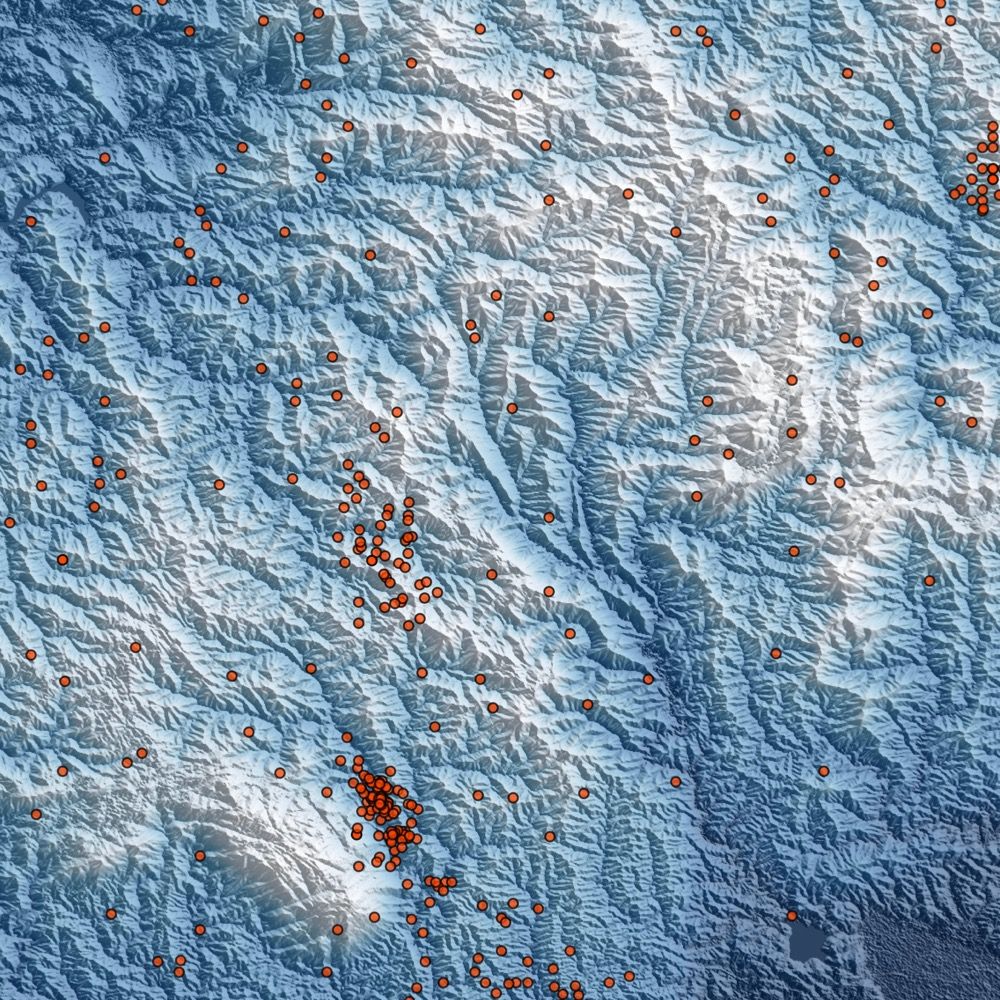
Chart of the study area

Concept diagram showing the main fjord inflow patterns by season
Greenland's fjords are pathways for exchange of heat and freshwater between the continental shelf and outlet glaciers of the Greenland Ice Sheet. Vries et al., present year-round water column velocity observations for Nuup Kangerlua in SW Greenland 🌊
agupubs.onlinelibrary.wiley.com/doi/10.1029/...
14.12.2025 06:02 — 👍 6 🔁 4 💬 0 📌 0

View over the working deck on RV Sanna in Disko Bay

Drone shot of RV Sanna working around an iceberg in Disko Bay

Landscape along the West Antarctic Peninsula

View from the RS Karpuj sailing through the Gerlache Strait
It's well known meltwater has some peculiar effects in the ocean, but we're always happy to find a few more! Ambient conditions are very different in Greenland & Antarctica, but curiously in both cases we see short-term negative responses of plankton to meltwater 🌊
online.ucpress.edu/elementa/art...
13.12.2025 06:31 — 👍 7 🔁 0 💬 0 📌 0

A weedy sea dragon drifts along above a sandy bottom with various seaweed in the background.

A male weedy sea dragon, about 30cm long, shown from the side. It has a large patch of old eggs below its tail and they are becoming encrusted in algae. The dragon itself is yellow and purple with darker areas around the edges and white/yellow spots throughout.

A closeup of a weedy sea dragon’s head in profile. It’s purple, brown and yellow with spots throughout.
Fun day poking around with a bunch of weedy sea dragons. Lucky me! #WeedySeaDragon #MarineLife #UnderwaterPhotography #PortseaPier
11.12.2025 07:19 — 👍 29 🔁 8 💬 1 📌 0

Be careful under the mistletoe this year 😉 😘
🎨: @lizclimo.bsky.social
#WhaleTales #Whalemas
10.12.2025 21:23 — 👍 31 🔁 5 💬 0 📌 1
Funders ‘hold all the cards’ to reform publishing, say academics - Research Professional News
Paper urges structural changes to stop “drain” of research resources by for-profit publishers
Publication fees are a drain of scientific resources, but individual scientists can't change the system.
"Funding agencies hold all the cards". They can and should mandate change; set reasonable terms and ensure good value for public money.
www.researchprofessionalnews.com/rr-news-uk-o....
10.12.2025 04:49 — 👍 0 🔁 0 💬 0 📌 0
We run the "Earth Scientists" feed — pester this account if you want to join
https://bsky.app/profile/did:plc:lpl45lei6abqpvmet5htdbtb/feed/aaakc72k5sgcs
(brought to you by @louis.moresi.info)
Mom. Soon-to-be University of Helsinki, Finland Full Professor studying aquaculture, fisheries, and climate change.
Uniting ocean enthusiasts over a pint! Ocean Hoptimism is a monthly gathering of ocean conservation, science, exploration, art, recreation, policy, & beer enthusiasts in SF Bay Area. Pint-sized hope for a brighter ocean future!
www.oceanhoptimism.org
Climate and environment reporter, The New York Times.
raymond.zhong@nytimes.com
https://www.nytimes.com/by/raymond-zhong
PhD student at Southampton, studying mesopelagic fish ecology. Occasional writer and amateur baker. Tweets about fish in superlatives. Opinions my own.
PhD in Paleontology🦴Postdoc at the Chinese University of Hong Kong (soon also East China Normal, Shanghai)🦕 Dinosaur Doodler 🦖 Brexit-causing immigrant 💼 Slav in China🍲Queer🐦
New paper out in Nature Geoscience!
Read it here: https://rdcu.be/
PostDoc at Middlebury College
Polar Oceanography | Earth Science | Remote Sensing
How do you do, fellow squids? 🌊 We're your frondly Aquarium with a mission to inspire conservation of the ocean. https://www.montereybayaquarium.org
The GO-BGC Array is a global robotic network of profiling floats carrying sensors that will revolutionize our understanding of ocean and ecosystem health.
https://www.go-bgc.org/
Oceanographer and climate scientist 🌊 | Assistant Professor at Georgia Tech 🐝 | MIT/Caltech alumna 🦫 | Penguin enthusiast 🐧
Our research mission with more than 100 scientists investigates whether and to what extent the ocean can play a significant role in removing and storing #CO2 from the atmosphere.
Laboratory of experimental oceanography based at CEREGE 🦚, Aix-en-Provence 🇫🇷. We culture, measure, and dissolve carbonates!
📨 exocean@cerege.fr
🌡️🌊🫧🐚🪸🔬
@juliemeilland.bsky.social, @sulpis.bsky.social, @chalkyoceans.bsky.social
Scientia Prof. of Ocean & Climate Dynamics UNSW Australia | Fellow Australian Academy of Science | CMSI / BEES | Deputy Director ARC Australian Centre for Excellence in Antarctic Science | I study our oceans ice atmosphere and climate 🌊🌎🧊🌍🌤
Wir fördern Naturwissenschaften, Mathematik und Informatik.
#bildung #forschung #wisskomm
Datenschutz/Impressum: http://klaus-tschira-stiftung.de/datenschutz
Science journalist. Astronomy, geoscience, and more. 2024 FRONTIERS Fellow. Find me @SkyandTelescope, @AGU_Eos, @ScienceNews, @QuantaMagazine,@el_pais
MCPapageno: biólogo con Síndrome de Stendhal. Mi casa es un archipiélago entero, es una casa concreta, infinita. A donde mires es tu casa. A donde vayas es tu gente.
Algunas fotos aquí 👉 mcabsoc.myportfolio.com/work
Fisheries Ecologist, PhD 🦈🐟
Ecosystem-based management, sharks, fisheries, sustainable seafood 🇧🇻🇺🇲
Yoga, cats, spearfishing 🐈⬛
📙My book on Marine EBM is available here: https://tinyurl.com/MarineEBMBookHaugenLink
jannehaugen.com
Born at 321 ppm. Climate & Carbon Cycle Scientist. Prof @UniofExeter Directeur de Recherche @CNRS @GlobalCarbonProject