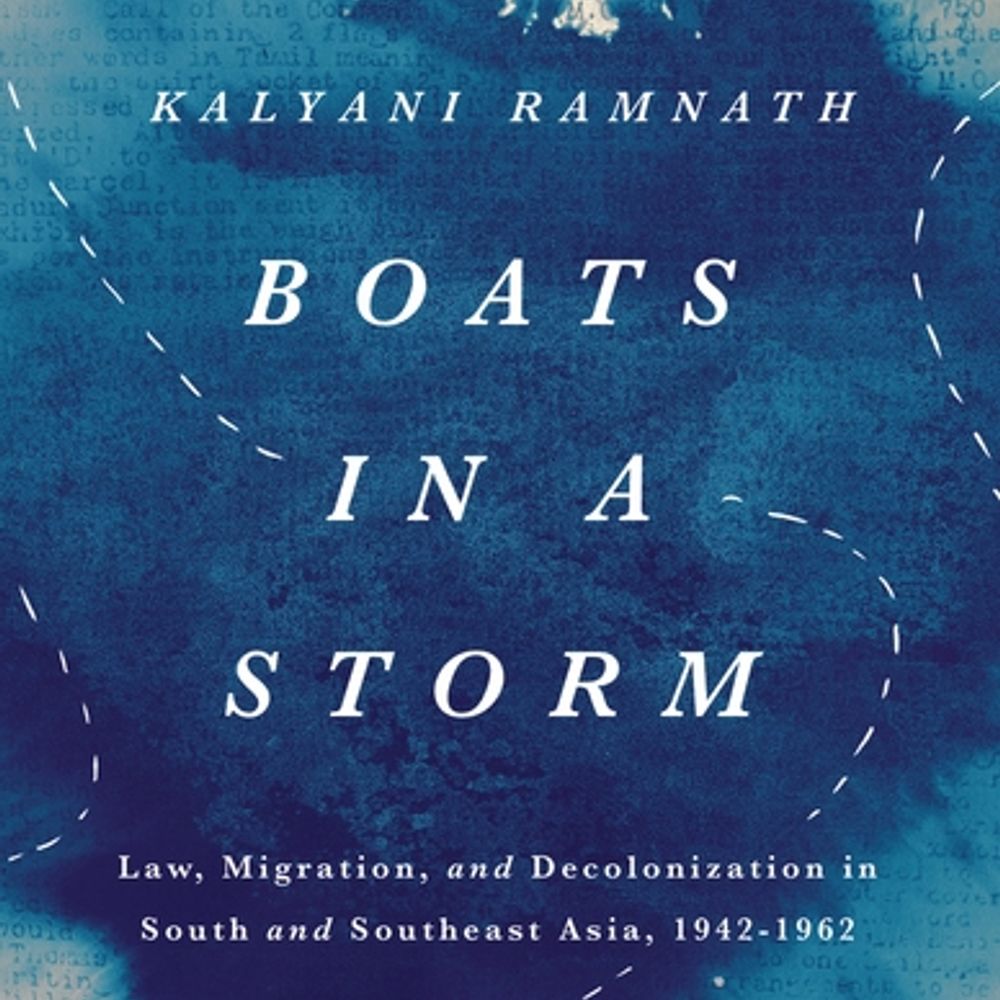
New post: “The printing press, identity, and the formation of diaspora in early modernity - my review of Sebouh Aslanian's book”
open.substack.com/pub/proseont...

@malikaltaf.bsky.social
Postdoctoral Fellow | Knee Center, WVU | Economic history & public health in colonial India https://malikahussain.github.io/
New post: “The printing press, identity, and the formation of diaspora in early modernity - my review of Sebouh Aslanian's book”
open.substack.com/pub/proseont...

New submission format at SBE:
“Replications as Registered Reports”
link.springer.com/journal/1118...
You can get "in-principle acceptance" before data collection even begins; final paper gets published regardless the results, if the study is conducted rigorously.
#EconSky
Prof. Noel Johnson (GMU) on our co-authored work on the 1857 Rebellion and vaccine hesitancy in colonial India. #EconSky
16.01.2026 21:12 — 👍 1 🔁 0 💬 0 📌 0
Did a podcast on my research with @malikaltaf.bsky.social on the 1857 Rebellion, British massacres, and smallpox vaccine hesitancy in Colonial India. open.spotify.com/episode/6Qfw...
16.01.2026 19:31 — 👍 2 🔁 1 💬 1 📌 1📢CALL FOR PRESENTATIONS | Virtual Economic History Workshop for early-career researchers
The workshop turns 3 in January! 🎉🎉🎉
Presenters have come from 15 universities in 3 countries (list below)
Sign up to present: forms.gle/vt21XRe4KA4J...
Join the mailing list: forms.gle/tVWH2TPYaRuD...
1/
Recently accepted by #QJE, “Enlightenment Ideals and Belief in Progress in The Run-up to the Industrial Revolution: A Textual Analysis,” by Almelhem, Iyigun, Kennedy, and Rubin (@jaredcrubin): doi.org/10.1093/qje/...
24.12.2025 16:46 — 👍 23 🔁 10 💬 0 📌 0![The first is a working paper by three economists—Elliott Ash, Daniel Chen, and Suresh Naidu—from 2017. While the authors are economists, the actual contribution—summed up in a title that few historians would think debatable, “Ideas Have Consequences”—is about legal or intellectual history. It presents a powerful and discrete account of the transmission of ideas across social networks through textual analysis. The substance argues that privately funded Manne seminars in law and economics—which were attended by a substantial proportion of the federal judiciary—affected the language, decisions, and sentencing of federal justices who attended them and thus, by implication, allowed large-value conservative donors to capture the federal judiciary. The effect seems robust to a variety of covariates [...]
Reading this paper was exciting, but looking through the tools and tricks and sources also made me feel like someone in a science fiction movie encountering an artifact sent back from a few decades in the future. The extraordinary quality of data that economists can obtain is almost unimaginable to humanists. It is not just a million or so circuit court votes and 300,000 opinions but also the institutional capacity to file Freedom of Information Act (FOIA) requests to get the exact years of attendance for every judge who went to the Manne program and the disciplinary capacity to casually use relatively new methods like word embeddings without spending pages slowly, gently analogizing them to some “simpler” concept. Humanists wandering through algorithms seem to have to justify using an algorithm by first identifying which Borges short story—whether about the Map of the Empire, the analytical language of John Wilkins, or Pierre Menard and the Quijote—it most closely resembles.](https://cdn.bsky.app/img/feed_thumbnail/plain/did:plc:643p6z4ydk2xnwv77maa6eec/bafkreidctt57eseamimgzctkjtu2ly2vmsugcjwcrargerohe5bljg7jie@jpeg)
The first is a working paper by three economists—Elliott Ash, Daniel Chen, and Suresh Naidu—from 2017. While the authors are economists, the actual contribution—summed up in a title that few historians would think debatable, “Ideas Have Consequences”—is about legal or intellectual history. It presents a powerful and discrete account of the transmission of ideas across social networks through textual analysis. The substance argues that privately funded Manne seminars in law and economics—which were attended by a substantial proportion of the federal judiciary—affected the language, decisions, and sentencing of federal justices who attended them and thus, by implication, allowed large-value conservative donors to capture the federal judiciary. The effect seems robust to a variety of covariates [...] Reading this paper was exciting, but looking through the tools and tricks and sources also made me feel like someone in a science fiction movie encountering an artifact sent back from a few decades in the future. The extraordinary quality of data that economists can obtain is almost unimaginable to humanists. It is not just a million or so circuit court votes and 300,000 opinions but also the institutional capacity to file Freedom of Information Act (FOIA) requests to get the exact years of attendance for every judge who went to the Manne program and the disciplinary capacity to casually use relatively new methods like word embeddings without spending pages slowly, gently analogizing them to some “simpler” concept. Humanists wandering through algorithms seem to have to justify using an algorithm by first identifying which Borges short story—whether about the Map of the Empire, the analytical language of John Wilkins, or Pierre Menard and the Quijote—it most closely resembles.
This essay from @bschmidt.bsky.social on how history rejected computational methods, & so "quantitative history" ended up in the social sciences, & "digital humanities" in literature, with no historians doing computational work, is fascinating, & worth a read: dhdebates.gc.cuny.edu/read/computa...
04.11.2025 03:34 — 👍 49 🔁 20 💬 4 📌 4Just want to mention two articles of mine since we are talking about the hilariously-named "Credibility Revolution."
1. "Randomized Controlled History?" It explores design-based inference approaches to history and finds them mostly problematic. (www.nowpublishers.com/article/Deta...)
The world's time zones visualized on a spinnable, interactive globe.
Try out the code - it'll default to your current time zone and show you times around the world!
#30DayMapChallenge Day 27: Boundaries
Code: gist.github.com/walkerke/c4a...
Now forthcoming at Quarterly Journal of Economics
Enlightenment Ideals and Belief in Progress in the Run-up to the Industrial Revolution: A Textual Analysis
Available at: digitalcommons.chapman.edu/esi_working_...
(See thread below for an overview)


#Stata #geoboundary has been bumped to v1.22 to include #WorldBank 's latest official boundary data that now provides upto ADM2 level shapefiles.
Installations+code+more info on GitHub:
github.com/asjadnaqvi/s...
Up soon SSC!
More than a decade of effort went into this magnificent dataset. What an incredible public good. People need to know how hard it is to do rigorous empirical work in political science.
08.10.2025 12:01 — 👍 21 🔁 8 💬 0 📌 1
For our next seminar at the Demography Department at Cedeplar, UFMG, we have the extraordinary Ridhi Kashyap @ridhikashyap.bsky.social presenting. Don´t miss it! The Zoom link is below. We see you all tomorrow, October 8, at 2 pm Brazilian time 👇 💡
Zoom link: lnkd.in/e5UC-M54
#demography
🚨New Working Paper 🚨
Did Catholic missions have an impact on American Indigenous communities? Were the effects different depending on the origin of the missionaries? These are things I examine in this paper: papers.ssrn.com/sol3/papers.... (1/6)

I am proud to announce that my book "As Gods Among Men. A History of the Rich in the West" has been awarded the Ranki Biennial Prize by the Economic History Association!😊👇
02.10.2025 14:23 — 👍 17 🔁 3 💬 1 📌 0
Now on Early View: 'Wealth inequality and epidemics in the Republic of Venice (1400–1800)'.
By Guido Alfani, Matteo Di Tullio & Mattia Fochesato.
@guidoalfani.bsky.social @stone-lis.bsky.social
@uni-of-warwick.bsky.social
onlinelibrary.wiley.com/doi/10.1111/...

Why was the Irish Famine was so severe? Why did the North and South develop differently? Is Ireland ‘rich’?
If you want to find out, CEPH is pleased to announce that registration is open for our online course, "The Development of the Irish Economy". Register here:
ceph.ie/the-developm...

I'm excited to launch a YouTube channel about econometrics and practical coding / productivity tools. Please consider subscribing so that others can more easily find these resources!
www.youtube.com/@structurale...

My interview on The Visible Hand podcast is now live!
www.thevisiblehand.uk/episodes/epi...

Whoa! Elsevier fired @richardtol.bsky.social, longstanding Editor-in-Chief of the journal Energy Economics. Richard's side of the story should be ringing alarm bells. #EconSky
Fraud and cover-up
richardtol.substack.com/p/fraud-and-...
Come and check out our next Formal Demography Working Group meeting with @phbocquier.bsky.social ! Sign up on our website to receive the link. If you have an ideia/paper/ work in progress you would like to present please feel free to reach out to us!
formaldemography.github.io/working_group/


Come check out our panel on Bureaucratic Performance in the Developing World at APSA (Thu, September 11, 12:00 to 1:30pm PDT in East Meeting Level, East 12. I'll be presenting some new work on how farmers and officials in India learned to game satellite-based environmental enforcement.....
10.09.2025 17:50 — 👍 3 🔁 1 💬 0 📌 1
Please apply!! RA for research on culture and development. employment.ucsd.edu/research-ass...
27.08.2025 15:49 — 👍 3 🔁 3 💬 1 📌 1Just wanted to say clearly that Gautam Gambhir's comments to the Oval groundsman (heard over the mic) were arrogant, obnoxious and unacceptable. It represents the upper caste privileged Indian mentality.
30.07.2025 18:06 — 👍 1 🔁 1 💬 0 📌 0If anybody is heading to Lund for WEHC next week, come see me present new research with @malikaltaf.bsky.social on "The Great Revolt and its Legacy: Understanding Vaccine
Hesitancy in Colonial India". www.dropbox.com/scl/fi/om1q6...
✨Did markets make Americans more cooperative❓🔍
✅YES‼️
Between 1850 and 1920, the US became the largest and most integrated economy in the world 📶🌎
We show that this shift didn’t just move goods and affect prices—it fundamentally changed culture and behavior
🧵 👇 1/17

The keynote recordings from the 7th EBRD–CEPR Symposium on the Economics of Demographic Change are now online!
Talks by:
Jesús Fernández-Villaverde (@upenn.edu): www.youtube.com/watch?v=f7_e...
@mdoepke.bsky.social (LSE): www.youtube.com/watch?v=6FRE...
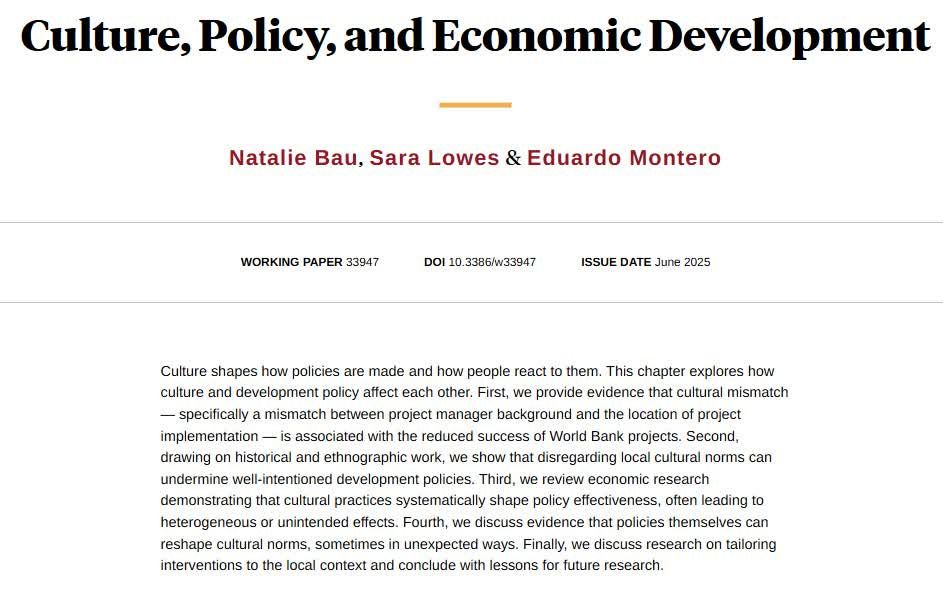
How culture and policy shape each other—and why paying attention to local context is key for development policies' success, from Natalie Bau, Sara Lowes, and Eduardo Montero https://www.nber.org/papers/w33947
01.07.2025 18:00 — 👍 11 🔁 4 💬 0 📌 0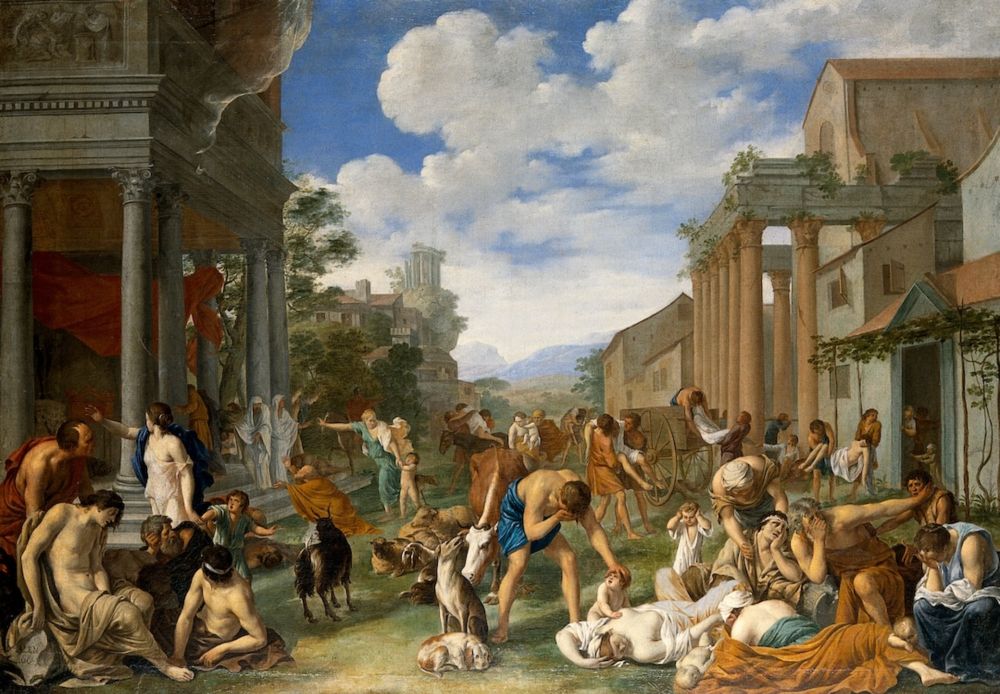
Read this, bookmark it, download it (& print it, too, if you want to go all out). But make sure you & yours know that medical history ( #histmed) has a solid response to the nonsense our HHS secretary is spouting. nursingclio.org/2025/06/30/m... 🧪🗃️ And follow @nursingclio.bsky.social. #MiasmaTheory
30.06.2025 20:50 — 👍 41 🔁 17 💬 0 📌 1
Delighted that after many years of hard work, Barriers to Global Capital Allocation (written jointly with Bruno Pellegrino and Enrico Spolaore), will be coming out in the QJE. academic.oup.com/qje/article-...
30.06.2025 06:11 — 👍 19 🔁 3 💬 0 📌 0